“Hey, Todd. I’d like to talk with you about becoming Ordained. I think I’d like to get Ordained to perform weddings. You know, to be of service.” My friend asked me innocent enough after our group meeting, not knowing the weeks I’d ponder his question and the waves of emotions that would sweep through me.
“Yes, of course,” I responded with a forced smile. “Anytime.”
My wife looked at me with that puzzled look on her face. “What do I think ordination means to me?” She repeated my question. Silence filled the air as she thought. “Well,” she began.
“I mean,” I interrupted her, “get Ordained just to perform marriages? You can get that online for the price of ten minutes and thirty-five bucks. But what does it mean? If a United Methodist lay person obtains an online certificate of ordination does that renounce their membership?” It remained a mystery to me.
“In that case,” she resumed, “ordination means nothing more than the ability to conduct a civil ceremony.” Not a church service, not an act of worship, not a recognized ordinate of the Church. Her clarity swept the fog away and revealed the hard reality of today’s Church in American society.
Online ordination was a certification to conduct a civil ceremony. Nothing more, nothing less. It held no religious or theological weight.
Civil forces are eroding the foundation of the Christian Church. School activities have taken-over time previously dedicated to youth fellowship, Christian education, mission work, and camping. Church softball and basketball leagues have been replaced by intermural sports. Community festivals, complete with carnival rides, beer tents, and marching bands have replaced church picnics, dish-to-pass fellowship dinners, and game nights.
Wedding venues have replaced church weddings and funeral chapels have removed church funerals from the sanctuary table. Civil religion, resplendent with nationalism, has hijacked two thousand years of deep theological thought and practice. Even the term “evangelical” has been corrupted to reflect a political reality, rather than a fervent, passionate desire to bring people into a relationship with Jesus Christ.
The throne of Christ hasn’t been abdicated, it has been overthrown in an unopposed palace coup.
The innocent question from my friend, who grew up in the Church, but, in adulthood, walked away from organized religion has caused me to think more deeply the reality of my own ordination, what it means, and why it is important.
Ordination is Christ centered. The God of my experience and tradition was manifest as the Creator’s son, Jesus Christ. This is not to exclude the experience or tradition of others. I come to The Way in and through Jesus. I follow his teachings and pattern my behavior on him, to the best of my limited ability. Forgiveness, redemption, and salvation, both personal and corporate, are freely given as gifts of grace through Christ from a loving God.
Ordination is Holy Spirit infused recognition of a call to pastoral ministry. The Holy Spirit first worked internally, in my experience, casting for me the vision of serving as a pastor, a shepherd leader, of communities of faith assigned to me. My call began in childhood, developed and matured in youth, and came to fruition when I was nineteen.
“Todd, what are you going to do with your life?” The college chaplain asked me with compassion and love in his eye. Over a period of months, words began to form and I confessed to the local parish pastor that I felt called to Ordained Ministry. That got the ball rolling.
The Holy Spirit worked externally, first in my local church and the Pastor-Parish Relations Committee. We talked, thought, prayed. Did they see in me what God was revealing? Would it be a call to parish ministry, or to engineering a new road through town? They must have liked what they saw and responded to the Spirit’s prompt. I was passed on from the local church to a District Committee on Ordained Ministry and assigned a mentor.
The Holy Spirit was at work in my mentor and the District Committee. We studied together, met multiple times a year to gauge progress and provide guidance, each time assessing if the Spirit was ripening my spiritual fruit, strengthening my vine and branches. Concentric circles of Spirit led affirmation were spreading ever outward.
By the power and guidance of the Holy Spirit, I survived the required background checks and psychological assessments, earned a bachelor’s degree and completed seminary. The local church and District Committee still met with me on a regular basis, even when I was handed off to the Conference Board of Ordained Ministry.
The Conference Board represented Ordained clergy from across the state. They received my records, visited me in seminary, met with me annually, confirmed my trajectory towards ordination, all the while, being led by the power and direction of the Holy Spirit. Concentric circles of affirmation, like water in a pond disturbed by a falling pebble, began locally and spread globally. Two step ordination assured a successful probationary period of service, coming to completion in two years with full membership and ordination as Elder. The entire Spirit led process took seven years.
Ordination is humble service. The self is replaced with God at the center. Accomplishments are attributed to God. Thanks goes to God. My life, my soul, my all, is given wholly to God and God’s service. The DNA of servant leadership began with the Apostle Peter, given the keys to the kingdom by Jesus, with the exclusive authority for the good stewardship of the Church. The Ordained are stewards of the office, Episcopal leaders, Diaconal support, and Elders serving as parish pastors. We share stewardship of the efficient, effective, transparent use of money and property wholly for the purpose of Christ and his Kingdom.
Ordination is stewardship of the Sacraments. Baptism and Eucharist are commands of Jesus, Holy Spirit fueled and led activities that initiate one into Christianity and nourish the faithful, uniting us with Christ and the common vision to complete God’s kingdom on earth as it is in heaven. Initiation is one and done. Eucharist is ongoing and never ending, mysterious, yet filling. Awesome, always refreshing and filling. Give us today, nourishment sufficient for today’s work.
Ordination is stewardship of The Word. Over centuries the Church has recognized specific writings as sacred, Holy Spirit inspired and empowered texts that are useful for Christian initiation, teaching, guidance, and inspiration. Scripture becomes the foundation for music, instruction, meditations, prayers, lyrics, proclamation. To the Ordained is the charge to proclaim The Gospel, literally meaning “the Truth of Jesus Christ”, to all the world. Uncut. Uncensored. As recorded in the Biblical books of Matthew, Mark, Luke, and John. The proclamation of The Word has been my lifetime of labor, of love, of stewardship, given to me.
Ordination is stewardship of order. Order must be made out of the chaos of the masses. To the Ordained is given the charge to establish and maintain order, modify order as the Spirit so moves to keep the Church relevant and engaged in culture and society. In the United Methodist tradition, order is codified by The Book of Discipline, approved by a global conference of equal lay and clergy delegates, chaired by a rotation of bishops, held once every four years. The process of change is deliberately slow and intentional, giving space for the Holy Spirit to work through discernment, study, and dialogue.
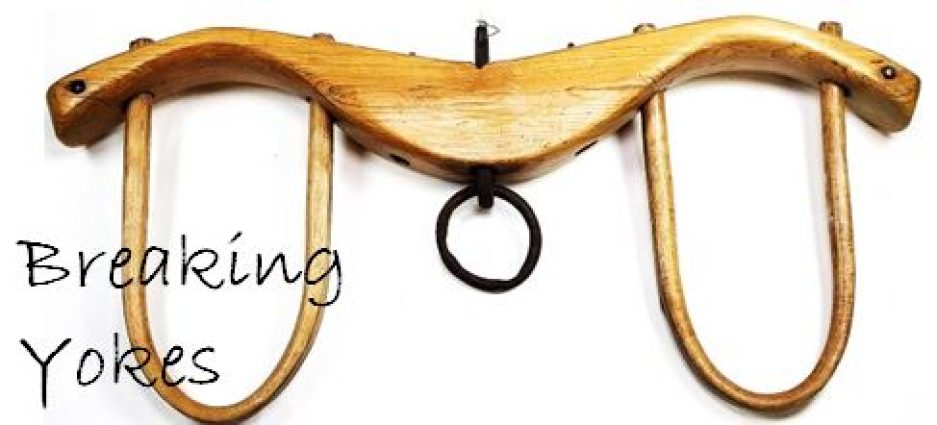
Ordination is the union of authority and responsibility for the Church of Jesus Christ. The weight of service is symbolized by the yoke worn around the neck, the stole, often resplendent with colors and symbols of Christian seasons, celebrations, or sacred events.
The right to wear the yoke is reserved to the few who are called and affirmed, the Ordained, stewards of the Church of Jesus Christ, successors of the Apostle Peter, each and every one of us, prepared to lay down our lives in sacred defense of the faith.
The Ordained, present company included, are less than perfect. I cannot pretend to be. Thus, the Church on earth is routinely human. This is no excuse for failing to strive for perfection, the completion of Christ’s kingdom on earth as it is perfect in heaven.
We do our best. I do my best. When I fail, I confess my sins, repent, ask God for forgiveness, make repairs, and start all over again. God has always responded with amazing, abundant grace and love, redemption and salvation. This is The Way of the cross of Jesus Christ. God has never let me down.
—
I attacked the pool this morning fitted out in a Pentecost red, skin tight, streamlined swim suite. It hid some of the physical defects and signs of aging, but not all. It streamlined my stroke and make forward propulsion more efficient. Lord knows how good it felt not to be dragged down by a baggy suit and ballooning pockets.
One. One God.
Two. God created Adam and Eve, in the near perfect image of God.
Three. Father, Son, Holy Spirit. Creator. Redeemer. Sustainer.
Four. Scripture, tradition, reason, experience; the quadrilateral of Wesleyan based faith.
Five. Pente, as in Pentecost, or fifty. Fifty days following the resurrection of Jesus, he sent God’s replacement, the Holy Spirit, to guide and sustain us until Christ comes again.
Six. Six points of the Jewish star.
Seven. The Lord created the heavens and earth in six days, then rested the seventh. Seven is Sabbath. Keep it holy.
Eight. Hum. The higher the number the more difficult it becomes to keep track of my laps with numbers associated with faith.
I make it to fifteen, and I’m done. Spent. Breathing hard. Steady myself by reaching and touching the wall. The hot shower felt, oh, so good. So good.
—
It was a cold, damp, misty Monday morning, one which the Spring’s rain slicken roads and swelled creeks. Trees held the moisture, dripping the excess, under a dark, grey dawn. A young woman prepared for the office, dressed modestly, rolling on her tight stockings that revealed the muscles of youthful legs.
Driving to work on back country Wayne County roads, something cause her to swerve her late model SUV, skidding head on into a bridge abutment, flipping upside down, falling into the swift muddy creek below. Submerged, only the tires remained above the tide. Time ticked by.
The pager startled me to consciousness. “MVA. Car into a creek.” The coveralls slipped on, followed by shoes and car keys. My wife told me to be careful. Out the door I went, headed to the fire station, where our two ambulances silently stood ready, connect to an electrical land line to ensure all batteries were fully charged.
The call was way out at the furthest part of our district, a good 15 minute drive, when the roads were dry and free from traffic. One of our chiefs reported on scene and immediately called for a wrecker with a heavy duty winch. This couldn’t be good.
Safe extraction takes time. Years of training culminated with two brave firefighters dawning wet suits, harness, and ropes. No one knew if the submerged vehicle was occupied. Only the four tires stood sentinel like gravestones above the swirling water. Slowly, deliberately, the two descended the steep bank, a whole line of firefighters holding their tether in belay.
I watched the orchestra from the safety of the bridge. The tow truck backed to the edge, extended it’s crane, and slowly lowered the weighted steel cable over the side. The rescuers in the water knew exactly how to rig the automobile to hard points. When cleared, the winch slowly began to grind lifting the car from the watery grave. When above the rail, the operator, Buddy, a friend of the department, pivoted the boom and swinging, inverted SUV over to the road, water pouring from every compartment. Cable released, and a crowd of beefy firefighters flipped the car onto its wheels.
Equipment was piled on the waiting stretcher and backboard. I rolled it over to the driver’s door and pulled on the handle. It sprung open. Water cascaded out. In the driver’s seat was the woman, head down, looking as if she was taking a nap. I unbuckled the seat belt and we carefully pulled her out, laying her on the backboard.
She was as cold as ice, dark and grey, her long hair splayed around her head. There was no pulse, no respirations, no signs of life. The only anomaly I could see was a mid-thigh tear in her left stocking. A beautiful, young woman, on her way to work, now a corpse before me.
She had been submerged well over an hour, by the time she was found missing from work and people began to search for her. No, we would not start CPR or make any other life saving efforts. We were later informed that the autopsy revealed a mortal closed head injury that was the cause of death. She was dead from the initial impact, before she hit the water.
All that was left was to spread a linen blanket lovingly over her corpse and wait for the medical examiner to arrive.
—
After thirty years, sometimes I wonder why I write about these tragedies. Their memories remain vivid and real, down to the tear in a woman’s stocking. Hundreds of other scenes from my experience will remain unwritten. Only a few, the chosen, have I decided to put words to paper. Anonymity is always a critical element, never wanting to add to another’s grief.
Yet, I write. In doing so redemption fills my soul and brings me healing. Bad things happen, in spite of my will and every effort. Birth. Life. Death. Eternal life. It’s not about me. This is God’s kingdom, not mine. Rather, I’ve come to know the privilege of being present, being the tangible evidence of a loving God, even in the presence of unfathomable tragedy.
—
It was a mid-summer, hot afternoon, one where the cicadas buzzed in the trees and a cool glass of ice tea on the front porch provided sweet relief. “MVA, route 31, east of town,” my pager tripped then squawked the details of the call.
It was a routine cycle of response, honed by training, tempered by experience. The flashing blue light on my dashboard urged me to go faster, maturity reigned me back. Eagerness and adrenaline is no substitute for physics or adherence to traffic law. The fire house was enroute to the scene, so I parked, ran in and jumped into the passenger seat of the rig.
Vern was my driver. Old. Reliable. Confirmed bachelor, Vern; who had a habit of baptizing the radio and lights and siren console with a cup of black coffee. “Hit it, Vern,” and off we went, entering the cue of responding police cars and fire chiefs also responding to the call.
One day in the near future I would conduct Vern’s funeral. He was found dead in his recliner, pager still working. We closed his casket with Vern dressed in his fireman’s dress uniform, working pager at his side. Hefty firefighters hoisted his casket to the hose bed of the pumper for his final ride to the cemetery. There wasn’t a dry eye in the company.
We pulled up to the scene. Two cars smashed in a head on collision, still smoldering, in the middle of the road, both vehicles crushed by the violent impact, passenger compartments folded tight by torn metal, covered in cubes of safety glass. If ever there was a text book evolution for the Jaws of Life, this was it.
A woman’s arm hung loosely from the driver’s compartment, attached to a crushed body, trapped in unnatural positions. There were no airbags in this era, only seat belts. A lot of good her seatbelt did for her. Her face was towards me, narrow slits in her eyes, just enough for me to believe that she was still alive and straining to peek out.
She had a pulse, weak, as it was. As the firefighters began their extraction with their noisy engine and jaws, I held her hand and placed my other upon her head. “It’s going to be alright,” I lied to her. “We just have to get you out of here.”
We were taught in training to never lie to a patient, to provide promises that couldn’t be kept. But in that moment, I lied. Not to mislead, rather, to bring comfort to a woman in the last moments of life.
Her pulse faded, then stopped. The guys on the jaws were frustrated; there just were not any hard points left on the car from which to spread, wedge, or pry. I would not let go of her hand, no matter how much it ached to maintain the position, no matter how cramp my legs became. Oh, my back ached. Yet, I held on.
It was well over an hour after her last heart beat that the wreck finally gave up it’s driver. Even the coroner arrived on scene and pronounced her dead before we were able to glide the corpse onto the backboard and stretcher. We were not allowed to transport the dead, so we waited for the local undertaker to be paged and dispatched. All we could do was cover the body and wait.
I did not know her name or family, yet I knew the grief that would fall upon them. It was important, at least to me, knowing that she did not die alone; knowing that she had died with someone who loved her, holding her hand. This was the best I could do.
I remember sitting on the back of the rescue truck pouring a cold bottle of water over my head and crying.
Welcome to my life: ordained pastor, volunteer medic, psychiatric assessment officer. This was the crucible of ministry.

