51. Epilogue

It has been such a privilege to share with you the first thirty five years of life. It helped defined my call to pastoral ministry, education, training, ordination, marriage, starting a family, and early career appointments to beloved communities of faith.

Unique to the path I’ve walked has been my training and moonlighting as a psychiatric assessment officer, providing crisis intervention, stabilization, and referral for individuals in crisis. The work was rewarding and life affirming. Also, I greatly benefited and grew professionally as a medic and firefighter in one of the many local volunteer fire departments where I was welcomed as a member. 

Decades later, I drive through the towns where I once served, looking for landmarks; places where I made pastoral calls, responded to emergency calls, or experienced life changing events. The carved stone, brick, cobblestone churches where I served bring warm memories of the wonderful souls I cared for, what seems like a lifetime ago. I don’t see ghosts, but I feel the presence of sinners and saints alike, each beloved by God and by me. 

Over the time taken to write about these God filled experiences, it became increasingly difficult to obscure identities and keep confidences. It occurred to me that this would become impossible if I wrote with the same transparency about the final twenty-five years serving in the parish. People trusted me with information which I will not betray. These confidences I’ll take to my grave. So, it’s time to bring this biography to a conclusion. 

In the years that followed I was blessed to serve eighteen years as the pastor of West Walworth: Zion United Methodist Church, in western Wayne County. We were blessed to live in our own home in the school district, giving our two sons the stability they needed to complete school; something that neither Cynthia or I (both preacher’s kids) never experienced ourselves.

After serving a short two-year appointment at the neighboring Walworth church, I was appointed to serve the local chapter of the Alzheimer’s Association, as an educator, curriculum developer, and speaker. What a wonderful privilege to brush elbows with leading researchers in the field, compassionate caregivers, both family and professionals, and the wonderful souls living with a devastating mortal diagnosis. In seven short years, our program expanded from serving 2,200 unduplicated students to over 6,400. We taught in English, Spanish, and Russian, both in person and online, making extra efforts to reach out to underserved populations and people of color.

It was a privilege to be asked to present across New York State and at national events. I learned so much about how not-for-profits operated, leading a staff, leadership development, the importance of culture, and how to infuse Christian values in every level of an organization. 

What a fun ride!

It was a blessing to serve for six years as the pastor of the East Rochester United Methodist Church, a congregation rocked and battered by circumstances largely out of their control. We were able to take a congregation in danger of failing, remove a toxic program, welcome a day program for individuals with developmental and physical disabilities, and welcome oodles of meetings of Alcoholics Anonymous. These outreach efforts swelled church attendance and warmed people’s hearts. 

In the final act, I was asked to serve as the pastor of a large suburban parish in Rush, New York. We were able to initiate and complete a lot of large capital projects, welcome a new day program for more people with disabilities, and extend our outreach into the community. Seven months after I started, the pandemic shut us down. We were blessed with technology and a resilient volunteer cohort that kept us thriving, online, and continually engaged. Our day care program never closed, a tribute to the wonderful staff and volunteers. 

It’s been a privilege to lead four groups on pilgrimages to the Holy Lands. I pray for peace every single day. Full. Stop. Making a pilgrimage is better than the best commentary on the Bible. I love Israelis and Palestinians, and deeply feel their historical and existential pain. Please find a way to live together in peace, with justice, just being kind to one another. Perhaps you could teach the rest of the world, ourselves included, how to do likewise.

The world expanded when I engaged in short term mission and outreach adventures, going with two groups to Nicaragua and three groups to Guatemala. Banyo means bathroom, but beyond that, my Spanish suffers. What does cross all cultural and language boundaries is the value of God’s love, love of neighbor, helping those in need.

We send used wheelchairs to central America for remanufacturing (in a shop staffed by people with special needs), deliver and fit them to people we visit, and make home visits to assess future recipients. We also build secure houses primarily for single mothers and children, deliver WHO nutritional packs that will feed a family of four for a month, and help people enroll their children in school and set up a business with microloans. Carpenter, therapist, teacher, social worker, pastor; we all become one. We build, support, teach, and provide spiritual guidance for the last, least, and lost.

Want to experience some eye popping, jaw dropping miracles that God is doing? Go where others ignore. Learn firsthand the ways of the world. Lead with humility. Serve with love and compassion.

These experiences have been instrumental to get over myself, placing God in the center of my obsession, and, as a result, working myself to be a channel of God’s love, peace, and grace. This approach and effort made me a better pastor, a better human being.

In 2023, I suffered a terrible automobile collision and received my second ride in Mercy Flight, this time as a patient struggling to breath, wondering all the while if “this was it.” During the recovery period my son told me, “Dad. You only get so many trips around the sun.” 

Point made. 

The Lord blessed us with conservative fiscal values, learned from our depression era parents. Our financial advisor said it was possible, so I asked my District Superintendent if we could meet for coffee. “I’m thinking about retiring,” I told her. “How wonderful!” She practically jumped with authentic excitement (and jealousy, I presume, for she would retire a year later). And that sealed the deal. 

Bishop Hector Burgos and my beloved, Cynthia at my retirement. June, 2024.

In retirement, I’ve filled in for injured or sick colleagues, took a small part-time parish of beloved for a year, but gently handed it off to a colleague just this month who needed to serve a different appointment and would better meet the needs of the people. It is a privilege to chair and serve on two not-for-profit boards, to support our son with autism, and to volunteer in the community. We travel as a family, especially enjoying cruises in warmer climes.

It is so restorative to join my wife and son for worship each Sunday at Asbury First United Methodist Church in Rochester, NY. It is large enough they can be active in its outreach ministries and I can quietly slip in, find serenity, and just worship. The music is exceptional, often led by members of local musical institutions or universities. The preaching is first rate, exceptionally well prepared, deeply engaging, Christ centered, academic and informed, welcoming and inclusive, and speaks to my soul. After 45 years of leading worship, being the one up front in alb and stole, it is gratifying to just be one of the crowd, anonymously attending with only compliments, absent of complaints. 

Church reflects larger society, mostly good people seeking a closer walk with the God of their experience. There are also a few abrasive people, individuals who could make life miserable, yet, they are in the smallest minority. I served them, anyways, sometimes in spite of themselves. The key is to not grant them free rent in my memories, where God only intended blessings. 

The journey with the God of my experience is centered on the life, death, and resurrection of Jesus Christ. I continue to welcome others to join me on this walk. Some do. Others don’t. Some join me for a time. Others have been lifelong companions. Retirement has given me the latitude to free up the schedule such that if you ever want to meet for coffee, just reach out and ring my bell. It would be my privilege. 

Laps in the pool this morning were nearly effortless. Then why does my body feel worn? They cleared my mind, led me to meditate on the words to two sacred hymns “O for a Thousand Tongues to Sing” and “Amazing Grace.” 

Swimming laps and inviting you into my inner thoughts in the pool serve as a foil for life, giving laser focus to life lived in the Spirit’s tether. Water cleanses. Water supports and suspends gravity. Water is the means of intertwining meditation and prayer with the physical world. The pool is the same water the Lord created in the earliest days of the universe, separated from dry land, over which blew the Spirit. That water is the same water  that baptized Jesus and me. 

The river of life flows, never the same from moment to moment, always present, always pressing, never absent, even for a moment. This river has been God’s gift of grace to me, transporting me from what was to what will become. God has provided every moment of creation, why would there be a reason to change?

Water is life, ever flowing; past, present, eternal. And life is beautiful.

What’s next? 

It is a blessing that I have forty plus years of original source material digitized. It may be frightening to those who observe artificial intelligence and machine learning as a threat. Where others fear to go, I see opportunity. 

Sermons? No. Nobody wants to read them. Countless retired ministers have their old sermons relegated to the landfill by nostalgic but reality minded adult children. 

How about Eucharistic prayers, known as “The Great Thanksgiving”? Now, there might be something with traction.

I worked diligently to create original Eucharistic prayers for use during worship throughout my pastoral ministry. Each created and anchored by the scripture passages identified in the three-year rotating Revised Common Lectionary, beating with the heartbeat of the ebbs and flows of the Christian liturgical year. If they can be organized and offered, why not? If no one advantages themselves, well, so be it. I’ll still benefit from the exercise. 

“Strong, Loving, and Wise” was a seminary text book that was used to teach young seminarians how to prepare and approach the Eucharist Table.

Strong.

Loving.

Wise.

It was on my mind every time I had the privilege to celebrate Holy Communion. It served me well for more than forty years. Perhaps this new effort with be somehow related to that influential text. 

In the end, my thoughts return to God’s river of grace and my love of fly fishing. In the beloved flyfishing tale of our era, there is a valley, and “a river runs through it.” 

God loves you. So do I. 
50. Funerals, Part Two

A whole book of funeral related material could be written by any parish pastor who served (survived?) for more than forty years. Been there. Saw that. So, I’m writing the book. 

A shout out to the diggers, the people who actually do the burying. Most are employed by the local cemetery association. I’ve only come across one who does all the digging by hand, pick and shovel carving a seven by three foot hole, six feet deep. The little, tightly arranged plots in West Walworth made it impossible to get a backhoe in most location. Bless Norm’s soul.

Another shout out to the vault people, usually dressed in coveralls waiting at their truck parked nearly out of sight while family and friends gather. Once the hole is ready, they remove the concrete box from their flatbed, using a small crane. A small remote controlled tracked machine delivers the vault to the grave. They assemble a steel frame with rollers and belts above the grave. The vault is slid into place, connected to belts and lowered into the hole. The cover is set aside. Vault people set up the tent, lay boards around the hole, roll fake grass over everything, set up chairs. Hopefully, the weather is accommodating, though, not always. 

Clergy precede the casket into the sanctuary, and out when the funeral is concluded. We ride in the undertaker’s limo that precedes the hearse, leading the processional from funeral parlor or church to the graveyard. 

Shout out to the motorcycle escorts, in fair weather and foul, icy blizzards, pouring rain, and hot sunshine, who zoom ahead to block intersections, ensuring a smooth processional of cars, headlights on, to the cemetery. They are a sturdy bunch. 

The undertaker at the cemetery gives necessary paperwork and checks to the association attendant, wrangles pallbearers and removes the casket from the coach. Clergy lead the procession of pallbearers to the grave. If the corpse is heavy, I’ve seen many straining, gripping, hoping not to fall pallbearers deliver the casket to the straps held by the frame above the grave. Flower arrangements are placed around the casket by the undertaker and their helpers. The family follow, closest relatives given front row seats, everyone else standing in silent tribute to the deceased. 

The undertaker gives me a nod, indicating all have assembled. I step forward, open the prayer book, and begin. At most internments, as it’s known in the business, I wear my Alb and stole directly from the service. If it is really cold, I’ll put on a coat under my liturgical garb. Internments are short; no need to prolong the agony of grief. Just a few prayers, words of assurance, and a benediction. 

Ashes to ashes. Dust to dust. 

It has been my practice to stand quietly by the side while loved ones place flowers on the casket and say their final goodbyes. When all have left for their cars, the vault people begin their move. 

The casket is lowered into the vault, belts slid clear. The cover is lowered over the top, tongue and groove with an epoxy seal, nearly impossible to open ever again. The frame, tent, fake grass, and chairs are removed, and the digger begins to shovel in the earth. Rarely do family witness these final acts of mercy, but occasionally some do. 

I waited at my father’s grave, and my mother’s. 

Laps today were meditative and restful.

“Lord, Jesus Christ, Son of God: have mercy on me, a sinner.” Words synchronized with movement gives me serenity and peace. It removes the obligation of exercise to keep my mortal, aging body as healthy as I can be. 

Less rust, like the tin man left in the forest, leave me frozen and stiff. 

A good swim is better than oil.

I’ve seen a lot of things buried with a corpse over the years, some intentional, others, not so much. Some are symbols of insider information that only the donor and deceased would share. Some are funny, others are tear jerking sad. 

I buried a bullfrog once. It jumped into the open vault before the casket was lowered. Ironic, but the family had spared no expense and purchased the most expensive model on the lot, with a highly polished stainless steel liner. The frog croaked his tune during the internment. After the family left and the digger and vault people gathered, it was obvious no one was going to volunteer to remove the casket, get in the hole, and rescue the frog. The casket went down, the lid was sealed, and so was the fate of the bullfrog for all eternity. 

I buried more than one beer in my time. A lot of six-packs, pints, and fifths have also been slid into the coffin before it was sealed and locked. A corpse is forever, a beer is only good for twelve ounces, not that any corpse could take advantage of the gift. Bottles and cans have also been left in the cemetery, beside or upon the grave and stone. Usually the undertaker removes them discreetly after the family has left, less neighborhood kids descend. Sometimes it takes death to lead a person to sobriety, an eternal life that is happy, joyous, and free. 

I buried a beautiful mahogany coffin once, with a deep gouge left in its top. The rain and mud caused the hearse and procession to slide down the hill. Everything at the grave was slippery. When the vault people assembled after the family departed, one had his grip slip when he was removing the iron frame. It fell and deeply scared the casket. Being a distant cemetery, unfamiliar workers, and a long drive home ahead of us, the undertaker looked at me, bowed and shook his head. “If these were my guys back home, I’d make them take it out and pay for a new casket.” They weren’t. He didn’t. None were the wiser.

I buried a corpse once tilted on a slope. It had been a multi-day downpour and the ground was swollen with water. As the digger dug, water seeped into the hole. Thinking the cement vault was so heavy, it would sink to the bottom, remaining upright, the vault people lowered it into the partially water filled hole. One side caved in, just before the vault was set in place, leaving it tiled at a forty-five degree list. With no quick fix available and the family driving in the gate, they hoped no one would notice. After all, everyone just wanted to get to the reception, dry, and warm. No one did. The casket slid in, the lid was sealed, eternity on his side. Literally. 

I buried a lot of mother’s tears. It’s always emotional to celebrate the funeral and internment of a child. We think parents should age and go first, but it doesn’t always go that way. One baby had died from SIDS, or so the coroner determined, his tiny casket was easily moved by two pallbearers. The other baby had died in childbirth, the pain too much for either of the parents to attend. I can’t even imagine. Few of us can. 

I’ve buried a lot of photographs, jewelry, teddy bears, and military medals. It is always a solemn moment for the family to depart, the corpse to be cranked down (think like the seat in a car being fully reclined), the lid to be closed and locked with a special key that only an undertaker can own. As a clergyman, I always considered it my duty to watch the casket closed, giving assurance to the family that no theft or funny business took place. 

I buried one person twice. His wife had used his own handgun to dislodge his brains. Before one makes judgment, the bruises left around her neck would acquit her of homicide. The illegal possession of a firearm charge would stand, and she served her due time. Justice, I suppose, in an odd sort of way. I got a call from the undertaker a few weeks after the internment, asking if I would return to the cemetery for a second burial. “Why?” I asked. “The cemetery buried him in the wrong site. So, out came the vault, sealed with coffin inside, transported fifty feet to the new grave, where I said my piece, and the digger went about his work.

I buried a fireman with his working pager. The final call, made by an accommodating 911 dispatcher was the last anyone heard from that pager, batteries obviously now depleted, before being buried next to the corpse of its faithful owner.

I buried a patient of mine, a frequent flyer from my EMS days. A COPD sufferer from emphysema as a result of a lifetime of cigarette smoking. Her intoxicated son found her deceased with a burned down cigarette between her lips, oxygen still flowing from her nasal canula. She was cold and dead, blood pooling in her lower extremities. The son made his request for a funeral director from another town. The deputy sheriff didn’t want to hang around, so he left me in possession of the deceased. The undertaker arrived, a good friend of mine. I helped him remove the body, and off she went. Later that day he called and asked if I’d do the funeral. She had no church affiliation. My frequent visits as a medic on the ambulance apparently impressed her son. “Of course,” I responded, “It’s the least I can do.” She received the dignity and respect that was due.

I buried a few former medics in my time. The captain of the squad, who I greatly admired, was buried, as was his son, in the Reformed church where he was a member. Another medic who worked many calls with me was buried because he had no church affiliation. He was a loveable character, who always embarrassed us with foul body order and dirt under his nails. He always just skidded by with a minimal passing grade on his recertifications, but I loved him just the same. He was dedicated, worked hard, and we shared the shit together.

I buried two young men who died of drug overdoses. On both occasions the grief was deeply felt by all who loved them. I made it a point in my eulogies to tell the congregation that addiction was a deadly disease, yet, it could be successfully treated and managed, less such grief visit their own families. “Ask for help,” I encouraged. “There are a lot of professionals who will move heaven and earth to get you the treatment you need.”

I buried a COVID victim, though the family did not want it publicized. She died of natural causes, thus avoiding stigma and blame.

I’ve buried a lot of friends and family members, each beloved, each leaving behind a painful absence of life, love, and passions. One heart felt funeral was conducted at the chapel at the United Nations. Talk about pressure.

I’ve buried numerous people, co-celebrated their mass or service with colleagues from many different denominations and traditions. When it comes to death and grief, our difference in theology and polity doesn’t matter anymore. Everyone whose life I celebrated was done so with an attitude of thanksgiving. “Thank you, God, for sharing your beloved child with us.” Every funeral celebrated received Biblical assurance of a loving God, a redeeming Savior, and the promise of eternal life.

Eternity may be on some distant shore, I don’t know the specifics. God has never revealed to me such insider information. I only know that the God of my experience will care for my eternal soul in the same way I have been cared for all my mortal days. Grace. Love. Forgiveness. Salvation. These are the eternal signature of the Divine.

Undertakers have an amazing talent for absorbing grief. Those who act with professionalism and grace do well. Those who do not don’t last long in the business. They are the firsthand eyewitnesses of trauma and violence, yet go to extraordinary means to ensure dignity in death. They minister to every conceivable circumstance, children and the aged, spouse and divorced, functional and dysfunctional family members, sinners and saints.

The vast majority of undertakers I’ve been privileged to work with amaze me with their professionalism, dignity, and grace. Like in any profession, there are exceptions. Mostly, they work long hours, earn small margins, cater to the most demanding families, and pay out of their own pockets when a family has no money. I’m so grateful to God for the wonderful undertakers I’ve worked with along the way. 

Clergy have no fees for parish members, though most undertakers insisted on passing though honorariums. For non-church families, the going rate was twenty bucks when I started in the early 1980’s to two-hundred fifty today. It is awkward for many to speak about fees for service, but, I’m not shy. People should be paid for their service. When I add in my professional preparation, experience, one home visit, calling hours, leading the service, conducting the internment, and sometimes saying the grace at the reception, I think I’m worth it. 

One day I will leave this world, leaving behind an aging corpse. Trusted colleagues will celebrate my death and resurrection. In seminary one project was to plan your own funeral. I have repeated this exercise throughout my life and pastoral ministry. The liturgical rubric includes the prayer to live everyday prepared to die.

This, I have tried to do.

48. Honeoye Falls, Walworth, and West Walworth: Zion

Disability was not a destination. At least, not for me. Not now. It was respite, a temporary pit stop, a time to refresh, renew, refocus, to build back strength. Cynthia and I bought a house on the west side of town, and with the assistance of members of the Palmyra church, fire department, and family, we made the move. It was quite a sight to see my son’s backyard jungle gym on the back of Buddy’s tow truck, making the turn at the four corners. It nearly swiped the stop light.

We settled in. Made a nest. With no pressure, I was free to meet with my care team, get Christian on and off the bus to his pre-K special education program at Roosevelt Children’s Center, and to get Nicholas off to middle school each morning and welcome him home every afternoon. In between moving from Labor and Delivery nursing jobs, Cynthia worked a short time as a school nurse at Roosevelt, where she could take a more active role in Christian’s early childhood education. I’d answer a few ambulance and fire calls, but I began to slowly back away.

I didn’t need to add to the pile of traumatic stress. Over time, the pile needed to shrink.

Respite was found and tapped beside the CSX mainline. Each night, I’d park on the north side of Division Street, far enough away from the village to hear the crickets chirping in the summer, or snow gently falling in the winter. When squinting the ears, one could hear the distant horn and churning of diesel engines, nearly imperceptible at first, yet faintly present, taking time to build like an approaching storm. Watch; try not to blink, less the signal light, suspended by the rusted iron gantry, glow to life, granting engineer and conductor safe passage. In the quiet, I’d watch and wait.

Listening. Patient, actively listening for the still, small voice of God calling my name.

Got a call from one of the Bishop’s district superintendents (who would one day be elected Bishop himself) offering to take me out to lunch. The lunch was nice. His expense account picked up the tab. We didn’t talk about anything profound. He was truly caring about my life, call, health, and progress towards wellness. We parted with a smile and a handshake. Nothing more; nothing less.

Soon thereafter, a call came from the Rochester district superintendent, asking me if I wanted to cover the final three months of the year for a colleague who was out on medical leave. “I heard you were doing much better,” she said to me.

“Yes. Yes, I am. Thank you for the vote of confidence. I feel great.” I paused, thinking about who served in what churches where.

“It’s about a forty-five minute drive. It would be full time. The appointment would only be to fill in until the end of June. You’d be great.”

“I’ll take it!” I felt a wave of relief. God did have a place for me. I had a shot to reestablish my call to pastoral ministry. Within a week the Staff Parish Relations Committee (SPRC) met with the district superintendent and me and the announcement of the Bishop’s appointment was made official. Welcome to Honeoye Falls United Methodist Church.

I found a hurting church. I was on the mend. Together, we made a great team. God began to do great things with us. The family fell right in and we had a new church home. Over the course of those three months my confidence returned. It felt great being a servant, shepherd pastor. Nothing to encumber me, weigh me down, or bring distractions. Just kind, loving people who were just as eager to love me back.

Three days a week I’d spend time in my new church office, staying late for the occasional meeting, working from my laptop and cell phone, both marvels of technology that greatly assisted the work of pastoral ministry, constant companions for the later thirty years of ministry.

One Sunday I made a point of Jesus fishing for men (and women), using my fly fishing rod to whip a tapered line above the heads of the congregation. Toddlers and gray haired old ladies alike loved it. The visual demonstration served to weld into memory the value and importance of fishing for people to bring them into a relationship with Jesus.

The Memorial Day committee made it a point to include me in the Memorial Day parade and service at the cemetery. Prayers were said, the band played, a senior sang our beloved anthem. Prayers were spoken aloud with humble thanksgiving into a portable public address system. With three cracks, seven members of the local Legion fired in tribute to Americans loved and lost during time of war. Less we forget the pain of war, the message was crystal clear, let us always be cautious and reflective before the violence card is unleashed in reckless abandoned.  

“If only I could stay here, serving these lovely people,” I thought to myself.

But, it was not to be.

An aborted attempt was made to drop us into a city parish, one who didn’t like the changing neighborhood and rip tide of crime that was assaulting the region. The city school district was beset with waste and corruption, suffocating under a blanket of poverty. Health care and higher education took up the mantle of a shrinking middle class, even as Kodak, Busch and Lomb, and Xerox were fading away. The gap between the haves and the have nots was widening each year, and in the crevasse left between, crime and poverty filled the vacuum. As we left the meeting of a dying church longing for the energy of yesteryear, Cynthia and I were both in tears.

The district superintendent wasn’t naive. She saw clearly the parish killing dynamics at work. Thankfully, it wasn’t me. God’s grace allowed me to dodge a bullet.

Patience. Wait for the call. Have confidence. God has not let us down in the past. Something was bound to happen the Spirit was primed to move.

___

No pool today.

It isn’t as if I don’t have the time. I just don’t have the energy. It feels familiar like last year’s virus, or like prior fluctuations in blood chemistry, regular adjustments being necessary to keep me from nutritional Armageddon. Having the stomach removed and internal plumbing reconfigured will do that to a guy.

Time to call the doctor.

Growing up in the great depression, mom and dad would only call a doctor if death was imminent. By that time, what’s the point? at least that was my thought in middle age. Now that retirement has come and I’m riding the wave of Medicare, I can’t help but wonder.

Just when is it time to call the doctor?

Perhaps tests and scans fail to reveal the source of malaise? What then? I’m not a fraud, but what would the doctor think? Spend all that money, only to have it result in a shrug of the shoulders and the insincere assurance that “we’ll keep an eye out for any changes?”

The thought of crawling through the water with arms that hang heavy keeps me home with my head in a book. Friday will come, and with it, new medical expenses. With the new Medicare Advantage plan, at least the membership at the pool will be free.

We had not even lived in our newly purchased house for two years when we sold it for a loss. It was okay, the new parish had a parsonage, and it was only twenty minutes away.

Walworth and West Walworth: Zion were the answer to our prayers. We were much closer to Rochester than Roosevelt Children’s Center, so Cynthia resumed her Labor and Delivery nursing career at a large city hospital. She also enrolled, thanks to the generosity of her aunt, in a Master’s degree program at the University of Rochester to become a licensed, certified midwife, a mid-level practitioner of women and babies health care. Her call to the ministry of nursing was expanding and growing, opening new doors of possibilities. She was positioned to make a difference in the lives of many new mothers and families, many from the poorest neighborhoods. Nicholas was enrolled in the Wayne Central middle school and Christian continued in his early childhood education at Roosevelt.

Walworth, with the parsonage right next door, was the former Episcopal Methodist Church on the east side of town. West Walworth: Zion was the former Evangelical United Brethren Church on the, you guessed it, west side of town.

Zion had settled immigrant German families into lowland muck farms when America was fresh and new. Services were led in German until the first decade of the twentieth century.

Walworth people saw themselves as the sophisticated, educated members of town, an upper-middle class affluent suburb. West Walworth people reminded me they rode to school on an underpowered school bus during the great depression. East side; white collar. West side; blue collar. It was a town with two church cultures.

I followed a wonderful pastor and family who had served the people of this two-point parish for fourteen years. She did a great job. There was no way I could fill her shoes, so I tried not to.

As in prior parishes, I was blessed with two wonderful lay leaders. Jacque, in Walworth, drove a 1970’s era Lincoln, is a bra burning plank holder in the ERA, was a special education teacher for the Sisters of Mercy, and would, one day, retire from teaching and go the route of serving as a licensed local pastor. She knew where all the bodies were buried and was eager to fill me in on the details if it could further my ministry and the church.

Sharon, in West Walworth: Zion, was a recognized leader in church and community. She was the number two person at the local chapter of the Alzheimer’s Association, well connected in the United Way and Lifespan, and was a killer euchre player. Loyal, with no exceptions, Sharon would fight and die for the rights and wellbeing of others.

Now, that’s what is called amazing grace.

It was good to only move a short distance to start serving a new appointment. Neighboring school districts. Same funeral directors. Same hospitals to make calls. Same ecumenical clergy breakfast group. Familiar back roads. The CSX mainline was never far away, the distant crossing horn fading to silence on hot summer nights.

September rolled around. School sales abounded. Life in the parish began to tick up with the start of Sunday school. Worship was planned through New Years around a table that included Jacque, Sharon, and pianist and organ player. The Sunday evening praise band thought it was beneath them to plan. It smothered the Spirit, so they claimed. Perhaps it was the inability to sing on key. I don’t know; just thinking out loud.

Tuesday was crisp and clear. I rode my Yamaha to breakfast at the Yellow Mills Diner with my clergy buddies. As I zipped up my leather jacket to leave I overheard a stranger speaking with the cashier something about an airplane crash in New York.

CNN was leading with the headline of breaking news, showing a live shot of a burning, bellowing World Trade Center building making its last gasp. Reporters with head down and hand covering an ear, each brought a unique perspective to unfolding events.

From the left of the live frame flew another airliner, straight into the other twin tower, banked at a cruel angel, slicing through space and time, shrapnel flying, rolling fire like napalm. Horrifying. Instant death. It was an American trauma, sucking in all to the live broadcasts. Pentagon. Shanksville, PA. Combat air patrol circling above American cities.

“Uncle Todd? What are you calling me for?” my niece asked as soon as she picked up my call. “No time for questions. If you’re in Manhattan, get out now!” “But I’m at an audition for a Broadway play. I can’t leave.” “Run. Please run.” My brother, watching events unfolding in my living, room hung his head and prayed.

News slowly came in. Her uncle David, who taught at Columbia, and suffered from advancing Parkinson’s was last heard from near ground zero. He got out, made every human effort to get away, swept up in the dust covered frantic crowd of New Yorkers fleeing for their lives. He made it. Aunt Esther’s call was a huge relief.

Like most congregations across the land, people were devastated. Many had personal connections with the 9/11 attacks. Others were stranded in airports when airliners were grounded. Nearly everyone wondered: what was the next shoe to drop? And, where would it land?

Is this an act of God? Good? Bad? Evil? Whom should I believe? Whom should I fear. I felt in my bones the need to gather.

That evening we did just that. We came together, two churches as one. We prayed and sang, mourned and cried, recognized there are many more unanswerable questions than there were answers. It felt to me at the time that this would be the moment in history where society would begin a return to roots of faith, anchored deep in family and culture.

There was a surge in worship attendance, for a time. But that time was surprisingly short. In place of reflection, prayer, and discernment the cultural landscape and airwaves were quickly filled with talking heads and war-mongering commentators calling for revenge and  retribution. Instead of a message of love your enemies and pray for those who persecute you, the message of an eye for an eye and a tooth for a tooth was demanded by an angry electorate.

Thinking back, what could have the Church done differently leading up to 9/11 and in the days thereafter? So much of the effort in the 1980’s and -90’s was building and deploying programs for church growth, despite the fact that overall worship attendance continued to plummet like a rock.

Something new. Something shinny. Sign up for this program. Sign up for that. Get on board, or get left behind.

Then, boom. One bookend began with the fall of the Soviet Union and the end of the cold war. The other was defined by 9/11. In between was a peace dividend that never was, a nation dividing into rigid, non-compromising  ideologies, and a new definition for “sexual relations.” The world as we knew it came to an end.

Observing the bookends in one’s life is helpful for uncovering meaning, understanding, comprehension. “Ah, yes,” I say to myself. “Now I see.”

It’s time for a pipe.

47. Ordination and Two Women

“Hey, Todd. I’d like to talk with you about becoming Ordained. I think I’d like to get Ordained to perform weddings. You know, to be of service.” My friend asked me innocent enough after our group meeting, not knowing the weeks I’d ponder his question and the waves of emotions that would sweep through me. 

“Yes, of course,” I responded with a forced smile. “Anytime.”

My wife looked at me with that puzzled look on her face. “What do I think ordination means to me?” She repeated my question. Silence filled the air as she thought. “Well,” she began.

“I mean,” I interrupted her, “get Ordained just to perform marriages? You can get that online for the price of ten minutes and thirty-five bucks. But what does it mean? If a United Methodist lay person obtains an online certificate of ordination does that renounce their membership?” It remained a mystery to me. 

“In that case,” she resumed, “ordination means nothing more than the ability to conduct a civil ceremony.” Not a church service, not an act of worship, not a recognized ordinate of the Church. Her clarity swept the fog away and revealed the hard reality of today’s Church in American society. 

Online ordination was a certification to conduct a civil ceremony. Nothing more, nothing less. It held no religious or theological weight.

Civil forces are eroding the foundation of the Christian Church. School activities have taken-over time previously dedicated to youth fellowship, Christian education, mission work, and camping. Church softball and basketball leagues have been replaced by intermural sports. Community festivals, complete with carnival rides, beer tents, and marching bands have replaced church picnics, dish-to-pass fellowship dinners, and game nights.

Wedding venues have replaced church weddings and funeral chapels have removed church funerals from the sanctuary table. Civil religion, resplendent with nationalism, has hijacked two thousand years of deep theological thought and practice. Even the term “evangelical” has been corrupted to reflect a political reality, rather than a fervent, passionate desire to bring people into a relationship with Jesus Christ. 

The throne of Christ hasn’t been abdicated, it has been overthrown in an unopposed palace coup. 

The innocent question from my friend, who grew up in the Church, but, in adulthood, walked away from organized religion has caused me to think more deeply the reality of my own ordination, what it means, and why it is important. 

Ordination is Christ centered. The God of my experience and tradition was manifest as the Creator’s son, Jesus Christ. This is not to exclude the experience or tradition of others. I come to The Way in and through Jesus. I follow his teachings and pattern my behavior on him, to the best of my limited ability. Forgiveness, redemption, and salvation, both personal and corporate, are freely given as gifts of grace through Christ from a loving God. 

Ordination is Holy Spirit infused recognition of a call to pastoral ministry. The Holy Spirit first worked internally, in my experience, casting for me the vision of serving as a pastor, a shepherd leader, of communities of faith assigned to me. My call began in childhood, developed and matured in youth, and came to fruition when I was nineteen. 

“Todd, what are you going to do with your life?” The college chaplain asked me with compassion and love in his eye. Over a period of months, words began to form and I confessed to the local parish pastor that I felt called to Ordained Ministry. That got the ball rolling.

The Holy Spirit worked externally, first in my local church and the Pastor-Parish Relations Committee. We talked, thought, prayed. Did they see in me what God was revealing? Would it be a call to parish ministry, or to engineering a new road through town? They must have liked what they saw and responded to the Spirit’s prompt. I was passed on from the local church to a District Committee on Ordained Ministry and assigned a mentor. 

The Holy Spirit was at work in my mentor and the District Committee. We studied together, met multiple times a year to gauge progress and provide guidance, each time assessing if the Spirit was ripening my spiritual fruit, strengthening my vine and branches. Concentric circles of Spirit led affirmation were spreading ever outward. 

By the power and guidance of the Holy Spirit, I survived the required background checks and psychological assessments, earned a bachelor’s degree and completed seminary. The local church and District Committee still met with me on a regular basis, even when I was handed off to the Conference Board of Ordained Ministry.

The Conference Board represented Ordained clergy from across the state. They received my records, visited me in seminary, met with me annually, confirmed my trajectory towards ordination, all the while, being led by the power and direction of the Holy Spirit. Concentric circles of affirmation, like water in a pond disturbed by a falling pebble, began locally and spread globally. Two step ordination assured a successful probationary period of service, coming to completion in two years with full membership and ordination as Elder. The entire Spirit led process took seven years. 

Ordination is humble service. The self is replaced with God at the center. Accomplishments are attributed to God. Thanks goes to God. My life, my soul, my all, is given wholly to God and God’s service. The DNA of servant leadership began with the Apostle Peter, given the keys to the kingdom by Jesus, with the exclusive authority for the good stewardship of the Church. The Ordained are stewards of the office, Episcopal leaders, Diaconal support, and Elders serving as parish pastors. We share stewardship of the efficient, effective, transparent use of money and property wholly for the purpose of Christ and his Kingdom. 

Ordination is stewardship of the Sacraments. Baptism and Eucharist are commands of Jesus, Holy Spirit fueled and led activities that initiate one into Christianity and nourish the faithful, uniting us with Christ and the common vision to complete God’s kingdom on earth as it is in heaven. Initiation is one and done. Eucharist is ongoing and never ending, mysterious, yet filling. Awesome, always refreshing and filling. Give us today, nourishment sufficient for today’s work.

Ordination is stewardship of The Word. Over centuries the Church has recognized specific writings as sacred, Holy Spirit inspired and empowered texts that are useful for Christian initiation, teaching, guidance, and inspiration. Scripture becomes the foundation for music, instruction, meditations, prayers, lyrics, proclamation. To the Ordained is the charge to proclaim The Gospel, literally meaning “the Truth of Jesus Christ”, to all the world. Uncut. Uncensored. As recorded in the Biblical books of Matthew, Mark, Luke, and John. The proclamation of The Word has been my lifetime of labor, of love, of stewardship, given to me.  

Ordination is stewardship of order. Order must be made out of the chaos of the masses. To the Ordained is given the charge to establish and maintain order, modify order as the Spirit so moves to keep the Church relevant and engaged in culture and society. In the United Methodist tradition, order is codified by The Book of Discipline, approved by a global conference of equal lay and clergy delegates, chaired by a rotation of bishops, held once every four years. The process of change is deliberately slow and intentional, giving space for the Holy Spirit to work through discernment, study, and dialogue. 

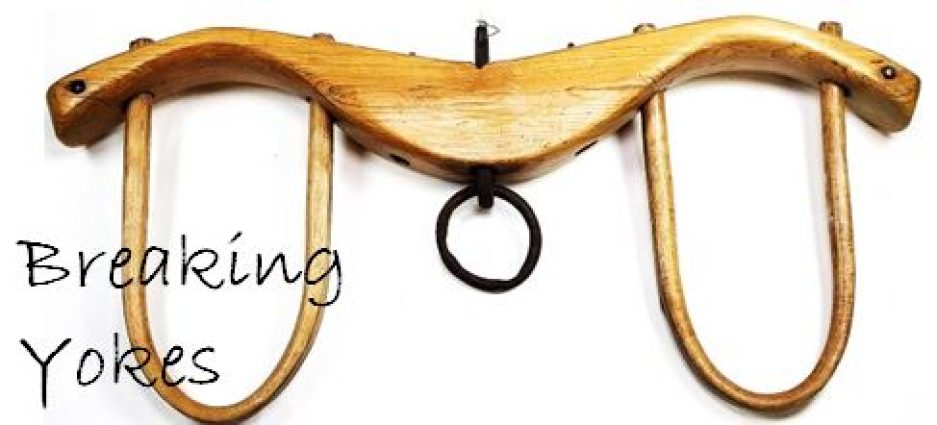
Ordination is the union of authority and responsibility for the Church of Jesus Christ. The weight of service is symbolized by the yoke worn around the neck, the stole, often resplendent with colors and symbols of Christian seasons, celebrations, or sacred events. 

The right to wear the yoke is reserved to the few who are called and affirmed, the Ordained, stewards of the Church of Jesus Christ, successors of the Apostle Peter, each and every one of us, prepared to lay down our lives in sacred defense of the faith. 

The Ordained, present company included, are less than perfect. I cannot pretend to be. Thus, the Church on earth is routinely human. This is no excuse for failing to strive for perfection, the completion of Christ’s kingdom on earth as it is perfect in heaven. 

We do our best. I do my best. When I fail, I confess my sins, repent, ask God for forgiveness, make repairs, and start all over again. God has always responded with amazing, abundant grace and love, redemption and salvation. This is The Way of the cross of Jesus Christ. God has never let me down. 

I attacked the pool this morning fitted out in a Pentecost red, skin tight, streamlined swim suite. It hid some of the physical defects and signs of aging, but not all. It streamlined my stroke and make forward propulsion more efficient. Lord knows how good it felt not to be dragged down by a baggy suit and ballooning pockets. 

One. One God.

Two. God created Adam and Eve, in the near perfect image of God. 

Three. Father, Son, Holy Spirit. Creator. Redeemer. Sustainer. 

Four. Scripture, tradition, reason, experience; the quadrilateral of Wesleyan based faith. 

Five. Pente, as in Pentecost, or fifty. Fifty days following the resurrection of Jesus, he sent God’s replacement, the Holy Spirit, to guide and sustain us until Christ comes again.

Six. Six points of the Jewish star. 

Seven. The Lord created the heavens and earth in six days, then rested the seventh. Seven is Sabbath. Keep it holy. 

Eight. Hum. The higher the number the more difficult it becomes to keep track of my laps with numbers associated with faith. 

I make it to fifteen, and I’m done. Spent. Breathing hard. Steady myself by reaching and touching the wall. The hot shower felt, oh, so good. So good. 

It was a cold, damp, misty Monday morning, one which the Spring’s rain slicken roads and swelled creeks. Trees held the moisture, dripping the excess, under a dark, grey dawn. A young woman prepared for the office, dressed modestly, rolling on her tight stockings that revealed the muscles of youthful legs.

Driving to work on back country Wayne County roads, something cause her to swerve her late model SUV, skidding head on into a bridge abutment, flipping upside down, falling into the swift muddy creek below. Submerged, only the tires remained above the tide. Time ticked by.

The pager startled me to consciousness. “MVA. Car into a creek.” The coveralls slipped on, followed by shoes and car keys. My wife told me to be careful. Out the door I went, headed to the fire station, where our two ambulances silently stood ready, connect to an electrical land line to ensure all batteries were fully charged.

The call was way out at the furthest part of our district, a good 15 minute drive, when the roads were dry and free from traffic. One of our chiefs reported on scene and immediately called for a wrecker with a heavy duty winch. This couldn’t be good.

Safe extraction takes time. Years of training culminated with two brave firefighters dawning wet suits, harness, and ropes. No one knew if the submerged vehicle was occupied. Only the four tires stood sentinel like gravestones above the swirling water. Slowly, deliberately, the two descended the steep bank, a whole line of firefighters holding their tether in belay.

I watched the orchestra from the safety of the bridge. The tow truck backed to the edge, extended it’s crane, and slowly lowered the weighted steel cable over the side. The rescuers in the water knew exactly how to rig the automobile to hard points. When cleared, the winch slowly began to grind lifting the car from the watery grave. When above the rail, the operator, Buddy, a friend of the department, pivoted the boom and swinging, inverted SUV over to the road, water pouring from every compartment. Cable released, and a crowd of beefy firefighters flipped the car onto its wheels.

Equipment was piled on the waiting stretcher and backboard. I rolled it over to the driver’s door and pulled on the handle. It sprung open. Water cascaded out. In the driver’s seat was the woman, head down, looking as if she was taking a nap. I unbuckled the seat belt and we carefully pulled her out, laying her on the backboard.

She was as cold as ice, dark and grey, her long hair splayed around her head. There was no pulse, no respirations, no signs of life. The only anomaly I could see was a mid-thigh tear in her left stocking. A beautiful, young woman, on her way to work, now a corpse before me.

She had been submerged well over an hour, by the time she was found missing from work and people began to search for her. No, we would not start CPR or make any other life saving efforts. We were later informed that the autopsy revealed a mortal closed head injury that was the cause of death. She was dead from the initial impact, before she hit the water.

All that was left was to spread a linen blanket lovingly over her corpse and wait for the medical examiner to arrive.

After thirty years, sometimes I wonder why I write about these tragedies. Their memories remain vivid and real, down to the tear in a woman’s stocking. Hundreds of other scenes from my experience will remain unwritten. Only a few, the chosen, have I decided to put words to paper. Anonymity is always a critical element, never wanting to add to another’s grief.

Yet, I write. In doing so redemption fills my soul and brings me healing. Bad things happen, in spite of my will and every effort. Birth. Life. Death. Eternal life. It’s not about me. This is God’s kingdom, not mine. Rather, I’ve come to know the privilege of being present, being the tangible evidence of a loving God, even in the presence of unfathomable tragedy.  

It was a mid-summer, hot afternoon, one where the cicadas buzzed in the trees and a cool glass of ice tea on the front porch provided sweet relief. “MVA, route 31, east of town,” my pager tripped then squawked the details of the call.

It was a routine cycle of response, honed by training, tempered by experience. The flashing blue light on my dashboard urged me to go faster, maturity reigned me back. Eagerness and adrenaline is no substitute for physics or adherence to traffic law. The fire house was enroute to the scene, so I parked, ran in and jumped into the passenger seat of the rig.

Vern was my driver. Old. Reliable. Confirmed bachelor, Vern; who had a habit of baptizing the radio and lights and siren console with a cup of black coffee. “Hit it, Vern,” and off we went, entering the cue of responding police cars and fire chiefs also responding to the call.

One day in the near future I would conduct Vern’s funeral. He was found dead in his recliner, pager still working. We closed his casket with Vern dressed in his fireman’s dress uniform, working pager at his side. Hefty firefighters hoisted his casket to the hose bed of the pumper for his final ride to the cemetery. There wasn’t a dry eye in the company.

We pulled up to the scene. Two cars smashed in a head on collision, still smoldering, in the middle of the road, both vehicles crushed by the violent impact, passenger compartments folded tight by torn metal, covered in cubes of safety glass. If ever there was a text book evolution for the Jaws of Life, this was it.

A woman’s arm hung loosely from the driver’s compartment, attached to a crushed body, trapped in unnatural positions. There were no airbags in this era, only seat belts. A lot of good her seatbelt did for her. Her face was towards me, narrow slits in her eyes, just enough for me to believe that she was still alive and straining to peek out.

She had a pulse, weak, as it was. As the firefighters began their extraction with their noisy engine and jaws, I held her hand and placed my other upon her head. “It’s going to be alright,” I lied to her. “We just have to get you out of here.”

We were taught in training to never lie to a patient, to provide promises that couldn’t be kept. But in that moment, I lied. Not to mislead, rather, to bring comfort to a woman in the last moments of life.

Her pulse faded, then stopped. The guys on the jaws were frustrated; there just were not any hard points left on the car from which to spread, wedge, or pry. I would not let go of her hand, no matter how much it ached to maintain the position, no matter how cramp my legs became. Oh, my back ached. Yet, I held on.

It was well over an hour after her last heart beat that the wreck finally gave up it’s driver. Even the coroner arrived on scene and pronounced her dead before we were able to glide the corpse onto the backboard and stretcher. We were not allowed to transport the dead, so we waited for the local undertaker to be paged and dispatched. All we could do was cover the body and wait.

I did not know her name or family, yet I knew the grief that would fall upon them. It was important, at least to me, knowing that she did not die alone; knowing that she had died with someone who loved her, holding her hand. This was the best I could do.

I remember sitting on the back of the rescue truck pouring a cold bottle of water over my head and crying.

Welcome to my life: ordained pastor, volunteer medic, psychiatric assessment officer. This was the crucible of ministry.

46. A Higher Level of Care

The Pitt is a masterful rendition of a fast moving Emergency Department. Like its predecessor, ER, the pace, emotions, and procedures reflect my own experiences in ERs around the region. With my wife, with over 40 years of Labor and Delivery experience, and my experience running EMS and Psychiatric Assessments, we love to watch each episode, call out bull shit when we see it, fill in blank spots in our knowledge. To a large extent, Hollywood gets it right. 

Shout out to ED staffs of doctors, nurses, respiratory therapists, and techs. I loved them all. Some became more than professional acquaintances; friends even. There would be middle of the night calls, when everything was settling down and paperwork was complete, when one would pull up a chair and we’d begin to talk about theology, family, politics, cases. 

It was always a huge relief to transfer care to ER staff, professionals with a higher level of care than my meager Intermediate Life Support Emergency Medical Technician certification allowed. Responsibility for life and limb weighs heavy on every medic. Training only goes so far; it kept me focused in the center of the hurricane, yet, each and every one of us responding to the cry for help from a neighbor remained deeply human. I felt, and cared, deeply for the human hurt and pain I heard and experienced.

The man sitting on the gurney opposite from me in the small psychiatric ER room was dressed in uniform. He had just completed his work day, jumped into his pickup truck and drove straight to the ER. He knew he was in trouble, just as serious as if he had crushing chest pains and difficulty breathing. 

Except, he didn’t. 

This soft spoken member of the law enforcement community had been hearing voices recently telling him to kill his wife. He knew they were not real, for he could not locate any source of the voices outside of himself. His experience, he reported to me, was more real than mere fleeting thoughts that could be brushed away by refocusing on a different tasks. He reported to me that he heard these voices plain as day. They began when he woke, continued through the day and into the night. 

He loved his wife, and children. From his world view there was no reason to want to bring harm or violence to his wife or family. Unnerving. Frightening. Terrifying, even. With no history of mental illness, this gentleman came to me desperate for help.

“The voices tell me to shoot her,” he reported. “They are breaking me down, and I’m afraid the only way to make them stop is to do it, even though I don’t want to.” My heart broke for this man, all the while, my brain is franticly searching for cause, treatment, and a path leading to a healthy outcome. He checked the homicidal box, had the means, and desire to carry through on his plan. 

Doing nothing wasn’t an option. He was also armed. 

People who experience homicidal ideation can be very dangerous, not only towards their target, but also to anyone else on the sidelines. Experience and crisis intervention training taught me to establish a non-anxious presence, de-escalate and maintain calm, and compassionately remove the threat. My affect was laid back and empathetic, words were soft and eyes expressed kindness. My brain was praying for God’s mercy to work in and through me. 

My legal pad was full of notes taken, a life spilled into my lap, emotionally flailing in an attempt to find a way out. Even during our interview I could see him wince, blink hard, when he heard his command hallucinations. Maybe he was attempting to block that which was assaulting him. 

“Give me one moment,” I said as I stood and stepped towards the door. “I’ll be right back.” And I left him, sitting in silence, on a hospital gurney, in a small ER room, armed with a gun. 

I went straight to the attending ER doctor, pulled him aside and gave him the brief run down. “And he’s armed,” I told him, driving home the life held by a thread, serious nature of the patient. Fear wasn’t on my radar. Training and experience kept me laser focused. Yes, there was mortal danger, but thinking about that could be postponed to later. Then I could collapse in the staff lounge with a case of the he-be geebies. 

No. He-be geebies cannot be found in the clinical manual of psychiatric disorders. That doesn’t mean they aren’t real. “I’m on it,” doctor Mark told me. “Go back in and keep him calm.” 

So I re-entered the exam room, pen and legal pad in hand. Memory fails regarding what we spoke about, but it must have been effective because he remained calm and quiet. Time passed, as if I could hear every tick of a sweep second hand on the clock. Our conversation was almost casual. There was a knock at the door. 

Turning to stand and open the door, it exploded open and in rushed the A-team. Cops, hospital security, lots of big burley men. I slipped out, unseen. It was over before the patient knew what was happening. He was restrained and disarmed, not of just one handgun, but two. Later, his pickup truck in the parking lot also sported a cache of firearms and ammunition, now secure. Whew!

A tragedy was averted that evening. A story was written that never made the evening news. A tortured mind was made safe, and I can only hope and pray, he was able to find the cause of his hallucinations, to be effectively treated, and to return to a life filled with love and family. 

Why? I wondered. There are many possible causes for such a condition. Medical, chemical, disease, abuse, hereditary, you name it. UTI? Brain tumor? Late onset Schizophrenia? Sometimes it is nearly impossible to nail down a cause, let alone treatment. There but by the grace of God goes any of us. It was by that same grace that I was effective and safe that hot summer evening so long ago in the ER. 

Thank you, Lord. 

Every lap in the pool this morning was shared with a fellow traveler on this journey called life. He was kind is offering to share a lane, faster than me – aren’t they all? – completing three laps to my every two. 

Each time we passed I squeezed tight to the lane markers, compensating for the violence of water, splash, and wave. It was as if his displacement pushed against me. It wasn’t intentional, just physics. 

Water has to go somewhere. I reflect on the wet spring we are experiencing, breaking records I hear from the evening weather report. Streams, running chocolate brown, fill their banks full to overflowing. Low dams that used to support mills long since gone have been swept clean of debris, water swift, flowing so fast over the crest it registers as hardly a bump. Low lands, fields, and lawns flood, basements fill, and rain continues to fall. 

Pool water refreshes. River water cleanses. Filtered water nourishes. Baptismal water stakes a claim. 

All the classroom training cannot prepare an EMS medic for the full reality of traumatic injury and death. Experience is the only calming effect I know of. Debriefing helps reduce the debilitating effects of post-traumatic stress. But that comes after the fact. This is where having experienced leadership is essential to the effective deployment of an emergency medical services agency. 

We were blessed with Vince and Jean. Retired, but not inactive, a husband and wife duo who had been in on the ground level of emergency medical services in the 1940’s and 50’s, when local undertakers gladly passed responsibility to someone else, anyone else, usually to volunteer fire departments! The ubiquitous black hearse with a gumball light would be replaced with municipally funded, hand crafted ambulances, complete with trained medics and drivers, lights and sirens. Trauma medicine had advanced by leaps and bounds during WWII, Korea, and Vietnam. It was making the leap into every neighborhood and community in the country. 

Vince and Jean, lifelong members of the Reformed church, had seen it and done it all. Some new bucks rebelled against their authority, but quickly were told to toe the line or get out. That’s what the other ambulance service in town was for; our rejects, and it showed, or so we believed. 

Her name escapes me. She was alive when I got to her. Her elderly body trapped by steel and plastic, covered with cubes of broken safety glass, violence now ended, leaving her with exposed bone, blood, and brains. But, she was breathing and had a heartbeat. “Launch Mercy Flight,” I requested in my radio. Standing back, ever the leader and safety officer, Vince agreed and relayed my request to dispatch. 

Our rescue crew fired up the Jaws of Life, its small engine powering a hydraulic set of pincers, coughed and came to life. All I could get at was covering her nose, or what was left of it, with a non-rebreather mask and 16 liters of pure oxygen. A fireman threw a blanked over the two of us, shielding us from shards of glass and flying plastic parts. Her vehicle had been obliterated, engine separated from frame, axels departed, steel twisted, steam hissing, electrical connections severed, one wheel 150 feet down the road resting in a ditch. 

Pulling into the path of a car doing 55 will do that to a vehicle. I know, from personal experience, both as a medic, and, later in life, as a patient. 

Firefighters set up a landing zone a few hundred yards away on a driveway well clear of overhead obstructions. Mercy Flight landed with sound and fury, just as my patient was freed from entrapment. C-collar. Back board. The non-rebreather reservoir inflating and deflating with every breath, until it didn’t. 

Shit. Respiratory arrest, I called out. The Bag-Valve-Mask (BVM) came out and we took over breathing for our unconscious patient. Unbelievable, but she had a pulse. 

The impeccably coifed flight paramedic approached from behind and snarled at me, “what did you call us for? She’s in arrest. We can’t transport a patient in respiratory arrest.” 

“Well, she wasn’t when I called you,” I responded, anger rising. Now he was on the scene, as a paramedic, he was a higher level of care than me, so the ball was in his court. His call. What was he going to do?

First things first. A is for airway. We loaded her temporarily in our ambulance so he could sink an Endo-Tracheal tube. That meant starting an IV and the paramedic pushing drugs that sedated and paralyzed her. We worked like demons with the house on fire. Success meant a possibility, however slim, for life. Failure, and, well. We might just as well call the undertaker and go home. 

Oh. Yeah. There was blood, bone, and brain all over the place. But she still had a heartbeat. 

“We fly,” he decided, as he looked at me and said, “and you’re bagging her all the way to the hospital.” 

My heart jumped. The prospect of flying in a helicopter, a new experience. “Sure,” I smiled, wiping away the sweat dripping into my eyes.

Bagging was made easier because the BVM was connected to the ET tube. We extracted from the ground ambulance, and with the assistance of big, burley firefighters, rolled the gurney to the idling helicopter, helmeted pilot still in his seat. We ducked beneath the blades, and steered clear of the tail rotor, just as instructed in training, ball caps removed and secured under the belt. The backboard slid between the clamshell doors. I entered the starboard side door, of a very small, cramped compartment. As the patient slid into place, I resumed respirations, knees sandwiching her ears, hunched over, head above her belly. The paramedic behind me monitored the EKG, drugs, and IV lines.

I couldn’t move, shift my weight, or adjust my position. Other than my hands squeezing the breath of life into our critical patient, I became one big cramp. If only I could have looked up or out a window.

The flight to Strong Memorial Hospital was all business. We landed with a thump. Only when the patient was slid from beneath me was I able to move, barely. Fortunately, plenty of hospital personnel took over and I was freed to work my aching muscles.

The broken woman delivered to trauma care remains nameless to this day. I don’t know if she lived or died. If she lived, God help her, for her broken body and bones, and lacerated brains, would need something more than the balm of Gilead.

The turn around was fast; much faster than I was used to on a ground ambulance. The roof top helicopter pad needed to be opened as soon as possible. “Let’s go,” the aeromedical paramedic said to me. Up and out we went.

He helped me strap in and dawn a flight helmet, complete with intercom. “Welcome to my bird,” the pilot said to me. “Time to go home.”

“Can you take me back to Palmyra?”

“No can do, buddy. Rules say I have to take the chopper back to base in Canandaigua. Don’t worry, we’ll get you home.”

“Okay, then,” I said, thinking to myself that my little joy ride just made a three hour ambulance call into a six.

“No worry,” the pilot replied. “Rules don’t say I can’t give you a guided tour back home.”

And so we went, flew up and straight south-east, out of the Rochester airspace. Over Mendon, not quite half way, the pilot began to dive and swoop, banking left and right, giving me a joy ride unlike the best rollercoaster anywhere. It was glorious! I laughed until I cried. The views were fantastic.

The pilot straightened up approaching the Canandaigua airport, set the skids down on a wagon slightly bigger than a Radio Flyer, shut down, and a John Deere lawn tractor towed us into the hanger. I wondered how that was done. Now, I knew!

The owner of Mercy Flight, Paul H., met me as I got out of the aircraft. He shook my hand and thanked me for the help. Hey, I was free labor; why wouldn’t he have a smile on his face? Paul was nice and offered me a ride home to Palmyra. “Sure,” I smiled. “Thank you.” We talked EMS and Mercy Flight all the way back.

I was dropped off at the fire station and everyone crowed around, welcoming me home. “How was it?” “Enjoy the ride?” “Did she make it?”

All the while Vince and Jean stood back, arms folded across the chest, waiting, quietly smiling. When the crowd thinned, then dispersed, Vince came over and said to me, “Good job, Todd. You did real good.”

That was all I needed to hear.

Thank you Lord, for great training and the support of a professional team, all volunteers. Thank you, for higher levels of care. Thank you, for Vince and Jean.

45. Jim, Betsey, and the Gift of Silence

A good lay leader is such an asset to a congregation and a blessing to the pastor. They can provide a trusted sounding board for the possible, a breath of the Spirit’s guidance, and a faithful confidant. They function as a bridge between the pastor and the parish, serving on all church committees, and are in a position to be an effective communicator with members and friends of the congregation.

“Should I go visit so-and-so?” I’d ask Jim.

“Yeah, that would be a good idea. He is the second cousin of so-and-so, you know.”

Good to know. Vernon Lee, a mentor, saint, and denominational leader had counseled me early on to make it a point to learn the people’s history better than any one person knows it themselves. Jim was always willing and able to help me connect the dots, fill in the blanks.

Jim was an exceptional lay leader when I served the United Methodist Church in Palmyra. He was a confirmed bachelor, who lived with his aging, widowed mother. He did all the shopping, taking her to her doctor appointments, watching over her like a hawk. His car was recognizable where ever he went, a tan Bonneville, I seem to recall. He was also the village mayor, a person whom the general public endowed their stewardship and trust. 

Jim walked everywhere throughout the village. It gave him a feel for the grass roots of the community. He’d wave and greet everyone he met or passed by. Be they a kid on a bike or an elder on the front porch, Jim had the gift of being a good neighbor. He’d stop to talk with anyone on a wide range of topics – can you fix that pot hole at the corner? Or, What’s up with the fire department budget? Or, thank the police chief for bring back my lost cat. Jim was a man about town.

Though he easily exceeded ten thousand steps a day, we’d often walk the village together after dark. We’d be done with church meetings, or, he’d have the village board meeting behind him. We both needed to unwind, to talk out the stress, and wear off some shoe leather. We’d inspect the village water works, streetlights casting long shadows around the parameter. Jim and I would visit the combined village and town gas pumps and check for open doors at the village DPW. We walked the village cemetery, taking notice of fresh graves, straw, and grass seed. 

Sometimes we’d walk along the railroad right of way, pausing when a distant train whistled it’s approach. We’d step behind cover and experience the passing thunder from a safe distance, watch the color lit signals reset and go dark. Our conversations ranged from the informative to the sublime, from humorous to the tragic, from superficial to profound theological questions that plumbed the depths of the human condition. 

Mostly, I appreciated how Jim held a reverential respect for silence, the ebb and flow of sacred space between us, where thoughts freely came and went, or where nothingness became a welcomed familiar. A respected seminary professor once taught us that when you don’t know what to say, “keep your mouth shut.”

Presence speaks louder than words. Showing up; that’s what the Lord expects, laity and Ordained alike. Be the embodied presence of our loving and merciful God.

Silence.
Presence.

Just show up. 

___

We know who we are. Lap swimmers are creatures of habit, predictable, trustworthy, locker room mates of few words. Goggles and towel separate us from our pickleball and weight room cousins. Words would be wasted when an eye and nod of the head will do. I see you. I respect you. 

We look for each other. When absences occur, it is impossible to help but wonder. Are they okay? Did something happen that disrupted their schedule? Are they on the way to some distant vacation? If so, good on them. 

Windows on the south side of the pool give brief glimpses of the larger world when the crawl stroke takes me down the lane. Returning eastbound, I see a familiar, disinterested lifeguard, watching the clock for fifteen minutes to drip down the drain, anticipating relief from another guard rocking flip-flops and the red cross.

Hourly workers tend to watch the clock. 

Yesterday’s blowing snow is replaced this morning by a beautiful sunrise, west Texas orange and red, the cosmic sphere rising in the dawning sky. Spring is in the air, and, boy, does it ever smell good!

Today I ask to share a lane with an unfamiliar face. “Sure,” he smiled. “No problem. Do you prefer a side?”

This give and take is an important social lubricant, under the guise of reducing the risk of collision.

“Naw,” I replied. “I’m slow on both sides of the lane.” We share a smile in the moment. He heads out in front of me. I wait to give him a head start. 

Silence is a beautiful thing.

We are silent partners, sharing a common space and time. Unlike my walks with Jim, we remain obscure and unknown to each other. Is he a person of faith? I wonder. Children? Grandchildren? What did he do for a living? He left before me and vacated the locker room before I finished my shower. Yet, his face and kindness remained, as a whisper of potential for meeting again, perhaps, some day. 

Silence is good. For waiting. For wondering. For dreaming. For praying. Thank you, Lord, for the gift of silence, and for the ability to share your silence with a friend. 

___

Silence isn’t naturally comfortable, at least in my case.

The scenery around the retreat center was Rio Grande brown and flat, wind swept, with few natural trees, bookended with stunning sunrises and sunsets. Our group was a cohort of younger pastors from around the country, each paired with a denominational leader or seminary professor, a mentor who would help shape our life, call, and career.

Chapel was a shared experience, with devotions multiple times a day. Early in this post-graduate program, a worship leader invited each in attendance to enter into five minutes of sitting in silence. One would think a bunch of pastors wouldn’t have any problem sitting in silence.

You’d be wrong.

I sat and stared at my wristwatch. The sweep second hand took forever to work its way around. My weight shifted, from one cheek to the other. There was an itch on my nose. Someone coughed. The pew on which I sat cracked. Thoughts raced though my head. Tangents, snippets, randomness, questions that couldn’t be answered. There is a sound of undisciplined silence, and I discovered it is as deafening as tinnitus.

“Five minutes is up. Let’s talk about what just happened.”

The debrief revealed a shared experience, and it wasn’t good. Distrust. Uncertainty. A space filled with anxiety, anger, and justification. The troubles of the world filled our spiritual containers, yet the drain was clogged and all the flotsam and jetsam overflowed. Like innocent bystanders with mouth agape, watching the train wreck of the soul in slow motion, unable to control, slow, or stop the flow.  

Is it possible to just be? This was uncharted waters.

Put a crimp on thinking. Throttle thoughts and distractions. Breathe; deeply breathe. Listen. Dial in the hearing. Narrow the eyes, just enough to welcome the shadows yet ward off the temptation to sleep.

Become one with the silence.

For me, silence has become God’s gift ready for me to claim.

___

Betsey was a colleague, twenty-five or so years my senior, a contemporary of my father (and his generation). She and Dad were buddies, hanging together at clergy gatherings and conferences. Years later she reported, after the daily session they’d sometimes go out and have a beer. Or two. Or three. This was in spite of his promise to my mother that he’d never drink again.

A resentment arose from me after hearing of Dad’s alcoholic transgressions, but, over time, and with greater understanding of his traumatic younger life, I’ve forgiven his flaws and let go of these harmful thoughts.  

My first encounters with Betsey were not positive. When I visited annual conference, usually supporting camping and retreat ministries, I observed that Betsey was one often at the microphone, asserting her case, advocating for justice, calling out hypocrisy. She was a bra burning, tie dyed, anti-war feminist, Selma marcher of the first kind. She was obviously no friend of the bishop. Yet, neither were they foes. Other female clergy members of conference loved her and often rallied at her side.

Women clergy seemed to have a thing among themselves. It was mysterious; a secret bond, or so it seemed, unknowable to men. It made other male clergy and me jealous.

As a co-chair of the Board of Ordained Ministry, I had to deal with Betsey when I came through the ordination process. When all was said and done but the bishop’s laying on of hands, I got a note in the mail with her return address. It looked like it was written in pencil on a piece of brown paper torn from a grocery bag. The note informed me that, in lieu of the traditional ordination gift from the conference, the Board of Ordained Ministry decided to make a gift to Africa University, in our name. 

Without our permission. Without our input. Gee, thanks for asking. The message I heard was, take it, new guy, and like it. Welcome to the union. And, oh. I wasn’t worthy of a decent piece of paper, or the effort of a typewriter?

Though her loud-and-proud presence repelled me, and the resentments I harbored from the gift I didn’t receive continued to gnaw away at my serenity, there was something more about Betsey that caused me to pause, to wait, to watch and listen for the Spirit to move. God was using Betsey to catch my attention, lassoing her into my sphere of friends with the invitation for us to become friends. 

We two could not be more unlikely friends.

In time, we got to know each other. Social circles began to overlap. I witnessed Betsey weave her means of grace serving as defense counsel to clergy charged in church trials, one in our conference and another in a neighboring conference. Though guilty of dishonoring the office of the Ordained, every defendant deserved competent counsel. And Betsey gave it her best effort. 

Betsey was not afraid to call any bishop on the phone, day or night, and demand an accounting. She’d stop in the conference office un-announced and request the treasurer go over with her the budget and pension numbers for the ensuing year. She served a minimum of one week per summer at one of our camp sites, ensuring kids had a chance to have a personal relationship with a female clergy person. Being a role model was important, and her actions spoke louder than words. 

The church calls forth strong, independent clergy women, and it’s past time for us men to pay attention. I loved it. 

Betsey was a butterfly at annual conference. One clergy, one laity, parity in decision making, gather for three days of annual conference, usually at a regional college or conference center. We worship and learn together, celebrate retirements, honor the dead, conduct ordinations and consecrations, pass resolutions, and debate a proposed budget. Passing a budget means sharing the burden equitably among local churches.

I was Ordained in the former Central NY Conference, centered in the Finger Lakes region. Consolidations over the years led to the North Central NY Conference, and, to the Upper New York Conference (when Western, Troy, and Wyoming conferences were added). Think of it this way: Big meeting, chaired by the bishop, produced by conference staff. It is time to socialize, caucus, and toe the line defined by Robert’s Rules of Order. Attendees grab free pens and tchotchkes from vendor tables, drink bad coffee, and gather for terrible meals.

In later years, I learned to lodge with local clergy colleagues, instead of grabbing a hotel room. This allowed us to show up to conference late in the morning, and leave early in the afternoon. Attend only to be seen. Keep under the radar.

We learned nothing we could say or do would impact the agenda or momentum of legislation, so why bother? For the colleagues and I who ran in the same social circles, annual conference was a three day affair to gather around an evening camp fire, talk about the challenges we overcame the prior year slugging it out in the parish, to catch up on family and friends, and to reminisce with embellishment past escapades of pastoral ministry. Often, cigars and alcohol were involved. Nuff said. 

Over the years Betsey circled into these gatherings for annual conference. We’d meet and stay at the local home of one of our colleagues, or at our family cottage on Bradley Brook. We’d sing. We cried. We shared responsibility for preparing meals. We had some of the finest steaks off the grill. We ate, drank, and smoked until we fell into our respective beds to sleep the night away, waking the next morning to do it all over again. 

We’d sit in silence around a campfire.

When Betsey’s husband died, we all showed up. Nothing need said. We gathered from across the state, just because that’s what we do. She bought the bar that day. By this time, I was living sober (thankfully so).

In her retirement, Betsey was surrounded by a close knit family she loved to take on worldly travels. From Iceland to Antarctica. It was ironic that I received news of her sudden, unexpected death while I was with my family in Alaska, exploring faraway lands, glaciers, and seas. Though unable to attend her funeral on the opposite side of the continent, the silent space between us was powerful, and brought me to tears. It still does.

Silence makes room for the Spirit to fill.

Over the years our numbers diminished. What is left of our dwindling group of clergy colleagues gathered last year for the annual conference memorial service. Betsey was one of many of our colleagues being remembered that day.

Betsey was something more to us. We honored her memory. We are grateful that we shared the journey together. Her name was read, and the bell was rung. We bowed in reverence to the loving God of our experience. In the silence, the pause, the in-between, we whispered “thank you.”

43. Can Humpty Dumpty Be Put Back Together Again?

The answer is “yes,” but it takes a lot of work.

This is a sensitive topic, but, if I am to be rigorously honest, mental health is one that needs to be posted. Mental Health, like it or not, is a taboo, carries with it a stigma, and visions of psych wards staffed by Nurse Cratchet right out of the 1950’s. The self-righteous are known to use it as a weapon, a useful tool for manipulation or blackmail, or justifying superiority. 

Fact is, 46 percent of Americans will have a mental illness sometime in their life. One in five will have a diagnosable mental health condition in any given year. (mental health America dot org)

Talking about one’s personal mental health exposes vulnerabilities, but, in my case, is an opportunity for healing, triumph, and perseverance. Successfully navigating through this mine laden field, one is better educated, is able to employ a tool box of self-care, and has empathetic insight that brings strength to relationships. 

I’m a better pastor because I have walked the valley of the shadow of death.

The day of this writing is Good Friday, the day of crucifixion, blood, scorn, and death writ large on the I-Max screen of life. Redemption is a gift from God, laid at the feet of the cross, ours to claim and benefit. God made the call, Jesus made the sacrifice, humankind benefited. God’s grace is amazing.

My Diagnostic Statistical Manual of Psychiatric Conditions, the DSM-3, in my library is well worn from use from years of providing crisis intervention and psychiatric assessments services at Eastway Community Mental Health (Dayton, OH) and Clifton Springs Hospital and Clinic (Clifton Spring, NY). I’ve interviewed and seen it all: homicidal or suicidal people, depression, bi-polar disorders, schizophrenia, borderline personality, and everything in between. 

On this day, the DSM-3 would be used for me.

I was at the top of my game, or so I thought; a successful parish pastor for ten years, chairing the District Committee on Ordained Ministry and serving on the Conference Board. I was running North of 300 calls a year as a volunteer firefighter/medic, working every third night conducting psychiatric assessments, living on caffeine and peering dangerously at the cliff edge, observing others falling over, smugly thinking to myself that it could never happen to me. Our beloved family dog, Job – named after the Old Testament portrait of suffering, had aged out and we had to have him euthanized. Oh, how I cried. 

Then, our son, Christian was born, given birth through trauma and now diagnosed with pervasive developmental disabilities. Our home had become a revolving door of early intervention professionals. Before Christian had learned to walk, we put Christian on the peanut bus to take him to the regional school for handicapped (I hate that word) children. 

It felt to me like I was on a carousel, the world was spinning past, yet, I was revolving in the opposite direction.

The signs were obvious to others, but my lack of introspective insight left me blind to the dark clouds that were moving in like a Canadian cold front. Weight had always been a challenge to me; I had put on a hundred pounds. Check that box. Mood was depressed, chronically running on empty. Check that box. Situational stressors were off the chart. Check that box, too. 

For the large part, the church leadership team was wonderful, compassionate and accommodating of my community based ministry. All but one. An ultimatum was thrown down, “If you force me to pay our Conference apportionments,” he said, “I’ll quit.” He was a reputable local businessman who was used to getting his own way. 

Ultimatums, I had learned in graduate school, were nuclear bombs in human relationships. The professor had taught us seminarians that ultimatums should always be called out. “I call your bluff, and raise you another twenty.” Never give in to ultimatums. 

I didn’t, and neither did the church Board. If looks could kill.

The next Sunday, prior to worship, during the parish announcements, the treasure stood, swore at the assembled (yes, he used Ralphie’s choice word that got his mouth washed out with soap), threw the church checkbook into the air and loudly informed us that he quit. One well-meaning man from the congregation walked him out. In the church foyer they loudly argued. We all could hear the entire commotion. We feared that the confrontation would break into fisticuffs. The outside door slammed shut, and he was never seen in the church building again. 

I sat in my revered seat in front of the traumatized congregation and cried. Humpty Dumpty broke. 

For the next year and eight months I worked to put Humpty Dumpty back together again. I went on disability leave. We purchased a house in town and a new pastor was appointed to the church. 

The dark clouds of depression overwhelmed me. Blessed are those professional clinicians who gathered as a team to help me stand, learn to walk, and, in time, led me back to health. The inpatient and outpatient help I received was exceptional. Medication and Dialectical Behavior Therapy (DBT) broke the situational stress that pushed me over the precipice. Once the storm clouds parted, intensive interventions prevented chronic depression from metastasizing. I was given space and time to safely wean off the sedating psychoactive medication. It took more than a year and a half to get back on my feet and feel confident about returning to parish ministry. 

I’ve been depression free for over 25 years.

DBT filled my toolbox with all things necessary to maintain stable mental health. I learned the importance of setting boundaries and sticking to them, of self-assessment (what to watch for and how to ask for additional help if needed), how my relationship with family and loved ones needed repair (and how best to work on it), and how to restore professional self-confidence. 

I was called by God to be a parish pastor, and nothing in heaven or hell was going to change this fact. A few insights:

First, I lost some friends and colleagues. Too bad, so sad. Don’t let the door hit you on the ass as you leave. I don’t know if they couldn’t handle the stigma, or if my circumstances led them to wonder about their own vulnerabilities. Perhaps they thought life was just easier to not know, to remain ignorant, to deny the possibility. It is just easier to go along and get along, than to have someone have a mental health crisis that you have to deal with. I don’t know, neither did I feel the need to investigate further. Exit interviews are not necessary, nor my cup of tea. Those individuals who meant the most stuck to me, visited me, prayed with me, gave encouragement, and endorsed my progress. These cheerleaders were true angels, gifts of grace from God. 

Thank you. You know who you are. 

Secondly, my fall and healing were hard on my wife and family. They sacrificed much to accommodate my resurrection. God’s love brought us together, and it was God’s love that saw us through. Every day brings new revelations, opportunities, insights. Maintaining good mental health is all about being made new. It isn’t taken for granted; it is to be practiced with gratitude. 

Thirdly, I’m grateful to the United Methodist Church for providing leave and disability support for clergy like me. Yes, it is a Conference expense item. In this era of cuts and declining support, this benefit should be aggressively maintained and strengthened. The Church is a means of God’s redemption and healing. The shepherd leaders are in need of this grace, as well as the laity. We don’t shoot our wounded; we pick them up, dress their wounds, and take them to the inn to recuperate. This is who we are, who we are called to be. 

Lastly, work with my psychiatrist helped me identify priorities. This changed and energized my parish ministry. I culled all work on denominational boards and committees, tempered my participation in conference politics, and brought focus to the communities I served. I ditched the fire department, quit my part time job at Clifton Springs, and slept peacefully through the night. I got my weight under control, for the time being, and my physical health improved.

I plunged beneath the lane lines and waded to the open lane. Cold; bone chilling cold. Like being plunged into baptismal waters. But, once wet, acclimation comes quickly, exposing a resilient character trait that keeps me coming back.

“Stay with me, remain here with me, watch and pray, watch and pray.” (1991 Les Presses de Taizé, GIA Publications, Inc.) This beautiful Taizé worship chant rolls my synapse, reminds me of the prior evening’s Maundy Thursday service, focuses my meditation this Good Friday, as I pull myself back and forth, keeping to my swimming lane. Reach. Plunge. Pull. Breathe.

Stay with me. It is as if these were words of Jesus spoken to his drowsy disciples in the Garden of Gethsemane. Remain here with me almost sounds like a plea.

How many laps had passed by?

Watch. Be on the lookout for God to do something cosmically awesome right before our eyes. And pray. Open the channel of communication between God and the self.

Pull and breathe.

Time has passed. 15 laps had to be completed, “don’t you think?” my inner voice inquires my own conscience. Stay with me. Remain here with me. Watch and pray.

Stay. Remain. Watch. Pray.

___

Prioritization in life didn’t happen overnight. It took years of hard work, coaching, networking, discernment, and prayer. The payoff has been life changing. Some of these changes took over a decade to implement.

Discovered and honed values identified these main concerns:

1. Disability & Theology.

Christian received early intervention service through Wayne ARC at Roosevelt Children’s Center, so I found my way onto the Board of Directors. Twelve (or so) members of the board wielded a $65m budget, serving thousands of people, staff, and families. My voice at the table was welcomed and appreciated, much more so than in the denomination (where 800 gathered annually to debate a $4m budget). An added benefit was that I learned how non-profit organizations operated. Finance. Human Relations. Publicity. Quality Assurance and Improvement. Corporate compliance. It was a brave new world. 

2. Compassionate Eldercare.

In time, my mother had been diagnosed with Alzheimer’s disease and began a long good-bye of more than twenty years. I found my way onto the Rochester Presbyterian Home (RPH) Board of Directors. It was an expansive, multi-campus of homes for the elderly. The RPH was known to be a world leader in dementia care. Though separated from my mother in geography, we connected with a compassion for seniors and their care. I chaired the capital campaign to expand to an additional campus. The depth and breadth of my not-for-profit experience was growing.

3. Addictions, Mental Health, and Rehabilitation.

A family member had suffered from alcoholism for decades, destroying family, jobs, and relationships. He crashed his car and live to tell about it. He asked me for help, and I did my best to rescue him from the quicksand of addictions. One night he called me from jail and asked if I could bail him out. He had been arrested at a DWI roadblock. He lost his license, and I became his personal driver. He attended out-patient rehab through FLACRA (Finger Lake Addiction, Counseling, and Resource Agency), which helped to save his life. He is over twenty years sober, and I could not be more proud of him. 

Over the years, I had led countless parishioners to FLACRA and Alcoholic’s Anonymous.

I joined the FLACRA Board. Today, I’m completing my second stint as Board Chair and have been blessed with more than two decades of service. We are a $35m organization that provides wrap around in-patient, out-patient counseling, supportive living, and employment services, employing nearly 600 staff. FLACRA does amazing, lifesaving work. We are blessed with an exceptional CEO and executive staff. 

4. Campus Ministries.

Lastly, I joined the Board of Genesee Area Campus Ministries (GACM). It was a campus chaplain who looked me in the eye in my Freshman year of college and asked me where I was going in my life; a real wake up call. I’ve been paying it back with my service on GACM for the past twenty plus years, providing a chaplain and ministry to students at the University of Rochester and Rochester Institute of Technology. 

Wow! How did I ever become so blessed? A major depressive episode turned into personal growth and strength and community service. Priorities led me to compassionate efforts in the areas of developmental disabilities, aging, addiction, and campus ministries.

God’s healing favors descended on me, not because of what I said or did, but solely, wholly by God’s amazing grace. Humpty Dumpty had been put back together again. Thank you, Lord.

38. Gotta Shovel? Bag Pipes and the Motorcycle Clergymen

The experience of a snow day through the eyes of a child is awesome. It means a reprieve from school; sleeping in; Flexible Flyer sleds and Norwegian toboggans leaned against the garage; snow angels and evidence of less-than-successful snowman rolling efforts in the front yard; wet coats, hats, and mittens strewn about a home’s entryway; hot cocoa and rosy red cheeks. The State Education Department only allotted a specified number of flexible days that each district could use for snow. Any school district that went over, school days were tacked on at the end of school in June. Nobody wanted that!

The weather forecasters the prior week had been calling for a huge storm this weekend. Well, the cold and snow came to pass. Sixteen inches in my youth would have been a mere flesh wound. Today, it is a snowpocalypses. Everyone and everything shuts down, closes down, doesn’t go in to work. Just another day in Western and Central New York. When I shake my head with disdain, I can’t help but think to myself, “Yes, I have become my father.”

For years we lived within a mile of Lake Ontario. When the forecaster spoke about lake effect snow, we took notice. Fifteen miles away would get a flurry; we’d get two feet. One winter, our driveway had to be plowed out seventeen times. At twenty-five bucks a pop, back in the day, ouch! Snow was expensive. The town highway department would plow the snow back so far, then push the top even further back with an elevated wing, resulting in snowbanks with shelves of layered terraces. Impressive.

Palmyra was a good fifteen miles south of Lake Ontario, but we still received our share of winter punishment from both Lake Ontario and Lake Erie. John Blazey and his wife Alice, were members of the parish. John grew up working long hours to scrape together a living for his wife and family. He welded for the New York Central, the Town and Village. He repaired farm machinery, and sold lawn tractors and implements. In the winter, John would put a plow on his truck and set about plowing out the church and his neighbors. John used to have a wood stove in his store, where friends and neighbors would gather round to shoot the bull and catch up on the community news. For lunch, Alice would set a plate for family and employees of the store. All were welcome around their table.

As a member of the local fire department, we did our best to keep the community safe. There were about forty, or so, active members who kept up our training. I served as a driver (passed the NY State Emergency Vehicle and Pump Operator courses), as the department chaplain, and as a medic on the ambulance. I was getting too old to be going into burning buildings, so I took a pass on keeping up my certification and training for interior firefighting. I never liked heights, so I never qualified on the aerial truck other than as a driver and pump operator. I’ll carry a ladder, put up a ladder, even hold a ladder while someone climbs up or down. But don’t ask me to go up. Heights have never been my friend.

Our volunteer department were a bunch of loveable rugrats. We had all ages; young bucks right out of high school, old dogs with sixty or seventy years of service. We had four officers of each rank: chief, captain, and lieutenant. I was happy not taking a leadership position; the church was enough for me. Training and calls were a great relief, a way to stay in shape, a good social outlet, a wonderful way to keep my hand on the pulse of the community. We had professionals and factory workers, common laborers and union bosses, retired and those still working a regular job, night shift folks and out of towners. Some came for the quarter beers in the soda machine in the truck bay, others for the wild and crazy antics of the younger breed.

Being a volunteer, but highly trained medic on the fire department ambulance, we were always down at the firehouse. We averaged more than a call a day, so there was always something to do: wash a rig, restock inventory, training, delivering oxygen, updating paperwork, getting the oil changed, swapping out batteries, checking expiration dates. 24/7/365 we were on call, prepared for any emergency, be it a jetliner falling from the sky to a call for a back ache from a fall, three weeks earlier.

The county 911 dispatchers were wonderful to us. We got to know them by their voice and tone, their ability to sort sense out of chaos, and their willingness to go the extra mile for a neighbor in need. Every year they were invited to our annual banquet for a free steak dinner and award recognition. We’d get called out in the darkest of nights, in the foulest of weather, on a mutual aid call to a neighboring department that couldn’t raise a crew. Sometimes we’d drive for miles in uncharted territory, guided in by our dispatchers to the proper location.

In later years, our mongrel of a dog got loose one night after a High School Band Concert. I drove around the neighborhood, calling for that miserable dog, listening for any hint of a response. Then, there he was. Lying in the middle of the road, flat as a pancake. I fetched a shovel from the garage and carried his lifeless body back home. The family was sad at his death, but, truth be told, we had only had “Doc” for a year and he just had not fit in.

“911. State your emergency,” the operator spoke back on the phone, his voice sounding suspiciously like the County Fire Coordinator. Could he be taking a shift in the dispatch center? “I called the number for Animal Control. How did I get you?” I asked. “After hours, the call gets routed to the 911 center.” “How can I help you?”

All my fire department and ambulance experience placed a face on the familiar voice. “Rick, is that you?” “Yes, Todd,” he replied, undoubtedly he had all my contact information on the screen in front of him. I told him the tale of woe and how the appropriately licensed family dog had gotten loose and run over in the road. “What should I do,” I asked with the attitude of a good, law abiding citizen wanting to do the right thing and avoid any fines or penalties.

“Well,” Rick replied, both of us knowing full well the call was being recorded, “Do you have a shovel?” “Well, yes.” “How about you go bury him?”

The ophthalmologist is still prohibiting me from swimming. There the lap pool sits, silently waiting my return. Hard to believe, but I miss the routine; the locker room, familiar faces of people who share a common journey.

So, it is today 20 laps around the walking track. A mile and a half by my calculations, lost in thought, listening through earbuds to a podcast on politics. As the laps tick by, it is hard for me to think of all the acrimony that comes from the public square.

Families divided by one party or another, one policy or something else, threats and intimidations, quietly pushing mounds of mashed potatoes at family meals because the tension about the table is so thick it could be cut with a knife.

We are not meant to be this way.

When we know each other by name, it becomes much more difficult to demonize each other. When we are curious about each other’s lived experience, meaning and motive become more clear, love and grace become easier to extend, and receive.

My voice is so small, so little, so insignificant. Yet, my voice I raise and join the prophet Micah, “What does the Lord require? To do justice. Love kindness. Walk humbly with your God.”

Steve replaced Clint as the Presbyterian pastor across the street. Clint would be greatly missed from our breakfast group of community clergy. He and his young adult son (with autism) hand crafted fishing lures and sold them to bait shops in pre-internet days. They found a mutual passion and a means to provide gainful employment for a beloved son. Winners all around. 

Clint moved up to middle management in Presbyterian circles. Steve was his replacement. After a long search committee process, he and his family bought a house in town and moved in. We all came to love Steve and his quiet, reflective approach to circumstances. His congregation was perhaps the most affluent of all the churches. It certainly was larger. Steve was full of surprises.

One summer day, I was enjoying my front porch. A good book and a fine cigar always put me in a contemplative mood. A warm day with cicadas buzzing and a cold glass of diet Coke made it a perfect afternoon. 

The windows of the Presbyterian church across the street were open. I assumed they were open to ensure a flow of fresh air. Steve’s car was parked in the pastor’s designated parking spot in the lot. I knew he was in his office. Emanating from the sanctuary through the open windows came a loud, offensive wail, similar to a pig in heat, though I’ve never heard a pig in heat. The wail certainly impacted the Main Street intersection, and drivers who passed the offensive blast. It varied in frequency and pitch; always grating and painful. 

Over bacon and scrambled eggs the following week I asked our table of ecumenical representatives if anyone knew about the terrible noises coming from the Presbyterian church. No one had a clue. Steve arrived late, hung up his cowboy hat, and joined us at the table. “What’s up with the noise?” I asked. 

A smile and twinkle in his eye worked his timed response just perfectly. “I’ve started taking lessons on the bag pipes, and the sanctuary is the best place to practice,” he informed us. “Great,” I responded with a forced smile. “Hope that works out for you.” My church and parsonage were across the street, directly in the line of fire. All the while, I’m wondering how much I can endure of a student’s bag pipes. 

Besides fitting in well with his Scottish heritage, Steve informed the table of us clergy colleagues that, once he became proficient in “Amazing Grace”, he could sell his services for weddings and funerals at $250 a pop, as opposed to the fifty bucks we’d be lucky to earn from the undertaker, or the hundred bucks we might get from the parents of newlyweds. Bag pipes, vile as piss poured from a boot, paid better than preaching. 

And it was as simple as that.

I greatly admired Steve and his odd Presbyterian and Scottish customs. He was slightly older than me, and so were his children. In those days, Chrysler began to manufacturer a new type of vehicle, marketed for families with children. They called it a minivan. Those front wheeled drive beaters served a generation of American families, all the while inhibiting paternal testosterone. Nearly every family had one.

Looking out my office window, I noticed a motorcycle was parked in the pastor’s spot in the Presbyterian parking lot, replacing Steve’s familiar family hauler. I needed a break from my work, so I crossed the street and stopped into his office. “Who parked their motorcycle in your spot?” I inquired with a suspicious eyebrow. 

“That would be mine,” he looked up and grinned. “Get out of town,” I enthusiastically responded. “You got a motorcycle? You got a license?” I was standing in the midst of middle aged manhood, lone defiance to stifling cultural norms, the whole world expecting their pastors to behave in public and wear Hush Puppies. 

Our weekly clergy breakfast table began to be regaled with Steve telling us about his new friendship with his motorcycle mechanic, where he had most recently ridden, what new accessories for his bike he had just purchase from the mail order catalogue. It became too much for me to bear; I just had to have a motorcycle, too. 

The motorcycle bug also bit my Methodist colleague from the next town over. Don was a second career Ordained pastor and a regular at our weekly clergy breakfast table. Don and I both purchased motorcycles on the used market; entry level bikes that we thought would be easy to control. I believe Don had previously held a motorcycle endorsement on his license, so he just had to rebuild muscle memory. I had never had a motorcycle, so I had to start from the beginning. 

In New York State, anyone can get a permit, but one has to pass a written and road test to earn the coveted motorcycle endorsement on their driver’s license. Learning with a permit required that you rode with a licensed partner. “Would you ride with me?” I asked Steve. Of course he would. Presbyterian grace covered Wesleyan circuit riders. 

(It is said Episcopalians went West by Pulman car; Presbyterians came by stage coach; but Methodist won the West on horseback.)

Steve taught me well. In due time, I passed the written test and scheduled my road test. Steve drove his minivan and I followed on my $400 Honda CB750. The road test began at the DMV office at the county seat in Lyons. I was on time and eager to demonstrate my newly obtained two wheeled skills. The rule was that the evaluator would ride with the motorcycle licensed driver in a car, following the student rider, around a pre-defined course. 

The evaluator stormed around the corner and down the sidewalk. His appointment, prior to mine, had nearly killed him. He flunked her and walked back to the office, mad as a hornet. He forced a smile at me as he reviewed my paper work. He took note of Steve’s minivan, came to a stop, and leered over the top of his glasses. “Your test is canceled,” he announced. 

“But why?” We protested. The mini van’s registration was expired. He wasn’t allowed to evaluate a road test from a non-registered motor vehicle. Steve was smooth in his response. “Can you squeeze us in after lunch if we come back with a registered car?” The state evaluator looked at two middle aged Protestant pastors wearing Hush Puppies standing before him. He rolled his eyes and said, “Yes, I’ll see what I can do.” 

“Come with me,” Steve pulled at my elbow. We walked over to the Presbyterian church across the village park. He introduced me to his colleague, a newly installed pastor seated behind her desk. “Can I borrow your car?” She didn’t know us from Adam, but Presbyterians must know each other just by their scent. 

We returned to the DMV road test station with the keys to a brand new car, that was properly registered and inspected. Thank you, Jesus!

Passing the road test and getting my motorcycle endorsement was a piece of cake. Don, Steve, and I rode often together, many times apart. We did hospital calls on our bikes. We even arranged for an annual motorcycle ride fund raiser for the local Habitat for Humanity organization. Hot summer mornings, we three would pull into the diner together for our weekly clergy breakfast. 

One Fall Saturday, Steve was pulled over by the local constable for exceeding the posted speed limit. He reported the officer scanned his paperwork and asked him why he was going so fast through town. Steve sat on his bike and thought. He told the cop that he was the Presbyterian minister in town (obviously lobbying for sympathy and leniency) and that he was late for a wedding. Or funeral. Or, whatever ministers rush to.  

“Say, I’ve heard about you,” the village police officer replied. “You’re one of three preachers in town who just got their motorcycle licenses, aren’t you?” “Yep,” Steve reported he replied. “My Methodist colleagues, Don and Todd, also ride bikes with me.” Cool beans, the officer thought, and let Steve off the hook with a warning.

Ten minutes later, while the cop dozed behind the wheel at his speed trap, another motorcyclist speeds past. Officer friendly responds with lights and siren, pulling over the offender with haste. The motorcyclist removed his helmet and opened his jacket, exposing a clerical collar. With no time to call in his traffic stop, the cop walked up to the motorcyclist dressed in a collar and asked, “Just who in the hell do you think you are speeding through my town? Are you Don or Todd?”

Don reported his eyes grew wide at the apparent divine clairvoyance by the officer of the law, knowing without checking, the perpetrator of his near felonious offense. Don confessed his sin and disclosed his identity. “But, how did you know it was me?” He asked. 

“Because I just got done pulling over your buddy, Steve.”

And thus began the lore and oft repeated and exaggerated tale of the great clergy motorcycle caper.  

More than friends; closer than blood; God knows how much I loved my clergy colleagues. Our breakfasts were sacred; sacramental I’d suggest. Our love, eternal. Thank you, Lord.

“Could you please pass the Tabasco?”

Post Script: Don died this past year, his struggles with disease ended. The world is at a loss without him. We all miss him. Until we see each other once again, rest in peace, dear friend. Rest in peace.

37. Farts in a Submarine and Peeing in a Pool

The parsonage in Palmyra was large and well maintained, though the basement was dark and creepy. Few churches are good landlords, but the good people on the Board of Trustees in Palmyra kept the parsonage up to snuff.

The parish supplied parsonage was right behind the church at the four corners in the center of town. It is fondly remembered as being large enough to have played basketball in the attic, pocket doors between downstair rooms, two fireplaces, and a stained glass lined staircase that wound its way upstairs from the first floor. It had four bedrooms and a parlor; big enough for me to comfortably set up a home office.

We had a key to the church in the parsonage foyer, hung on a hook on the backside of the door jam, chained to an oversized block of brass. It was an ingenious effort to prevent the key from walking off. I still think everyone in town had a key to the church and our house. Common were the late Saturday nights after the bars let out that we’d have a drunk leaning against our doorbell, slurring, drooling, begging for dollar or a ride home. 

The back door exited right on the church parking lot. Our son, Nicholas, and I enjoyed riding our bikes on that parking lot, playing an improvised version of polo, using hockey sticks and pucks. I’m sure the neighborhood talked about the new crazy Methodist pastor playing with his son. It didn’t matter to me what other people thought. A father playing with their son was a reputation well earned, I thought to myself.

We used thick sticks of chalk to draw on the pavement and the sidewalk connecting the parking lot to the church. Encouragement; everyone needs some! Faith; “Come, join us!” “Grow deep your faith.” “Rise and shine! Give God the Glory!” It was sidewalk evangelism at its finest.

The church, parsonage, and parking lot were right in the center of village life. Two doors to the North was the old village cemetery, overlooking the Erie Canal. The eldest brother of the founder of Mormonism, Joseph Smith, is buried there. Mormon pilgrims from all over the world come to visit the grave of Alvin Smith.

During the summer, tour busses would pull into our parking lot, where my son and I played, to drop off and pick up pilgrims. Not once or twice; multiple times a day. It was unsafe. No one asked permission. This practice exposed the church to unacceptable liability and risks, so I thought. I put my foot down and told the local community that the church parking lot could not be used for tour busses. 

My response was like a fart in a submarine. The message to our Mormon neighbors was loud and clear. Palmyra took notice. Colleagues raised an eyebrow. Certainly, some giggled about the crazy Methodist bicycle riding, polo playing, preacher and his son.

A true benefit of serving in a larger village church is the blessing of likeminded colleagues from other Christian denominations. We, local clergy, met weekly for breakfast at one of the village restaurants. Presbyterian, American Baptist, Roman Catholic, Episcopalian, Friends, United Methodist. It didn’t matter. Those who gathered around the table were safe. None would be promoted or elected to be your supervisor. There is no risk of saying or doing something that would damage a career.

It was a good opportunity for fellowship, to network community resources, sometimes, to just let down our hair and be silly. Families from different churches married one another. We covered for each other when vacations were taken and made hospital calls when another was out of town.

We learned about one another: best practices, denominational differences, career risks and rewards. We talked about undertakers; who paid what for funerals. And we talked about musicians; “anyone know where I can find a good cellist for a wedding?” Our families and spouses enjoyed each other. It is a joy to work together, collaborate on community wide ministry projects, and to establish a track record of success.

We shared communities secrets. Confidence was held. We could be safe with each other over a plate of scrambled eggs, toast, and bacon. Kids. Schools. Local politics. Rumors. Gossip. Births. Deaths. Adultery, divorce; you name it. We heard and saw it all. Peers serving sibling faith communities became fast friends, tenured anchors of objectivity and wisdom, lifelong blessings. 

Thank you, Lord, for my clergy colleagues and friends.

One local tradition was the Advent choir festival, an annual gathering of choirs on the first or second Sunday of Advent. It was held late in afternoon to a standing room only packed house. Choirs shared Advent and Christmas anthems. We always ended with one of the choir directors leading all the choirs and congregation in singing Handel’s “Hallelujah Chorus” from Messiah. It was glorious! Lay and clergy members from the ecumenical community packed the host sanctuary. A collection was always taken on behalf of a local charity. 

One year we received a request. Could the choir from the Mormon Stake take part in the Advent Choir Festival? Debate circled the clergy breakfast table. We each consulted our respective church boards, councils and choirs, superintendents and Bishops. We debated, gathered information, discerned, and prayed. 

No formal vote was taken, but, over the course of time it became apparent to us clergy leaders that Joseph Smith’s Latter Day revelations of God and his visitation by the Angel Moroni were inconsistent with our revelation and experience of God. Joseph Smith’s choice was to lead his followers away from traditional dogma. He left us; we didn’t leave him. His experience of God was not ours. Larger ecumenical claims of faith were not on our radar, neither would be the Mormon experience. The answer was no. 

A second fart in a submarine brought each of us clergy a smirk and eyeroll from the waitress serving our weekly bacon and eggs.

Bright flashes and an intense headache on one side of my head caught my attention. Stroke? Or, something else?

Blood pressure: normal. Pupils, equal and reactive. Vitals were all within normal limits. Check. Check, and check. Though after hours, time to call the doctor.

Long story short, a retinal hemorrhage has sidelined my swimming. Rotating my head back and forth to rhythmic breathing makes for a shaken snow globe like experience.

Guess I’ll never be a fighter pilot.

Floaters, the doctor called them. Good thing, because floaters, together with tinnitus, could be easily mistaken for hallucinations. The doctor assured me vision will return to normal in six months. In the short term, no bending, lifting, or rotating my head. With a snow storm bearing down on the region, it means no snow shoveling (for the win!).

Aging is a beautiful thing.

An elevated walking track above a gymnasium full of pickle ball courts has to make due for the time being. My wife allows me to use one of her mechanical counters to keep track of laps. If only there was some kind of equivalent for swimmers, I think to myself. It is satisfying to punch the counter with the completion of every revolution around the track.

The competition below makes me think of the waiting room filled with newly retired people coming in for physical therapy at the specialized orthopedic hand clinic. A motor vehicle collision gave me a seat at the table in the department of broken toys. For many it was a pickle ball related injury that curbed their enthusiasm and made them bow in submission at the table of orthopedic repair and rehabilitation. 

“What happened to you?” I ask, as I elevate my broken arm and cast. “I broke my arm playing pickle ball,” was a common answer. My cast was purple. Others were pink, green, and red. Were we color coded in this strange new world? We looked at each other and shook our heads in silence, waiting for our names to be called.

Twenty laps on the walking track equals a mile and a half. Good to know. Not bad for this old geezer with two titanium knees.

— 

I received a call from one of the local Mormon missionaries, who asked to speak with me. “Yes, of course,” I replied. We set a time and date to meet at the parsonage, in our parlor. Only the brightest and best looking missionaries are sent from Salt Lake City to Palmyra for their one year service obligation. They want to put their best foot forward. I can’t blame them. I would, too. 

The door opened to my surprised. The Mormon missionary was right from central casting. He was a newly retired television anchorman from Utah. Fit and handsome, high and tight. With him, was Jud, one of my church leaders; a man born and bred, dyed in the wool, United Methodist. His lineage was peppered with a long history of Methodist circuit riders and church leaders. Jud was a veteran of the Battle of El Amin, made deaf by unrelenting artillery, and I greatly respected him.

“Pastor Todd,” the elder Morman missionary began, “I brought Jud with me to talk about his possible conversion to Mormonism.”

Jud adjusted the volume on his hearing aids, gave me a wisp of a smile and twinkle of his eye.  

Poaching members from other churches is called proselytizing, and it is hugely frowned upon by fellow clergy and our respective denominations. It is like peeing in your neighbor’s swimming pool; you just don’t do it. Apparently our Mormon neighbors had not received the memo. 

I smiled, thanked the missionary for being straightforward with me, and politely asked him to leave. I wasn’t being rude; just being honest. His protest faded, but eventually he gave up, turned on his heels and left. Jud and I sat on my front porch watched him drive out from the church parking lot. 

“You weren’t really planning to become a Mormon,” I said to Jud. 

“No,” he chuckled. “But I thought it would get a good rise out of you.” And so he did. Jud, my beloved church leader, generous and mischievous, wrinkled by wisdom and experience, reserved and dignified in a beautiful sort of way. He and I sat quietly on my front porch that warm summer day in the shadow of the church steeple, watching and listening to the life of Palmyra going about its business. And life was good.

The attempt to poach Jud and his wife from my flock came after an interview by a reporter from a Mormon magazine. I had been new, and didn’t know any different. The reporter took a nice picture. The article was kind and professional. After the proselytizing pee in my swimming pool, I wouldn’t be interviewed for any more articles about my progressive theology.

The final straw came at the end of my first year. Local clergy were invited to front row seats and the VIP treatment at the annual outdoor Mormon pageant. Famous Mormon celebrities, Donnie and Marie, were going to play the lead roles. The critically acclaimed Tabernacle choir was going to perform. This ten-day repeat performance traditionally drew thousands of the curious from the region. My own mother reported that she had attended once in her youth.

It was a clandestine effort to grow the Mormon church.

So, my colleagues and I declined to be used as props for their predatory evangelism. Nope, neither would we volunteer to flip hamburgers and hot dogs in their festival booths. None of us, we determined, would allow the mission and ministry of our local parishes to be undermined and ruined by our less than honorable neighbors, no matter how nicely they dressed, proclaimed lily white American values, or claimed to be followers of Jesus. 

Tolerance and respect are qualities that I’ve tried to practice and encourage others to develop in their journey of faith. I really tried to keep an open mind regarding our Mormon neighbors, but they never made it easy. I wished it was different, but I eventually came around to the opinion that the effort to proselytize members from others is so hard wired into the Mormon faith that there wasn’t anything I could do to change it. Wishing it away wasn’t going to change it. The only cooperation was to not cooperate.

Others have wondered over the years, how I can be so tolerant and welcoming to people of other faiths and religions, but be so cold to Mormons. Being neighborly must be reciprocal. I’ve tried to go overboard, to exceed expectations with abundant hospitality, to surpass Mr. Rodgers at being a good neighbor. But, once burned, shame on me. Twice burned, shame on you. 

It is important to live my values, make my stand, and never compromise my faith. Always be kind. Smile. But be firm. It is possible to say “no” and to remain friends. Sometimes, I just have to walk away. 

36. A Church on Every Corner, A Bar on Every Block – Poop, Pee, Vomit, and Blood

Palmyra is known for being the birthplace of Mormonism, the cult of Joseph Smith, and I was appointed to serve the local United Methodist parish. It is the only place in North America, I was told with hometown pride, that sported four churches on four corners. Mine was on the northwest corner. If asked which steeple was taller, I’d make the claim that ours was six inches taller than the others. True, or not? I don’t know, but it always made me laugh. 

While there was a church on every corner, there was also a bar on nearly every block. From fire and EMS calls, I’d come to know each of our watering holes, and those who frequented them, like the back of my hand. Palmyra was on the original Erie Canal. Booze, drinking, and fighting were central to life on the canal, a legacy that continues to this day.

Cannon Hill was so named because when the canal opened in 1825 a cannon was fired from the modest peak; one of a long string of celebratory cannons fired in succession from Manhattan to Buffalo. A hundred years later, the outdated canal was updated to the Barge Canal, which is still in operation, more so for pleasure boating than commerce. When the New York Central came through town, commerce transferred from canal boat to the high iron. 

In the center of town there was an iron flag pole, nearly a hundred feet high. We often trained on it with the aerial platform from the fire department. The pole had a patriotic history, but was tarnished with drunken and suicidal opportunist. Many a crowd I witnessed at its base, encouraging one to jump. Not a good look by the Chamber of Commerce. Eventually, village leaders welded steel plates to restrict access. Too many horses had already fled the barn. At least progress was being made. 

The church building was built of similar red brick architecture as other churches across upstate New York, two towers in front, with a tall steeple capping the one over the entrance. It was fun to climb the hidden access, circular staircase up the one tower, cross over the sanctuary rafters to the steepled tower, then climb ladders up to the bell. From this pigeon poop encrusted lair, one could look straight down Main Street, State Route 31, both East and West, and down Route 21 to the South and Division Street over the canal to the North. It was always peaceful and calm high above the village below. 

The sanctuary was modernized, everything was able to be repositioned. Worship in the round? No problem. Traditional back to front? Many hands make light work. Even the (expensive to maintain) pipe organ was connected by an electrical umbilical cord such that the console could be relocated to an ideal location. Cool beans. 

We were blessed with great people and families in Palmyra, though my volunteer team of church leaders didn’t always agree or get along. We held it together for eight years, a good run for any pastor and parish, ending with as many people in worship as when I started. Maintaining worship attendance was a win in the 1990’s when all the world was idolizing church growth and the mega church phenomena. Even then, mainline Protestant churches were in decline. The director of the New York State Council of Churches at that time described the religious environment as “an angry electorate,” and that the people in our pews were a reflection of the larger community. What did grow during my tenure was the endowment, more than tenfold, due to some very generous members of the parish and intensive efforts to provide exceptional pastoral care.  

From my prior experience assisting a capital fund drive and from my work in Palmyra, I learned that giving begins and ends with relationships. A cold solicitation rarely produces fruit. Making friends, developing friendships, building trust, showing oneself dependable, sharing trials and tribulations, mutually enjoying the joys of life’s success, traveling the journey of life together; this is the successful recipe for developing a culture of generosity. There are no shortcuts. 

The pool this morning didn’t happen. My shoulders and neck have been stiff and painful all week. Range of motion is suffering. The thought of fifteen laps of crawl stroke is a non-starter. 

“If it hurts, Don’t do it,” is common medical advice that gives me cover to take a day off. Maybe if I let my body rest and heal? That’s it! That’s the ticket; but, when presented to my wife, the medical professional in our household, I get the stern look out of the top of her eyes. 

“Have you called the doctor?” 

“No.”

“Why not?”

We’ve been through this a thousand times before. We both know the script. “I hate to waste money only to be told there isn’t anything more that can be done other than Tylenol and rest.” No one needs a medical degree for acetaminophen and bed rest.

“But, maybe it is something else.” (Pause for effect) “If you’re not feeling better by next week, will you call the doctor?” 

“Okay,” I concede, defeated by my aging body and prideful mind. 

The village fire department was one of the larger ones in Wayne County. We had about forty active volunteers, three pumpers, a brush truck, rescue truck, and aerial platform. Though we had no paid firefighters, lots of young bucks would hang out at the station just waiting for calls, watching television, or wasting time on video games. Training was held every Thursday evening and Sunday morning. Each volunteer was required to attend and participate in a certain number of yearly training sessions to keep in good standing.

I was warmly welcomed; after all, I had experience as a driver, pump operator, interior firefighter, and chaplain (though I was happy to yield my interior firefighting skills to younger and stronger members of the department). It didn’t take long before I was elected President of the company, a non-line officer. I was not elected to be a firefighting officer, like one of the four chiefs, captains, and lieutenants. They got radios, colored helmets, and red lights and sirens for their personal vehicles. My responsibilities were purely social, raising money, renting the hall, bringing in new members, sending cards and flowers, ensuring the beer machine and bar was stocked.

We also had two ambulances. We were a mixed department, running both fire and EMS calls. We were called the Oxygen Squad from the days when we supplied Oxygen dependent residents with free tanks of pressurized gas from a cascade system installed at the fire hall. We took care to ensure people had an uninterrupted supply of this life essential commodity.

I was intrigued. 

Did I have the chops to learn how to take a blood pressure? Start an IV? Save a stabbing victim? Did I have the stomach to deal in the industry of mayhem and death? My wife was a labor and delivery nurse. She spoke the language of medicine and knew the difference between proximal and distal. My dad had served as a navy medic during World War Two, training and serving to do some of the most horrific tasks known to human kind. If dad could do it, well. So could I. I signed up to take the Emergency Medical Technician course, offered for free by the State of New York, to become an entry level medic on our fire department ambulance. 

Our emergency medical services, essentially rescue, first aid, and transport to the local hospital, was a community service handed over from local undertakers, fifty years earlier. We were dispatched three times more for EMS than for fire or rescue calls. My highest year, I ran 325 EMS calls; I would guess, that averages to about three hours a day. A rival, competitive not-for-profit ambulance also ran in town, but their availability and quality suffered. Today, both services have quit the field to for-profit ambulance companies. At least modernization has given some of the young bucks a job and a paycheck. 

There was a lot to learn.

The course was long and thorough, covering everything from trauma to medical emergencies, helicopter transport, to the jaws of life. From birth to death, from the time a call is dispatched to when you call the rig back in service. Just about everything that can happen is covered. Law, consent, ethics, mass casualties, heart attacks, strokes, burns, amputations, weather disasters. You name it. We even learned were the best donut and coffee shops were located between the hospital and station.

The course ran twice a week for six months. Reading and comprehension before every class was essential. Lectures by senior instructors, doctors, and nurses were common. Time had to be spent with experienced, senior medics answering calls. We had weekly tests, final test, and a practical exam at the end. The wash out rate was pretty high.

I strived for perfection. I was scared half to death that the one answer I got wrong could result in the injury of death of someone. The responsibility that came with the credentials and patch weighed heavily on me. Rookie medics need not worry, for within our squad, outside of the class, we were paired up with veterans and taught the ropes. 

Poop. Pee. Vomit. Blood. These were the essential body fluids that defined many calls. Brains, too; they became fluid if dropped from sufficient height. Can’t forget the calls that involved brains. The more common body fluids were also the means to break in the new medics, present company included. Could I do what had to be done without being sick myself? Only time would tell. 

One rite of passage for new medics was when a patient had to be fully immobilized. This was to protect the head, neck, and spine from further injury. This was the result of motor vehicle collisions, falls, and other traumatic incidences. Head stabilized. Check. C-collar, used to immobilize the head and neck, sized and fitted. Check. Patient fixed to a rigid back board to protect the spine. All check. A good evolution results in a patient hog tied and gussied up like a thanksgiving turkey, fully unable to protect their own airway. 

And then, there is the meal they ate right before becoming my injured patient. Three tacos covered in jalapenos. All you can eat pasta buffet. Burgers, fries, and chocolate milkshakes. Lying flat and strapped to a stretcher in the back of a moving ambulance. On a warm summer night. You get the picture. It doesn’t take long for one to start to get that Pepto feeling. 

Pro tip: aggressively open windows, crank vent fans on high, and turn the air conditioning up to 10. Pro experience, learned in the heat of the call: despite the best efforts to reduce a patient’s nausea, sometimes what went down is bound to come up.

Both veteran and rookie medics sit on side benches, flanking the patient, hog tied and strapped down to the rigid back board. The veteran medic, learned by fire and experience, knows to aggressively unstrap, lift, and tilt the back board on its side, allowing the immobile patient to let gravity clear their airway. Tip it away and all the productive content, if aimed correctly, coats the rookie medic with a baptism of all things holy, head to toe. It happened to me; in turn, I passed on this sacred tradition to those who followed in my footsteps. It isn’t pretty. It’s not a nice thing to do. But it was our rite of passage.

Remember your baptism, and be thankful.

Before leaving my student church in Ohio, the congregation had a celebration for me. One gift I received was from my senior pastor, Nunzio Donald Catrone. The gift was a blank book titled “Pastoral Record.” It’s significance didn’t register in 1986, but as years began to accumulate, the pages became filled with names, dates, and significant notations. Baptisms, marriages, and deaths each have a section.

For the past week I’ve been thinking about Francis. Her entry in my Pastoral Record is January 11, 1996.

Francis was a member of my congregation in Palmyra. She was widowed perhaps fifteen years prior to my arrival. She was proud of her marriage, though their love never produced any children. Her husband had been the village postmaster and a faithful Episcopalian. She was a Methodist, and proud of her independence. Her house was on top of Cannon Hill, a house at the end of the street, the backyard sloped down to the original Erie Canal (in the foreground) and the Barge Canal, a hundred yards beyond.

Children in the neighborhood avoided Francis and her home. Mrs. B was thought to be a witch, ogre, or some other monster who feasted on the unsuspecting child who was caught crossing her yard or peeking in her window. Francis attended church every week, sat front and center, and took in every word of my sermons. She especially loved Summer worship. Bring a folding lawn chair on Sunday evenings; I’ll provide the lemonade. Age compressed her bones and joints, losing her six inches, or so. Francis was being doctored for a heart condition.

It was so enjoyable to stop by and visit on hot summer afternoons. Francis would serve me tea under a tree in her back yard. The flies would be buzzing. People passed, walking the canal path down below us. Time slowed. We’d talk about the past, my most recent sermon, faith, hopes, and fears. Though she was a woman of strong faith, she, like most of us, also had her fears.

Living alone, she feared calling for help, if and when the time came that she found herself in distress. She had a scanner, like most residents in the village, that monitored the fire and ambulance frequencies. Scanners were the source of gossip and juicy speculation. Though we had codes for many circumstances, mostly we spoke on the radio in plain English. She was modest and didn’t want her name and address broadcast publicly for all the world to hear.

Over the course of five years I received her call numerous times in the dead of night. “Pastor Todd, can you come,” she whispered. “Did you call 911?” I’d ask, rubbing the dirt from my eyes, according to our well-worn script. “No, I don’t want to start any trouble.”

“Any chest pains or trouble breathing?” Her answer was always a resounding “Yes! I can’t hardly breath,” she’d say. I could almost see her squirming. “I’ll be right over.”    

A quick-to-don pair of coveralls hung from the closet door next to the bed. Shoes and my department cap, and I was out the door. My Ford Ranger carried a small Oxygen tank, a manual defibrillator, a first aid kit, and my radio. My call sign was Palmyra 14-15. “Fire Control, this is Palmyra 14-15. Dispatch my rig to this address for chest pains and trouble breathing.” The three minute head start would give me precious time to make a thorough assessment of Francis before my crew arrived with the ambulance.

Time and again, we’d take Francis to the hospital to have her stabilized, admitted, healed, and discharged. Each time her heart grew weaker and weaker.

Calls taking Francis to the hospital in the middle of the night were special. I did what needed to be done; repeat vitals, heart monitored, high flow Oxygen, IV started (I had since taken advanced courses and certifications), and, if needed, called for a higher trained medic (to pass medication) to intercept us during transit (though protocol called for the request, a higher level of care in the field was rarely needed). When completed, I turned the lights down low, tucked her in, and held her hand. I’d pray with her; we prayed that the current crisis and pain would end, for diagnostic clarity for the doctor, for compassion for her bedside caregivers, to safely return home.

Francis liked that I prayed with her and for her.  

“Pastor Todd, could you stop by the house this week sometime?” she called. “Yes, of course.” Tea beneath the tree was always a happy place for the both of us.

“My doctor wants me to have open heart surgery,” she stated matter of factly. “Split me right down the middle.” She paused, biting her lower lip. “I thought I’d run it by you. What do you think?” she asked.

Time slowed like molasses in wintertime. What did I think? I’m just a medic on the ambulance. I don’t know about such things, I thought to myself.

Except… Except that I was Francis’s pastor. I did know a little something about faith, life, death, and eternal life. I knew Francis, her life, her passions, her love, her wishes. She and I shared a sacred place between us. We truly loved each other, as only a pastor can love, like a sister or a child, as a shepherd and a sheep.

As we talked, listing pros and cons, discussing risks and rewards, Francis found herself coming to the conclusion that she would have the surgery. We prayed together. The date and time were set. I met her at the regional cardiac surgery hospital as she was being prepped. “You sure you want this?” I asked, holding her hand. She looked so small in the oversized hospital bed. “Yes,” she said, “I’m ready.”

Those were the last words I heard Francis speak.

She became one of those far too frequent individuals who the doctor would proclaim “the surgery was successful,” but they lost the patient. She was splayed like the crucified Christ, being kept alive by artificial respirator, drugs, and fluids. No family; I was alone by her side.

I cried.

For years I felt the guilt of talking her into a surgery that she would not survive. In time, the guilt dissipated. Acceptance has taken its place. As her wounds have healed her into eternal life, so, too, have I been healed from the regret, mourning, and loss of a dear friend and parishioner. God shared Francis with me, for a time. When that time was up, that was it. God led her home. I can now see how Francis was God’s gift of grace to this simple parish pastor.  

A number of months later, the church received in the mail a letter from her estate lawyer, a copy of the will, and the largest check I had ever seen with my eyes. Amazing grace. I’ve heard the sound.