14. Casowasco – Building Community

When the end of June arrived, the four of us guys migrated to the Staff House, now known as Wesley Lodge. Goodbye disgusting shower and the flea infested chemical toilet! We got indoor plumbing! The rest of the staff arrived and moved in. The ratio went from 4:0 to 6:25, men to women. Life was improving.

The prior seven weeks were devoted to getting the property in shape for summer camp. Most evenings, after a long workday and sailing / water skiing, we, few set about the task of building the long anticipated Fourth of July campfire.

Each year boats from around Owasco Lake would gather offshore to gather around our campfire, strategically located where the creek poured into the lake. It appeared to be safely positioned far enough away to keep embers from catching Galilee on fire, our signature Lodge, yet, close enough to the water that we could easily shove it into the lake if things got out of hand.

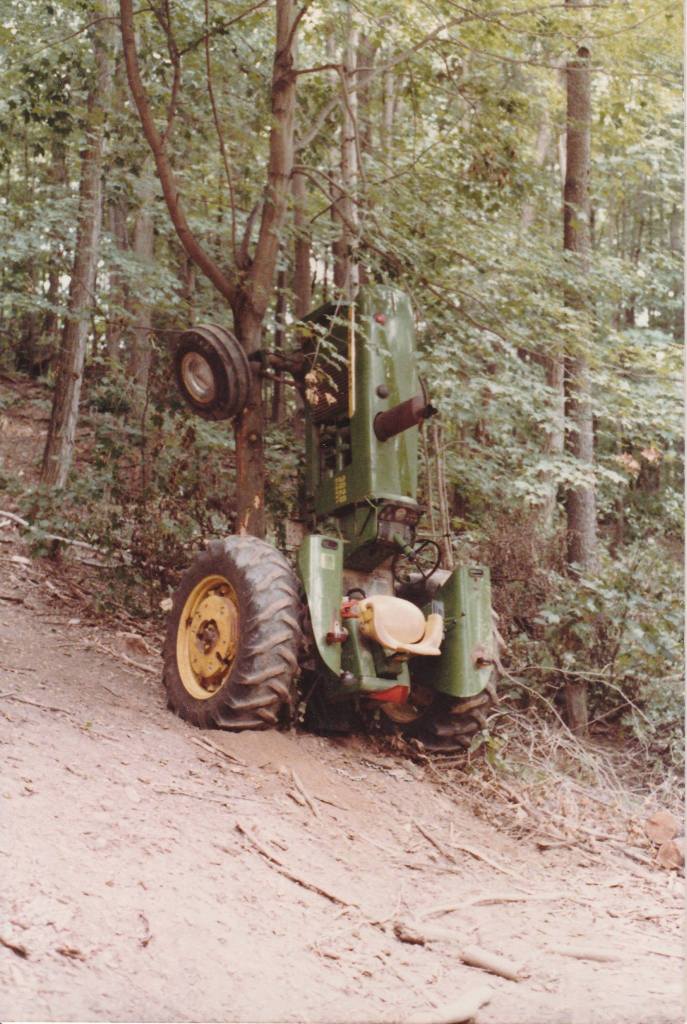
Dave, lifelong friend and best man at my wedding, was the chain saw guy. I was on the International tractor, using the front loader as an elevated platform and the hitch to drag logs. Clint, another dear friend, drove the dump truck, and climbed to the top of the stack to help Dave place the logs. We might have had one or two helpers, but mostly, it was the three of us.

We seldom found logs suitable for our efforts laying on the ground, so we went about the extensive woods searching for trees to fell and add to our stack. Dave would drop the tree and cut to length the largest logs to fit into the Dodge Power wagon dump bed. Clint would chain me up, first, to skid the logs, then, to attach them to my front loader so I could place them in the truck. The woods we worked could be anywhere between flat level to near vertical. Chains, cables, and winches, Oh my!

We’d take a load to the campfire site down by the lake, dump the load, and begin to lift each log onto the pile. We built a four-sided fire log cabin style, wide at the bottom, tapered to the top. We’d fill the interior with old firewood that had turned punky and couldn’t be used in any of the fireplaces. Our first year, the fire was built to 17 and a half feet tall. My final year, the campfire was built to 35 feet. Galilee was beginning to appear uncomfortably close.

It was not unusual for the coals to be a couple of feet deep and the fire to burn for four or more days afterward. Yes. It was a big campfire. And it got bigger every summer.

Dave, Clint, and I were a team. We worked well together, enjoyed each other’s company, and shared a humorous trait for pulling practical jokes. We pilfered another male staff member’s underwear, put them in zip lock bags, soaked them in beer, and froze them in the staff house freezer! We commandeered a younger clergyman’s canoe one night, hulled it up the dinning hall bell tower, and skewered it five stories high, for him to find the next morning as he came for breakfast. Alan, I’m looking at you. Priceless!

We hauled a sailboat to the reservoir at the camp entrance, placed the lifeguard tower over top the mailbox, and greeted Captain John and his family when they drove in from Ohio to spend the summer on staff. Yes, we were wearing life jackets. The mailman was also duly amused. NY State DOT had the audacity to place a stop sign at the entrance to our road. It made a very nice card table.  

These were but a tiny fraction of the high jinks we took part in while on the summer staff.

One June evening, as the last light of the day was fading and the three of us were dead tired, I was lifting the last of the logs to the top of the stack. Clint and Dave swung a log onto the pile and Dave commenced to cutting the notches to keep it from rolling and solidly in place.

In an absent-minded moment, Dave rested the idling chain saw on his thigh. Yikes! Blood went everywhere. I lowered him with the front loader, Clint threw him into the cab of the truck, and off they raced to the Emergency Room at Auburn Memorial Hospital. Forty plus stitches later, Dave returned a wounded soldier to the sympathy of the female staff. Clint and I just rolled our eyes.

Dave and Clint were joined with other male friends over the years; Rick, Dale, Scott, Larry, Bob, Mark, Carter, and others. Casowasco gave us a connection. Experience gave us strength. God wove us into a tapestry of grace that continues to hold me over four decades later.

Guys will be guys; for which I am thankful.

The pool this morning was calling me by name, gave me my own lane, and provided me with the necessary buoyancy of grace to swim my 15 laps. Other than to count the laps ticking by, it was hard to meditate, to focus my thoughts.

Thoughts of the recent Homeowners Association board meeting were interrupted by yesterday’s FLACRA’s all staff meeting. As the chair of the board, they insisted I be photographed presenting numerous awards to their respected recipients. I’m not that photogenic!

Breaking news, interrupted thoughts, thinking about my recent introduction to members of two small country churches where I agreed to serve part time in retirement. Did they like me? They seemed really nice. Would we come to love each other as a pastor loves their flock? Please, Lord; I hope so.

Most trips to the pool bring calm, clarity, focus. Today, not so much. Yet, I’m thankful and the laps give my muscles a good work out.

Bob called staff meetings each week on Sunday evening. Campers had moved in, parents left (either smiling or crying), and our staff needed to coordinate requests and activities. The craft room needed more supplies. The store was running low on Maple Walnut ice cream. Three campers were allergic to bees and had Epi pens in case they got stung.

Most staff meetings were in Bob and Ruth’s living room. We piled in laying on the floor or draped over the chairs, giving each other back rubs (my, oh, my). We laughed a lot and shared common misery, like tales of Saturday cabin cleaning. A toilet needed unplugged, additional sailboats needed to be brought out of storage, and the dock needed to be leveled (especially on hot days).

The schedule was posted such that a staff member was in attendance at every campfire each evening. We led the singing, guided the devotions, and closed with prayers. Rules were spoken, such as, “no put down phrases,” and “since everyone is new, you have the opportunity to be yourself and create the reputation you want to live with.” Good stuff, right there.

The rest of the staff and I learned how to live in community. How to express our needs. How to listen and respond with empathy. How to communicate, especially with members of the opposite sex. Yes, romances came and went, ebbed and flowed. We support each other and when there was a need, we all pitched in. When there was grief, we all responded with words of comfort and acts of kindness.

Christian community, I learned, is a beautiful thing. It can be found in a local church or an AA meeting just as it can be created and found at summer camp among the staff.

And then, there was Mary Jo.

She was new to the Staff and by this time, I was one of the veterans. My dad was an ordained pastor, appointed by Mary Jo’s father, the resident bishop. A resident bishop in the United Methodist Church has a lot of power, especially over who is sent where to serve which church. Compensation and steeple size matters. Politics and pride were in constant tension with the good-old-boys network. Yeah, back in the day, the bishop and his superintendents were all back-room cigar chomping white male  deal makers.

There are a lot of skeletons in them there closets.

They didn’t get a long. My dad was stubborn, a Don Quixote charging windmills of injustice, destined to short-term pastorates in small rural churches with tiny little steeples. Bishop Yeakel exuded power and authority, looked like he stepped right off a movie set, and was loved by all; except for those who crossed him. He was right at home in the bishop’s chair in are largest cathedrals, wearing his pointy hat and flowing robes.

To say it was chilly between Mary Jo and me would be an understatement.

After so many weeks of the silent treatment, following one Sunday evening staff meeting, Mary Jo pulled me aside, got right into my comfort zone and said, “Look. Your dad doesn’t like my dad. My dad doesn’t like your dad. But. That doesn’t mean we can’t be friends.”

I was stunned by Mary Jo’s stark honesty, her willingness to take risks for the sake of building a social network and our staff community, and her humility to swallow a healthy dose of pride. Yeah. Wow. “You’re right,” I said when the Spirit gave me a shove to break the deafening silence. “I’m willing to give it a try, if you are, too.”

The following day, Don has me using the backhoe to dig the footer for the staff house addition. It had to be straight, squared at the corners, and forty-eight inches deep to get the footer below the frost line. To this day, I still think a backhoe is a thing of beauty. In experienced hands, watching a backhoe work is like watching a maestro conducting an orchestra.

I wasn’t alone. Slightly behind me, my peripheral vision got a glimpse of Mary Jo standing, watching me dig. I turned, smiled, and shut down. “Good morning,” I said as I jumped down. I figured there was no better time like the present to start trying to be a friend. “Whatcha upto?” I asked.

“I always wanted to give that a try,” Mary Jo confessed. “It looks so cool.”

What an opportunity, I thought. “Hop up and let me show you how.” She sat in front of me. My arms wrapped around her and my hands guided her movement on the control levers. It was a little like that movie with the pottery wheel and music, but not really. It was more like two people who God had brought together to become friends.

Later, I was seeking a seminary to attend after I completed college. Mary Jo invited me to visit her in Dayton OH. She was going to be starting her second year at United Theological Seminary. Though accepted and tempted with generous financial packages, I didn’t want to attend where my dad attended (Drew in Madison NJ) or nearby Colgate (Rochester NY). I stayed with Mary Jo and slept on her apartment floor. She gave me the grand tour and introduced me to as many professors as she could find.

I was sold. If it hadn’t been for God working through Mary Jo, my life and call would have gone in entirely different directions.

Thank you, Lord, for the gift of Casowasco, for the people who became such important influences in my life, for lifelong friends, for community, for grace and love, for your call to be an ordained pastor.

13. Casowasco – Don and Bob

Don and Bob’s, now known as Don’s Original, is a hamburger joint in Rochester. Along Ontario’s shore, it has served Seabrease flocks with enough artery clogging fat to keep a cardiac practice printing money like there is no tomorrow. This is not the Don and Bob of today’s memory and reflection of serving on the Casowasco camp staff. Nor is a hometown burger stand about God’s prevenient grace, at least, as far as I can tell.

Don Welles was my boss, the property manager. He was a former dairy farmer from the southern tier, and therefore, an expert in all things construction, land management, McGiver style repair, and Guernsey milk. No one was better at running the John Deere or International tractors, not even by a long shot. Don was married to Beth, who was the food service manager, chief cook, and bottle washer. They had two girls and a dog, lived on site in a house attached to the dinning hall.

Don and Beth followed Court and Margarette Foster, living legends who opened and ran the place since Casowasco was sold by the Case estate to the church in 1948. They transformed the property into a children’s camp and retreat center until Court was tragically shot and killed by the mailman in a hunting accident within a stone’s throw of the hairpin curve. That curve, legend told, was also the location of a fatal sledding accident years ago, and where the morning breakfast driver would stop to stir the eggs before delivery to the Older Elementary camp above, called Mt. Tabor. Haunted hairpin? Who knows.

Four of us college guys on staff showed up in early May the day after the semester came to an end. We cleaned and mowed, repaired everything that broke over the winter … think endless water leaks from a cold winter and miles of plumbing. We got the place in shape before the rest of the staff arrived in Mid-June, followed soon thereafter with nippers (campers) arriving the last week in June.

We were housed in an old trailer with a flea infested chemical toilet and mold encrusted shower for a month and a half. Other than sleep and evening libation, we did not spend much time in that palatial dump. After 5 pm each day we’d water skied if the lake was smooth, or, took out sailboats if the wind was up. Each month we’d burn up 100 gallons of gas skiing until our legs fell off. Our earliest water ski was in March; our latest was in November. If the stars were out, we’d often paddle into the middle of Owasco Lake, lay in the bottom of the canoe, look up and wonder at God’s beautiful cosmos.

Other than a strong back and a willingness to learn, I had no skills. Don had to teach us everything; how to safely run a chainsaw, solder a copper pipe, clear a plugged toilet, patch a roof, and operate a backhoe. His leadership style was old school dairy farmer, wise and strong. He’d tell me what he wanted me to do. If I didn’t know how, he’d tell me, then Don would let me try. If I got it right the first time, great! If I fouled it up, we’d talk about it. He’d show me where I went wrong, then Don would have me try it all over again.

Don was patient and kind. Proper instruction followed by the freedom to try and learn by doing was a lesson well learned. I tried to practice Don’s pedagogy the rest of my life. Thank you, God, for the gift of Don.

Today was the second time back to the lap pool after a nasty case of Mononucleosis. For nine weeks, it kicked my butt, drained every ounce of energy out of my body, squeezed the sweat out of me, and kept me in bed or nodding on my recliner. My older brother, a newly retired primary care physician, told me that in his over 40 years of clinical experience, he never had a patient with Mono of “my advanced age.” Wonderful.

The water was fresh and clean. I glided as before, pushing off, inches above the bottom, centering on the tile rushing past my eyes, gently ascending post resurrection from near mortal illness until breaking surface and reaching for my first pull. The quiet was only broken by my thoughts of Casowasco from 1980 to 1984.

Bob ran the place. His formal title was Director / Manager, but he was so much more. He was an ordained United Methodist pastor (like my father), married to Ruth. They had middle school aged children, Mark and Kim. They lived in the manager’s house mid-way between the hairpin curve and the waterfront.  Bob knew way more than he let on, rarely got riled, and was wholly committed to building a staff and running the finest children’s church camp possible. Safety first, then faith formation took place in a milieu of grace and love.

Bob had an innocent and harmless humorous side about him, reflective of the culture of the day, but would never be spoken today. On days when he’d host interviews of college women to fill staff slots on the waterfront, kitchen, or craft shop, he’d mention it over his usual breakfast bowl of Cheerios. “Interviews today!” He’d announce. Don took Bob’s cue and the four of us guys nodded and grinned. Time to stain the siding outside the office. Let the parade of women commence! As each emerged from their interview, Bob would follow them out, stand near us watching each get into their car to leave. “Pass the bikini test?” He’d ask. Each of us would stare off and use our imagination to color inside the lines. “Yep, she does.” “Good, because I just offered her a job.”

My second year in engineering school was difficult. I lived in a campus apartment with hard partying fraternity members. We were often short of money for groceries and hunger was real. Bob threw the other guys and I a lifeline. Any weekend I wanted to drive the four hours from Clarkson to Casowasco the light would be on and the welcome mat would be rolled out. In exchange for a weekend of cutting and splitting firewood, Bob would load up my car with groceries from the kitchen and fill my tank full of gas. If it wasn’t for Bob’s fatherly love, I wouldn’t have made it through my second year of college.

A number of years later, I found myself newly married (Cynthia was the camp nurse) and just starting my third year of seminary in Dayton, Ohio. We just returned to the married student housing from a job interview and there was Bob sitting on a bench outside our building. “Bob! What are you doing here?” I asked. “I’m in Dayton for church meetings,” he replied, “when I got the call that your father died.”

Grief. Grieving. You get the picture.

Bob sat with us well into the evening, even as other students started dropping by with condolences and green bean casseroles. Sensing the time was waning, Bob pulled out his checkbook and wrote me a blank check. “You and Cindy need to get home for the funeral,” he said. I was stunned. I was completely overwhelmed by this tangible evidence of God’s amazing grace, the ocean in which I swim every day.

Overwhelming grace. Abundant generosity. This is the lesson I learned that day and have attempted to live the rest of my life.

Life is hard. Make it easier for others. Be the grace God calls us to be. Thank you, God, for the gift of Bob and his lessons about abundance and grace.

Bob retired long ago and moved away. News came from the conference office that he suffered declining health and recently died. Though I hadn’t seen him in years, it was like losing a second father. Rest in peace, friend. God loves you, and so do I.


  1. Where I’ve Been – Embracing Change: https://breakingyokes.org/2024/07/30/where-ive-been-embracing-change/
  2. From Whence I Came – Tears of a Birthing Mother: https://breakingyokes.org/2024/08/05/2-from-whence-i-came-tears-of-a-birthing-mother/
  3. Epiclesis: https://breakingyokes.org/2024/08/10/3-epiclesis/
  4. A Smidge of Grey: https://breakingyokes.org/2024/08/14/4-a-smidge-of-grey/
  5. Discipline, Honor, Integrity and Herb Larson: https://breakingyokes.org/2024/08/23/5-discipline-honor-integrity-and-herb-larson/
  6. Dairy Farmers, Bus Drivers, and Don Jordan: https://breakingyokes.org/2024/08/31/6-dairy-farmers-bus-drivers-and-don-jordan/
  7. Advent in August: https://breakingyokes.org/2024/09/07/7-advent-in-august/
  8. Addison and Vernon Lee: https://breakingyokes.org/2024/09/25/8-addison-and-vernon-lee/
  9. Discipline Matters: The Education of Todd Goddard: https://breakingyokes.org/2024/10/07/9-discipline-matters-the-education-of-todd-goddard/
  10. Becoming a Wolverine: https://breakingyokes.org/2024/12/17/10-becoming-a-wolverine/
  11. The Smell of Hoppes: https://breakingyokes.org/2025/03/11/11-the-smell-of-hoppes/
  12. Casowasco – My Beginning: https://breakingyokes.org/2025/03/28/12-casowasco-my-beginning/
  13. Casowasco – Don and Bob: https://breakingyokes.org/2025/05/31/13-casowasco-don-and-bob/

12. Casowasco – My Beginning

God had been moving quietly, subtly, deliberately in my life, beginning with my conception, periodically during my childhood, throughout my public school years. I didn’t see it then, but I see it now. My call to Ordained Ministry began before my call was discerned, characteristic prevenient grace that is rooted deep in the heart of the United Methodist experience. The fingerprints of God’s prevenient grace is written all over the first chapters of my life and development. Did you perceive it as you read through my story?

  1. Where I’ve Been – Embracing Change: https://breakingyokes.org/2024/07/30/where-ive-been-embracing-change/
  2. From Whence I Came – Tears of a Birthing Mother: https://breakingyokes.org/2024/08/05/2-from-whence-i-came-tears-of-a-birthing-mother/
  3. Epiclesis: https://breakingyokes.org/2024/08/10/3-epiclesis/
  4. A Smidge of Grey: https://breakingyokes.org/2024/08/14/4-a-smidge-of-grey/
  5. Discipline, Honor, Integrity and Herb Larson: https://breakingyokes.org/2024/08/23/5-discipline-honor-integrity-and-herb-larson/
  6. Dairy Farmers, Bus Drivers, and Don Jordan: https://breakingyokes.org/2024/08/31/6-dairy-farmers-bus-drivers-and-don-jordan/
  7. Advent in August: https://breakingyokes.org/2024/09/07/7-advent-in-august/
  8. Addison and Vernon Lee: https://breakingyokes.org/2024/09/25/8-addison-and-vernon-lee/
  9. Discipline Matters: The Education of Todd Goddard: https://breakingyokes.org/2024/10/07/9-discipline-matters-the-education-of-todd-goddard/
  10. Becoming a Wolverine: https://breakingyokes.org/2024/12/17/10-becoming-a-wolverine/
  11. The Smell of Hoppes: https://breakingyokes.org/2025/03/11/11-the-smell-of-hoppes/

My experience and perception of discernment is both personal and communal. God called me, pinging me like sonar. Even as a child, my spiritual antenna received the signal loud and clear. However, it took years for me to piece together the evidence that God’s hand was working in and through others at key moments in my life. It took a long time for me to get to an “aha” moment of recognition.

My call to ordained ministry wasn’t random. It wasn’t from out of the blue. Neither was it from a mentally delusional individual. God pumped the dime into the payphone and dialed my number. Over time, God worked through others, a community of disciples, to question me, encourage me, guide me to make choices that were consistent with a disciplined life of an ordained pastor. At first, it was informal. Friends and family. In time, others in the Church dropped hints. At the end of the process, it was the formality of Church polity; confirmation from the local church, the District Committee on Ordained Ministry, the Conference Board of Ordained Ministry, peer elders, and finally, the resident Bishop. My call took place over the first 26 years of my life.

I couldn’t bring myself to the pool this morning. My weekly self-injection 36 hours ago leaves me nauseous and without an appetite. Tomorrow morning I will swim. Reach. Pull. Kick. Push. Glide. Breathe. Uninterrupted silence, space for prayer, meditation, reflection.

Come, Lord. Come quickly.

Casowasco is a property on the shore of Owasco Lake, one of New York’s beautiful Finger Lakes. It is the former summer estate of Theodore Case and his family, an inventor who ran with the likes of George Eastman and Thomas Edison. Case on Owasco is 73 acres of woods, one mile of shoreline, and since 1948, it has served as a host for children and youth ministries operated by the United Methodist Church, as directed in the family’s bequest.

Summer, 1979. I graduated high school and prepared to attend Clarkson as an engineering student. Science and math came naturally to me. I took off two weeks from work to join my dad volunteering at a work camp at Casowasco. Bill Swales was the director. He was my dad’s District Superintendent. He knew of my interests. He was charged with building a solar hot water system for the Highlands, the camping area on the West end of the property. Bill needed a lifeline and he phoned a friend. I answered the call.

Over the course of two weeks I led the team clearing land (think chain saws, shovels, and heavy equipment), building the plumbing (think copper pipes, tin solder, valves, and couplings), and erecting a gravity system to provide hot water. It takes some serious planning and construction to safely locate a 500-gallon water tank eight feet above the floor and enable it to be annually winterized.

The buildout worked like a charm. The property manager, a pastor and Japanese scholar by the name of Bob Stoppert, took notice. He remembered my name. Mid freshman year Bob gave me a call and invited me to join his 1980 summer staff.

Confidence. Fleeting in adolescence, confidence is panned for like specks of gold. As it is discovered, developed, and amassed, it becomes a solid foundation for a fruitful life. Where is confidence found? In a phone call. Words of appreciation. Recognition of a strong work ethic. A twinkle in the eye; evidence of God’s greater will being lived out on stage and in the spotlight called youth.

What little confidence I gained in those two weeks at Casowasco would be shaken with a difficult freshman year at college. Everyone was way smarter than me. Alcohol and marijuana were as destructive to me as an unexploded time bomb. Fraternity life was a distraction and grades suffered. Developmentally, I wasn’t ready. It would take me an additional four years before I was truly prepared to grow up and move out to live independently. The summer of 1980 couldn’t come fast enough.

Move in day was as early in May as college let out. Maintenance staff were needed early to get the property ready for the first week of nippers, er, campers, as we called them. I went straight to Casowasco to open the next chapter in my call to ministry and life’s unfolding book.

11. The Smell of Hoppes

Tom’s kitchen table had been cleared after the evening meal. It was now set, with a base linen towel. Scattered on top were various rifle bits and pieces, displayed as if jewels under glass.

Tom had gone blind from macular degeneration. Yet, he insisted on cleaning guns when I returned from the field. Rifles for woodchucks or coy dogs, shotguns for fowl, rabbit or deer, pistol or revolvers for just plain fun.

Hoppes patches and oil were rubbed over every part, barrel, receiver, magazine before each was reassembled and gently returned to its case.

Residue from gunpowder and dirt from the Chemung River Valley spotted our oily rags. He and I sat at his table, rubbing and wiping, Tom listened to my most recent adventures, me listening to his tales from long ago. Into the evening we’d celebrate mass. Cleaning the guns Tom lent me was like the sacramental completion of the circle of life, from generation to generation.

Tom grew up in northeast Pennsylvania, depression poor, mining anthracite coal from the state’s deepest vanes. Dark, dangerous, unforgiving work could reduce a man to a gelatinous dark spot crushed into the floor of the mine, or, into a rasping, wheezing cancerous mesothelioma plaintiff in the blink of the eye.

During the great depression, Tom and his siblings worked two and three jobs to keep the household afloat. When the great war and shortages came, Tom was paid to run ration stamps out the back alley for complicit  store owners one step ahead of the federal agents. After the war, he settled into New York’s southern tier, bought and operated a gas station and repair shop in Elmira, filling tanks, replacing engine rings, and swapping out brake drums well into his seventies when his eyes began to fail.

A member of my father’s parish, Tom was a father figure my own dad couldn’t be. For my dad, guns were weapons of war that maimed with explosive violence, not tools for game or pleasure plinking. To think that a gun could bring together generations was beyond his experience and imagination. He’d prepared for burial too many of his generation, corpses violated by the unforgiving laws of chemistry and physics, flung without compassion by the brutality of war. But for Tom and me, Hoppes was the smell of our bread and wine.

“Lap Pool Closed” greeted me early the other morning, causing me to seethe. “I didn’t pay good money for a membership only to be denied at the door,” my sick brain whined and complained like a spoiled first world privileged brat.

“When the chemicals adjust to proper levels, they’ll call up and let us know the pool is open,” the blameless messenger smiled as she delivered up my bad news. Disrupt my routine and I tend to become more distempered than usual. Gnarly. Pessimistic, I’ve been described. Everyone who is surprised, raise your hand.

I’m working on it. I don’t want to be known as that ornery old man. I want to create the reputation I want to live with. You know what I’m talking about: kind, gracious, loving. Someone like Tom.

Rusty lived down the street from the parsonage. He and I were in the same grade, rode the same bus to school, and were often hunting partners. He was from a poor family, but he certainly knew just about everything when it came to the outdoors, hunting and fishing. What Tom didn’t teach me, Rusty often would show me. Game was plentiful behind town, down by the mainline Erie Lackawanna, where the muddy Chemung River wandered.

We liked to hunt pigeons from the railroad trestle, a three-span double-track bridge that paralleled the new highway bridge just a half mile upstream. Rusty and I would walk in single file with our 12 gage pumps at port arms down the center between track one on the north side and track two on the south, my right thumb resting on top the safety in the off position. Slow we’d stalk the filthy, good-for-nothing pigeons that roosted in the truss.

We’d usually make it center span before they’d spook and the whole mass would depart for the safety of any place other than there. Timing and a smooth pull were necessary for a safe and accurate shot. One in the chamber and four in the magazine would quickly be pumped out. If the lead was corrected for flight below and away, and, if by skill we successfully shot between the steel truss, we could bring down fifteen or twenty. Hit a girder and duck! Once the flock departed, we’d find cover in the steel and wait for first, their scout, then second, the flock to slowly but surely return to the roost. Wash, rinse, repeat. A good outing might bring two or three iterations of this killing cycle, littering the river, turning the water red.

A hot, summer afternoon found Rusty and I stalking Chemung’s filthy pigeons. Cicadas buzzed. Skeeter skimmed stagnant pools. The river flowed. The moaning of Jake brakes from eighteen wheelers further down the valley echoed into the hills and gulches so characteristic of the Southern Tier. The sun high in the sky bore down. Sweat stained our tee shirts and wet the brow. Safety off. Slow. Lift, advance, gently, step, one railroad tie to the next. Watching. Listen. Waiting for the first sign of a pigeon to stir.

What? Was? That? Head on a slow swivel, rotating from Rusty’s back to the horizon around behind us. There. A mile and half behind barely visible whiffs of soot ascended above the tree line, followed by six thousand horsepower of Erie Lackawanna muscle leaning into the corner, lining itself up for the bridge we were on. Thirty feet above the water. Dead center. Inches from the rails. Loaded shotguns un-safed.

Shit.

We just about did. “Run!” we both yelled simultaneously. Safe on, and I ran like the devil was licking at my ass. West we ran, feeling the bridge rumble when the groaning engines gained the distant bank. Can’t slow. Can’t slip. Can not, for God sake, put an ankle between ties. Snap, scream, and pink mist. Rusty, don’t you fall. As we gained the west shore, we angled across track two and flung our bodies and guns down the embankment, just as the lead engine, horn blaring, roared past. Tumbled and slid in a cloud of dust, soot, and railroad ash, guns protected by the roll.

Stunned, we righted ourselves. Sat silent as the caboose above glided past. Soon, the train disappeared down the straight, enveloped by the valley. I exhaled about the same time as Rusty and we burst out laughing.

How close. How incredibly lucky. How incredibly stupid we were, but we survived. The walk back to town was quiet. Pensive. He veered off to his house, and me to Tom’s.

The table was soon set. The smell of Hoppes appeared, drifted, enveloped two guys, one blind and old, the other young and not quite so full of spit and vinegar as before. The quiet was broken only when necessary. The table was so rich and full. Oh, how the memory warms my heart. God’s grace whispered as my shotgun was cleaned, reassembled, and returned to its fitting and proper place.    

10. Becoming a Wolverine

Don’t know why; all I know is that we had to pack up the house and move to another parsonage. Dad had a change of parishes, starting his third of four years of seminary. Hello! Chemung, here we come. Nestled in New York’s southern tier, Chemung is a small village on a ridge overlooking the Chemung River, which flowed west to east towards the Susquehanna. Annual flooding lends to dikes and dams, in a futile attempt to tame its brown moving effluent.

This would be the third high school in three years. My new identity was a Waverly Wolverine. I wasn’t looking forward to the change. New friends are hard to come by. Good friends are rare. Lifelong friends, linked by youth-filled common experiences and shared values, are like finding diamonds in the rough; diamonds that God planted for me to discover.

First day of school. Assigned homeroom. Mr. Allen took roll call. Everyone looked when my name was called. New guy! I was all alone.

Except.

Except Gary and Chuck reached out to me. They didn’t have to. But they did. They worked at the local hospital and nursing home in the kitchen washing pots and pans. They got me a job, and I fit right in, earning $2.20 an hour. Gary’s aunt ran the local American Legion. We got paid five bucks every Friday night to clean up after Bingo and set up for Saturday’s wedding. I’ve cleaned up enough dirty ashtrays for a lifetime. Sometimes the Legion bartender would put a case of beer on the back steps for us when we finished up. Life was good.

Gary and Chuck had known each other since before Kindergarten. They weren’t jocks, nerds, or potheads. They were middle average, often overlooked, underappreciated, under the radar flying, clean cut type of ordinary nice guys who welcomed me into their inner circle of acceptance.

They were awkward around girls, uncomfortable in their adolescent acne scarred skin, and always looking for a reason to sneak into or out of school. I fit right in. Gary drove a Ford LTD that was herded down the road, and Chuck drove a Ford Pinto, a stick shift on which we all learned. I got my senior license and often sported my dad’s dark green Plymouth Satellite. Gas was under a buck a gallon.

Gary, Chuck, and I hung out together. Worked on completing homework and lab assignments together (usually at Pudgie’s Pizza across the border in Athens, PA). We went to rock-n-roll concerts together. We saw some great bands. The late 1970s were some very good years! We experimented with alcohol together, swapped car stereos into and out of each other’s cars, and talked about dream girls together. All three of us had a poster of Farrah Fawcett on our bedroom wall.

Chuck and Gary were God’s gift to me. It has only taken me a lifetime to recognize the enormous impact this grace has had upon my life. Thank you, Chuck. Thank you, Gary. You guys mean more to me than you know.

Thank you, God, for Chuck and Gary.

The pool yesterday morning limbered me up and wore my ass out. Crawl, breast, elementary back. Down and back five times each, for a total of 15 laps. Doesn’t sound like much, but it is just right for me. Discipline is everything. Don’t try to increase time or distance. Faster is a false idol. Further is asking for trouble. Repetition is where the sweet spot it. The nice thing about falling into a rut is that you always know where you are going.

Yesterday, sunlight penetrated the dark grey winter sky and illuminated the lane I was swimming in. What a blessing! To roll my head and breath with each stroke, to bathe my face in the sunlight of God’s grace. Humbling.

The day was much like today. It was December, the Christmas time of year. Chuck, Gary, and I would rotate work schedules. However, whenever a tray girl called in sick, which was often, we would call in one other to cover their afterschool shift. We also elbowed our way into cooking on the weekends. The net result was that all three of us were often working the kitchen at the same time.

Saturday inventory was always an opportunity for us to express our creativity. The daytime (older) pots and pans guy frequently stole food out of the walk in. Every evening after sweeping and mopping the whole place, we’d put on some rock and roll music, throw a few pounds of steak into a frying pan with butter, break out the medicinal beer (for patient’s use only) and party on. Completing the monthly inventory sheets was an exercise in creativity. If Frank, our boss, ever caught on to our Tom foolery, he never let on.

Being festive, I wore a red Santa hat in the kitchen and sung Christmas carols. It was great delivering and picking up trays from patients, especially those unfortunates on the psych ward and the nursing home residents. Thoughts and fears brought my imagination to life as I entered and exited the locked units. What happens if someone jumped me? The movies Halloween and the Exorcist had just come out. Cue the slasher music. What if I went into a patient’s room to deliver a food tray and I found them dead? You know; not alive? Singing Christmas carols brought smiles to staff and patients alike. I had a talent to make people happy. Life was good.

I learned one of the nursing home floors wasn’t going to have a staff Christmas party. The direct care staff was bummed. I knew they worked hard, cleaning up the nasty, not making a dime more than minimum wage. They were pretty. I was looking for acceptance. They needed a party and I knew how to make people happy.

Frank kept a few bottles of hard liquor in his desk drawer locked in his office. Undoubtedly, it was a violation of hospital policy and he could be fired if caught. Hey? He was the director of dietary services. Who were we to care?

Gary, Chuck, and I just had a way about learning everything there was to learn about the people and the hospital / nursing home. It didn’t matter if they worked in dietary or laundry or administration, we always got the skinny.

One evening (doesn’t every good tale start out this way?), the three of us were done for the day and locking up. A knock on the kitchen door caused us to stop, look, turn down the volume, and wonder what we were being caught doing this time. A young aide shared her tale of woe. The three of us looked at each other, knew what had to be done, and sprung into action.

We raided Franks desk drawers and liberated his liquor cabinet. We mixed in a splash of eggnog, just enough to color and season the punch. We carefully wheeled the bowl of spiked merriment to the unfortunate staff working a distant floor. “Merry Christmas” we proclaimed, and parked our gift in their lounge.

It didn’t take long before everyone was singing, dancing, and telling us how wonderful we were. A great time was had by all. Thankfully, no one was harmed and the only casualties were those who suffered the hangover consequences the next morning. Frank never said nothing. How could he?   

Life carried on. I had found my place. I had found my home.

Sermon for November 17, 2024 – “From Fear to Hope”

Mark 13:1-10

The Rev. Todd R. Goddard

Mark 13:1-10 (http://bible.oremus.org/?ql=409206313)

As he came out of the temple, one of his disciples said to him, “Look, Teacher, what large stones and what large buildings!” Then Jesus asked him, “Do you see these great buildings? Not one stone will be left here upon another; all will be thrown down.”

When he was sitting on the Mount of Olives opposite the temple, Peter, James, John, and Andrew asked him privately, “Tell us, when will this be, and what will be the sign that all these things are about to be accomplished?”

Then Jesus began to say to them, “Beware that no one leads you astray. Many will come in my name and say, ‘I am he!’ and they will lead many astray. When you hear of wars and rumors of wars, do not be alarmed; this must take place, but the end is still to come. For nation will rise against nation, and kingdom against kingdom; there will be earthquakes in various places; there will be famines. This is but the beginning of the birthpangs.

“As for yourselves, beware; for they will hand you over to councils; and you will be beaten in synagogues; and you will stand before governors and kings because of me, as a testimony to them. And the good news must first be proclaimed to all nations.

| Centering Prayer |

Cynthia and I went to the rare movie this past week.

We saw “Conclave”,

A drama about the death of a Pope

And the election of his replacement.

I highly recommend it.

The hundred plus Cardinals of the Church gather

From the far points of the globe,

In Rome,

Cloistered in the Sistine Chapel.

They represent diversity,

Culture,

Language,

Race,

Beliefs.

For many of those in the running,

The sky is falling,

The Temple is about to crumble,

The very future of the Church is in peril.  

For some of us

For many of us

This might feel like we are living in the end times.

The result of division into partisanship is fear.

If you like it, keep doing it.

There is another way.

Look at our great nation.

Like the grand Temple where Jesus and his disciples met.

Certainly, this great nation will never fall.

Or might it?

Those at either extreme

Appear to be most alarmed,

Fearful that these are the end of times,

That the only future is one that hurts, harms, or kills.

Anxiety is real, and for some debilitating.

“I can’t breath.”

Those at the left or right are not alone in trembling before a doomed edifice.

Consider the black, male driver of a car pulled over by the police.

Consider the closeted gay man, knowing he is one breath away from destruction, family, career, calling.

Consider the individual this morning placed on hospice.

Consider the student who failed their final exam in their major.

Yes, the end is at hand, and is well neigh.

Many of us choose to hunker down,

Fly low, hoping to keep under the radar.

The United Methodist Church hemorrhage near fatal wounds

And now lies weak, sick, and in intensive care.

Twenty percent of the churches in our conference,

Over thirty percent worldwide chose to leave,

Leaving us with budgets and programs on life support.

Destruction feels near at hand.

The Temple, like Babel, is

Like a house of cards,

Ready to collapse.

Context is the key to understanding.

First, some historical context:

Nobody likes ever rising taxes.

The result was protests and attacks on government officials.

In the decades after the resurrection and ascension of Jesus,

Governor Florus over-played his hand:

He had the Temple plundered and the treasury emptied.

This was the spark for the first of three wars between the Jews and Rome.

Wars the Jews could not win.

Wars our ancestors fought.

Lost before they began.

Desperate.

Hopeless.

To the end.

The Jewish rebels fought back against Roman heavy handed rule,

Leading the pro-Roman king, Agrippa, government officials, and soldiers to flee Jerusalem for their lives.

The rebellion was getting out of control.

Nero, the Emperor of Rome, had to act.

First, he sent Gallus to bring his legions of troops from Syria

To restore order and end the revolt.

6,000 troops were caught by Jewish rebels west of Jerusalem

In the Beth Horon pass.

All six-thousand Roman soldiers were slaughtered.

The Jewish victory attained great support throughout the land

And won over the hearts of the people.

Volunteers poured into rebel recruiting stations

Offering to fight Rome.

Passion and patriotism surged with youthful vigor.

Hold on there, dearly impassioned Jews.

Victory was short lived.

Nero wouldn’t be embarrassed again.

The more experienced general, Vespasian,

was handpicked to crush the rebellion in Judaea.

Avoiding a direct attack on the heavily reinforced City of Jerusalem,

Four legions of troops landed in Galilee in 67 AD.

For three years, the legions advanced, led by Vespasian’s son, Titus,

Who served as second in command.

Rebel strongholds were eradicated, the fields were salted, and the population was punished.

February, 70 AD found the Roman legions knocking at the gates of the City of Jerusalem.

The Jewish rebels held out against the siege for 7 months.

All food supplies inside the walls were exhausted.

Time was on the side of Rome.

Jerusalem fell on September 7th in the year 70.

The Temple was destroyed, timbers burned, every stone above the foundation was thrown down and smashed.

The fire was so hot you can see the burn stains on the rubble to this day.

Rome found its revenge.

Josephus, the famed Jewish historian,

claims 1.1 million people were killed during the siege, and 97,000 prisoners were taken into Roman slavery.

The few surviving Jews fled,

Diaspora-ed under cover of night to the four corners of the world.

Among the traumatized, surviving Jews

Were a small band of disciples

Who, as luck would have it, witnessed Christ’s ascension

a mere 38 years earlier.

By the light of the burning Temple,

St. Mark and his band of new Christians,

Began to convert memories to word,

Put pen to paper

and begin a first draft of their Gospel.

(Historical references from:

https://en.wikipedia.org/wiki/First_Jewish%E2%80%93Roman_War

https://en.wikipedia.org/wiki/Siege_of_Jerusalem_(70_CE)

https://en.wikipedia.org/wiki/Gospel_of_Mark )

Context is the key to understanding.

Some theological context:

“Remember when Jesus made his final visit to the Temple?”

Mark and his small band of brothers probably opined.

“Jesus told us,

‘Do you see these great buildings? Not one stone will be left here upon another; all will be thrown down.’” (13:2)

Not one stone.

The thirteenth chapter of Mark

Is called by some scholars

“The Little Apocalypse”

Written in the form and style of Jewish writers of old.

Apocalypse, as found in the book of Daniel, Isaiah 35, Jeremiah 33, and Ezekiel,

Is a revelation of cosmic mysteries or the future.

Combined with concerns and expectation of the present age,

We see here in Mark 13

Jesus lifting the veil,

Providing for his disciples and the Early Church

Insight to the end of time with the promise

Of God’s judgment and salvation.

What does this mean for us today?

Yes, for the faithful,

The end is always near;

As near as the next breath or heartbeat.

The Temple is pulverized by chest pains or stroke,

Destroyed by death or probate,

Shattered by temptation or evil.

Judgment and salvation are at hand.

Jesus doesn’t simply build a sandcastle on the beach

And foretell of its destruction.

Frankly, any visitor to the beach knows that,

If patient, all tides rise.

All that is made of sand,

Will soon be swept away.

Rather, Jesus takes his disciples,

Peter, James, John, and Andrew

privately to the Mount of Olives

where he teaches them what we are to learn today.

Listen to what Jesus has to say.

First, beware.

There will be those who try to take advantage of the fear, anxiety, hysteria.

Beware they do not lead you astray.

They may impersonate Jesus,

Falsely boasting salvation with no hope of making good.

They will lie, planting false rumors, and spin out of thin air wacked out conspiracy theories.

Impersonators and liars should be avoided at all costs.

Run-away bravely!

Second, be strong.

Wars and rumors of wars will take place.

Wars. Violent. Deadly.

They tear out the heart and soul of community, whose destruction continues from generation to generation.

Be strong enough of faith to outlast their insidious impact.

Endurance and strength is what we need.

Seek from the Lord, that you may be found.

Third, watch.

Watch for signs of new birth.

Earthquakes? God is making all things new.

Famines? God is using adversity to communicate to us

That the end of these former days is upon us, and

The beginning of God’s new creation is about to break forth.

Lastly, be assured.

Expect strife and persecution.

It isn’t pleasant or without pain.

Know full well that suffering is a witness,

A testimony to all nations

That Christ is King and

Jesus is Lord.  

Be the witness!

I’ve got good news and bad news.

The bad news:

The end is near.

The good news:

The end is near.

We are teetering on the edge of God’s new creation.

The stain of the cross and grave

Are soon replaced by the presence and promise of the resurrected Lord.

This old, worn out body, will be replaced.

Hatred, racism, antisemitism, structural discrimination will soon pass away.

What has happened to the United Methodist church is done,

What is emerging is something that God is making brand new.

Apocalyptic breads danger and fear,

Yet, Jesus brings calm and assurance.

This is God’s kingdom.

These are God’s terms.

We are God’s people.

Beware.

Be strong.

Watch.

Be assured; Christ will come to save you.

Amen.

Sermon from November 10, 2024 “Out of Poverty”

(I’m taking a pause writing my memoirs, because I’ve been called to fill in for a colleague on medical leave, for the foreseeable future, I’ll be posting my Sunday sermons. Thanks for following my blog Breaking (present tense) Yokes (plural), dot, org.)

Mark 12:38-44

As he taught, he said, ‘Beware of the scribes, who like to walk around in long robes, and to be greeted with respect in the market-places, and to have the best seats in the synagogues and places of honor at banquets! They devour widows’ houses and for the sake of appearance say long prayers. They will receive the greater condemnation.’

He sat down opposite the treasury, and watched the crowd putting money into the treasury. Many rich people put in large sums. A poor widow came and put in two small copper coins, which are worth a penny. Then he called his disciples and said to them, ‘Truly I tell you, this poor widow has put in more than all those who are contributing to the treasury. For all of them have contributed out of their abundance; but she out of her poverty has put in everything she had, all she had to live on.’

| Prayer |

Lord, please don’t let Jesus paint me into a corner and force me to identify myself with this poor widow.

She lost everything.

Her husband.

Her house was devoured by the legal power of organized religion.

Her independence. No money. No pension. Nothing.

Her last two small copper coins, she brought to give.

Not that it would make any difference.

In forty years, the large stones and magnificence of the Temple would become a smoking crater.

Her two coins wouldn’t make a difference.

Lord, please don’t allow my hubris and privilege identify me with the scribes, who walk around in long robes,

To be treated with respect in the marketplace,

To be seated in places of honor.

Money is power.

Money is freedom.

To come and go as I please,

To contemplate and decide for myself,

To live wholly independent of others.

Taking from widows is easy money.

Imposing taxes and employing usuary is smart business sense.

That’s what MBAs are made from.

From a position of privilege

I renounce my privilege,

But … not completely. 

Let’s not go overboard.

As Walter Brueggemann said in his book, Prayers for a Privileged People,

“We are tenured in our privilege.”

“We are half ready to join the choir of hope,

half afraid things might change,

     and in a third half of our faith turning to you,

     and your outpouring love

     that works justice and

     that binds us each and all to one another.

So we pray amidst jeering protesters

     and soaring jets.

   Come by here and make new,

     even at some risk to our entitlements.”

(Prayers for a Privileged People, Abingdon, 2008, p.21-22)

The third half of faith isn’t

A Weight Watchers portion of apple pie.

So, Lord, allow me to identify with the disciples of Jesus.

They appear to be the safest bet.

Yes, most dropped their nets,

Walked out on their families, or

gave it all away to come and follow,

But they aren’t widow-poor;

Neither are they uber rich.

Be careful for what you wish for.

Two such disciples of Jesus

Cynthia and I were privileged to know came

From serving the church in Palmyra.

Otto was a modest bench chemist.

Bernice was a stay-at-home mom,

Raising one son.

They were a family of simple means,

Drove secondhand beaters,

Never spend much on themselves.

Cynthia recalled Bernice telling how their church tithe was paid first,

Before taxes,

Before bills,

Before groceries,

Before everything else.

Because, why?

Bernice and Otto had learned to be wholly dependent upon God’s grace and love.

They tithed, not for what they could do for the church.

They tithed for what dependence upon God did for them.

I buried Otto in 1993 and

Bernice in 1997,

Side by side in the Town of Huron cemetery,

Truly saints of the kingdom.  

Giving transformed their lives

From living in this world,

Filled with elections, politics, and power,

Filled with wars and threats of war,

Filled with anxiety, death, and unexpected disability,

Into living in God’s kingdom,

Fulling embracing the life that God had to offer.

The gift Jesus seeks

Is one that transforms the giver.

Five quick take aways for you to further ponder:

1. First, honor and wealth gained at the expense of the poor results in condemnation.

“How might this impact me today?” you may ask.

Perhaps we need to be a bit more knowledgeable and responsible in the use of our money… and

make sure it isn’t used at the expense or detriment of another.

2. Secondly, Jesus is telling us that giving is not an option.

If you are going to follow Jesus, you must give your money.

Like it or not, it’s that straight forward.

Return to God

That which God has given to you.

3. Thirdly, Jesus tells us that giving to God must be sacrificial.

Q: What does this mean?

A: If it doesn’t hurt, you haven’t given enough.

It’s not enough to give out of your abundance.

Give up that which would make you hurt.

Give such that it transforms your life.

4. Fourthly, Jesus tells us that giving to God means

Being transformed from independence

To absolute dependence upon God.

5. I would lastly add, joy comes when you can relate

your own sacrifice with the sacrifice Christ made for you.

Jesus gave everything for you and for me.

He gave up his dignity, his life, his very being for our behalf.

Jesus sacrificed everything!

So what do we do in return? What can we do?

We can take what we have

And give it away.

We can allow ourselves to be completely transformed

By God’s grace and love.

9. Discipline Matters: The Education of Todd Goddard

It was an old, familiar story. Something happened in dad’s parish and next thing I knew, the U-Haul was taking us to a new village. Great. Nothing like starting my sophomore year of high school with strangers. I was the thirty-second kid in my class, in a school district that had K-12 in one building.

Dad decided to turn a three-year Master’s degree into a four year adventure, still commuting to Drew Seminary in northern New Jersey. My eldest brother was married with children, my older sister had married the mayor’s son, and my next oldest brother was off to college. Monday through Friday, mom and I were on our own.

I took a paper route, delivering the Olean daily, earning five cents a copy. Unfortunately, this was a record-breaking winter, and the Lake Erie snows piled so deep the national guard needed to be flown in with their rotary plows. There was a young, newly-out-of-college apartment dweller on my route who led me to think about the opposite sex. She never even hinted that I was alive, yet, something awoke in my imagination every Friday when I collected my paper route money.

The local grocery store had a rack full of girly magazines (that’s what we called them in those days). My friends and I would hang around, pretending to browse the periodicals, when, in fact I was scanning the full anatomy of the female body. The store manager had better things to do than chase away horny adolescents. Oh. My. Goodness. It was hard to believe what I was seeing; impossible for my brain to process the changes and surges in my body.

Our inept regent’s biology teacher told us way too many details about the birth of his two children. Besides Ron G-ski nearly slicing off his finger in our blood typing lab, biology remained a riddle, and a mediocre exam score.

A cheerleader at school, the daughter of the local insurance agent, became pregnant. Word on the street was she had sex with her boyfriend standing up in the alley behind Main Street. She may have been cute, but just the thought of that less-than immaculate conception turned my stomach. It was as if she became invisible at school, frequently absent, then she disappeared altogether. Sadly, I don’t even remember her name.

The pool this morning went by like a flash. My laps were completed before I realized I started. Push. Glide like a manta ray. Use the position of hands and fingers above the head to come to perfect alignment in that majestic three-dimensional space. Slowly, exhale; if done with discipline, only one breath is necessary to cross over to the other side. Ever so slightly, make adjustments to apply momentum, reduce depth, and gracefully surface pulling the first stroke on the fly. Focus. Eyes down. Skim an inch or less above the bottom. Fly. Twelve tiles wide is the width of the lane marker, one of six parallel lines running the length of the pool floor. Twelve to a dozen. Twelve steps. Twelve disciples of Jesus.

Discipline.

Besides my introductory lecture about the birds and the bees (see post 5 about dad telling me about tadpoles swimming upstream), dad only taught me one other truth about sex, sexuality, and the disciplined spiritual journey.

KYPIYP he told me one morning over breakfast in the kitchen of the Little Valley parsonage. “What’s that supposed to mean?” I asked, looking up over my cereal bowl.

“That’s what the chief petty officer would tell us sailors before going on shore leave. You know. KYPIYP. Keep your pecker in your pants.” Deadly, highly communicable diseases would make your male anatomy shrivel up and fall off if you didn’t KYPIYP.

“Oh,” I said and sighed, thinking about the young woman on my paper route. Although my primordial DNA was attempting to tell me otherwise, as clear as rain, dad said no. It made sense, actually. Even as a tenth-grade kid I began to understand the consistency of our morally conservative upbringing.  

Discipline, the Protestant, German kind.

My soon-to-be-minted doctor older brother taught me two other values about sexuality that left a life-long impact on my values and ethics. First, virginity was a gift that can only be given once. Make certain the person who is chosen to receive it is worthy of your gift. In other words, don’t throw it away in the back alley behind the pizza shop.

Secondly, if you are going to have sex, be prepared to raise a child. Unplanned pregnancies happen. In tenth grade, I was struggling with maintaining personal hygiene and an A-minus average, let alone trying how to be a parent and father. Nope. Not going to happen. Not because I didn’t want it to, but because it was the right thing, the disciplined thing, to do. I was not going to make anyone an unwed parent or any raise any child as a deeply flawed, immature father.

Discipline, the married kind.

Marriage is created with a vow between two individuals. A promise is made to God. A promise is made to another. A promise is made before two families and in front of multiple friends and witnesses. Monogamy matters. My word matters. Perhaps yours should, too.

Individuals of our desire are not objects to be conquered. Objectification rips the soul out of the individual and seeds an environment ripe for violence, negating the fullness of God’s near perfect creation. It would be like slapping God in the face. Danger, Will Robinson.

I’d like to think I’ve led a morally perfect existence, but like the peanut farmer former president, I, too, have looked and lusted. It has only been the grace of God that pulled me back and slapped me upside the head. Wake up! I did, painful as it was. I’ve learned and I have grown. I don’t ever have to relive that experience ever again.

Discipline, the parish kind.

Seminary and parish ministry brought with it lots of different advice about how to lead a disciplined life of faith. Professional workshops taught about power imbalances, the inability for a parishioner to grant consent, the necessity to establish and keep strict boundaries to keep oneself and the parish safe.

Never meet in private. Be certain every door has a window and there is always someone else in the building. Better yet, meet in public at the local coffee shop or diner. Keep parents close and involved in children and youth activities. Become certified in Safe Sanctuaries and encourage parish engagement in developing and deploying safe practices.

“Never fish from your own dock,” one colleague once told me. “What the hell?” I thought to myself. He was a married man with six children. Why would he say that to me? I have no idea. If I was a single pastor, that would have made sense.

Better advice was “think of the people in your parish as blood family, sisters and brothers.” The thought of incest is so revolting to me it would be next to impossible to think of a parishioner as the focus of my sexual desire. I wouldn’t look at my sister that way, why would it be okay to look that way at someone else? Made sense.

Over the course of my life and ministry, I came to believe that preference doesn’t matter if one believed and practiced the fact that love comes from God. Not me; but that doesn’t mean that God does not or did not intend it for you. Who am I to judge?

An undisciplined sexual life is inconsistent with parish ministry. Period.

I’m not preaching or telling anyone what to do. I’m simply sharing how God’s grace has been planted and has grown in my life. Each disciple of Jesus must walk their own valley, creating the reputation they are prepared to live with.

‘Nuf said.

8. Addison and Vernon Lee

Things went south for dad’s pastoral ministry in New Jersey and the U-Hall was backing up to the parsonage for parts unknown. I didn’t know why and I didn’t ask. We were moving to Addison, New York where dad would serve the Addison / Woodhull parish while commuting to seminary. New house, new school, new friends, oh my. 

Addison was right on the mainline Erie Lackawanna. Trains that passed nearby in New Jersey passed right behind dad’s church in Addison. It seemed that every Sunday during the Lord’s Prayer, the quiet of a church sanctuary got a dose of the blaring horn and earthquake that rocked the building as a passing freight passed mere feet from the back door. 

That back door. I recall Mom, dad, and me meeting the district superintendent (and future mentor of mine), Vernon Lee, at the church for dad’s interview with the Pastor Parish Relations Committee. The back door hung by one hinge. Vern told us that he’d fix that door if only he brought along a screwdriver. He would have, too.  First impressions matter.

Addison was a hard drinking, hard scrabble town. One Sunday, dad arrived at the church early for worship when he found a suspected arsonist passed out drunk in one of the Sunday school rooms. He had started 17 fires around the building. Thankfully, none of them amounted to anything other than a huge mess. Probably spared his life, too. 

The prospect of burning down a church appeared to me to be positively evil. All was not right with the world, even my simple 9th grade mind could see the evidence. 

The pool today was quiet and refreshing. Laps went quickly as my mind dwelt on those days spent in Addison. It would be more than a week before I can return since a family trip is scheduled to begin tomorrow morning at the Rochester airport. It felt great to glide through the water, my eyes inches from the bottom, feeling like flying.

School was filled with bullies and fist de cuffs. I gravitated towards a group of kids from church who tried to fly beneath the radar of the carnivores. Even still, we witnessed teachers being assaulted and kids being dragged into the bathrooms to serve as punching bags for the alpha males. 

My English teacher, Mr. U, was a member of the parish. He also drank in school. We all knew he had a pint in his lower desk drawer. Down the hall was the shop class, where Mr. N was king. He was short, fat, and the first non-white person I had ever met. He was always angry at us kids. No one dared cross him. 

In shop class, our period was coming to an end. I cleaned my bench and stood next to it waiting for the class bell. A kerfuffle rose behind me, and Mr. N stormed in our direction. He took two kids from behind me and myself out into the hall. In his hands was his self-made, notorious “Board of Education”. He made us line up in the hall with our hands on the wall. He summoned Mr. U to act as a witness, I suppose, and laid into our asses with rage and furry. I cried, it hurt so much. I cried because I knew I had done nothing deserving of corporal punishment. Injustice laid bare was, and is painful. 

When I met Dad after school, he was outraged. Despite my pleading, he marched down to the school to talk with the principle. My life, already difficult, was about to get really complicated. I don’t know what became of the yelling behind closed doors, but I knew that Mr. U and Mr. N gave me a wide birth for the rest of the school year.

Dad had my back. A father’s love provided protection, stood up to injustice, and helped me navigate through the growing complexities of life. 

Evil. Real. And dangerous.

Injustice. Systemic. Insidious. 

A Father’s love was able to overcome both. Lesson learned.

7. Advent in August

Dad finished off his bachelor’s degree and headed off to seminary in New Jersey. We loaded up the U-Haul truck and left for a land of new adventures. The parsonage in Tranquility, NJ had been left a bug-ridden mess. Thank you, Rev. Predecessor. The fermenting disposable diapers left on the back deck were a real treat.

We lived on a knoll next to the church and stone wall enclosed cemetery. Fathers and sons gathered every other week to mow the cemetery lawn. The ice and soda filled igloo coolers were a real treat. The guys had a money maker setting up circus sized tents for a fee. It was great fun to crawl underneath the heavy canvas to thread the center poles. Guys could be guys, boys could learn by example, and it was good to just be gathered as the masculine members of the church family.

Railroad tracks. The evidence of prior trains was spiked to tie and held by ballast, two polished rails from there, to here, and beyond. Christ had come.

Two railroads went through town. The mainline Erie Lackawanna ran on top of the cutoff from Newark to Scranton. It was only accessible by climbing a steep, tall bank. Double tracks left little room on top, trains were frequent, thrilling, and fast; hauling the nation’s freight right through our town. Cool.

Memories of New Jersey were drawn from behind closed eyes as I mindlessly worked the exercise contraption at the Jewish Community Center, or the J, as the locals call it. The pool was closed for maintenance. Grrr. Burning 100 calories in 30 minutes was better than nothing, I suppose. I wanted water, breath, laps, a half mile of pulling, kicking, and throwing myself down the pool lane. I didn’t get what I wanted. Dang. I am a selfish man. Forgive me, Lord.

I remembered what time had largely forgotten about the other railroad in that New Jersey town.

The Lehigh and Hudson River Railroad was old and tired by the early 1970s. It traveled from nowhere to somewhere. It delved under the Erie cutoff through a cement casing tunnel crossing the township just below our house. The engines were old Alcos, unwashed and covered in soot, smoking worse than a fully engulfed house fire.

Trains came by twice a day, usually eastbound in the morning and westbound at dusk. A solitary red, yellow, green block signal protected the west. A small factory had its own switch just to the right of the road crossing below us. A curve to the east swallowed from sight the shiny, ancient rails.

Each night the signal would illuminate green, indicating a train had entered the block. I knew it was coming closer, hearing his horn two townships away, warning cars of the danger of its approach.

Some nights the train would stop well east of our road crossing, showing only its incandescent headlight reflecting off the rails, lurking behind the curve. I knew the count, the timing, the sound of the rumbling Alcos.

As the cut of cars was isolated from the rest of the train, engine throttles opened, and superchargers began to scream. Engines billowing black, sooty smoke pulling obedient boxcars appeared with a brakeman riding the front end. He pulled the decoupler, separating the puller from the pulled. A second brakeman threw the switch as the engines cleared. The cars coasted into the factory’s siding, decelerating gently as the brakeman cinched down the brake wheel, brakes and wheels squealing the cars to a stop. Engines reversed, coupled to the remainder of the cars, and the new, shortened train continued its way west to parts unknown.

Danger and excitement mixed, creating a well-rehearsed, choreographed iron and horsepower ballet. I’ve been told switching on the fly is now outlawed by some well-meaning regulatory agency. Afterwards, I often took a look around. I never found a severed limb.

Most free evenings I rode my bike down to the tracks, jumped in the ditch between cow pasture and rails, hidden by the tall grass and reeds, and waited for the first hint of a faraway train. My heart fluttered, anticipating the arrival of the evening’s freight.

Then, there it was. Or not? Did I hear something, or was it my imagination? Could I create the sound of a train simply by sheer willpower? Perhaps if I turned my ears a bit. Then, suspicion: confirmed! Two or three whistles later, each louder than its predecessor, the green signal lamp would illuminate, clearing westbound freights.

Not all nights received a flying switch. Other nights, with no cars to be set off, the westbound LHRR would slow from lightning speed of 35 to about 20 to ease through the curve. 

Anticipation. Waiting for Godot. Waiting for Christmas. Waiting for retirement. Waiting for an anticipated train. Waiting never felt so good.

Ever so slowly, I could begin to hear the low frequency oscillating growl of the signature Alcos, pulling their commerce. A flicker from the railhead broke the dusk, signifying the imminence of high horsepower awesome sauce. Light broke like the dawn as the train rounded the bend headed straight toward me. Insects quieted, birds retreated, even pasturing cows took notice, raising their heads and swinging their tail.

I lay low in the embankment, fingernails digging into the dirt, daring not to be seen. Sound and fury grew to apocryphal levels. Grass bowed in reverence of the power and might of the speeding train. All three chimes of the Leslie horn sounded as the engines crossed the road crossing and bore down upon my hidden position.

The ground shook, Christ, no longer anticipated, had come, leading car after cars rushing past, a woosh followed by vacuum, offering only a glimpse of flashing crossing signals and flickering shadows from the other side of the tracks. Rails lifted and plunged with each passing car.

As fast as it came, the freight was gone. The caboose cleared the block signal, green turned to red, then a half moment later the silent sentinel returned to darkness. Grade crossing blasts were swallowed by the recovering silence. Grass and reeds returned to standing. Cicadas resumed whatever cicadas do at night, buzzing and mating, I suppose. Crickets cricked and bullfrogs croaked once again. Leaving behind, only the rails and the promise of another tomorrow, a new day, a new advent.

Christ will come again.