31. Lent, a Bat from the Belfry, Tech in the Parish, and the Yates County Fair

Lent is a time of year for personal reexamination of one’s spiritual health, relationship with God, and our personal journey with Christ. It is forty days long that, except for Sundays, grants recognition of Jesus journey in the wilderness, being tempted by the Devil. Every Sunday is a celebration of the resurrection, hence, every Sunday is a mini Easter. As Lent progresses towards Holy Week, we spiritually journey with Jesus from the Judean wilderness to Jerusalem atop Mt. Zion. The journey is uphill all the way, and, as such, is only for those who dare. 

Do you have the right stuff?

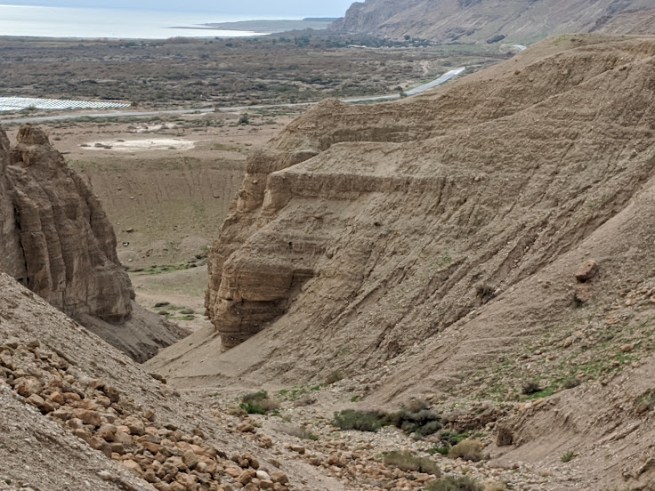
The wilderness is a windswept gravel and sand mountainous expanse between Jerusalem (to the West) and Jericho (to the East). Four times in my life I’ve been privileged to lead pilgrims to the Holy Lands and to sit quietly on a dusty ridgeline taking in the environment of the wilderness. It is humbling to consider the temptation to eat where there is no food, to drink where water is rare. As the sun sets, oppressive heat is replaced by bone chilling cold.

If Christ could resist the Devil’s temptation to turn stones to bread, can I not resist the temptations of daily living? If Christ could reject a challenge to his sovereignty, can I also not resist challenges to my call and Ordained Ministry? “What wondrous love is this?” My thoughts return to the sacred hymn in the silence of the wilderness that surrounds me. 

Lent in the parish included both a personal call for introspection and a communal call for learning and shared fellowship. We’d host Wednesday evening dish-to-pass dinners followed by a Bible study or an appropriately themed movie. It was a time to be together, to be as one, as the Eucharist liturgy reads, one with each other and one with our God. 

Back in the day (Now you know that I am old!) I had arranged for the delivery of 16mm films to be delivered weekly from the Conference Resource Library. This was years before projectors and Power Point. The church had a cantankerous movie projector that displayed the 16 millimeter film on a flimsy screen. As the dessert was cleared and coffee cups refilled, all settled in for an inspiring Lenten movie. 

The lights went out and we all settled in for the show. People were happy. I was happy, content with myself that I was providing spiritual guidance for my flock.

Suddenly, a shadow swooped across the screen. Then, back again. “What was that?” I heard some startled to awareness. That was a mischievous bat, nothing more than a flying mouse that probably was housed in the church belfry. Children squealed. Mothers ducked for cover. The men entered the gauntlet determined to put a heroic end to the bat’s misadventure. 

It was a free for all!

The lights flew on. Coats were stripped from hangers and a half dozen men began chasing the offender with the hope of bagging him. After several failed attempts, amidst a crowd of now shrieking children and mothers  telling their husbands to “do something,” the men regrouped. What to do? 

“I’ve got a tennis racket in my truck,” one gentleman offered. The rest of us wondered what he had a tennis racket in his truck for? Playing tennis wasn’t exactly a thing in rural Yates County. “The bat’s radar won’t see it coming.” 

The refined dinner and a movie group of parishioners became a cheering crowd as the lone man chased the bat around the fellowship hall, flailing with a tennis racket. Finally, a swift backhand launched the bat across the room, knocking it silly. A coat was quickly thrown over it. A group of victorious men walked the bat-in-a-coat out the side door and set it free into the night air. 

It took a while for proper Lenten decorum to be reestablished. When all were settled in, the lights went out, the projector was restarted, and the movie returned to it’s inspirational self. 

An athlete I am not. Don’t even pretend to be. I swim my fifteen laps every Monday, Wednesday, and Friday morning, not because I want to, not because I like to, but because my doctor and medical research has demonstrated the importance of regular exercise. 

“If I had it my way,” I thought to myself this morning, “I’d be home in my nice warm bed.” 

This morning I dug at the water, fluttering my kick, raising my heart rate for a half an hour. Three groups of five, my brain tells me, is an easy way to keep pace, an easy way to keep count. Except, I have been known to lose track, lost in meditation or thought.

Reach and pull. Reach and pull. My reach extends my arms as far forward as I am able, stretching sinew and muscle, causing oxygenated blood to surge and flow. My fuselage rolls with each reach, giving opportunity to breath out of the side of my mouth in a rhythm worthy of a drummer. 

Just as quick as it starts, I’m done, leaning against the end of the lane gasping to catch my breath. The lifeguard takes notice. I nod that I am okay. I just need to catch my breath. 

There are times throughout my pastoral ministry that I’ve needed to just stop and catch my breath. Periods of hard work and preparation, followed by execution, relief, exhaustion, and nodding to sleep in my easy chair. 

Technology was breaking out all around me. Copy machines became small and affordable. Stencils and ink spewing AB Dick duplicating machines were relegated to the junk closet in every church. Bulletins and newsletters could be typed and copied much easier, much faster. 

I bought my first personal computer; portable it was called. My new K-Pro sported two five and a half inch floppy disk drives and a whopping 16 k of working memory. It weighed in at about thirty pounds. Portable? Just barely.

Programs were on one drive, data was saved on the other. My K-Pro spoke programming languages I was familiar with, harking back to my college days working IBM and DEC mainframes. The only thinks lacking on my new K-Pro were the punch cards and a printer. New daisy wheel printers were expensive, but I bit the bullet and had one delivered to the parsonage. 

Parishioners scratched their heads in wonder. 

Lightyears before email and the internet, it was hard to imagine what a computer and printer could do for a parish pastor. I provided printed spread sheets for finance teams and the Board of Trustees. I began to print a bulletin and monthly newsletter, run it over to the corner store where the one copy machine in the entire village was located, pay five cents a copy, fold and press, and, boom, it was like Jesus turning water into wine.

My volunteer printer and AB Dick bulletin maker, covered in ink when that contraption blew up one morning, spewing ink from head to toe and across the walls and ceiling, thought I was able to walk on water.

Who was I to bust her bubble?

The county fair came every July. Each of my two churches ran a food stand on the main thoroughfare, selling hamburgers, hot dogs, fries, macaroni salad, homemade pie, and assorted other things. The question became, which of the two booths were you going to work, Pastor?

I couldn’t prioritize one over the other, neither could my choice reflect any preference or quality of food. The Fidelus Class of young adults, who’s average age was about 65, ran the one booth, while the other was operated as a Y’all Come type of affair. Everyone was expected to volunteer and make donations. If you couldn’t come up with four or more home baked pies, and schedule yourself for 16 hours’ worth of shifts flipping burgers, you’d better send a sizable check. The two concession stands stood on opposite sides, facing one another. My choice would be affirmed by one, at the same time, observed by the other.

What was I to do?

So, I did what any young buck, newly ordained, inexperienced pastor would do; I did both. The best controversary was the one avoided, I naively thought to myself. How soon I would learn different.

The week of the county fair, I rotated on a daily basis between the two booths. No time to prepare for Sunday; I was stuck working twelve or more hours each day hawking food to fair goers. At the end of fair week my first year in the parish, I was beat! Completely and utterly exhausted, and everything about me smelled of grease. The following Sunday should have been a vacation Sunday, but, nope, I was too green to know better and nobody was forthcoming to tell me different.

By God’s grace, each year I learned. Each year, I got better.

I learned to stop and catch my breath.

29. Lights and Siren: Closing One Door, Opening Another

Before moving on to my first parish, I had to say goodbye to SK Wiley and friends at the Miamisburg Police Department. I rode road patrol with them a minimum of once per week my last year of seminary, usually the evening or late night shifts. I was privileged to get to know the officers well, learn their back stories, and of their present day joys and challenges. Saying goodbye was the least I could do; saying thank you for their gift to me and my professional development was even more important.

They pulled pranks on each other, shared tragedies, locked up the same career criminals, week in, week out, over and over again. Shared experience made them tight as a family, dysfunctions, and all. One moment I’d hear whining, “Yeah, that fat fornicator served in Viet Nam, but he spent his whole tour sitting on his ass changing airplane tires.” Or “hope his wife never hears from his mistress.” Or “Too bad he can’t hold his liquor. I found him last week sleeping in his car, passed out behind the wheel, stuck in a ditch, drunk as a cooter.”

It was a different time and a different era.

Yet, when the chips were down, everyone came out of the woodwork to protect one another. Be it “shots fired” or “personal injury accident” all stops were swept away, off duty cops responded, everyone, from the chief to the new hire, jumped into harm’s way. It was tight as blood, and I had been made an honorary member of the family. How cool was that?

There were too many experiences to write about, but here is a sampling: Doing donuts in the high school parking lot after a heavy snow, giggling like high school kids. There was the guy who hung himself in the basement, having his wife discover the grizzly scene. Then, the lady and her infant who’s pickup stalled on the railroad tracks, only to be demolished by a freight train. “You smashed up my brand new $50 truck?” her husband shouted at her over the phone.

I’ll never forget the kid arrested by an Indiana cop on a warrant in a city park, ready to be beaten to a pulp, until the young, inexperienced, poorly trained home-town-hero looked up and saw me standing there in my clerical collar with arms folded across my chest. Not on my dime, Jerk.

Playing the intruder in a darkened bar with an open door, crouching on a toilet in the women’s room, dressed in oversized protective padding, having the police dog sicked on me. Jake was good, even with one incisor missing. Everyone got a laugh of the terrified Padre.

Skyline Chili is a thing. I love it, a five-way topped with melted cheese and tabasco sauce. The local franchise charged us half price if the cop was in uniform and parked the cruiser out front. Problem was, after a five-way and four or more skyline slider hot dogs, the GI system responded with a plumb. “Damn, Padre!” Steve would yell at me. “Roll down your window cause I can’t breath!”

Steve’s radio crackled, “See the domestic, at such-and-such address.” “That’d be Jokie Horn and his girlfriend,” Steve told me. “Let’s go.”

Lights and siren. I love me some lights and sirens, revolving red and blue, both the wail and the European high-low. Traffic parts for you, especially for cops. For fire trucks and ambulances, not so much. I guess a badge, gun, and handcuffs make all the difference. Power. Authority. Command. It matters.

We pull up to find Jokie and his girlfriend duking it out on their front porch. Jokie has a handful of hair and she had cut Jokie face real good. Blood was everywhere. Both hillbillies were blind drunk. Snow was lightly falling and I can still remember seeing my breath. Must have been Christmas time.

Bam! Steve hit them both like a hurricane, while I stood back on the freshly shoveled front sidewalk, unknowingly stepping in something soft. They both collapsed like a house of cards. With Jokie and girlfriend cuffed and locked behind the cage in the back seat, we started the drive back to the station.

The smell of dog shit filled the cruiser. Jokie and his girlfriend began to complain and their eyes watered. The heater was on full blast, which made the situation all the worse. Tear gas would have been an improvement. Steve looked over at me, slammed on the brakes, and said, “Padre, if you go stepping in dog shit, be sure to wipe it off before getting in the car.”

“Yes sir,” I said giving him my best Gomer Pyle salute. I got out, cleaned off my shoe, wiped the floor mat in a snow bank, all the while, Steve, Jokie, and his gal were laughing themselves silly. “Jokie was beating on my face,” she later wrote out her complaint when she sobered up, “That’s why I called the P-O-L-L-I-C-E.”

I can’t make this stuff up.

Laps this morning were matter-of-fact, no nonsense, fifteen laps of up and back hard charging freestyle. My wife was late to breakfast, so she kindly sent me ahead with her promise to follow.

Our normal routine is for her to meet me when I emerge from the locker room. She’s able to use the machines in the Jewish Community Center that work her arms, legs, abs, and everything else in-between. She knows when I’m coming out because she hears the squeak of my wet Crocks, pink beauties that resemble oversized clown shoes. They protect my feet from the dangers of a dirty, viral infested locker room floors and pool deck. 

Laps today were meditative, restorative, quick to pass by. With each lap I thought of each year I served the churches in Dresden and Milo Center (1986-1989), Canandaigua (1989-1991), and Palmyra (1991-1999). The final two years (to make 15 laps) were painful but necessary years for a mid-career adjustment. 

Reflecting with each stroke I saw beautiful Finger Lakes and autumn leaves, back country roads and Mennonite buggies, and villages nestled in valleys, hidden by wood smoke from fireplaces and stoves. Snow days brought time to a standstill. Fresh plowed and tilled fields graced dairy farms, red barns, and blue silos. Vineyards laden with grapes and orchards of apples and peaches. Tall church spires pointed to heaven and graveyards marked the final repose of both sinner and saints. Trains moved commerce and fire sirens signaled  the ending of the day. 

Life in the Finger Lakes has been good.

One of my last opportunities to go on patrol with SK was hard. Emotionally, I knew I had to say good-bye. At the same time, I was having more fun in my clerical collar than should have been allowed. These cops were my cops, and I loved them all.

Steve loved to regale me with his stories of working at his previous department. He was the only white guy to successfully work undercover drugs in black neighborhoods, or so he said. Steve told me of responding to a call on Thanksgiving to find the whole family chowing down on turkey and gravy, even as dad laid with his face in his plate, a bullet hole in his forehead. “I told him to pass the meat,” momma said, and went right on eating. Yikes!

The cops provided perimeter security for a local factory, all very hush-hush, highly classified government stuff. The campus was ringed with military wire, elevated machine gun towers and missiles that pointed towards the sky. I kid you not. A middle of the night call went out, an alarm for a possible security breach. Blue and red lights are beautiful at night. No siren was needed, for the streets were empty during these early morning hours.

SK parked his cruiser diagonally across the intersection, he pointed toward a tree and said, “Padre, park your ass behind that tree and pray nobody starts shooting.” He didn’t have to ask me twice. I peeked out to see SK pop the trunk, put on tactical body armor, strap on a  helmet, and pulled out the coolest looking H&K submachine gun I’ve ever seen.

Now there’s something you don’t see every day.

I salute brother and sister law enforcement officers. They’re often down in the dirt, wrestling with the devil, day in day out, trying to hold their family and personal life together, and remain sane at the same time. It’s a tough job.

Bad cops? Yep. Thankfully, in my experience, they’re rare. Good cops? Lots more good cops than bad. Way more. Exceptional cops? There are a lot of them who live a disciplined life, who embody service and love of neighbor, give extra effort, and strive to be better every day. I hold all in my prayers and highest esteem.

It was really hard saying goodbye.

Those lights and sirens.

Writing about my experiences in the parish is complicated. “Do no harm,” my conscience tells me. I couldn’t bear to hurt anyone. Some have died in the Lord, yet, their legacy needs to be respected, defended even. Others live. Their confidences are not mine to share. Even the use of pseudonyms isn’t sufficient, for events may unintentionally identify individuals. 

Parishioners confide in their pastor. That information is theirs, not mine. They own it like a car and title, like a house and deed. I’m not free to share without express permission. Throughout my forty plus years in the parish, I’ve carefully created compartments in my mind to hold memories of confidences. Even a judge’s court order would not compel me to talk without explicit permission from the owner. My wife is not privy to these, nor anyone else on the planet, except for one: my psychiatrist. 

Having the support of a psychiatrist is an essential key to my success in the parish. I’ve been blessed with the same professional for over twenty-five years. He is the one source of objective feedback regarding my mental, emotional, and spiritual health. Our relationship is locked tight confidential. 

During periods of anxiety or stress, my psychiatrist has carefully monitored me and provided effective treatment. Symptoms of depression have been held in check. He’s taught me effective management techniques to remain healthy and productive. He has put more tools in my toolbox than all the workshops or continuing education experiences I’ve attended combined. He is a cheerleader, guide, counselor, and accountability check. I don’t get a free pass when I’ve screwed up. Rather, options are played out for redemption and healing. It also helps that he is a faithful layperson in a similar protestant denomination. He knows how the sausage is made.

Over the years, I’ve counseled new or less experienced pastors to get themselves a good psychiatrist. Not because I think they are crazy. No. We all need that someone we can go to when the going gets rough. And, yes, it can get rough in the parish. 

Okay. So I can’t betray confidences, but …

… there are stories of triumph to share, heartwarming experiences to tell about. There are moments of faith to witness. There are accounts of the movement of the Holy Spirit – the God of my experience – to testify. I’ve even been witness to miracles. My life lived in the Spirit gives me goosebumps when I fathom the blessings and grace I’ve received. 

This, I will attempt, with pastoral love and affection, with the sole purpose of giving glory to God. 

George and Laura were our neighbors. I came to love them both.

Each in their eighties (I would guess), George was retired from the local power plant; a boiler operator who spent his life watching and adjusting the ratio of coal, sulfur content, and oxygen being atomized and shot into a firebox. Industrial scale electricity generation, courtesy of New York State Electric and Gas. George spent a lifetime at top level engineering, critical thinking, and decision making. It was soot covering, sweat stained, muscle straining, salt of the earth hard, honest work. It fascinated me.

George smoked a pipe, so I did, too. He had a Sears lawn tractor; the church provided me with an identical grey Sears steed, so when he mowed, I mowed, too. George had a split rail fence between our houses that we’d lean against and talk about everything except getting down to doing something productive.

One hot, summer afternoon we took a break from mowing. We chatted small talk over the fence when a flatbed truck pulled into my back yard. The driver, a farmer from my parish, didn’t say a word. He just backed up to my door, left arm farmer tanned flopped out the window, navigating in reverse using his side mirrors. He squealed the brakes to a stop and tilted the bed. Off slid a wood crate full of freshly harvested cabbages. “This is for you and the misses,” he said, giving me the thumbs up.

“Good for the colon!” he grinned, and drove off.

“Now, what am I going to do with a crate of cabbages?” I wondered aloud. “If you don’t want them, I’ll take ‘em,” replied George. Visions of sauerkraut ferries danced in his head. George had a lifetime of being well prepared for such an occurrence.

Over the next couple of weeks, the neighborhood became saturated  in the smell of sauerkraut fermenting from his garage. Cut up in a 55 gallon barrel, simmering over a slow burning propane flame, George cooked down some mighty fine tasting, old fashioned kraut that he shared with the neighborhood. Um, good!

“Can you drive a fire truck,” George asked me as he pulled on his pipe. Cyntha and I had only moved in a week, or so, before. The parsonage had been left a wreck, so we stayed at a parishioner’s lake house for three weeks while work parties (and Cynthia) stripped wall paper, patched walls, repaired cabinets, replaced appliances, and painted. The parsonage was like new when we moved in. The generosity of parish volunteers still takes my breath away.

“I suppose I can drive anything, if you teach me,” I replied. “Good,” George replied. “Here is an application for the volunteer fire company,” he pulled the form from his pocket. That afternoon, George gave me my first orientation, most certainly before I was elected and approved.

There were three institutions in town, the church, fire company, and the Masonic Lodge. My church trustees were the fire chiefs and officers. They also served as the grand poo-baas in the lodge. I figured I could do two of the three. Being the pastor of the church, I was happy to be a worker bee in the fire company.

“Here’s the starter,” George patiently told me. “And over here is the radio, the lights, and siren.” Red and blue lights. And a siren. It was if my heart skipped a beat. Memories of Miamisburg flooded back to me. It didn’t come with a gun, badge, and a pair of handcuffs. But, it would do.

George and I would go on to putting out a lot of fires over the next three years. It was often just him and me in town during working hours. He was a county deputy fire commissioner, which entitled him to add a radio, emergency lights, and a siren to his F-100 brown pickup. Well into retirement, George would pull up behind my pumper at a scene, drag off a hose line, stretch it to where it needed to go. I charge it with water from the tank, and boom. George put the fire out.

Time to take the truck back to the barn, clean up, put everything back in order, and have a cup of coffee. Becoming a volunteer firefighter in Smalltown, USA was about as close to heaven as this country boy could get. And it came with lights and siren. Be still my soul.

One day, over the side yard fence, George had a pained look in his face. “What’s up,” I cheerfully asked. “My daughter has brain cancer.” Silence followed. What is there to say. My empathy and love for George and Laura were unbounded. “Would you take part in her funeral Mass?” he asked. “Yes, of course. It would be my privilege.

The Roman Catholic priest uptown was a good friend and trusted colleague. He was the fire chaplain for his department and a medic on the volunteer ambulance. We ran in the same circles. Our paths often crossed. Father M readily agreed to grant me access to all his bells and whistles.

The processional halted midway down the aisle and Father M began to use a mace to splash holy water around the casket. “In baptism, she was born to Christ. In baptism, she has died in Christ. In baptism, she has been welcomed home by Christ.” Or something like that. Father M stopped, pivoted in my direction and handed me the mace, smiling. When in Rome, I guess. I too, splashed the holy water. George and Laura took notice.

Not long thereafter, Laura became sick and was dying. Hospice arranged for a hospital bed to be place in the living room. My heart was breaking for George. With a stiff constitution, his faith saw him through. “Would you celebrate Laura’s funeral Mass with Father M?” “Yes, of course. It would be my privilege,” I repeated my promise. And I did.

George died a few years thereafter, perhaps of a broken heart. I cried deeply at the loss of my friend and neighbor. As a lifelong volunteer firefighter, his casket was carried on the hose bed of Dresden’s polished pumper from the funeral home to the Roman Catholic Church. Father M and I rode in the undertaker’s car at the front of the processional. The sky was turning black as we pulled up to the church and George’s casket was solemnly brought by the pallbearers into the sanctuary.

Midway through the funeral Mass the sound of rain on the roof and windows began to rise. Flashes of lightening increased in frequency. The roar of thunder growled over the church, village, and Finger Lakes region. Burial in a thunderstorm wasn’t going to be pretty. The church was full, mostly with volunteer firefighters in formal uniform dress. Midway through the funeral, pagers simultaneously went off, and a dozen or so local firefighters filed out before the Mass was done.

During the recessional, the rains came to an end and sunlight began to filter through the stained glass windows. We exited the church to witness a rainbow, beautiful and full of assurance, that hung above town. I said to Father M on the ride to the cemetery, “Wasn’t that just a beautiful sign from God?”

We pulled into the village cemetery and made our way to the open grave. There were three firetrucks parked off to the side, hoses lying on the ground, and the burnt trunk of a tree next to the grave. Yes. A bolt of lightening struck a tree beside George and Laura’s grave, just as we were prepared to say our final prayers. It was one of those God moments. A divine intervention for all of us to witness.

I’m still moved with emotion forty years later. Bearing witness to God’s grace, power, majesty, intervention is truly miraculous. Thank you, God, for extending to me your unmerited privilege.

28. Graduation, Ordination, and Moving to Our First Parish

My three years of seminary were coming to a close. My Brother electric typewriter was plum worn out. My Merriam-Webster was stained, worn, and key pages were dogged. The binding was broken in numerous places. Classes were passed, oral and written exams were completed. All that remained was crossing the stage and receiving my Master of Divinity degree, dressed in a black academic robe and scarlet red Master’s hood. Hard. Long. Intense. I’m guessing we graduated two thirds of those who started. 

I was tired of reading “church stuff.” So, off I went to the Dayton Public Library and borrowed three Stephen King novels. Hibachi grills sprouted like daisies on campus with graduate families celebrating with picnics and social gatherings. Frisbees flew and snot nosed kids were ramming around the seminary campus. Life was good.

Graduation brought forth the question, “what’s next?” For some of us, it was back to our home conferences Board of Ordained Ministry (BOM) for written and oral examinations for recommendation, or not, for ordination as Deacon and Probationary Member of conference. My written packet was about 40 pages of double spaced content, six copies, mailed off in early January. Each of us had to travel to our respective conferences to sit for two days of oral exams. Being the tightest union imaginable, BOM didn’t want to let in any slackers. 

Those of us from Central New York sat for our exams at the Liverpool United Methodist Church (a suburb of Syracuse, NY). Those who passed, and not all of us would, were invited to the Bishop’s retreat at Casowasco, where Bishop Stith would spend three days with the proposed class of ordinands, lay down the law for all clergy members under appointment, and conference staff could provide an orientation for employment.

But, to get there, each of us had to get through oral exams. 

At that time BOM was composed of forty, or so, Elders, divided into interview teams of three or four. Members of the Board had read all of our written material; many marked them up in bright red pen. Interviews were categorized by topic and candidates would rotate like musical chairs. Eight hours of interview per day, with breaks for coffee and lunch. Afterwards, BOM members would meet, compare notes, and vote to recommend, or not, each candidate. It was exhausting, emotionally draining, and fraught with danger. 

Waiting for results was really hard. I just wanted to throw up. A number of my group were asked to come back next year. Thankfully, I passed and my bags were packed for Casowasco. 

Other than a few casual encounters with the Bishop, I really hadn’t met Bishop Stith. He was a big, lanky African American with a gentle countenance. Laid bare were his marching orders: No arrests, no infidelity, no stealing from parish funds. Discipline words and behavior. Dress professionally. You represent Christ and His holy Church. Act like it!

Because parish pastors are largely unsupervised day-to-day, we were required during our probationary period to keep a daily account of our time spent on parish activities, with reports to our local church Parish Pastor Committee and the BOM. We were, after all, probationers for a minimum of two years before becoming eligible for full ordination as Elders and full conference membership. The golden ticket.

Ei-ya, Captain!

Sage advice came from the Conference Council Director, Vernon Lee, and the Conference Treasurer, Roger Strait. They taught us the essentials no one had bothered to teach us in seminary; How to complete monthly expense reports, enroll in health insurance, and invest in the pension fund. “Save all you can,” Roger explained, “even to the point where it hurts.” We were also encouraged to opt in to Social Security, for participation is voluntary with clergy. I did. Now in retirement, I’m blessed more than I ever could have imagined forty years ago.

The Bishop had his flaws, as his behavior and service were negatively impacted years to come. Yet, he led the ordination retreat with grace and love. Roger and Vernon were two of the best, mentors for this green behind the ears candidate for ordination. I loved them all, and responded with enthusiasm. God gave me their friendship and wisdom. The least I could do was serve with integrity and honor.

The pool this morning was intimidating. My previous swim was all freestyle, no sluffing off or dogging it with a few laps of breast stroke. Half an hour of all out “get me some.” Could I do it again 48 hours later?

Half an hour of laps wouldn’t  even constitute a warm up for a high school swim team. SEAL training do this in their sleep. Who was I?

Retired. 64 years old. Nothing more than a wind bag full of excuses, I tell myself. 

So, I dug in, hit it with all my might. Each lap brought back memories of the associated grade in school. Lap six, sixth grade. You get the hint. Twelve grades and three years of college. Boom! Shut the door. No more laps until Monday, when, I’d start it all over again.

Again, I watched the soapy water swirl the filthy drain as I stood exhausted in the hot shower.

The Conference employs, we like to say in the United Methodist tradition, while the Bishop deploys. I was about to place myself in the bull fighting ring of appointments. Where were Cynthia and I going?

Loose ends in Dayton were tied up. Cynthia completed a year in the neo-natal ICU at Miami Valley Hospital. The U-Haul was packed and the apartment was swept clean. Even the Stephen King novels were returned to the library, read cover to cover. 

Being new and lowest on the seniority list, my appointment didn’t come through until the first of June. Big churches, tall steeple, and highest salaried pastors went in January. Everyone else in-between, in a complex Daisy chain succession of moves, were appointed and choreographed by the Bishop’s office. God bless their souls. 

Dresden and Milo Center was our destiny, located on the West side of Seneca Lake, in rural Yates County. The nearest civilization was the village of Penn Yan (Up town) and the City of Geneva (the city). Rural. Blue collar. My kind of people. The hills overlooking Seneca and Keuka Lakes were covered in dairy farms, vineyards, and back country roads. Salt of the earth people, descendants from the Revolutionary War soldiers given land grants following the conflict (much to the consternation of the Iroquois nation who were native to the land). 

The district superintendent, Jim Spear, the representative of the Bishop’s office met us in Geneva and drove both Cynthia and I to meet with the Pastor Parish Relations Committee (PPRC) of both churches. They were pleased as punch to meet us. Both Cynthia and I were all smiles. 

Yes, Geneva had a hospital with Labor and Delivery, so Cynthia would be employed in her call to nursing. God called her to become an OB/GYN nurse of the highest order, just as sure as God called me to serve as a parish pastor.

The parish paid $11k per year, so we could afford a car, pay off our student loans (amounting to over $21k), and buy a few groceries. Around the PPRC table were representatives of the parish; Wrinkles spoke of wisdom, calloused hands spoke of hard work, loving eyes revealed faith, deep and strong, like Seneca Lake, the largest and deepest of the Finger Lakes.  

Time to take a tour of the parsonage. Nervous glances around the table betrayed anxiety with the departing pastor and spouse. His efforts flamed out amidst scandal and pain. He was headed off to a life of a failed marriage, selling office products. The parsonage was left in disrepair and smelling like cats. As Jim drove us back home, tears were in Cynthia’s eyes. “Yep. There’s work to be done in Dresden and Milo Center. But that is just what you’re going to do,” he told us. 

And we did it.

Conference was held the third week in June in Hamilton, NY at  Colgate University. About 600 clergy and laity representing 300 local churches gathered for the annual event to celebrate our shared ministries, retirements, passages, election of new clergy candidates, and ordination. 

Cynthia and I stored all our earthly possessions in a parishioner’s garage in Dresden and stayed at her family’s cottage at Bradley Brook, just 8 miles away from sessions at Colgate. The day of my ordination I had to clear a clogged toilet, a portent of things to come? No, but funny and memorable, none-the-less.

In the super-secret clergy session, the Board of Ordained Ministry presented each of us candidates, one at a time to the clergy members. One stood alone on stage, facing the music. Questions? Anybody?

I don’t know how the other candidates fared, but I had numerous pastors stand and gush about what a good guy I was and affirmed my call. Cleared of my dad’s legacy, I stood on my own two feet. Once elected, the Bishop asked us as a group the traditional Wesleyan questions … “Will you …” “Are you so in debt to embarrass yourself?” (Always got a laugh) “Will you follow Christ? Preach the Gospel? Celebrate the Sacraments? Serve the people in your trust?” 

“Yes.” “Yes.” And “to the best of my ability.” You get the picture. 

Ordination was the final event of the three day conference. It was a worship service where all the bells and whistles were brought out and the finest liturgical wares were on display. Not only was Bishop Stith presiding, two prior Bishops were assisting, Bishop Ward, and Bishop Yeakel.

During Holy Communion, Bishop Stith rich baritone voice led the singing of the Epiclesis, to the tune of Tallis’ Canon. The congregation, many hundreds strong would respond:

1. Come, Holy Ghost, our souls inspire, And lighten with celestial fire,

thou the anointing Spirit art, who dost thy sacraments impart.

2. Thy blessed unction from above is comfort, life, and fire of love;

enable with perpetual light the dullness of our blinded sight.

3. Remember Saints who’ve passed this way, for us to follow every day;

May we keep true their faithful life, justice, forgiveness,  love, and light.

4. Anoint and cheer our soiled face with the abundance of thy grace;

keep far our foes; give peace at home; where thou art guide, no ill can come.

5. Teach us to know the Father, Son, and Thee, of both to be but one,

that through the ages allalong this may become our endless song.

6. Prepare Thy table for yourfeast Thy kingdom come, to all, the least.

Our bread and wine return to you Our gifts of praise, thanksgiving, too.

7. Flames of Thy Spirit forge us new, and blow a fresh Good News from you.

Praise to the Father, Christ the Son, and to Thy Spirit, three in one.

I was deeply moved. Singing this at the communion table would become my practice the next 39 years.

The time had come. Each candidate was called forward by their full name, knelt before the altar and all three Bishops placed their hand on our head, as they read the ancient liturgy. Their three hands were heavy, and I felt held down, as if to impart on me the ancient reverence of St. Peter. “Take Thou Authority …” Bishop Stith commanded.

The ordained pastor’s authority comes from the “Thou,” from God, as imparted through apostolic succession. They Keys to the Church, to lock and unlock heaven and hell, are passed to successive generations of the ordained. The Bishop’s public affirmation of the pastor’s call and ordination means that the channel of God’s grace is made through the hierarchy of the Church (The Body of Christ), made abundantly available to the sinners and saints in the pews.

Heady stuff.

With authority comes responsibility. The call is much greater than doing a job. Seminary was much more than learning a trade. Membership in the annual conference and the privilege of serving under Episcopal appointment was more than joining the best union in the world. In my experience, ordination became a wellspring of God’s grace, a channel of God’s redeeming love and acceptance, the gift of spiritual transformation and welcome into God’s heavenly kingdom. I had been called and affirmed as one of many stewards of Christ Holy Church.

Take a breath, Todd. Come Monday morning, he trash still needed to be put out to the curb.

24. First Year Winter Break and Spring Placement

Pass / Fail is a beautiful thing. I passed all my courses in the Fall and was set to begin Spring classes mid-January. The seminary would be a ghost town over break so it was time to return home for a few weeks.

Rick Stackpole and I had been friends over a number of years. He was the waterfront director at Casowasco when I was on staff. It was his underwear that we bagged in zip locks, filled with beer, and froze in the staff house freezer. What ever I gave, Rick returned in kind. Our practical jokes were the stuff of legend. We both were from central New York, he was from Bath and I was from Elmira, in the southern Tier. He was, and is, wicked smart. He was drawn in by his first term professor of Christian Education, Don Rogers, and felt like he was right at home. Both Rick and I were on the ordination track with the Board of Ministry. We shared the same District Board, based out of Elmira, and we were both scheduled for our annual interviews.

The District committee tracks candidates progress through a process that includes mentoring, supervision by the candidate’s local church, educational progress, psychological testing, and half a dozen other boxes that have to be  checked. They represent an ever widening circle of discernment to confirm a candidates call to ministry. During the third year of seminary, they pass the candidate off to the Conference Board of Ordained Ministry for possible membership in the conference and ordination. All in all, it was for me an eight year process. 

Rick and I carpooled and headed home over Christmas break. Night driving was preferable, so we set off from Dayton, Ohio headed to Elmira well into the evening. We drove into a wicked blizzard. Snow on the interstate between Columbus and Cleveland was piling up fast. No moon, it was as dark as the inside of a cave. It seemed like we were the only car on the road. I was just nodding to sleep when Rick yelled in terror. The car spun in circles, at least a 720, headed off road, and we ended up buried deep into a snow drift. 

Just great. Neither of us had any money. AAA was for rich people. And our luck ran out. We were going to be a day late and a dollar short. What are we going to do?

We keep the engine running and the lights on as we considered our options. After about a half hour we heard a tap on the window. An Ohio State Trooper had seen our tracks and lights in the snow drift, came to a stop, and hiked down to investigate. “You boys okay?” He asked. 

I don’t know about Rick but I was near tears in despair. He must have seen the look of fear and uncertainty in our eyes because he said, “Let’s see what we can do.” The trooper was massive, all muscle, built like a bull dog. I got out. Rick stayed behind the wheel. We pushed. Rick spun the tires. We rocked the car. Slowly, but surely, the car made its way back to the road, foot by foot. Both the trooper and I were drenched in sweat … poor guy. 

“Thank you,” I said as we were both bent over at the waist trying to catch our breath. “What do I owe you?” I naively asked. “What? What are you talking about?” The trooper replied. “This is what I do,” he said. “It’s all part of the job.” 

His job, his call to ministry, was to help young, idiot seminarians out of a snow bank, and get them safely back on their way home.

“Thank you, sir.” I said. Thank you, O Lord, for sending Rick and me a kind hearted, strong as an ox, Ohio State trooper. 

Laps are usually a time to quiet my mind, to meditate without interruption, to listen to the still soft voice of the Holy Spirit leading me in harmony with God’s will. Not this morning.

The pool was cool and I had a lane all to myself. I should have been content. Instead, my mind raced from topic to topic, issue to issue, from opportunity to threat that life was sending my way. 

“Be still,” I told myself. 

Drain the thoughts like pulling the plug in a water filled basin, I thought to myself. “Be quiet,” and observe the anxieties circle in vortex as the water is drained away. 

Ten laps of freestyle, I counted, along with another five of breaststroke. In the blink of the eye, I was standing under a hot shower washing the chlorine off my body. The water felt good, oh, so good.

The woman seated across the table looked pleasant enough. Roy C., a full time counselor in our Crisis Unit sat in the corner, observing, taking notes, looking at every aspect of my assessment. I was doing my best to appear non-threatening, kind, and respectful. The clinical phrase we used was “establishing a non-anxious presence.” Like a branding iron, pastors everywhere work their non-anxious presence.

“What brings you in today?” I asked quite innocently. 

“I had to wash my mother of her sins,” she replied. Her thick mental health record had tipped me off to a lifetime of physical, psychological, and sexual abuse at the hand of her mother. She showed no sign of fear, anxiety, or guilt. Not a care in the world.

“What happened?” I asked.

“I stabbed my mother with a butchers knife,” the woman smiled. My eyes widened. She proceeded to tell me that she then used the knife to dismember the corpse, cube the muscle, dump it all into the washing machine, added detergent, and set it on spin. “She’s all clean now,” she smiled at me. 

A danger to self or others, with the means and intent, was sufficient clinical criteria for admission to our locked psychiatric unit. Dayton Police handcuffed her and transported her to our unit located at the Dayton State Psychiatric Hospital. The crime was never mentioned on the news. I assume she was remanded by a judge to a forensic psychiatric facility, but I don’t know. I never heard from her again. 

Lord, have mercy. 

As spring term of our first year drew to a close, we were to be assigned to a student church for our middle year. I decided I wanted to stay on with Eastway Community Mental Health because I loved working with people in crisis and those with chronic mental health diseases. I was good at it and it was rewarding. I was young, needed little sleep, and it paid five bucks an hour. 

Regardless, I had to work in a parish setting twenty hours a week, supervised by a senior pastor, in addition to being a full time student, reading, writing, and attending class. Student churches treated seminary students like a new change of clothes. One would leave, another would take their place. The work was always leading the youth fellowship group, assisting in worship, and, rarely, filling the pulpit. 

I was assigned to the St. James United Methodist Church in Miamisburg, Ohio. It was a suburban community about ten miles south of the city of Dayton. The church was large, compared from my experience of United Methodist churches in central New York. Attendance was about 300, divided between two services on Sunday. I could give them all day Saturday and Sunday, but that was about it. 

The secretary smiled and pointed my way to the pastor’s office. My knock was timid. What was I expecting? I had no clue.

“Welcome to Miamisburg,” the short Italian gentleman stood from behind his desk, came around, and shook my hand. He appeared to genuinely want me to feel right at home. Hospitality on the half shell. “I’m Nunzio Donald Catronie,” he enunciated every syllable with a natural Italian accent. “But you can call me, Don.” 

I knew I was right where God wanted me to be. 

Don was a tenured elder in the West Ohio Conference. He was confident in his own skin. He’d seen it, done it, wrote the book on pastoral ministry. He was an exceptional mentor my second and third year of seminary. 

Don loved restoring old Toyota Celica and Civics in his garage, eagerly participated in youth events I arranged, and added many tools to my pastoral toolbox that would serve me well. One, was to always write out prayers in advance, otherwise “you end up saying the same old thing the same old way every time you pray. People deserve better,” he’d say. 

Two, when it came to setting the fee for doing a wedding, don’t fall into the same trap he had done in his early years serving the parish. “Never ask the groom, ‘how much is she worth to you?'” he reported. The first, and last time he did this, the groom pulled out his wallet and gave him a one dollar bill for his services. 

Don was such a blessing to me. He and his wife often welcomed me for lunch after Sunday services. He introduced me around town, with other Clergy, down at City Hall, the Rotary Club, and with families throughout the parish. The people of the Miamisburg United Methodist Church were kind and loving, gifting me with blessings and experiences that would serve me well. 

It was a Miamisburg city police officer by the name of S.K. Willey that would end up changing my life. 

19. God’s Call to Ordained Ministry & Pine Valley

Reflecting back, I was not developmentally prepared to leave home and go away to college for my first two years at Clarkson. I was undisciplined and exploited my newfound freedoms in behavior that I’m not proud of. Hungover one Sunday afternoon, I met up with Bill, the college chaplain assigned by the United Methodist Church to North country colleges, to visit a local church Youth Fellowship gathering. Bill grabbed a hold of my shirt, pulled me close, and looked into my bloodshot eyes. “What does God want you to do with your life?”

There was a question I had never considered. God’s will for my life. Hum. 

The winter of my sophomore year, the Clarkson hockey team traveled to Boston to play in the ECAC tournament at the Garden. I loaded up a car load of fraternity brothers and made the road trip to support our team. I dumped the others off at their hotel and I met up with Phyllis, a graduate music student at Boston University, and a fellow Casowasco summer staff member. I slept on her apartment floor and Phyllis gave me the grand tour between games. 

Late one night we were locked away on the observation deck of the Hancock Tower watching airliners take off and land across the bay when Bill’s question kept returning to my thoughts. What is God’s will for my life? Engineering? Two kids and a boat in the driveway, earning a big salary at a large company? Or, was it something else?

Phyllis gave me a tour of BU, ending at Marsh Chapel, the cornerstone of the School of Theology. She introduced me to professors and students she had come to know during her time there. Serene. Peaceful. Powerful was the space. We exited the chapel and before us was a sculpture dedicated to BU’s most popular graduate, the Rev. Dr. Martin Luther King, Jr. On the pedestal were his words to “I have a dream.” 

The sun was just right. My heart was strangely warmed. I knew God was calling me to do what my father had done: serve as a pastoral shepherd of local churches. 

My laps this morning flew by. I replaced a 101 year old regular lap swimmer. “Did you warm up the lane for me?” I asked. “Yep,” he smiled, “and I made sure all the water in the lane remained wet.” God bless his soul.

One, one. One, two. One, three. Two, one. Two, two. Two, three, I counted as each lap passed me by. The cool water hydrated my dried out skin, giving me a break from the omnipresent summer heat and humidity. 

Push. Glide. Stroke. Breathe. Wash. Rinse. Repeat. Swimming laps is a beautiful thing, especially in retrospect when they are completed.

I was 19 years old, had transferred from Clarkson to Elmira College, and moved back home to settle myself down. The commute for my Junior year would be from Chemung, NY where my father served the Chemung and Willawanna parish. A major in Mathematics would ensure my transferred credits would be translated into a bachelor’s degree in four years and a ticket to graduate school. Math and computer science, back in the age of programing with IBM punch cards in BASIC or FORTRAN on a computer main frame the size of a house, would be my home.

That fall the phone rang. It was the District Superintendent, Bill Swales, calling. “I’ll go get my dad,” I replied. Bill knew me well from Casowasco and my solar panel hot water engineering days. “No, I want to talk to you.”

“What’s up, Bill?”

“I heard you were thinking about going into ordained ministry,” he said. He didn’t question my call, judge my youthful lack of maturity, or my utterly lack of knowledge.

“Yeah,” I replied. “Well, kind of. Maybe. I don’t know.”

“Well I have a church for you,” Bill offered. WHAT? Does he even know that I’m a 19 years old kid without a clue, my subconscious screamed. “What would I preach about?” I innocently asked.

“Well, you’ve got a Bible, don’t you?” Bill replied. Besides, your dad could help you along. “Plus, it pays $55 a Sunday, right out of the offering plate.”

“I’ll take it!”

Oh, boy. I’d have to put up or shut up. 

Pine Valley was about a 20 minute drive from home and a full hour from Casowasco. My first vehicle was a Datsun pickup truck, rusted to the rims, hand painted with a brush by the previous owner with green latex paint. Holes in the floor boards ensured a shower when it was raining. It was impossible to put the stick into reverse without opening the passenger door. Flies gathered on the inside of the windshield and died on the dashboard. It was the perfect vehicle for a pastor. 

The people of Pine Valley were so gracious and kind. They knew that their role as a part of the larger United Methodist Church was to give prospective pastors a start with a taste of ministry, or, to help ease into retirement those who were ready to go. I was a member of the former category. 

My first funeral was for a patriarch, a retired contractor with a large family. Dad gave me the Book of Worship. The undertaker told me when to enter, where to stand, and when to leave. Just read from the book, I thought to myself. How hard could that be? Another pastor entered and sat in the last row, a kind gesture of support. 

Note to self: when leading a funeral, print the deceased name on a sticky note and post it in the Book of Worship. The second lesson I heard from Ted’s funeral was to write in the title “The Lord’s Prayer” so I wouldn’t forget it. Sounds silly, but for a newbie, these little tips lasted me 41 years in the parish. 

From November 1981 until June 1983 I commuted to Pine Valley every Sunday morning to lead worship and preach. It fit my summer schedule working at Casowasco and my routine the rest of the year when school was in session. My first sermon was “On Christ the Solid Rock I Stand.” The rest is history. 

Kind. Gracious. Faithful. These were the people of Pine Valley who affirmed my call to Ordained Ministry, who encouraged me to continue down the path towards seminary. These salt-of-the-earth people would be found in every small church I served. They were God’s gift to me, mentors, cheerleaders, even financial supporters. Each, beloved. 

By the time I graduated in 1983 and was headed to United Theological Seminary, I had saved enough to trade in that Datsun for a used VW Rabbit. With a car loaded to the gills, I set course for Dayton, Ohio and three years of the unknown, leaving tears and gratitude behind.

18. Casowasco – 2040

It is wonderful to recall fond memories of my youth, call to ministry, and deeply felt connections to Casowasco. But, I ask, what of Casowasco’s future? What can Casowasco become by the year 2040, a mere fifteen years from now?

Two conditions that must be honored are related to the property being sold to The United Methodist Church in 1948, namely, the site carry on the “Case” name (i.e. Casowasco), and, that the land be use in ministering to youth and children. These conditions must be honored. Our word matters.

In earlier years, stable leadership and the popularity of summer church camp proved widely successful. Former campers and staff have enriched local churches with exceptional lay members and clergy. In recent years, the popularity of summer church camping waned, leadership frequently changed, and Casowasco oversite lacked mission, vision, and accountability. Today, Casowasco sits empty, the property is heavily capitalized and in need of repair. Consultants have been employed by the church to lead discussions and to create a plan for the future.

One consideration that should not be given the light of day is selling the property. This would harm the integrity of the Upper New York Conference, alienate prior campers and staff, and violate our word to Gertrude Case, her family, and estate. Legacy needs preserved. Cremains need to be honored. Furthermore, the potential for real estate development is high. This would lead to an environmental disaster to the woods, watershed, and lake.

A vision forward is needed.

For a vision to be transformed into mission and evaluative goals, the first priority for the next 15 years is to create a solid foundation upon which Casowasco may be resurrected. To this end,

  1. The stewardship of Casowasco should be transferred to an independent not-for-profit corporation, while the ownership of the property must remain with the annual conference.
  2. A solid financial footing must be established by a capital fund drive by the annual conference to stabilize and eventually to improve the property, facilitate donor development, and to pursue investment and grant opportunities.
  3. An effective not-for-profit board should be exclusively United Methodist, employ capable, stable leadership, establish a long-range plan, and be held accountable for the achievement of measurable and realistic goals.
  4. The long-range plan should stabilize the property, enact sound economic principles for the buildings and grounds, and make plans for future site development.
  5. The long-range plan should grow the financial foundation, support an aggressive development effort, and be flexible to a changing market for camping and retreat ministries. Casowasco can become financially sustainable, especially when the potential for fund raising is unleashed. Prior campers and staff will be generous in their support, provided the necessary policies have been put in place to ensure fidelity and trust.
  6. The long-range plan should include for the gradual implementation of site use.

What might the Casowasco experience be like in the year 2040? I can imagine three opportunities for the future of Casowasco

  1. Children and Youth Ministries
  2. Lay and Clergy Development
  3. A Finger Lakes Education and Cultural Experience

Children ministries should be maintained on a deliberately modest scale, anchored to one lodge or site, should be themed, and should be limited to a limited number of weeks throughout the summer. Perhaps one lodge should survive and become the sole host for children’s seasonal camping.

Youth ministries should anchor district and conference councils of youth ministries, provide short term camping experiences over educational breaks, and, possibly serve as an educational incubator for innovative local church Christian education initiatives. Think: training and running an effective vacation Bible school by hosting a Bible school academy every spring. Think: youth retreats, training efforts for youth mission trips, youth trip camps.

Lay development. Casowasco should be dedicated to training, empowering, and deploying effective lay leaders in our churches. Casowasco could host efforts to license and credential lay ministers and local pastors. Think: Mission academy, to develop the mission potential of local churches; Stewardship school, to develop effective stewardship programs; and Justice Institute, to develop and deploy effective justice ministries throughout the conference, impacting the entire world.

Clergy Development. Casowasco can become a leader in clergy support and professional development, as well as nurturing physical, emotional, and spiritual health. Think: Preaching Academy, where pastors can hone their homiletical skills; New Pastor Start Up school, to orient new pastors to serving in our conference; Clinical Pastoral Education; spiritual guidance and retreats; and Board of Ministry meetings, retreats, and interviews. Consider partnering with The Upper Room, evangelism and discipleship ministries, local seminaries and universities.

A Finger Lakes Education and Cultural Experience. Casowasco can be transformed into an educational center of excellence, teaching visitors about the geology, flora, and fauna of the Finger Lakes, ecology and environmental history, history of native Americans and colonials, the Burned Over District of religious fanaticism, women’s suffrage, industrialism, and the Great Gatsby Era, as reflected by the Case family history. Think Elderhostel, Ted Talks, corporate leadership retreats. Think retreats that support sobriety, serenity, and spirituality. The only limit is our imagination.

These thoughts are not an attempt to derail the process of discernment that is taking place. Listening is essential. United Methodist across New York and beyond have much to teach us. Intentional, gentle policies and procedures must be put in place that honors the legacy of Casowasco, rebuilds trust, and affirms a future that only God knows, even as we faithfully attempt to discern God’s will moving forward.

I’m praying the Casowasco discernment process bears fruit, worthy of the Lord. God dreamt big; in six days the earth was created, and the Lord took an additional day for rest. I’m praying for the day that Casowasco will return to bearing fruit, worthy of the Kingdom. Decades of decline must end. The tomb is empty; Christ is risen, and so, too, should the Church. Parishes need to be resurrected and placed on a growth trajectory. Casowasco can be that springboard of new life, grace, peace, and hope for the future.