34. Disillusioned but Wiser & Parish Ministry Undercover

After three years in my first parish I was asked to move. Ordination and full membership box, checked. This modestly increased my compensation package, but it just wasn’t in the cards for both churches to sell more hamburgers at the county Fair to cover my additional cost. We were happy where we were planted; the people were happy with my effort. The only thing that didn’t add up was the Conference minimum base salary and the bottom line. 

My wife, Cynthia, was comfortably employed by Geneva General Hospital, working nights and weekend doing labor, delivery, and post-partum care. She was hitting her stride, fulfilling God’s call for her life, doing her best to keep the obstetricians from knee capping each other, and expanding her circle of friends and coworkers. I pale in her shadow.

My new appointment was within commuting distance to Cynthia’s hospital. I was to serve as a co-pastor with someone who was fifteen years my senior. That’s what I was told, anyways. The vision of a big church with lots of people, far reaching missions and ministry, and a bump in compensation was too much for my pride to turn down. With three years of tenure, I can now look back and see how entirely naive I was.  Indeed, pride comes before the fall.

My partner was at the top of his game, politically connected with the Bishop and conference leadership, and well liked among peers. He looked and acted the part. In hindsight, he was probably excited by the possibilities of a bigger church, having an associate pastor and staff, and the prestige it provided. It also helped that he had family in the new church. 

My district superintendent sold me a bill of goods, some true, some not-so-much, and a whole lot of obfuscation. “There is a bit of a mess to clean up,” he repeated to me, an echo that led me to my first appointment. I showed up July first to find the larger office was already claimed, and I was to be happy with one half its size. Red flag, number one.

A prior beloved pastor left behind in a closet an aerosol can labeled “Bullshit Repellent”. We both laughed at the find. I should have been paying closer attention.

The people were wonderful to Cynthia and me, welcoming us to our new parsonage, making us to feel right at home. The staff became like a second family, Joanne running the office, Frank the custodian, Trixie on the organ, Sharon the choir director, and Barb the head of Christian education. All top shelf, first class professionals. 

Frank made the best coffee, and could often be found loafing in the boiler room, chair tipped back, his eyes closed in rest. The floors shined. The job got done, so, who should care?

Likewise, church leadership was excellent, local business leaders, a healthy mix of gender, background, and experience. All, well-educated, lifelong United Methodists and disciples of Jesus. The congregation was generous in sharing their time, talents, prayers, and gifts. Groups of the willing were being added to the roles with each new membership class. Fewer were quietly exiting by the back door. Racial diversity was lacking, yet, we were blessed beyond imagination.

One undertaker in the congregation was known to palm me a one hundred dollar bill at holiday time. Nice.

The second red flag was soon to be raised. In walked a former pastor to say “hello,” when, in fact, he appeared to be showing off two trophy women, one under each arm. He had left with a spouse dying of cancer, and under a pall of infidelity. The first attempt to move him was aborted when the new church learned of his portfolio and told the Bishop to go back to the starting block. His second attempt at assignment would end in unflattering ways, with alleged victims writing to me and drawing me into his mess. He was forced into retirement, but never asked to surrender his credentials. 

My foxhole just wasn’t deep enough.

The next red flag rose when we divided up assignments. Working with the Capital Fund campaign and the Board of Trustees was mine. Finance and Staff-Parish went to my partner. The one who is the steward of the money makes the rules, a painful point when it came to negotiating my future compensation. 

Other troubling red flags tipped up. No, I could not keep some things secret, especially where ethical lines were alleged to be crossed. No, I was never in the room, a la Alexander Hamilton, but I was being pulled into other situations where I was absolutely uncomfortable. Neither did I get any support for my less-than-forthcoming District Superintendent. 

It didn’t take long for trust to break down and for me to be seen as a potential liability. After two years, I was thankful for the experience, but I realized I was the captain of my own ship. Instead of ducking behind cover, it was time to maneuver.  We parted ways without any hard feelings, on my part, anyways. But our relationship would never be close. Over time, much has been forgotten, thankfully, but it was time to ask for another appointment.  

The lap pool at the Jewish Community Center is down for maintenance this week, forcing me to forgo my three times a week pattern of swimming. We are all in need of retreat, fixing, healing, cleaning, and restoration. Even community assets like pools, recreation centers, and houses of worship need time and attention, I suppose. 

I laced up my Pentecostal red walking sneakers, planning to take on the walking track. Elevated above a gym that hosted three pickleball courts filled with competitive geriatric players, the walking track appeared unusually occupied this morning. Probably displaced lap swimmers, like myself. My wife allowed me to borrow her mechanical lap counter; an occupied mind easily loses track of such mundane details. Ear buds, inserted; Handel’s Messiah is especially poignant this season of Advent. 

The voice of Isaiah spoke powerfully through the eons. “‘Comfort, O comfort my people,’ says the Lord. 

Twenty laps ticked off before I knew it. Arms waving, conducting an orchestra of my imagination, I’m sure others stared in disbelief at this self-absorbed nut job. 

Both my artificial knees held up without a whisper of pain. Thank you, Lord.

My original office just wouldn’t do. It was small, a closet really, right off the main welcome desk and administrative work station. Noise and constant interruptions were not conducive to the thinking, reading, and writing necessary for an Ordained, parish pastor. 

Ministry happens in the interruptions, a wise seminary professor once told me. Even he would be seeking new real estate given the unrelenting interruptions. A former storage room right off the choir room was perfect. Large windows gave me a northern view. And quiet; listen to the quiet! In moved a desk, my Kay Pro computer, books, and assorted office supplies. 

Patterns are revealed over time and with an attention to details. Each week, an older pensioner would walk across the church lawn to the center where a three inch pipe stood silently a foot tall. Just what was that pipe? And where did it go? The gentleman unslung five or six one gallon jugs, inserted a hose down the pipe, and began to crank a hand operated pump. Dark fluid began to fill the jugs. When finished, he carried the jugs to the trunk of his car, retrieved his pump, and drove off. Once a week, like clockwork. 

After a few weeks of this carefully choreographed routine, I decided I needed to meet this man. “Hi. I’m Todd, one of the new pastors here,” I introduced myself. “Who might you be?” Even as he continued to crank his pump he looked up and smiled. He introduced himself as a former custodian. He further told me that a former pastor had given him permission to draw off fuel oil as he needed, since the buried fuel tank was no longer used. A natural gas boiler had replaced an oil burner years earlier.

“Is it okay with you?” He asked.

“Yes, certainly,” I paused. “How long have you been doing this?”

“Oh,” he stroked his chin in thought, “probably for the past twenty years, or so.” 

Here was something they don’t teach in seminary.

The concerns of the chair of the Board of Trustees were embedded in the wrinkles above his eyebrows. He obviously had never known of the buried fuel oil tank in the church yard. His concern for the elderly gentleman paled in priority to a larger pan of frying fish.

“Wonder how big it is?” He asked. We had no idea, other than it had been pumped out a few gallons each week for the past twenty years.

“I wonder if it is leaking?” He wondered out loud. 

At the next meeting of the Board, the chairperson had the newly discovered fuel oil tank at the top of the agenda. Members shared concerns based on their knowledge and experience. What about the DEC (Department of Environmental Conservation)? They didn’t think highly of potential or actual fuel spills. Remediation costs were always astronomically high.

What about the city’s Historical Conservation Commission? Nobody on Main Street could so much as paint their house a different color (or pick their nose) without pre-approved permission. Professed ignorance was no defense. A long history of punitive fines proceeded our deliberations. 

Everyone talked themselves out. Apparently, there was no solution to this Gordian knot. No notes in the minutes were recorded and no decision was made; the topic was tabled by inaction. The chair moved on to the next agenda item and we got on with it. I could see from his demeanor that he was still working on a solution to the buried fuel oil tank in his brain, even as other items were checked off the agenda. Prayer. Motion to adjourn. We departed for the evening. 

A week, or so, later, I opened the shades on my office window and noticed a newly reseeded area of lawn where the pipe once stood. At eight in the morning, the church was just awakening. Downstairs in the kitchen, hot water was dripping into a basket full of grounds. The dew was still wet on the grass. I walked over to investigate. Hum. “What in the devil is this all about?” I wondered. Escaping my notice were two tractor trailer low boys parked in the back parking lot. By the time I returned to my office, they were gone. 

“What happened to the yard?” I asked the chairperson over the phone. 

“Is there a problem?” He asked. 

“No, its just that yesterday, the yard was green and this morning there is a 20 by 40 foot patch of newly seeded ground covered in straw.” I noticed the pipe was missing, but failed to mention it.

“I guess the boys got to work last evening,” he said, “but I’ve got to swear you to secrecy.” 

After dark the preceding evening, the chair had called in a favor. One of his friends owned an excavating company. With stealth and speed, a crew moved in with a shovel and cutting torches. Out they pulled a six-thousand gallon empty fuel oil tank, thankfully with no signs of leakage, cut it into quarters, and chained the remains to flatbed trailers. With my back turned in the morning, his guys departed with all the evidence taken to the scrap yard. Ten wheel dump trucks had filled the hole; the area hand graded and raked. Seed and straw completed the clandestine mission. No one the wiser, except the Board chair and this new, green-horned pastor. 

“Your secret is safe with me,” I replied.

That was nearly forty years ago and all the suspects I’m sure are gone to their heavenly reward. I am thankful that everything turned out okay, there were no leaks, and not a penny of church money was used. Whenever I’ve driven by, I take notice that the grass is still green. The only regret came when I informed the retired pensioner the next week that his old reliable source of free fuel oil had dried up. 

The new parish and parsonage was in a smaller city. There were even movie theaters in town. Funny how one remembers what is important. We moved from being a big fish in a small pond to becoming a small fish in a big pond. The local fire department had both paid, union firefighters, and, three companies of volunteers. My former neighbor, George, well connected in the volunteer fire service made the customary introductions. 

“You’d fit in fine with the Merrell Hose,” the full-bodied paid guy said, as he tilted back in his chair. That was fine with me.

The Arenea Hose company was the traditionally Roman Catholic company. The Hook and Ladders were an assortment of cast offs, want-to-be paid guys, and manual laborers. The Merrells were the Protestant guys (we were all male), the oldest fire company East of the Mississippi, we were told, and composed of all the local doctors and lawyers in town. No, most did not actually respond to calls or fight fires; they left that up to about five of us willing young bucks.

The Merrells meetings were held in secret, in an upstairs room of one of the city fire stations. High backed chairs lined the four walls. A desk, gavel, and chest were located in the center. Votes were cast by placing a white or black marble in the hole in the top. I received not one black ball, was voted in, and shown to my chair. Wow. Cool beans. I was in. They even assigned me a chair.

The Merrells raised money by their bi-monthly steak and clam roasts. It was quite the social affair. Liquor flowed unabandoned. Some of the money went to charity. Some of the funds went to outfit the actual volunteers who answered calls with only the best firefighting equipment money could buy. I received new bunker gear, a leather helmet, a grin, and a handshake. That helmet was a status symbol, the envy of every other firefighter in the region. 

The call came in for a fully involved house fire on Fort Hill Avenue. I drove to the scene and met the pumper and paid crew on scene. The first rule I was taught early on, was only union guys were allowed to touch a fire truck. Rule number two: volunteers don’t violate rule number one.

I backed up and a self-contained breathing apparatus (SCBA) was hung on my back. Straps were pulled tight, hose attached to my face mask, and air was turned on, just as I had been trained. Brian Mace, another Merrell guy, was my interior attack buddy. 

We grabbed an uncharged inch-and-a-half hose line, handed to us by the white helmet safety officer standing at the door. Glass was breaking, flames were rolling inside, and it appeared as if the house was building up pressure. We handed our ID tags with the safety officer and entered into Dante’s Infernal. Black smoke descended from the ceiling down, forcing us to our hands and knees. The fire had started in a wood stove at the far end of the room. We pushed the hose line ahead as we slowly, but deliberately, advanced. Flashover was imminent. Brian was in the lead with a radio and I was right behind him. He was much more experienced, and I felt confident he knew what he was doing.

The ceiling by the double walled stovepipe blew out and fire filled the room with explosive force. Brian called for water and opened the valve. We knelt and held on tight, ready for the surge of water. As the 60 psi stream hit the fire in the ceiling, the blown in insulation soaked up every drop of water that hadn’t be converted to steam. The ceiling sagged with the added weight and let loose right on top of us. We were driven flat to the ground. I was knocked silly. 

The hot water and steam flowed from the shower over my battered and bruised body, as I stood in silent reflection and nursed an ice cold beer. Thoughts of life, death, and eternal life flashed before my closed eyes. I was thankful for the Hopewell firefighters who arrived on scene just in time to bring their own hose line in, all the while dragging Brian and my sorry asses outdoors to safety. Just. In. Time. 

Thank you, Hopewell Fire Department.

My tie and dress shirt was ruined. Pants were torn and smelled of smoke. They could be replaced. But, I was alive. Brian was alive. We survived. We all survived; nobody was injured. The collective effort of volunteer and paid professionals saved the house from further damage. After a few months of intensive clean up and remodeling, the family returned to their house and home, none the wiser. 

Fire and furry humbled me, leaving me wiser, smarter, thankful for God’s amazing gift of grace: the ability to live to see another day. Thank you, Lord.

31. Lent, a Bat from the Belfry, Tech in the Parish, and the Yates County Fair

Lent is a time of year for personal reexamination of one’s spiritual health, relationship with God, and our personal journey with Christ. It is forty days long that, except for Sundays, grants recognition of Jesus journey in the wilderness, being tempted by the Devil. Every Sunday is a celebration of the resurrection, hence, every Sunday is a mini Easter. As Lent progresses towards Holy Week, we spiritually journey with Jesus from the Judean wilderness to Jerusalem atop Mt. Zion. The journey is uphill all the way, and, as such, is only for those who dare. 

Do you have the right stuff?

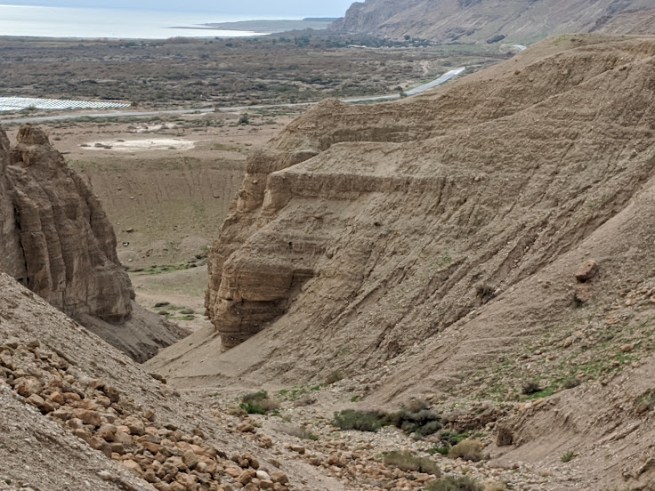
The wilderness is a windswept gravel and sand mountainous expanse between Jerusalem (to the West) and Jericho (to the East). Four times in my life I’ve been privileged to lead pilgrims to the Holy Lands and to sit quietly on a dusty ridgeline taking in the environment of the wilderness. It is humbling to consider the temptation to eat where there is no food, to drink where water is rare. As the sun sets, oppressive heat is replaced by bone chilling cold.

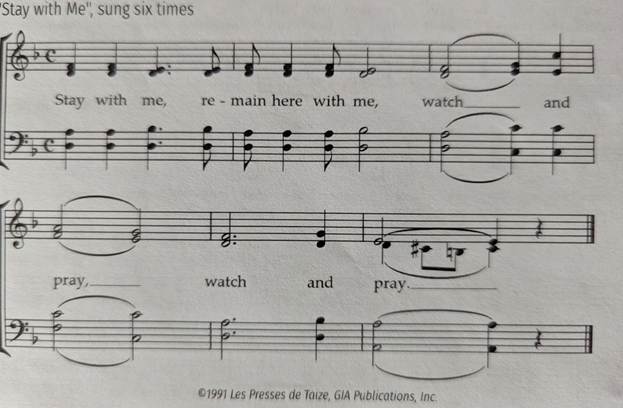
If Christ could resist the Devil’s temptation to turn stones to bread, can I not resist the temptations of daily living? If Christ could reject a challenge to his sovereignty, can I also not resist challenges to my call and Ordained Ministry? “What wondrous love is this?” My thoughts return to the sacred hymn in the silence of the wilderness that surrounds me. 

Lent in the parish included both a personal call for introspection and a communal call for learning and shared fellowship. We’d host Wednesday evening dish-to-pass dinners followed by a Bible study or an appropriately themed movie. It was a time to be together, to be as one, as the Eucharist liturgy reads, one with each other and one with our God. 

Back in the day (Now you know that I am old!) I had arranged for the delivery of 16mm films to be delivered weekly from the Conference Resource Library. This was years before projectors and Power Point. The church had a cantankerous movie projector that displayed the 16 millimeter film on a flimsy screen. As the dessert was cleared and coffee cups refilled, all settled in for an inspiring Lenten movie. 

The lights went out and we all settled in for the show. People were happy. I was happy, content with myself that I was providing spiritual guidance for my flock.

Suddenly, a shadow swooped across the screen. Then, back again. “What was that?” I heard some startled to awareness. That was a mischievous bat, nothing more than a flying mouse that probably was housed in the church belfry. Children squealed. Mothers ducked for cover. The men entered the gauntlet determined to put a heroic end to the bat’s misadventure. 

It was a free for all!

The lights flew on. Coats were stripped from hangers and a half dozen men began chasing the offender with the hope of bagging him. After several failed attempts, amidst a crowd of now shrieking children and mothers  telling their husbands to “do something,” the men regrouped. What to do? 

“I’ve got a tennis racket in my truck,” one gentleman offered. The rest of us wondered what he had a tennis racket in his truck for? Playing tennis wasn’t exactly a thing in rural Yates County. “The bat’s radar won’t see it coming.” 

The refined dinner and a movie group of parishioners became a cheering crowd as the lone man chased the bat around the fellowship hall, flailing with a tennis racket. Finally, a swift backhand launched the bat across the room, knocking it silly. A coat was quickly thrown over it. A group of victorious men walked the bat-in-a-coat out the side door and set it free into the night air. 

It took a while for proper Lenten decorum to be reestablished. When all were settled in, the lights went out, the projector was restarted, and the movie returned to it’s inspirational self. 

An athlete I am not. Don’t even pretend to be. I swim my fifteen laps every Monday, Wednesday, and Friday morning, not because I want to, not because I like to, but because my doctor and medical research has demonstrated the importance of regular exercise. 

“If I had it my way,” I thought to myself this morning, “I’d be home in my nice warm bed.” 

This morning I dug at the water, fluttering my kick, raising my heart rate for a half an hour. Three groups of five, my brain tells me, is an easy way to keep pace, an easy way to keep count. Except, I have been known to lose track, lost in meditation or thought.

Reach and pull. Reach and pull. My reach extends my arms as far forward as I am able, stretching sinew and muscle, causing oxygenated blood to surge and flow. My fuselage rolls with each reach, giving opportunity to breath out of the side of my mouth in a rhythm worthy of a drummer. 

Just as quick as it starts, I’m done, leaning against the end of the lane gasping to catch my breath. The lifeguard takes notice. I nod that I am okay. I just need to catch my breath. 

There are times throughout my pastoral ministry that I’ve needed to just stop and catch my breath. Periods of hard work and preparation, followed by execution, relief, exhaustion, and nodding to sleep in my easy chair. 

Technology was breaking out all around me. Copy machines became small and affordable. Stencils and ink spewing AB Dick duplicating machines were relegated to the junk closet in every church. Bulletins and newsletters could be typed and copied much easier, much faster. 

I bought my first personal computer; portable it was called. My new K-Pro sported two five and a half inch floppy disk drives and a whopping 16 k of working memory. It weighed in at about thirty pounds. Portable? Just barely.

Programs were on one drive, data was saved on the other. My K-Pro spoke programming languages I was familiar with, harking back to my college days working IBM and DEC mainframes. The only thinks lacking on my new K-Pro were the punch cards and a printer. New daisy wheel printers were expensive, but I bit the bullet and had one delivered to the parsonage. 

Parishioners scratched their heads in wonder. 

Lightyears before email and the internet, it was hard to imagine what a computer and printer could do for a parish pastor. I provided printed spread sheets for finance teams and the Board of Trustees. I began to print a bulletin and monthly newsletter, run it over to the corner store where the one copy machine in the entire village was located, pay five cents a copy, fold and press, and, boom, it was like Jesus turning water into wine.

My volunteer printer and AB Dick bulletin maker, covered in ink when that contraption blew up one morning, spewing ink from head to toe and across the walls and ceiling, thought I was able to walk on water.

Who was I to bust her bubble?

The county fair came every July. Each of my two churches ran a food stand on the main thoroughfare, selling hamburgers, hot dogs, fries, macaroni salad, homemade pie, and assorted other things. The question became, which of the two booths were you going to work, Pastor?

I couldn’t prioritize one over the other, neither could my choice reflect any preference or quality of food. The Fidelus Class of young adults, who’s average age was about 65, ran the one booth, while the other was operated as a Y’all Come type of affair. Everyone was expected to volunteer and make donations. If you couldn’t come up with four or more home baked pies, and schedule yourself for 16 hours’ worth of shifts flipping burgers, you’d better send a sizable check. The two concession stands stood on opposite sides, facing one another. My choice would be affirmed by one, at the same time, observed by the other.

What was I to do?

So, I did what any young buck, newly ordained, inexperienced pastor would do; I did both. The best controversary was the one avoided, I naively thought to myself. How soon I would learn different.

The week of the county fair, I rotated on a daily basis between the two booths. No time to prepare for Sunday; I was stuck working twelve or more hours each day hawking food to fair goers. At the end of fair week my first year in the parish, I was beat! Completely and utterly exhausted, and everything about me smelled of grease. The following Sunday should have been a vacation Sunday, but, nope, I was too green to know better and nobody was forthcoming to tell me different.

By God’s grace, each year I learned. Each year, I got better.

I learned to stop and catch my breath.

26. Laundry, Sin, and a Kid Named JAC

The living conditions were pretty spartan. I was given a third floor apartment with uneven floors, an ancient kitchenette and rusty shower. My bed and mattress was early American threadbare. Interior exit was to a hallway, an exterior exit that I most often used was by metal fire escape.

Stan and his family lived in an adjacent house. The kitchen and dining room were directly below. Alcoholics Anonymous held their regular meetings in the downstairs conference rooms and frequently clogged the urinals with cigarette butts. Stan was the director and direct supervisor.

One Saturday morning he sent me to the basement with a pipe wrench and step ladder. The sewage pipe from the first floor men’s room was clogged and I needed to clean it out. As soon as I had the waste pipe separated, the gush of effluent hit me square in the face. The job was completed and I quickly jumped into a long hot shower. 

Hospitality was job one at Camp Miami. I’d welcome guests, give them the fire drill spiel, point out where the linens and bathrooms were located, and enjoy meals with them in the dining room. There was a large outdoor swimming pool that required upkeep and maintenance. Cleaning it with an acid wash was not my favorite task. 

A family of skunks moved into one of our many campsites in our back forty. Campers and counselors alike were spooked. Stan knew that I had my 12 gauge pump locked in the trunk of the car. He asked me if there was something I could do about it.

One early morning when there were no campers or staff in the campsite, I drove out and set up shop. Sure enough, along down the path came mom, dad, and lots of children skunks. It took mere seconds to empty the chamber and five in the magazine. I should have felt bad about unleashing violence and death upon defenseless critters, but the smell quickly brought me to my senses and the awareness that I had not made plans for the disposal of their remains. I returned with a shovel and scooped up the bloody remains into the kitchen pickup truck. Evidence of the slaughter was deposited in the dumpster behind the kitchen. I thought my mission was complete.

It wasn’t.

The smell was terrible. It mixed with the aroma of the kitchen, making the cook mad. The pickup continued to smell even after I hosed out the back. “Todd,” Stan told me, “get some Clorox from the storage closet and a good broom and clean it out.” Wonderful. I scrubbed the truck clean as a whistle. After the trash company emptied the dumpster, I did the same, holding my nose and trying not to gag. But, I cleaned up my mess. Had my mother known, she’d be proud.

Mom would not have approved of the way I did my laundry. Clean cloths would be dumped on my bed. I didn’t have time to fold and store them, so, I figured, if I showered before bed, I’m be clean, the cloths would be clean, and all would be good. Neither would I need to change sheets. 

All wasn’t good when Cynthia flew to Dayton for her planned visit. I picked her up at the airport and brought her to my apartment at Camp Miami. She looked at the pile of cloths on my bed and probably realized that I was more than a boyfriend, but if our relationship was going to go any further that I would become a project for her transformation. 

We sat one evening on a recliner in the living room with her on my lap. We talked about the future, our hopes and dreams, of family and children, of her nursing career and my future serving as a pastor. “Do you think we are ready for marriage?” I asked. “I think so,” she replied. “Then, will you marry me?” I proposed. She rolled her eyes and said “yes.” Forty years later, we remain happily married, having raised two wonderful sons, both retiring from jobs when God called us to serve, blessed beyond any fathomable possibility. 

Our memories don’t coincide. Perhaps I sabotaged the laundry by mixing colors and whites, or, it was just my lazy attitude about folding and putting away the clean laundry. Whatever and however it happened, Cynthia ended up doing the laundry.

I don’t take her kindness and grace for granted. Cynthia is God’s gift to me. Full stop.

— 

I was so tired this morning, I rolled out of bed, dozed at my 6:30 am video meeting and got myself ready for the pool. As I handed Cynthia off to the gym, I told her, “pray I don’t fall asleep doing laps and drown.” 

The water was crisp and fresh, like fall apples snapped from the tree. I woke, in the proper sense of the term, only to realize that I was the only one swimming laps this morning. No distractions. God is good.

As water was pulled across my skin, leaving eddies, swirls, and bubbles in my wake, I thought of how busy I had become in retirement. I chair two not-for-profits boards, and constantly worry over the responsibilities of income, expenses, jobs, the mission and people we serve. The home owners association board on which I serve is undertaking a big project and I don’t want to offend my neighbors. I’ve been asked to serve on another board, because of my experience. Is this an appeal to my pride? I ask myself as the laps tick by.

I don’t know. So much of life is unknown and unknowable. What is God’s will and how will I know if I get it right?

Theodicy is the study of sin and evil, and God’s hand in it. Dr. Inbody taught the class. It was his specialty, and he taught with passion. He would write a book “The Transforming God: An Interpretation of Suffering and Evil” (1997) on the topic. In the opening chapter of the book, Ty told us a story of Indian lore, in an effort to warn us of the dangers associated with studying evil.

A rabbit is much faster than a cobra, yet cobras regularly feast on rabbits. “How can this be?” Ty asked us. The answer was eye contact. The hungry cobra will spy a rabbit, obtain eye contact in an almost trance like state, and slowly, deliberately, approach to within striking distance. Whereupon, the snake would strike its killing foe. His point: Don’t stare at evil for too long without a break. Step back, focus on other things, pleasurable things. Refresh and restore before diving back into the study of evil, less thee become consumed by it. Good advice.

The common belief that God took someone and caused their death disturbed me. It still does. It appears inconsistent with the God of my experience, One that loves completely and desires the best of every person. Ty’s class on Theodicy provided me a framework for ministry in the midst of death and dying.

I do not believe God creates suffering. The biological nature of the human condition is confined by lifespan, blood vessels with weak spots, lungs that are vulnerable to environmental stress, brains that are oxygen sensitive, bodies formed nearly, but less-than perfect, in the image of God.

I do believe God is deeply moved by human suffering and actively seeks ways of transforming suffering and evil into good, as he writes “through an influential and persuasive process, not a controlling one.” Believing that God is a partner with creation, it is my personal experience that God’s presence and active involvement in suffering brings a rich personal meaning to our ministry and service to others.

Whenever I counseled parishioners over the course of my pastoral ministry, I’ve encouraged those enduring suffering and grief to pay attention to their God given spiritual antenna, to watch and listen for the movement and words of God in their presence. God may be experienced through the loving touch of a nurse, the words of kindness and love from a family member or friend, or by an extravagant act of kindness by a total stranger.

It was about eight o’clock in the evening when the emergency tones went off on the patrol car’s radio. “Man down. Ponderosa Steak House.” The address followed, along with the dispatch of fire, rescue, and EMS agencies. Steve hit the lights and siren and floored the accelerator. I was riding the evening shift with the Miamisburg Police Department with my favorite officer, S.K. Wiley.

“Turn off the air conditioner, Padre!” Steve yelled at me, as he had every bit of grip handling the Ford Crown Victoria through heavy traffic. Cut out the air conditioner and more power would be available to the engine, or so it was thought.

We pulled in the Ponderosa to find the restaurant emptied of patrons standing outside, and a parking lot full of emergency vehicles. Steve and I went in, believing our presence could actually change a tragic outcome. In front of the deep fryer lay an adolescent male being worked on by the paramedics. We called it “the old thump and pump,” while more informed sources would call it CPR. “Gotta get him to the ER,” the one medic yelled. Quickly a stretcher appeared, the boy was transferred with hardly a missed beat or rescue breath. In a flash they were gone.

“Come on, Padre,” Steve motioned to me, “Time for you to earn your keep.”

We arrive at the hospital emergency room to find a crowded trauma bay. Doctor’s with arms across the chest, giving directions to the numerous specialists crowding around. Social workers made notifications. Scribes documented. Cops and paramedics and firefighters lingered off to the side, spilling into the hallway. Lots of onlookers stood as silent observers with looks of reverence, concern, and prayer.

Compressions continued. Manual respirations were modified by a mechanical respirator. IV lines ran open, drugs were pushed, a lumen was thread into the stomach, a catheter was inserted into his penis. Naked, splayed as if crucified, eyes wide open, pupils fixed and dilated.

With nothing to say, I stood sentinel as time ticked by, the clerical collar chaffing at my neck. A hospital social worker made her way over to Steve and I. She whispered to me “His mother and family are waiting in the consultation room. They’ve just been told there wasn’t anything more that can be done.”

JAC, his initials, had suffered a sudden hemorrhage in the blood vessels of his brain. Unconsciousness was quick. After the rapid onset of a severe headache, he probably didn’t suffer pain. He dropped like a sack of potatoes, right in front of the greasy fryer where he was working. Death was denied and delayed by the life saving and life sustaining efforts of modern medicine. “Would you come and speak with them?”

Anguish. Pure, unfiltered grief poured forth from their soul. “Before they turn off the respirator, would you baptize my son?” JAC’s mother asked. “He’s never been baptized and I don’t want him to go to hell.”

This was no time for a theological discussion on the fine points of Theodicy. Though I was an un-ordained seminarian the details of such ecclesiasticism were not relevant. The unforeseen consequences I could and have to deal with at some later time would have to wait. From an emerging spring of pastoral care and compassion I assured his mother, “Yes, of course, ma’am. I will baptize your son.”

We gathered. Bereaved  and broken family and friends circled close, supported by hospital staff and a host of neighbors, some in uniform, others not, many openly weeping. Mom was by my side caressing her son’s hair. A registered nurse held an emesis basin filled with water. “What name is given this child?” I asked. “JAC,” his mother replied. I baptized Jeffery in the name of the Father, Son, and Holy Spirit, my first baptism, a child of God, prepared for imminent death and eternal life.

Afterward I consoled weeping first responders, including the on-call Captain of the police department. JAC’s family and his were next door neighbors. Their kids played together. The ride back with Steve was silent, each of us lost in our own thoughts, tears dabbed from our eyes.

In the days that followed, I was given absolution from my senior pastor in Miamisburg and the faculty from the seminary. Pastoral care apparently trumps polity and doctrine. The parents asked that I’d conduct the funeral. I would, of course, and I did. To date, it was the largest funeral I’ve been privileged to celebrate. JAC’s classmates, seniors at the High School, one and all, attended, ‘en mass. Teachers and staff gave up their seats to elders in the overflow crowd and stood in God’s holy presence. He was the “Voice of the Vikings” I learned, the student announcer for the radio and public address broadcasts for every home football and basketball game. JAC’s voice had drawn silent.

The high school principle invited me to stop by and talk with a few of the kids. I spoke with perhaps three groups of ten, each session running about an hour. They, we cried, as I told them what had happened. The truth displaced rumors and assumption. They needed to know. From someone who was there. Who was trustworthy. This, I did. With the care and compassion I’ve come to know as divine grace, I poured it all out for those kids. In those moments, my spiritual antenna hummed as unlike anytime before.

God was there. God loves. And, miraculously, God healed. 

God loves you, and so do I.

23. God Talk, Ricky, and The Turkey in the Straw

As it turns out, a lot of people down through the ages have been thinking and talking about God. I wasn’t unique. Theology is quite literally God Talk. Theo- = God, -ology = words and the study of God. One doesn’t need to be Clergy to think and talk about God. Rather, it is everyone’s best interest for Clergy to spark discussions about who and what God is, how God has worked and acted through the ages, and one’s personal experience with the God of their revelation. 

What is God’s will; and, is my will aligned with God’s will? How does God reveal God’s self to humankind, in general, and to me, in particular? What are the benefits of God’s presence and influence? What are the characteristics of God’s divinity and, in the Christian experience, humanity? 

In addition to introductory classes in Old Testament, New Testament, Hebrew and Greek, I was privileged to take Introduction to Theology in my first semester at United Theological Seminary. Dr. Tyron Inbody taught the class. He quickly became one of my many heroes.

Ty taught us the unique language of theology, derivatives of Greek, Latin, and German, words found only in theological scholarship. It is helpful to discussion if everyone uses a common language, not so different than the language unique to medicine or law. Ty opened up to me an expansive cosmos, created out of divine joy and love. 

Whip smart, articulate, and a leading academic, Ty had learned his trade at the University of Chicago, from the presence of luminaries in the field, including Paul Tillich. He studied in the original French and German, taught with passion and context, and wrote prolifically. Ty was the real deal. Every single moment I was in Ty’s presence, I wanted to learn more. He had a talent of bringing the leading theologians of the age to United, many of whom were controversial, to expose us to the fullness the discipline had to offer. 

Doyle and I slid into our seats just as the class was about to begin, each of us sporting a big gulp from 7-Eleven. Before us was Norman Pittenger from Oxford, a guest of Dr. Inbody, to teach us about his work in the field of process theology. Pittenger spent a lifetime thinking, learning, teaching, and writing books expanding upon process theology. Long hair, unkept, very non-British, Doyle and I made our entrance. Dr. Pittenger pointed at Doyle and me and asked Ty, “what exactly is that?” Was he asking about the big gulp or Doyle and me? 

Process theology, was birthed in the later 1800’s by the writing of Alfred North Whitehead (I have all of his books, as I have read all of Pittenger). It gave birth to liberation theology, which spread with Evangelical fervor throughout central and south America and into Africa. No, it wasn’t communism disguised as church. It is the voice of the oppressed, the poor, the hungry and homeless. It opposed power, violence, and the evil of the world. Liberation theology was the movement of people who sought to be free, to live lives of meaning, to love and to be loved.

Now we are talking. 

What appeals to me about a process theology worldview is the intimacy of God. God did not create the world, set the earth spinning on its axis, and walk away with eternal disinterest.

It has been, and continues to this day, my experience of God acting and reacting in every moment (actual occasion, in process parlance) of life. I make a bad decision, God adapts. God acts, and I have the freedom to respond. God’s love is manifest in drawing me to make God’s approved choices (God’s will). God lures me towards a life of perfection, my own imperfection leads to the next actual occasion where I’m given an opportunity for redemption, to right the ship, and align myself better with God’s will for my life. 

As I approached the pool this morning, a swimmer finished his laps, got out and graciously offered me my own lap personal lane. “I warmed it up for you,” he smiled. “Why, thank you,” I replied. 

Lap speed is so over rated. The temptation is to pull too hard and injure a shoulder, kick too hard and run out of breath, try to keep up or draw ahead with swimmers in adjacent lanes. 

Avoid temptation, I tell myself. 

A half-hour swim is a half an hour, whether it is a half a mile or a mile and a half. The cosmos doesn’t care. Though my cardiologist might want me to do more, I’m trying to ride the fine line between quality and longevity of life, living faithfully, listening and responding to God’s encounters in every actual occasion. 

“Hello. Eastway Community Mental Health. This is the Crisis Center. How can I help you?” This was the corporate greeting with which we were taught to answer every call for help. 

“This is Ricky,” the barely audible, raspy voice whispered. His throat had held court to a lifetime of cigarettes, crack cocaine, and every form of alcohol known to human kind. As far as I could tell, none of the crisis counselors on staff had ever met Ricky in person. He was always a 3:00 am caller on the crisis line, calling from a payphone primed with his last dime. 

“How can I help you, Ricky?” I asked. The line was silent, but I knew I had to wait. Be patient, I told myself. His brain cells weren’t firing on all cylinders and his cerebrospinal fluid was intoxicated with industrial solvents, his recent MO, dumpster diving the factories in East Dayton in search of chemicals to sniff. 

“I need help, man.”

Prior attempts to get Ricky to come in had been unsuccessful. He was homeless and proud of it. He had rags and cardboard boxes sufficient to survive the coldest of winters. If he ate, it wasn’t much, and must have been whatever he happened upon in dumpsters. He was a black ring wraith who ruled the night.

“Can I get you to come in and talk to me? I can get you some hot coffee and something to eat.” I tried. Lord knows, I tried, not knowing these would be the last words I’d ever have a chance to speak to him.

Word of his death spread rapidly through our crisis team. Dayton PD had found his body in a dumpster, his head crushed when the lid fell on him. Factory-sized and scaled dumpsters were like that. Ricky’s life had meaning to his mother. He meant something to me, though I didn’t have the words to articulate it. 

Addiction is a ravishing disease. Progressive. Fatal. Yet, every actual occasion is an opportunity for God’s gift of grace to make a better decision, to hold addiction in hibernation, to suspend the craving and orient the whole self to God, light, and love. 

Years passed. Memories faded. Some attempted to keep Ricky alive with prank calls to new staff members. I couldn’t join in the cruel laughter. Ricky and thousands of other clients at Eastway deeply touched my heart, gave me a lifelong empathy for people who struggle with chronic mental health diseases or addictions.

Every parish I ended up serving had its share of people with mental health challenges and addictions. Experience at Eastway gave me the tools for my toolbox to work with these kinds of people, empathy to love when others judged or rejected, light in a world of shadows and darkness.

Common Meal at United and it was the day before Thanksgiving. Following lunch, campus would empty for the holiday weekend; everyone gone except for the few of us who hailed from a homeland too distant to return. We planned to get together for our own dish-to-pass thanksgiving meal at one of our apartments. We’d have plenty of time to study for the end of term and to get a jump start on the papers that were due. 

Dr. Jim Nelson stood and the room fell silent, upper class students with foreknowledge of that which was to come extended reverence where reverence was due. Jim was a professor of something that I don’t remember anymore, but it didn’t matter. He was an elder among professors, a teacher who’s pastoral approach and wisdom was absorbed by every student in his class. 

Dr. Nelson wore his life long struggle with depression on his sleeve. I could feel that it was a deep source of his empathy and love. You could see it in the contours of his face, wrinkles and shadows deep with meaning. Depression was yes, a struggle, but yet, even yet, a blessing, a gift from God, from which Jim drew and drank. 

Jim stepped onto his chair, then onto his table. The room was silent. He smiled. “Turkey in the Straw” was piped in from the public address system. Off came his pants, baring for the world to see Jim’s skinny, bony, hairy legs. He sang the lyrics and danced awkwardly as if the room was a Dodge City shindig.

We stood in awe of greatness. We clapped and stamped, whistled and hollered. We cheered Dr. Nelson and this encounter with God, humanity, with us lowly seminary students in the basement dining room of Fouts Hall. 

That actual occasion had meaning and I knew it. 

Decades later, I’ve emulate Dr. Nelson, dancing my own Turkey in the Straw for day programs, families, and friends in local churches I had the privilege to serve. Every time I’ve done so, it was with a smile on my lips and a prayer of thanksgiving in my heart for God’s enormous, amazing grace, and the lives of those like Ty Inbody, Ricky, and Jim Nelson.

God loves you. And so do I. Cue the music, please. 

22. Learning Church and The Dancing Lady

“Why do we attend church on Sunday?” I innocently inquired. The Sunday part, even I knew that Sunday was the third day after the crucifixion of Jesus when his tomb was found empty and he first appeared alive and resurrected to Mary and the disciples. Every Sunday is resurrection Sunday. But, why church? 

One would think that a preacher’s kid growing up and forced attendance to both Sunday school and church would have provided me a clue. But, nope. As a first year seminarian in the Introduction to Worship class led by Dr. McCabe, I sincerely didn’t know the “why” part of attending church.

Dr. McCabe’s tight lips betrayed a wisp of a smirk. “Mr. Goddard,” he began, pointing his index finger at my nose, “we attend worship to give praise and thanksgiving to God.” 

Boom! Like lightening and an energized light bulb above my head, I was given clarity to a question I long had wondered.

We gather, as a community of likeminded followers of Jesus, to praise God. Praise for God’s handiwork and marvelous creation, from atom to cosmos. Praise for God’s abundant, all encompassing, inexhaustible, unconditional love. Praise for God’s unmerited amazing grace that saved a wretch like me. I wasn’t feeling like a wretch, mind you, but, even I, a first year seminary student was self-aware of my imperfections. 

When we gather to worship God, we return our thanks. We thank God for the gift of scripture, God infused truth, Spirit filled insight and strength, that anchors my foundation of faith. We thank God for the gift of sacraments, initiation through baptism, sustenance for the journey with the body and blood of Christ. We thank God with such fervor that we sing out with hymns of praise, prayers of confession, intercession, and petition, and with silence to contemplate the awesome sauce of God’s plan. 

Praise and thanksgiving is a community effort on Sunday’s, as well as for weddings, and funerals. Praise and thanksgiving became my focus every time I placed the yoke of ordination around my neck, a stole resplendent with colors and symbols of the body of Christ across the centuries, at work to redeem and save the world. Sometimes praise and thanks were channeled to God by my labors of liturgy, sometimes in spite of me. Every moment at the pulpit or behind the altar, I experienced the awesomeness of responsibility, of privilege, of God’s imminence when leading worship. Leading worship is humbling, leading me to become greater disciplined, reflective, discerning.

In my 42nd year of leading worship I take to heart Dr. McCabe’s defining words that changed my life. I could get over Dr. McCabe’s pointy finger, and I did. Thank you, God, for Dr. McCabe and his impact on my life, call, and ministry.

The pool. My lane. This morning, I was uninterrupted. 

The water was cool and refreshing. The laps sailed by and in the blink of an eye, I was done. 

The water in which I swam, was the same water that baptized me in a little Evangelical United Brethren church (a predecessor denomination of The United Methodist Church) in Stillwater, New York. I swam in the same water that flowed among Jesus and John when Jesus was baptized in the Jordan River. The same molecules of water floated Moses, drifting him into the Egyptian bullrushes. The water that gave me buoyancy is the same water the Lord created, and found it good.

The water in which I swam is God’s gift of hospitality, of inclusion, welcoming even me into the community of sinners and saints, from time before, until time unending, salvation in the here and now and salvation into the eternal here after. 

We swim together.

The Rabbit died. 

My new-to-me yellow Volkswagen that carried me to Dayton to attend seminary wouldn’t shift into any forward gear. Reverse was good, but highly impractical in city traffic. My parents, poor as church mice, had nothing to give but empathy and prayers. Three days later (resurrection perhaps?), a check came in the mail from my older brother, Steve, 13 years my senior, and at that time, an unfamiliar brother who left for college the year I entered kindergarten. Steve wrote me a check to pay for the transmission repair. 

Did I mention God’s grace. Yup. Sustaining. Amazing. Thank you, Steve, if I hadn’t thanked you enough already. Thanks for throwing me a solid.

I arrived at my job as a crisis counselor at Eastway Community Mental health promptly at 6:45 am, giving the new shift an opportunity to be briefed by the overnight crew of any ongoing interventions before the start of the 7:00 am shift. Opening the double door to our lobby, I was greeted by a middle aged woman dancing barefoot on a coffee table, shrieking and laughing, obviously disconnected from reality, experiencing a psychotic episode. Now there is something you don’t see everyday. 

I passed her by, put my lunch in the fridge in the staff lounge, and took my place at my desk, waiting for report. Our desks were arranged in a circle, each with a telephone to receive crisis calls, under expansive skylights that welcomed in the daylight sun and gave sight to the rising moon. In the center of the circle was a rotating file with one dumb terminal, a Wang computer, that we all shared. It was State of the art, back in the day, a link with mental health records in Columbus. 

Dr. Rueth walked in, put his briefcase in his office and sat on a desk in our circle. “Anyone notice Mrs. So-and-so in the lobby?” Why yes, now that you mention it, I did. Dr. Rueth pointed at me and with a gesture invited me to follow him. We went to the waiting room. 

Slowly, gently, quietly, Dr. Rueth talked this psychotic woman off the table, took her by the hand, and led the two of us into his office. When he completed his assessment, Dr. Rueth walked her over to the day program, and brought her a cup of coffee, where she reconnected with reality, smiled, and thanked us. 

Wow. I was truly in the presence of greatness.

Afterwards, I learned that this woman was the wife of a prominent judge, who dominated and brutalized her in their marriage to the point where she would psychologically break from reality. She was a long term survivor of domestic abuse, her abuser protected by an unjust system of power and authority, disguised by the black robe of justice. 

In that time and era, in the absence of hard evidence, there wasn’t much that Dr. Rueth or I could offer her, except for a little bit of dignity, respect, and comfort. Our presence and undivided attention gave this woman a sense of worth and love, a lifeline of hope, as tenuous as it was, in a storm of uncertainty and evil abuse. 

It remains unknown to me how everything turned out, if it even did. She was a long-term client of Dr. Rueth, a woman he valued and treated with dignity and respect, simply because she was a child of God. She mattered. The lesson she taught me would last the rest of my life. 

People matter, much as I like to complain otherwise. Equal rights matters. People are not objects (the focus of objectification), where some are valued more or less than others. Power inequality cannot be dismissed as political wokeness. Life matters, because life is a good gift from God. 

Treat life kindly, beloved. Show respect. Love others, just as you are loved.

21. Suspended

My father’s ancient Royal wide carriage manual typewriter was too bulky and heavy to bring to United. An IBM Selectric was way out of my price range. In those prehistoric days a computer or word processor wasn’t even a twinkle in the eye of Alan Turing. So, I bought a brand new Brother electric portable typewriter to head off to Seminary.

I knew the demands on writing were going to be oppressive, but when we were introduced to the Turabian standard during orientation, I knew I was in for a steep learning curve. A math major has a lot of experience in proofs, logic, and computer programming on IBM punch cards, but when it came to the English language, not so much. A good Marriam-Webster became my Brother’s companion. Hundreds of papers later, both were thoroughly worn out after three years. 

Our three week orientation also required every student to take the Graduate Record Exam (GRE) and to sit for a day completing the Minnesota Multiphasic Personality Inventory (MMPI), an ancient device used to assess personality types and psychopathology. Apparently, the seminary faculty wanted to screen out mother rapers and father molesters.

I guess we all passed because no one appeared to drop out. There was significant grumbling among the women students who felt the MMPI was unnecessarily invasive when it came to questions about frequency of peeing. They rallied their courage and voice around one female student who was pregnant.

My first day at Eastway Community Mental Health found me in a classroom being taught how to defend myself from bodily injury if assaulted. “Good preparation for a parish minister,” I thought to myself. We were also taught effective methods for de-escalating violent clients and how to call for help by pressing the big red button on the wall in each of our interview rooms. 

It was a privilege to meet Dr. Thomas Rueth, a world leader in crisis management and my department manager. Over the course of the next three years, Dr. Rueth would teach me everything I needed to know. He was quiet, compassionate, and calm. He disciplined his body language and affect in such a disarming way, I was always left in amazement. The Dayton Police Department, Montgomery County Sheriff Department and all nine Dayton City hospital emergency depended on Dr. Rueth, his staff, and his training methods. My first year, I observed. My second year, I led assessments, supervised by Dr. Rueth or one of his experienced supervisors. My third year, I was conducting psychiatric assessments on my own. 

This was heady work. I was responsible to be thorough, to write with clinical precision, and to make recommendations to the staff psychiatrist regarding an appropriate level of care. The Diagnostic and Statistical Manual of Mental Illness (or DSM-3, as I first learned it) was the driver’s manual for diagnostic impressions. With a word, I could have a person restrained and locked up on a 72 hour hold. God forbid if I abused this responsibility and violate someone’s civil rights. In time, the staff psychiatrists began to trust me and Dr. Rueth gave me a longer leash. 

I had never seen a bicycle chain used as a belt before. The sixteen year old kid who stood up and faced off with me unleashed his belt and, despite using every communication tool in my toolbox Dr. Rueth had taught me, this kid was going to kill me. Not just dead, his chemically altered state meant to beat me bloody, make me suffer, kill me dead, and paint the room with my blood. What a headline that would have made in the Dayton Daily News. 

Remember that big red button?

Yep, I pushed it. As the chain swung and I ducked, the door opened and every male staff member in the building piled in and tackled the kid. He bit, spit, clawed, and writhed. He wet himself, pooped himself, and turned himself into a demon possessed person. Those demon possessed people Jesus exercised? Yeah, I’ve met quite a few of similar people over the years.

It broke my heart to watch the take down as if in slow motion. Dr. M walked in with a syringe. Held in a four point position the kid’s butt was bared and the shot was delivered. Within minutes the fight left this kid’s body, everyone breathed a sigh of relief, and Dr. Rueth pulled me aside to ask if I was okay. 

Me? How about that poor kid laying in a heap of his own mess unconscious on the floor?

No. Dr. Rueth wanted to make sure I was okay. His heartfelt empathy held enough room for both the patient and his staff. A few days later, sensing a teachable moment, we revisited the encounter in the privacy of his office. What I did. What I didn’t do. He didn’t pull any punches. Neither did I; the whole truth was laid bare before him. As our supervisory season came to conclusion, Dr. Rueth told me that there are times and circumstances in which the best intervention isn’t going to be good enough.

That’s okay he said. You did good.

I glide down my lane this morning pulling myself forward, kicking as vigorously as possible without running out of breath. My goggles provided me perfect clarity to the bottom of the pool. I was suspended on the surface, I thought to myself. The surface tension and viscosity of water was sufficient to counter the opposition of gravity, the capacity of my lungs and forward velocity giving me just enough buoyancy to keep from sinking.

Suspended is my lap swimming inspiration for today. Suspended; held aloft, held up, a force that counteracts drowning. 

The laps went by like a flash this morning, as I was deep in thought. My life has been suspended by God’s grace, allowing me to swim, find joy, maintain health, discern will, and provide strength. In the absence of God’s grace I’d lose buoyancy, veer of balance, careen out of control.

God’s grace has allowed me to be suspended and supported throughout my life and over 40 years of pastoral ministry, a fact as certain to me as stars are hung in the sky.

My next door neighbor recalled during his orientation for medical school that he was told to look left, look right, and know that by the end of the first year one of you isn’t going to make it. Seminary wasn’t quite as bad, but nearly so.

We had students attracted to graduate school who would never make it in the parish, even if their Board of Ministry granted them ordination (most never did). Some students were on an academic trajectory that would take them to a PhD and teaching. Other students transferred out, or transferred in, especially if they needed a degree from United (that was accredited). I was on the three year plan, while others took four years or more. I was determined to vacuum it all in, to experience seminary in its fullest, to learn as much as I could in the time allotted. 

I was reading 500 pages or more a week, writing papers as fast as my Brother could keep up. All the reading and writing was breaking me like a wild pony. I’ve often thought the first year of seminary was meant to de-construct faith and beliefs to the core foundation, jettison off the whey from the curds, the wheat from the chaff.

The second year was meant to build, to fill the mind with the faith and theology of great thinkers, scholars, theologians from the past 4,000 years (You read that right. To know 2,000 year old Jesus, one must know 4,000 year old Abraham).

My final year was focused on developing my own systematic theology, encompassing everything from eschatology to theodicy. 

The last thing I wanted to take was Bible classes. And no, God forbid if I had to take Greek or Hebrew. I had to, and I did. 

Bible classes turned out to be enjoyable. Taught with academic rigor, scriptural literalist and fundamentalist were exposed as frauds and turned out in droves. Ha! Serves them right. Take that, you filthy trout sniffers. Bible thumpers could harm me no more.

We learned critical thinking, methods of criticism, storytelling and oral tradition techniques, and language skills. We sought data from original documents, drew understanding or “sitz im leben”, and were taught to ask the question of God’s deeper truth. Biblical archeology was a thing, and my data driven scientific mind was thrilled. Don’t believe me? Go to https://www.biblicalarchaeology.org/ and prepare to have your mind blown. My enthusiasm for Biblical truth was kindled in seminary and became as flames of the Spirit, experienced as grace, suspending me throughout my parish ministry. 

Suspended. There is that word again. 

Dr. Battdorf slapped the blackboard with his cane. Dr. Boomershine drilled the Gospel into our DNA through rote learning and storytelling until we were blue in the face. Dr. Barr and Dr. Farmer led us into Hebrew scripture that brought grace to law, revealing a loving, personal, interested God in place of the vengeful punishing God of my youth. Biblical studies are hard, but, oh, so rewarding work. I revel in it to this day. The rewards are better sermons, a healthier spiritual life, and a closer walk with God. 

Suspended in an environment of Theological inquiry, discovery, and curiosity, attending and graduating from seminary changed my life dramatically, molding me into a parish pastor. Seminary taught me to swim in God’s ocean of grace, how to serve with love and empathy those entrusted to my care.  Suspended. Thank you God, for hold me above water, suspending me in your grace all of my days. 

19. God’s Call to Ordained Ministry & Pine Valley

Reflecting back, I was not developmentally prepared to leave home and go away to college for my first two years at Clarkson. I was undisciplined and exploited my newfound freedoms in behavior that I’m not proud of. Hungover one Sunday afternoon, I met up with Bill, the college chaplain assigned by the United Methodist Church to North country colleges, to visit a local church Youth Fellowship gathering. Bill grabbed a hold of my shirt, pulled me close, and looked into my bloodshot eyes. “What does God want you to do with your life?”

There was a question I had never considered. God’s will for my life. Hum. 

The winter of my sophomore year, the Clarkson hockey team traveled to Boston to play in the ECAC tournament at the Garden. I loaded up a car load of fraternity brothers and made the road trip to support our team. I dumped the others off at their hotel and I met up with Phyllis, a graduate music student at Boston University, and a fellow Casowasco summer staff member. I slept on her apartment floor and Phyllis gave me the grand tour between games. 

Late one night we were locked away on the observation deck of the Hancock Tower watching airliners take off and land across the bay when Bill’s question kept returning to my thoughts. What is God’s will for my life? Engineering? Two kids and a boat in the driveway, earning a big salary at a large company? Or, was it something else?

Phyllis gave me a tour of BU, ending at Marsh Chapel, the cornerstone of the School of Theology. She introduced me to professors and students she had come to know during her time there. Serene. Peaceful. Powerful was the space. We exited the chapel and before us was a sculpture dedicated to BU’s most popular graduate, the Rev. Dr. Martin Luther King, Jr. On the pedestal were his words to “I have a dream.” 

The sun was just right. My heart was strangely warmed. I knew God was calling me to do what my father had done: serve as a pastoral shepherd of local churches. 

My laps this morning flew by. I replaced a 101 year old regular lap swimmer. “Did you warm up the lane for me?” I asked. “Yep,” he smiled, “and I made sure all the water in the lane remained wet.” God bless his soul.

One, one. One, two. One, three. Two, one. Two, two. Two, three, I counted as each lap passed me by. The cool water hydrated my dried out skin, giving me a break from the omnipresent summer heat and humidity. 

Push. Glide. Stroke. Breathe. Wash. Rinse. Repeat. Swimming laps is a beautiful thing, especially in retrospect when they are completed.

I was 19 years old, had transferred from Clarkson to Elmira College, and moved back home to settle myself down. The commute for my Junior year would be from Chemung, NY where my father served the Chemung and Willawanna parish. A major in Mathematics would ensure my transferred credits would be translated into a bachelor’s degree in four years and a ticket to graduate school. Math and computer science, back in the age of programing with IBM punch cards in BASIC or FORTRAN on a computer main frame the size of a house, would be my home.

That fall the phone rang. It was the District Superintendent, Bill Swales, calling. “I’ll go get my dad,” I replied. Bill knew me well from Casowasco and my solar panel hot water engineering days. “No, I want to talk to you.”

“What’s up, Bill?”

“I heard you were thinking about going into ordained ministry,” he said. He didn’t question my call, judge my youthful lack of maturity, or my utterly lack of knowledge.

“Yeah,” I replied. “Well, kind of. Maybe. I don’t know.”

“Well I have a church for you,” Bill offered. WHAT? Does he even know that I’m a 19 years old kid without a clue, my subconscious screamed. “What would I preach about?” I innocently asked.

“Well, you’ve got a Bible, don’t you?” Bill replied. Besides, your dad could help you along. “Plus, it pays $55 a Sunday, right out of the offering plate.”

“I’ll take it!”

Oh, boy. I’d have to put up or shut up. 

Pine Valley was about a 20 minute drive from home and a full hour from Casowasco. My first vehicle was a Datsun pickup truck, rusted to the rims, hand painted with a brush by the previous owner with green latex paint. Holes in the floor boards ensured a shower when it was raining. It was impossible to put the stick into reverse without opening the passenger door. Flies gathered on the inside of the windshield and died on the dashboard. It was the perfect vehicle for a pastor. 

The people of Pine Valley were so gracious and kind. They knew that their role as a part of the larger United Methodist Church was to give prospective pastors a start with a taste of ministry, or, to help ease into retirement those who were ready to go. I was a member of the former category. 

My first funeral was for a patriarch, a retired contractor with a large family. Dad gave me the Book of Worship. The undertaker told me when to enter, where to stand, and when to leave. Just read from the book, I thought to myself. How hard could that be? Another pastor entered and sat in the last row, a kind gesture of support. 

Note to self: when leading a funeral, print the deceased name on a sticky note and post it in the Book of Worship. The second lesson I heard from Ted’s funeral was to write in the title “The Lord’s Prayer” so I wouldn’t forget it. Sounds silly, but for a newbie, these little tips lasted me 41 years in the parish. 

From November 1981 until June 1983 I commuted to Pine Valley every Sunday morning to lead worship and preach. It fit my summer schedule working at Casowasco and my routine the rest of the year when school was in session. My first sermon was “On Christ the Solid Rock I Stand.” The rest is history. 

Kind. Gracious. Faithful. These were the people of Pine Valley who affirmed my call to Ordained Ministry, who encouraged me to continue down the path towards seminary. These salt-of-the-earth people would be found in every small church I served. They were God’s gift to me, mentors, cheerleaders, even financial supporters. Each, beloved. 

By the time I graduated in 1983 and was headed to United Theological Seminary, I had saved enough to trade in that Datsun for a used VW Rabbit. With a car loaded to the gills, I set course for Dayton, Ohio and three years of the unknown, leaving tears and gratitude behind.

12. Casowasco – My Beginning

God had been moving quietly, subtly, deliberately in my life, beginning with my conception, periodically during my childhood, throughout my public school years. I didn’t see it then, but I see it now. My call to Ordained Ministry began before my call was discerned, characteristic prevenient grace that is rooted deep in the heart of the United Methodist experience. The fingerprints of God’s prevenient grace is written all over the first chapters of my life and development. Did you perceive it as you read through my story?

  1. Where I’ve Been – Embracing Change: https://breakingyokes.org/2024/07/30/where-ive-been-embracing-change/
  2. From Whence I Came – Tears of a Birthing Mother: https://breakingyokes.org/2024/08/05/2-from-whence-i-came-tears-of-a-birthing-mother/
  3. Epiclesis: https://breakingyokes.org/2024/08/10/3-epiclesis/
  4. A Smidge of Grey: https://breakingyokes.org/2024/08/14/4-a-smidge-of-grey/
  5. Discipline, Honor, Integrity and Herb Larson: https://breakingyokes.org/2024/08/23/5-discipline-honor-integrity-and-herb-larson/
  6. Dairy Farmers, Bus Drivers, and Don Jordan: https://breakingyokes.org/2024/08/31/6-dairy-farmers-bus-drivers-and-don-jordan/
  7. Advent in August: https://breakingyokes.org/2024/09/07/7-advent-in-august/
  8. Addison and Vernon Lee: https://breakingyokes.org/2024/09/25/8-addison-and-vernon-lee/
  9. Discipline Matters: The Education of Todd Goddard: https://breakingyokes.org/2024/10/07/9-discipline-matters-the-education-of-todd-goddard/
  10. Becoming a Wolverine: https://breakingyokes.org/2024/12/17/10-becoming-a-wolverine/
  11. The Smell of Hoppes: https://breakingyokes.org/2025/03/11/11-the-smell-of-hoppes/

My experience and perception of discernment is both personal and communal. God called me, pinging me like sonar. Even as a child, my spiritual antenna received the signal loud and clear. However, it took years for me to piece together the evidence that God’s hand was working in and through others at key moments in my life. It took a long time for me to get to an “aha” moment of recognition.

My call to ordained ministry wasn’t random. It wasn’t from out of the blue. Neither was it from a mentally delusional individual. God pumped the dime into the payphone and dialed my number. Over time, God worked through others, a community of disciples, to question me, encourage me, guide me to make choices that were consistent with a disciplined life of an ordained pastor. At first, it was informal. Friends and family. In time, others in the Church dropped hints. At the end of the process, it was the formality of Church polity; confirmation from the local church, the District Committee on Ordained Ministry, the Conference Board of Ordained Ministry, peer elders, and finally, the resident Bishop. My call took place over the first 26 years of my life.

I couldn’t bring myself to the pool this morning. My weekly self-injection 36 hours ago leaves me nauseous and without an appetite. Tomorrow morning I will swim. Reach. Pull. Kick. Push. Glide. Breathe. Uninterrupted silence, space for prayer, meditation, reflection.

Come, Lord. Come quickly.

Casowasco is a property on the shore of Owasco Lake, one of New York’s beautiful Finger Lakes. It is the former summer estate of Theodore Case and his family, an inventor who ran with the likes of George Eastman and Thomas Edison. Case on Owasco is 73 acres of woods, one mile of shoreline, and since 1948, it has served as a host for children and youth ministries operated by the United Methodist Church, as directed in the family’s bequest.

Summer, 1979. I graduated high school and prepared to attend Clarkson as an engineering student. Science and math came naturally to me. I took off two weeks from work to join my dad volunteering at a work camp at Casowasco. Bill Swales was the director. He was my dad’s District Superintendent. He knew of my interests. He was charged with building a solar hot water system for the Highlands, the camping area on the West end of the property. Bill needed a lifeline and he phoned a friend. I answered the call.

Over the course of two weeks I led the team clearing land (think chain saws, shovels, and heavy equipment), building the plumbing (think copper pipes, tin solder, valves, and couplings), and erecting a gravity system to provide hot water. It takes some serious planning and construction to safely locate a 500-gallon water tank eight feet above the floor and enable it to be annually winterized.

The buildout worked like a charm. The property manager, a pastor and Japanese scholar by the name of Bob Stoppert, took notice. He remembered my name. Mid freshman year Bob gave me a call and invited me to join his 1980 summer staff.

Confidence. Fleeting in adolescence, confidence is panned for like specks of gold. As it is discovered, developed, and amassed, it becomes a solid foundation for a fruitful life. Where is confidence found? In a phone call. Words of appreciation. Recognition of a strong work ethic. A twinkle in the eye; evidence of God’s greater will being lived out on stage and in the spotlight called youth.

What little confidence I gained in those two weeks at Casowasco would be shaken with a difficult freshman year at college. Everyone was way smarter than me. Alcohol and marijuana were as destructive to me as an unexploded time bomb. Fraternity life was a distraction and grades suffered. Developmentally, I wasn’t ready. It would take me an additional four years before I was truly prepared to grow up and move out to live independently. The summer of 1980 couldn’t come fast enough.

Move in day was as early in May as college let out. Maintenance staff were needed early to get the property ready for the first week of nippers, er, campers, as we called them. I went straight to Casowasco to open the next chapter in my call to ministry and life’s unfolding book.

10. Becoming a Wolverine

Don’t know why; all I know is that we had to pack up the house and move to another parsonage. Dad had a change of parishes, starting his third of four years of seminary. Hello! Chemung, here we come. Nestled in New York’s southern tier, Chemung is a small village on a ridge overlooking the Chemung River, which flowed west to east towards the Susquehanna. Annual flooding lends to dikes and dams, in a futile attempt to tame its brown moving effluent.

This would be the third high school in three years. My new identity was a Waverly Wolverine. I wasn’t looking forward to the change. New friends are hard to come by. Good friends are rare. Lifelong friends, linked by youth-filled common experiences and shared values, are like finding diamonds in the rough; diamonds that God planted for me to discover.

First day of school. Assigned homeroom. Mr. Allen took roll call. Everyone looked when my name was called. New guy! I was all alone.

Except.

Except Gary and Chuck reached out to me. They didn’t have to. But they did. They worked at the local hospital and nursing home in the kitchen washing pots and pans. They got me a job, and I fit right in, earning $2.20 an hour. Gary’s aunt ran the local American Legion. We got paid five bucks every Friday night to clean up after Bingo and set up for Saturday’s wedding. I’ve cleaned up enough dirty ashtrays for a lifetime. Sometimes the Legion bartender would put a case of beer on the back steps for us when we finished up. Life was good.

Gary and Chuck had known each other since before Kindergarten. They weren’t jocks, nerds, or potheads. They were middle average, often overlooked, underappreciated, under the radar flying, clean cut type of ordinary nice guys who welcomed me into their inner circle of acceptance.

They were awkward around girls, uncomfortable in their adolescent acne scarred skin, and always looking for a reason to sneak into or out of school. I fit right in. Gary drove a Ford LTD that was herded down the road, and Chuck drove a Ford Pinto, a stick shift on which we all learned. I got my senior license and often sported my dad’s dark green Plymouth Satellite. Gas was under a buck a gallon.

Gary, Chuck, and I hung out together. Worked on completing homework and lab assignments together (usually at Pudgie’s Pizza across the border in Athens, PA). We went to rock-n-roll concerts together. We saw some great bands. The late 1970s were some very good years! We experimented with alcohol together, swapped car stereos into and out of each other’s cars, and talked about dream girls together. All three of us had a poster of Farrah Fawcett on our bedroom wall.

Chuck and Gary were God’s gift to me. It has only taken me a lifetime to recognize the enormous impact this grace has had upon my life. Thank you, Chuck. Thank you, Gary. You guys mean more to me than you know.

Thank you, God, for Chuck and Gary.

The pool yesterday morning limbered me up and wore my ass out. Crawl, breast, elementary back. Down and back five times each, for a total of 15 laps. Doesn’t sound like much, but it is just right for me. Discipline is everything. Don’t try to increase time or distance. Faster is a false idol. Further is asking for trouble. Repetition is where the sweet spot it. The nice thing about falling into a rut is that you always know where you are going.

Yesterday, sunlight penetrated the dark grey winter sky and illuminated the lane I was swimming in. What a blessing! To roll my head and breath with each stroke, to bathe my face in the sunlight of God’s grace. Humbling.

The day was much like today. It was December, the Christmas time of year. Chuck, Gary, and I would rotate work schedules. However, whenever a tray girl called in sick, which was often, we would call in one other to cover their afterschool shift. We also elbowed our way into cooking on the weekends. The net result was that all three of us were often working the kitchen at the same time.

Saturday inventory was always an opportunity for us to express our creativity. The daytime (older) pots and pans guy frequently stole food out of the walk in. Every evening after sweeping and mopping the whole place, we’d put on some rock and roll music, throw a few pounds of steak into a frying pan with butter, break out the medicinal beer (for patient’s use only) and party on. Completing the monthly inventory sheets was an exercise in creativity. If Frank, our boss, ever caught on to our Tom foolery, he never let on.

Being festive, I wore a red Santa hat in the kitchen and sung Christmas carols. It was great delivering and picking up trays from patients, especially those unfortunates on the psych ward and the nursing home residents. Thoughts and fears brought my imagination to life as I entered and exited the locked units. What happens if someone jumped me? The movies Halloween and the Exorcist had just come out. Cue the slasher music. What if I went into a patient’s room to deliver a food tray and I found them dead? You know; not alive? Singing Christmas carols brought smiles to staff and patients alike. I had a talent to make people happy. Life was good.

I learned one of the nursing home floors wasn’t going to have a staff Christmas party. The direct care staff was bummed. I knew they worked hard, cleaning up the nasty, not making a dime more than minimum wage. They were pretty. I was looking for acceptance. They needed a party and I knew how to make people happy.

Frank kept a few bottles of hard liquor in his desk drawer locked in his office. Undoubtedly, it was a violation of hospital policy and he could be fired if caught. Hey? He was the director of dietary services. Who were we to care?

Gary, Chuck, and I just had a way about learning everything there was to learn about the people and the hospital / nursing home. It didn’t matter if they worked in dietary or laundry or administration, we always got the skinny.

One evening (doesn’t every good tale start out this way?), the three of us were done for the day and locking up. A knock on the kitchen door caused us to stop, look, turn down the volume, and wonder what we were being caught doing this time. A young aide shared her tale of woe. The three of us looked at each other, knew what had to be done, and sprung into action.

We raided Franks desk drawers and liberated his liquor cabinet. We mixed in a splash of eggnog, just enough to color and season the punch. We carefully wheeled the bowl of spiked merriment to the unfortunate staff working a distant floor. “Merry Christmas” we proclaimed, and parked our gift in their lounge.

It didn’t take long before everyone was singing, dancing, and telling us how wonderful we were. A great time was had by all. Thankfully, no one was harmed and the only casualties were those who suffered the hangover consequences the next morning. Frank never said nothing. How could he?   

Life carried on. I had found my place. I had found my home.

Sermon for November 17, 2024 – “From Fear to Hope”

Mark 13:1-10

The Rev. Todd R. Goddard

Mark 13:1-10 (http://bible.oremus.org/?ql=409206313)

As he came out of the temple, one of his disciples said to him, “Look, Teacher, what large stones and what large buildings!” Then Jesus asked him, “Do you see these great buildings? Not one stone will be left here upon another; all will be thrown down.”

When he was sitting on the Mount of Olives opposite the temple, Peter, James, John, and Andrew asked him privately, “Tell us, when will this be, and what will be the sign that all these things are about to be accomplished?”

Then Jesus began to say to them, “Beware that no one leads you astray. Many will come in my name and say, ‘I am he!’ and they will lead many astray. When you hear of wars and rumors of wars, do not be alarmed; this must take place, but the end is still to come. For nation will rise against nation, and kingdom against kingdom; there will be earthquakes in various places; there will be famines. This is but the beginning of the birthpangs.

“As for yourselves, beware; for they will hand you over to councils; and you will be beaten in synagogues; and you will stand before governors and kings because of me, as a testimony to them. And the good news must first be proclaimed to all nations.

| Centering Prayer |

Cynthia and I went to the rare movie this past week.

We saw “Conclave”,

A drama about the death of a Pope

And the election of his replacement.

I highly recommend it.

The hundred plus Cardinals of the Church gather

From the far points of the globe,

In Rome,

Cloistered in the Sistine Chapel.

They represent diversity,

Culture,

Language,

Race,

Beliefs.

For many of those in the running,

The sky is falling,

The Temple is about to crumble,

The very future of the Church is in peril.  

For some of us

For many of us

This might feel like we are living in the end times.

The result of division into partisanship is fear.

If you like it, keep doing it.

There is another way.

Look at our great nation.

Like the grand Temple where Jesus and his disciples met.

Certainly, this great nation will never fall.

Or might it?

Those at either extreme

Appear to be most alarmed,

Fearful that these are the end of times,

That the only future is one that hurts, harms, or kills.

Anxiety is real, and for some debilitating.

“I can’t breath.”

Those at the left or right are not alone in trembling before a doomed edifice.

Consider the black, male driver of a car pulled over by the police.

Consider the closeted gay man, knowing he is one breath away from destruction, family, career, calling.

Consider the individual this morning placed on hospice.

Consider the student who failed their final exam in their major.

Yes, the end is at hand, and is well neigh.

Many of us choose to hunker down,

Fly low, hoping to keep under the radar.

The United Methodist Church hemorrhage near fatal wounds

And now lies weak, sick, and in intensive care.

Twenty percent of the churches in our conference,

Over thirty percent worldwide chose to leave,

Leaving us with budgets and programs on life support.

Destruction feels near at hand.

The Temple, like Babel, is

Like a house of cards,

Ready to collapse.

Context is the key to understanding.

First, some historical context:

Nobody likes ever rising taxes.

The result was protests and attacks on government officials.

In the decades after the resurrection and ascension of Jesus,

Governor Florus over-played his hand:

He had the Temple plundered and the treasury emptied.

This was the spark for the first of three wars between the Jews and Rome.

Wars the Jews could not win.

Wars our ancestors fought.

Lost before they began.

Desperate.

Hopeless.

To the end.

The Jewish rebels fought back against Roman heavy handed rule,

Leading the pro-Roman king, Agrippa, government officials, and soldiers to flee Jerusalem for their lives.

The rebellion was getting out of control.

Nero, the Emperor of Rome, had to act.

First, he sent Gallus to bring his legions of troops from Syria

To restore order and end the revolt.

6,000 troops were caught by Jewish rebels west of Jerusalem

In the Beth Horon pass.

All six-thousand Roman soldiers were slaughtered.

The Jewish victory attained great support throughout the land

And won over the hearts of the people.

Volunteers poured into rebel recruiting stations

Offering to fight Rome.

Passion and patriotism surged with youthful vigor.

Hold on there, dearly impassioned Jews.

Victory was short lived.

Nero wouldn’t be embarrassed again.

The more experienced general, Vespasian,

was handpicked to crush the rebellion in Judaea.

Avoiding a direct attack on the heavily reinforced City of Jerusalem,

Four legions of troops landed in Galilee in 67 AD.

For three years, the legions advanced, led by Vespasian’s son, Titus,

Who served as second in command.

Rebel strongholds were eradicated, the fields were salted, and the population was punished.

February, 70 AD found the Roman legions knocking at the gates of the City of Jerusalem.

The Jewish rebels held out against the siege for 7 months.

All food supplies inside the walls were exhausted.

Time was on the side of Rome.

Jerusalem fell on September 7th in the year 70.

The Temple was destroyed, timbers burned, every stone above the foundation was thrown down and smashed.

The fire was so hot you can see the burn stains on the rubble to this day.

Rome found its revenge.

Josephus, the famed Jewish historian,

claims 1.1 million people were killed during the siege, and 97,000 prisoners were taken into Roman slavery.

The few surviving Jews fled,

Diaspora-ed under cover of night to the four corners of the world.

Among the traumatized, surviving Jews

Were a small band of disciples

Who, as luck would have it, witnessed Christ’s ascension

a mere 38 years earlier.

By the light of the burning Temple,

St. Mark and his band of new Christians,

Began to convert memories to word,

Put pen to paper

and begin a first draft of their Gospel.

(Historical references from:

https://en.wikipedia.org/wiki/First_Jewish%E2%80%93Roman_War

https://en.wikipedia.org/wiki/Siege_of_Jerusalem_(70_CE)

https://en.wikipedia.org/wiki/Gospel_of_Mark )

Context is the key to understanding.

Some theological context:

“Remember when Jesus made his final visit to the Temple?”

Mark and his small band of brothers probably opined.

“Jesus told us,

‘Do you see these great buildings? Not one stone will be left here upon another; all will be thrown down.’” (13:2)

Not one stone.

The thirteenth chapter of Mark

Is called by some scholars

“The Little Apocalypse”

Written in the form and style of Jewish writers of old.

Apocalypse, as found in the book of Daniel, Isaiah 35, Jeremiah 33, and Ezekiel,

Is a revelation of cosmic mysteries or the future.

Combined with concerns and expectation of the present age,

We see here in Mark 13

Jesus lifting the veil,

Providing for his disciples and the Early Church

Insight to the end of time with the promise

Of God’s judgment and salvation.

What does this mean for us today?

Yes, for the faithful,

The end is always near;

As near as the next breath or heartbeat.

The Temple is pulverized by chest pains or stroke,

Destroyed by death or probate,

Shattered by temptation or evil.

Judgment and salvation are at hand.

Jesus doesn’t simply build a sandcastle on the beach

And foretell of its destruction.

Frankly, any visitor to the beach knows that,

If patient, all tides rise.

All that is made of sand,

Will soon be swept away.

Rather, Jesus takes his disciples,

Peter, James, John, and Andrew

privately to the Mount of Olives

where he teaches them what we are to learn today.

Listen to what Jesus has to say.

First, beware.

There will be those who try to take advantage of the fear, anxiety, hysteria.

Beware they do not lead you astray.

They may impersonate Jesus,

Falsely boasting salvation with no hope of making good.

They will lie, planting false rumors, and spin out of thin air wacked out conspiracy theories.

Impersonators and liars should be avoided at all costs.

Run-away bravely!

Second, be strong.

Wars and rumors of wars will take place.

Wars. Violent. Deadly.

They tear out the heart and soul of community, whose destruction continues from generation to generation.

Be strong enough of faith to outlast their insidious impact.

Endurance and strength is what we need.

Seek from the Lord, that you may be found.

Third, watch.

Watch for signs of new birth.

Earthquakes? God is making all things new.

Famines? God is using adversity to communicate to us

That the end of these former days is upon us, and

The beginning of God’s new creation is about to break forth.

Lastly, be assured.

Expect strife and persecution.

It isn’t pleasant or without pain.

Know full well that suffering is a witness,

A testimony to all nations

That Christ is King and

Jesus is Lord.  

Be the witness!

I’ve got good news and bad news.

The bad news:

The end is near.

The good news:

The end is near.

We are teetering on the edge of God’s new creation.

The stain of the cross and grave

Are soon replaced by the presence and promise of the resurrected Lord.

This old, worn out body, will be replaced.

Hatred, racism, antisemitism, structural discrimination will soon pass away.

What has happened to the United Methodist church is done,

What is emerging is something that God is making brand new.

Apocalyptic breads danger and fear,

Yet, Jesus brings calm and assurance.

This is God’s kingdom.

These are God’s terms.

We are God’s people.

Beware.

Be strong.

Watch.

Be assured; Christ will come to save you.

Amen.