20. Orientation

Dayton, Ohio is hot in the summer. I arrived in early August, 1983 in my new-to-me yellow Volkswagen Rabbit. My two-room apartment in Fouts Hall was right out of 1930, complete with steam radiators and huge windows painted shut.

Down the hall, I met my first seminary chum, Doyle, who’s dad was a district superintendent from North Dakota, where the wind blows so hard one leg of a chicken is shorter than the other, simply to stand up straight. Doyle was one of the few classmates who was fresh out of college. Most of the others were second career budding preachers, who sold their mortgaged homes and moved their families to Dayton.

Doyle sported a bushy beard and a ponytail that hung to his waist. In other words, we became instant friends. We set out together for supplies and to scout the neighborhood. Kroger’s would become our main go-to. One week worth of groceries cost less than twenty bucks.

The first day of our three-week orientation found us in Breyfogle chapel, eight to a pew. There were about 40 of us, early morning tired, fearful of the great unknown. The Master of Divinity degree is a three-year master’s degree, ninety hours of post graduate reading, writing, discussions, classroom lectures, and practice. Add in a six-hour Clinical Pastoral Education stint (both an MDiv and CPE were required for ordination at that time) and each of us sitting in the pews were wondering if we could cut the mustard.

Home conferences would have their say, too. Just because a candidate for ordination presents themselves with the proper credentials does not mean the Board of Ordained Ministry would approve a recommendation to the elders and full clergy members of conference for ordination. The process was fraught with risks. Discernment sought increasingly large circles of people who would support, or not, an individual’s perceived call to the ordained.

Ordination may be the best union in the world, but it can be the most difficult to have entry granted.

In walked Dr. Kendal Kane McCabe, professor of preaching and worship, son of a bishop, single, perfectly comportmented, dressed in full blown Anglican cassock (black) and surplice (white lace), clerical dress unknown to all but a few. A full clerical collar completed his persona. This should be interesting.

Dr. McCabe passed out copies of the Daily Office. I had been used to my mother reading me the daily devotions from the Upper Room over breakfast cereal when I was young. It was always a relief when the closing prayer did not end with the Lord’s Prayer, drawing out the pain.

The Daily Office was a scripture-based collection of short, small, three times a day worship experiences that we were all expected to practice. The faculty had authored the Daily Office, tailoring the content for us young seminarians. It invited us to contemplate deeper questions of God, call, grace, and love. It was neither painful or drudgery, rather, it would serve as a common talking point during coffee breaks or before class.

Opening worship was led by Dr. McCabe, joined by various seminary professors, and the president. Dr. Schafer played the magnificent pipe organ and I attempted to sing without my voice breaking.

Around me were students from Iowa, Oregon, Kentucky, New York, Pennsylvania and all places in-between. The Eucharist balanced the scripture and sermon. It was without question, high church, complete with sung responses, bells and smells. This was quite a departure from my experience where one groveled at the feet of Jesus seeking undeserved table scraps. Instead of little cut cubes of white bread and Welches grape juice served in shot glasses, the elements were consecrated pita bread and a common chalice; actually, two chalices. One with fermented fruit of the vine, the other, not.

I recall a lot of silence in that opening worship. In between time were filled with large gaps of nothing, separating scripture from sermon, sermon from prayer, prayer from Eucharist, Eucharist from benediction. The magnificent chapel was a space of awe and wonder, reflecting an image of the God from our shared United Methodist experience. Immortal. Indivisible. God only wise. Alpha and Omega.

An open lane! Five other lanes were packed with lap swimmers and water walkers. I hurried out of the locker room and stood at the pool’s edge claiming it for my own, when behind me I heard the question, “mind if I join you?”

Crap.

“Yes, please do,” was my polite response. I slipped into the water and began my crawl stroke. Of course, my new lane buddy must have been an Olympic goal Metalist, slicing past me like a rocket shot out of a cannon. The only thing I saw of her was the fading bottom of her kicking feet.

Halfway through my meager attempt at exercise, the lane next to me lost both of its swimmers, becking me to come hither. I slipped over with the smile of freedom on my face. Just as I made the turn I noticed a mountain size of a man standing at the end of my lane.

CRAP!

I eased right as I approached the end. He leaned over and politely asked permission to join me. “Yes, please do,” I repeated, making me question my own honesty. Requesting permission is more about etiquette; to alert the other swimmer to one’s presence, to avoid collision and the potential of broken bones. My new lane buddy was more like an out-of-control washing machine, threatening to swamp me each time we passed.

Needless to say, when I finished, I dragged my sorry excuse of a lap swimmer out the pool and found serenity under a refreshing hot shower.

Common Meal was a tradition at United. During orientation it was held daily. During the school year, it was held every Wednesday at noon, following 11 am chapel. Faculty, staff, and students were strongly encouraged to attend. Over food we would grow to know one another, explore the latest lecture or book, talk about papers that were due, or just enjoy each other’s company. Our diversity invited us to challenge our personal beliefs, faith, and culture. Women and ordination, sexuality, doctrine, and the next General Conference (the global gathering of Clergy and lay delegates that speaks definitively for the United Methodist Church) were common topics about the tables.

I so loved sitting at Dr. McCabe’s table for Common Meal. He was an ideal model for a parish pastor, far different from my experience with my father. Being a preacher’s kid (PK for short) meant your father was also your pastor, definitely a conflict of interest, especially when it came to personal questions and confessions.

Dr. McCabe was proper. He spoke with clarity. He stood and sat as if he was schooled in a military academy. He knew his specialty through and through, presented at international conferences, publish widely, and spoke of prominent scholars on a first name basis. He probably knew the Lord’s first name.

At the conclusion of our first Common Meal, we were sorted into Core Groups; a collection of eight diverse students, matched with a professor and with a prominent pastor of one of the large local churches. Dr. Kathleen Farmer, a professor of Old Testament and Don, Brethren pastor, served as our leaders.

Core Groups were required to meet weekly for all three years of our seminary experience. We discussed the classes we were taking, classes we wanted to take, challenges in our student churches or community agencies, shared devotions and prayer, and often didactics (word-for-word renditions of our work experiences).

The curriculum’s expectation was that first year students would work in a social services agency, second year students would serve as a student pastor in a local congregation, and the third year was reserved for time to complete CPE. A Federal work study program allowed each eligible student to work for $5 an hour for up to 20 hours a week at a community agency. That was enough to buy groceries and put gas in the car.

That first week we visited at least three agencies who were willing to take on student interns. My first visit would be sufficient. Eastway Community Mental Health Agency (https://www.eastway.org/) caught my attention. I ended up working for Eastway all three years of seminary, granting me a deeper understanding of the human condition and the previously unknown world of mental health.

Eastway was a large agency, led by a United alumnus, that served people with mental health concerns. It offered short term in patient treatment, drop in centers for individuals with chronic disease, a battered women’s shelter, a crisis center, individual and group counseling, and probably a whole lot of other things I never knew about.

Crisis Services provided intervention, stabilization, and referral 24/7/365, on the phone, on scene, or at one of our offices. We had the contract to conduct psychiatric assessments at all nine city hospitals, Dayton Police Department, and the Montgomery County Sheriff’s department. If it was breaking news at 11 pm, there was probably an Eastway counselor present to talk the person off the ledge. I had been a math major, with a concentration in computer science. What was I doing working in a 24/7 crisis center working with homicidal or suicidal people?

Eastway would change my life in profound ways, giving me the skills and tools to conduct comprehensive clinical psychiatric assessments, deescalate conflict, establish control out of chaos, and respond with newly discovered empathy towards others. I’d learn to become the Quiet in the midst of the Storm.

What was I doing at Eastway? Only God would reveal.

18. Casowasco – 2040

It is wonderful to recall fond memories of my youth, call to ministry, and deeply felt connections to Casowasco. But, I ask, what of Casowasco’s future? What can Casowasco become by the year 2040, a mere fifteen years from now?

Two conditions that must be honored are related to the property being sold to The United Methodist Church in 1948, namely, the site carry on the “Case” name (i.e. Casowasco), and, that the land be use in ministering to youth and children. These conditions must be honored. Our word matters.

In earlier years, stable leadership and the popularity of summer church camp proved widely successful. Former campers and staff have enriched local churches with exceptional lay members and clergy. In recent years, the popularity of summer church camping waned, leadership frequently changed, and Casowasco oversite lacked mission, vision, and accountability. Today, Casowasco sits empty, the property is heavily capitalized and in need of repair. Consultants have been employed by the church to lead discussions and to create a plan for the future.

One consideration that should not be given the light of day is selling the property. This would harm the integrity of the Upper New York Conference, alienate prior campers and staff, and violate our word to Gertrude Case, her family, and estate. Legacy needs preserved. Cremains need to be honored. Furthermore, the potential for real estate development is high. This would lead to an environmental disaster to the woods, watershed, and lake.

A vision forward is needed.

For a vision to be transformed into mission and evaluative goals, the first priority for the next 15 years is to create a solid foundation upon which Casowasco may be resurrected. To this end,

  1. The stewardship of Casowasco should be transferred to an independent not-for-profit corporation, while the ownership of the property must remain with the annual conference.
  2. A solid financial footing must be established by a capital fund drive by the annual conference to stabilize and eventually to improve the property, facilitate donor development, and to pursue investment and grant opportunities.
  3. An effective not-for-profit board should be exclusively United Methodist, employ capable, stable leadership, establish a long-range plan, and be held accountable for the achievement of measurable and realistic goals.
  4. The long-range plan should stabilize the property, enact sound economic principles for the buildings and grounds, and make plans for future site development.
  5. The long-range plan should grow the financial foundation, support an aggressive development effort, and be flexible to a changing market for camping and retreat ministries. Casowasco can become financially sustainable, especially when the potential for fund raising is unleashed. Prior campers and staff will be generous in their support, provided the necessary policies have been put in place to ensure fidelity and trust.
  6. The long-range plan should include for the gradual implementation of site use.

What might the Casowasco experience be like in the year 2040? I can imagine three opportunities for the future of Casowasco

  1. Children and Youth Ministries
  2. Lay and Clergy Development
  3. A Finger Lakes Education and Cultural Experience

Children ministries should be maintained on a deliberately modest scale, anchored to one lodge or site, should be themed, and should be limited to a limited number of weeks throughout the summer. Perhaps one lodge should survive and become the sole host for children’s seasonal camping.

Youth ministries should anchor district and conference councils of youth ministries, provide short term camping experiences over educational breaks, and, possibly serve as an educational incubator for innovative local church Christian education initiatives. Think: training and running an effective vacation Bible school by hosting a Bible school academy every spring. Think: youth retreats, training efforts for youth mission trips, youth trip camps.

Lay development. Casowasco should be dedicated to training, empowering, and deploying effective lay leaders in our churches. Casowasco could host efforts to license and credential lay ministers and local pastors. Think: Mission academy, to develop the mission potential of local churches; Stewardship school, to develop effective stewardship programs; and Justice Institute, to develop and deploy effective justice ministries throughout the conference, impacting the entire world.

Clergy Development. Casowasco can become a leader in clergy support and professional development, as well as nurturing physical, emotional, and spiritual health. Think: Preaching Academy, where pastors can hone their homiletical skills; New Pastor Start Up school, to orient new pastors to serving in our conference; Clinical Pastoral Education; spiritual guidance and retreats; and Board of Ministry meetings, retreats, and interviews. Consider partnering with The Upper Room, evangelism and discipleship ministries, local seminaries and universities.

A Finger Lakes Education and Cultural Experience. Casowasco can be transformed into an educational center of excellence, teaching visitors about the geology, flora, and fauna of the Finger Lakes, ecology and environmental history, history of native Americans and colonials, the Burned Over District of religious fanaticism, women’s suffrage, industrialism, and the Great Gatsby Era, as reflected by the Case family history. Think Elderhostel, Ted Talks, corporate leadership retreats. Think retreats that support sobriety, serenity, and spirituality. The only limit is our imagination.

These thoughts are not an attempt to derail the process of discernment that is taking place. Listening is essential. United Methodist across New York and beyond have much to teach us. Intentional, gentle policies and procedures must be put in place that honors the legacy of Casowasco, rebuilds trust, and affirms a future that only God knows, even as we faithfully attempt to discern God’s will moving forward.

I’m praying the Casowasco discernment process bears fruit, worthy of the Lord. God dreamt big; in six days the earth was created, and the Lord took an additional day for rest. I’m praying for the day that Casowasco will return to bearing fruit, worthy of the Kingdom. Decades of decline must end. The tomb is empty; Christ is risen, and so, too, should the Church. Parishes need to be resurrected and placed on a growth trajectory. Casowasco can be that springboard of new life, grace, peace, and hope for the future.

15. Casowasco – Captain John and Clergy Shenanigans

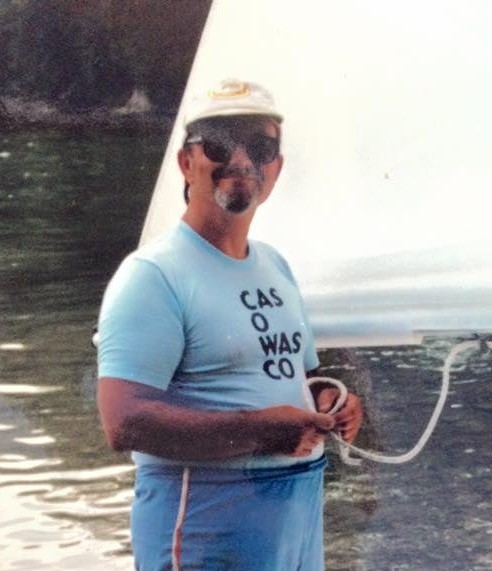
John Spooner is a Casowasco legend. Many will remember him from his campfire ukulele strumming silly songs, his waterfront antics, his Venture 21 sailboat, Pegasus, and his wife, Clair, his son, Larry, and daughter, Louise. John was a second-career elementary school teacher from Barea, Ohio.

John’s first career was as a bachelor ship mate on Great Lake freighters, homeported out of Cleveland. He plied their magnificent waters from Duluth to Montreal, learning navigation and weather, lighthouse and reefs like the back of his hand. He recalled to me once that he enjoyed a day in port, showering and air-drying buck naked on the open hold of his ship, just as a tourist boat slowly chugged past, its rail filled with gasping sightseers.

It is unknown to me how Captain John came upon Casowasco, but he was a fixture when I arrived in 1979. It offered him a free dock to berth the Pegasus, and for the small price of teaching sailing on the camps Sunfish and Phantoms, and shifts lifeguarding nippers, the good Captain was free to fix and polish his beloved sailboat. Summers were grand, for John I’m sure, a restorative respite from elementary school life.

Each evening Captain John would join the rest of the summer staff rotating among campfires with his ukulele, singing songs that remain rooted in my memory. “All God’s Critters Got a Place in the Choir.” John was singing and practicing inclusion generations before it was being maligned as woke. “The Big Rock Candy Mountain” was one of my favorites, for it painted a picture of what the kingdom of God would look like, complete with the buzzing of the bees and the bubblegum trees.

His wife Clair, volunteered in the office. Larry, in high school at the time, was the camp Romeo. He was always on the prowl for members of the opposite sex. He was good looking and knew all the best places around camp to sneak away and swap spit. Louise was Cosmopolitan as fully as a teenage girl can be, blow drying her hair and painting here nails before that was a thing. I took her on an Adirondack canoe trip once. She assured us she could live without a blow dryer for a week. When it came time to drive home, she was a long time in the Pizza Hut’s women’s room. She said that she made work each day as she disappeared into the woods with a shovel, but her agony and groans said otherwise.

One evening at dinner, Captain John asked me if I wanted to go sailing that night. “In the dark?” I asked. “It will be perfect,” John assured me. “The moon will be full and the wind is expected to be brisk.” “Sure,” I agreed. This should be fun. It was just John and I tacking Owasco Lake at midnight. Other than red and green running lights, we were sailing like lightning, healed up until both our butts were soaked.

“I got something to show you,” John told me, with a twinkle in his eye. “I’ve been working on this all week.” What could it possibly be, I wondered? John slipped into the cabin and I heard a cassette tape sucked into a player. High on the two stays off the main mast, newly installed Radio Shack speakers came to life. Wagner’s Flight of the Valkyries woke the waves with a hundred decibels of pure exuberance. I stood, as if at attention, and directed the imaginary orchestra like a conductor, sans a wand. Wind and waves, speed and angels, sound and fury expanded my conception of God’s magnificent kingdom and the potential it is waiting to reveal.

Watch. Wait patiently. Expect the movement of the Holy Spirit. Lessons taught to me by Captain John. Thank you, Captain, my Captain.

Lane choice was no choice this morning. The only lane not occupied by two swimmers was lane 6, the outside lane of the aging pool. “Okay, then,” I thought as I slipped on my goggles and began my laps.

Lane 6 is the road less traveled for multiple reasons. At one end, entry stairs crowd the wall. A Hoyer lift held belts and pullies overhead, making for a cramped approach and turn. At the other end is a chrome ladder into the deep end. Catch a hand on that and, yikes! All of which to say, the sandpaper textured edge of the pool ran its length. Careful positioning avoided stubbed toes and jammed fingers, but also distracted my glide induced meditation. When in Rome, they say.

As I pulled my sorry butt and wrinkled body out of the pool, I saw a cue of three waiting for a lane to swim. I was ashamed to think to myself how I was mentally grumbling about swimming lane 6 all to myself while others were waiting just to begin their laps.

I’m not proud of how selfish and shallow I can be. It’s a character defect that I’ve worked a lifetime to perfect, and a lifetime to correct. Some days are better than others. Sigh. Forgive me, Lord.

United Methodist Clergy frequently made their way to Casowasco for meetings, retreats, visits, and to direct one of the many summer camps for children. I practiced this rhythm throughout my pastoral ministry, at times more frequently than others. Driving down to camp has always been like finding respite from the anxieties of the world, a chance to breathe deeply, to claim a bit of serenity, if even for a time before reentry into the storm tossed world.

Other than exposure to my dad, who ended up serving 19 years in the parish before dying young, and, Bob Stoppert, the Director / Manager, my perception of Methodist ministers was they were a bunch of conservative, straight laced, black suit kind of humorless Oxford wing tipped preachers, who wore protective rubbers at the first sight of rain.

I couldn’t have been more wrong.

Harry came to our staff table Sunday afternoon and reported in a booming voice that he needed “two gigantic red balls” for his camp. We about knocked ourselves out laughing so hard. Harry, in his naivety, had no idea why we were all laughing. Another preacher stopped if he saw any of us loafing and told us to give him ten pushups. He was also known to tell my buddy Clint to retrieve a flash light that fell through the hole landing on top of the pile in one of the Highland’s outhouses. Um, no thank you.

Gordon woke his camp every morning at 6 am clad only in a bathing suit and flip flops, blowing a tuba, sans a polished bell. He probably bought it at auction. He also had a habit of driving his boat right onto shore instead of taking a regular mooring like everyone else; fuel leak and scratches be damned. One night Gordon and his wife startled my gal and I down by the waterfront. He was pushing her in a stolen shopping cart on Galilee’s south lawn, testing it out for his camp “M*A*S*H.”

Sam was a socially awkward, lovable pastor, and academic who did his seminary work at the University of Chicago at the foot of Paul Tillich. His boney chicken dance broke the nose of one senior high girl on the south porch. His eye filled with tears over his guilt and remorse. Sam would eat his sugar donuts like a mad man, coving himself in powdered sugar, looking at us staring, asking, “What? What did I do now?”

Les, considered Casowasco a second home, without the taxes. He was frequently there on his day off. He showed up when the Bishop met with his cabinet of District Superintendents when it was appointment season. He could be found sulking in the hedges under a cracked window or outside a door hoping to catch a snippet of information about who was being sent where. As soon as he caught a whiff of information, he’d hit the telephone and get the rumor mill started. Les was a fly fisherman who taught me, along with others, to tie flies and fly fish lake, pond, and stream.

One morning, Les was marching his camp of older elementary campers down to the waterfront for a polar bear swim. We had been building a hip roof on the staff house and the building was draped with ladders and tarps, the grounds with stacks of shingles and pails of nails. As was his practice, Les called his gaggle to halt, threw open the door and began to sing at the top of his lungs, “Good morning to you! Good morning to you! You look kind of sleepy, in fact, you look creepy. Good morning to you!” At 6 am every morning, his camp’s chorus was not welcomed.

We prepared the ambush for his Friday morning arrival the evening before. We filled buckets full of water balloons and hoisted them to the roof. We ran hoses inside the staff house and charged them at the ready. We populated ourselves in the bushes and on the hillside fully ammo-ed up with hundreds of water filled projectiles. As soon as Les flung open the door and took a deep breath we sprung the trap. He was soaked with streams of water. The kids were bombed with water balloons, such they were dancing, laughing, and begging us to take aim for them. It was a slaughter. Everyone loved it. We still talk about it today, nearly fifty years later.

Lessons from a diverse community of Clergy men and women still guide me to this day. “Never fish from your own dock,” one mysteriously told me. He was in his second marriage with six children. “What?” I wondered. “It cost just as much to keep a full tank of gas as an empty one,” my future father-in-law told me before I went on a date. Pastors were a diverse bunch of folks. What I learned was that every one of them had a passion for Christ and a deep reservoir of faith.

Casowasco, where the butterflies fly and the bluebirds sing, at the Big Rock Candy Mountain.

12. Casowasco – My Beginning

God had been moving quietly, subtly, deliberately in my life, beginning with my conception, periodically during my childhood, throughout my public school years. I didn’t see it then, but I see it now. My call to Ordained Ministry began before my call was discerned, characteristic prevenient grace that is rooted deep in the heart of the United Methodist experience. The fingerprints of God’s prevenient grace is written all over the first chapters of my life and development. Did you perceive it as you read through my story?

  1. Where I’ve Been – Embracing Change: https://breakingyokes.org/2024/07/30/where-ive-been-embracing-change/
  2. From Whence I Came – Tears of a Birthing Mother: https://breakingyokes.org/2024/08/05/2-from-whence-i-came-tears-of-a-birthing-mother/
  3. Epiclesis: https://breakingyokes.org/2024/08/10/3-epiclesis/
  4. A Smidge of Grey: https://breakingyokes.org/2024/08/14/4-a-smidge-of-grey/
  5. Discipline, Honor, Integrity and Herb Larson: https://breakingyokes.org/2024/08/23/5-discipline-honor-integrity-and-herb-larson/
  6. Dairy Farmers, Bus Drivers, and Don Jordan: https://breakingyokes.org/2024/08/31/6-dairy-farmers-bus-drivers-and-don-jordan/
  7. Advent in August: https://breakingyokes.org/2024/09/07/7-advent-in-august/
  8. Addison and Vernon Lee: https://breakingyokes.org/2024/09/25/8-addison-and-vernon-lee/
  9. Discipline Matters: The Education of Todd Goddard: https://breakingyokes.org/2024/10/07/9-discipline-matters-the-education-of-todd-goddard/
  10. Becoming a Wolverine: https://breakingyokes.org/2024/12/17/10-becoming-a-wolverine/
  11. The Smell of Hoppes: https://breakingyokes.org/2025/03/11/11-the-smell-of-hoppes/

My experience and perception of discernment is both personal and communal. God called me, pinging me like sonar. Even as a child, my spiritual antenna received the signal loud and clear. However, it took years for me to piece together the evidence that God’s hand was working in and through others at key moments in my life. It took a long time for me to get to an “aha” moment of recognition.

My call to ordained ministry wasn’t random. It wasn’t from out of the blue. Neither was it from a mentally delusional individual. God pumped the dime into the payphone and dialed my number. Over time, God worked through others, a community of disciples, to question me, encourage me, guide me to make choices that were consistent with a disciplined life of an ordained pastor. At first, it was informal. Friends and family. In time, others in the Church dropped hints. At the end of the process, it was the formality of Church polity; confirmation from the local church, the District Committee on Ordained Ministry, the Conference Board of Ordained Ministry, peer elders, and finally, the resident Bishop. My call took place over the first 26 years of my life.

I couldn’t bring myself to the pool this morning. My weekly self-injection 36 hours ago leaves me nauseous and without an appetite. Tomorrow morning I will swim. Reach. Pull. Kick. Push. Glide. Breathe. Uninterrupted silence, space for prayer, meditation, reflection.

Come, Lord. Come quickly.

Casowasco is a property on the shore of Owasco Lake, one of New York’s beautiful Finger Lakes. It is the former summer estate of Theodore Case and his family, an inventor who ran with the likes of George Eastman and Thomas Edison. Case on Owasco is 73 acres of woods, one mile of shoreline, and since 1948, it has served as a host for children and youth ministries operated by the United Methodist Church, as directed in the family’s bequest.

Summer, 1979. I graduated high school and prepared to attend Clarkson as an engineering student. Science and math came naturally to me. I took off two weeks from work to join my dad volunteering at a work camp at Casowasco. Bill Swales was the director. He was my dad’s District Superintendent. He knew of my interests. He was charged with building a solar hot water system for the Highlands, the camping area on the West end of the property. Bill needed a lifeline and he phoned a friend. I answered the call.

Over the course of two weeks I led the team clearing land (think chain saws, shovels, and heavy equipment), building the plumbing (think copper pipes, tin solder, valves, and couplings), and erecting a gravity system to provide hot water. It takes some serious planning and construction to safely locate a 500-gallon water tank eight feet above the floor and enable it to be annually winterized.

The buildout worked like a charm. The property manager, a pastor and Japanese scholar by the name of Bob Stoppert, took notice. He remembered my name. Mid freshman year Bob gave me a call and invited me to join his 1980 summer staff.

Confidence. Fleeting in adolescence, confidence is panned for like specks of gold. As it is discovered, developed, and amassed, it becomes a solid foundation for a fruitful life. Where is confidence found? In a phone call. Words of appreciation. Recognition of a strong work ethic. A twinkle in the eye; evidence of God’s greater will being lived out on stage and in the spotlight called youth.

What little confidence I gained in those two weeks at Casowasco would be shaken with a difficult freshman year at college. Everyone was way smarter than me. Alcohol and marijuana were as destructive to me as an unexploded time bomb. Fraternity life was a distraction and grades suffered. Developmentally, I wasn’t ready. It would take me an additional four years before I was truly prepared to grow up and move out to live independently. The summer of 1980 couldn’t come fast enough.

Move in day was as early in May as college let out. Maintenance staff were needed early to get the property ready for the first week of nippers, er, campers, as we called them. I went straight to Casowasco to open the next chapter in my call to ministry and life’s unfolding book.

10. Becoming a Wolverine

Don’t know why; all I know is that we had to pack up the house and move to another parsonage. Dad had a change of parishes, starting his third of four years of seminary. Hello! Chemung, here we come. Nestled in New York’s southern tier, Chemung is a small village on a ridge overlooking the Chemung River, which flowed west to east towards the Susquehanna. Annual flooding lends to dikes and dams, in a futile attempt to tame its brown moving effluent.

This would be the third high school in three years. My new identity was a Waverly Wolverine. I wasn’t looking forward to the change. New friends are hard to come by. Good friends are rare. Lifelong friends, linked by youth-filled common experiences and shared values, are like finding diamonds in the rough; diamonds that God planted for me to discover.

First day of school. Assigned homeroom. Mr. Allen took roll call. Everyone looked when my name was called. New guy! I was all alone.

Except.

Except Gary and Chuck reached out to me. They didn’t have to. But they did. They worked at the local hospital and nursing home in the kitchen washing pots and pans. They got me a job, and I fit right in, earning $2.20 an hour. Gary’s aunt ran the local American Legion. We got paid five bucks every Friday night to clean up after Bingo and set up for Saturday’s wedding. I’ve cleaned up enough dirty ashtrays for a lifetime. Sometimes the Legion bartender would put a case of beer on the back steps for us when we finished up. Life was good.

Gary and Chuck had known each other since before Kindergarten. They weren’t jocks, nerds, or potheads. They were middle average, often overlooked, underappreciated, under the radar flying, clean cut type of ordinary nice guys who welcomed me into their inner circle of acceptance.

They were awkward around girls, uncomfortable in their adolescent acne scarred skin, and always looking for a reason to sneak into or out of school. I fit right in. Gary drove a Ford LTD that was herded down the road, and Chuck drove a Ford Pinto, a stick shift on which we all learned. I got my senior license and often sported my dad’s dark green Plymouth Satellite. Gas was under a buck a gallon.

Gary, Chuck, and I hung out together. Worked on completing homework and lab assignments together (usually at Pudgie’s Pizza across the border in Athens, PA). We went to rock-n-roll concerts together. We saw some great bands. The late 1970s were some very good years! We experimented with alcohol together, swapped car stereos into and out of each other’s cars, and talked about dream girls together. All three of us had a poster of Farrah Fawcett on our bedroom wall.

Chuck and Gary were God’s gift to me. It has only taken me a lifetime to recognize the enormous impact this grace has had upon my life. Thank you, Chuck. Thank you, Gary. You guys mean more to me than you know.

Thank you, God, for Chuck and Gary.

The pool yesterday morning limbered me up and wore my ass out. Crawl, breast, elementary back. Down and back five times each, for a total of 15 laps. Doesn’t sound like much, but it is just right for me. Discipline is everything. Don’t try to increase time or distance. Faster is a false idol. Further is asking for trouble. Repetition is where the sweet spot it. The nice thing about falling into a rut is that you always know where you are going.

Yesterday, sunlight penetrated the dark grey winter sky and illuminated the lane I was swimming in. What a blessing! To roll my head and breath with each stroke, to bathe my face in the sunlight of God’s grace. Humbling.

The day was much like today. It was December, the Christmas time of year. Chuck, Gary, and I would rotate work schedules. However, whenever a tray girl called in sick, which was often, we would call in one other to cover their afterschool shift. We also elbowed our way into cooking on the weekends. The net result was that all three of us were often working the kitchen at the same time.

Saturday inventory was always an opportunity for us to express our creativity. The daytime (older) pots and pans guy frequently stole food out of the walk in. Every evening after sweeping and mopping the whole place, we’d put on some rock and roll music, throw a few pounds of steak into a frying pan with butter, break out the medicinal beer (for patient’s use only) and party on. Completing the monthly inventory sheets was an exercise in creativity. If Frank, our boss, ever caught on to our Tom foolery, he never let on.

Being festive, I wore a red Santa hat in the kitchen and sung Christmas carols. It was great delivering and picking up trays from patients, especially those unfortunates on the psych ward and the nursing home residents. Thoughts and fears brought my imagination to life as I entered and exited the locked units. What happens if someone jumped me? The movies Halloween and the Exorcist had just come out. Cue the slasher music. What if I went into a patient’s room to deliver a food tray and I found them dead? You know; not alive? Singing Christmas carols brought smiles to staff and patients alike. I had a talent to make people happy. Life was good.

I learned one of the nursing home floors wasn’t going to have a staff Christmas party. The direct care staff was bummed. I knew they worked hard, cleaning up the nasty, not making a dime more than minimum wage. They were pretty. I was looking for acceptance. They needed a party and I knew how to make people happy.

Frank kept a few bottles of hard liquor in his desk drawer locked in his office. Undoubtedly, it was a violation of hospital policy and he could be fired if caught. Hey? He was the director of dietary services. Who were we to care?

Gary, Chuck, and I just had a way about learning everything there was to learn about the people and the hospital / nursing home. It didn’t matter if they worked in dietary or laundry or administration, we always got the skinny.

One evening (doesn’t every good tale start out this way?), the three of us were done for the day and locking up. A knock on the kitchen door caused us to stop, look, turn down the volume, and wonder what we were being caught doing this time. A young aide shared her tale of woe. The three of us looked at each other, knew what had to be done, and sprung into action.

We raided Franks desk drawers and liberated his liquor cabinet. We mixed in a splash of eggnog, just enough to color and season the punch. We carefully wheeled the bowl of spiked merriment to the unfortunate staff working a distant floor. “Merry Christmas” we proclaimed, and parked our gift in their lounge.

It didn’t take long before everyone was singing, dancing, and telling us how wonderful we were. A great time was had by all. Thankfully, no one was harmed and the only casualties were those who suffered the hangover consequences the next morning. Frank never said nothing. How could he?   

Life carried on. I had found my place. I had found my home.

Sermon for November 17, 2024 – “From Fear to Hope”

Mark 13:1-10

The Rev. Todd R. Goddard

Mark 13:1-10 (http://bible.oremus.org/?ql=409206313)

As he came out of the temple, one of his disciples said to him, “Look, Teacher, what large stones and what large buildings!” Then Jesus asked him, “Do you see these great buildings? Not one stone will be left here upon another; all will be thrown down.”

When he was sitting on the Mount of Olives opposite the temple, Peter, James, John, and Andrew asked him privately, “Tell us, when will this be, and what will be the sign that all these things are about to be accomplished?”

Then Jesus began to say to them, “Beware that no one leads you astray. Many will come in my name and say, ‘I am he!’ and they will lead many astray. When you hear of wars and rumors of wars, do not be alarmed; this must take place, but the end is still to come. For nation will rise against nation, and kingdom against kingdom; there will be earthquakes in various places; there will be famines. This is but the beginning of the birthpangs.

“As for yourselves, beware; for they will hand you over to councils; and you will be beaten in synagogues; and you will stand before governors and kings because of me, as a testimony to them. And the good news must first be proclaimed to all nations.

| Centering Prayer |

Cynthia and I went to the rare movie this past week.

We saw “Conclave”,

A drama about the death of a Pope

And the election of his replacement.

I highly recommend it.

The hundred plus Cardinals of the Church gather

From the far points of the globe,

In Rome,

Cloistered in the Sistine Chapel.

They represent diversity,

Culture,

Language,

Race,

Beliefs.

For many of those in the running,

The sky is falling,

The Temple is about to crumble,

The very future of the Church is in peril.  

For some of us

For many of us

This might feel like we are living in the end times.

The result of division into partisanship is fear.

If you like it, keep doing it.

There is another way.

Look at our great nation.

Like the grand Temple where Jesus and his disciples met.

Certainly, this great nation will never fall.

Or might it?

Those at either extreme

Appear to be most alarmed,

Fearful that these are the end of times,

That the only future is one that hurts, harms, or kills.

Anxiety is real, and for some debilitating.

“I can’t breath.”

Those at the left or right are not alone in trembling before a doomed edifice.

Consider the black, male driver of a car pulled over by the police.

Consider the closeted gay man, knowing he is one breath away from destruction, family, career, calling.

Consider the individual this morning placed on hospice.

Consider the student who failed their final exam in their major.

Yes, the end is at hand, and is well neigh.

Many of us choose to hunker down,

Fly low, hoping to keep under the radar.

The United Methodist Church hemorrhage near fatal wounds

And now lies weak, sick, and in intensive care.

Twenty percent of the churches in our conference,

Over thirty percent worldwide chose to leave,

Leaving us with budgets and programs on life support.

Destruction feels near at hand.

The Temple, like Babel, is

Like a house of cards,

Ready to collapse.

Context is the key to understanding.

First, some historical context:

Nobody likes ever rising taxes.

The result was protests and attacks on government officials.

In the decades after the resurrection and ascension of Jesus,

Governor Florus over-played his hand:

He had the Temple plundered and the treasury emptied.

This was the spark for the first of three wars between the Jews and Rome.

Wars the Jews could not win.

Wars our ancestors fought.

Lost before they began.

Desperate.

Hopeless.

To the end.

The Jewish rebels fought back against Roman heavy handed rule,

Leading the pro-Roman king, Agrippa, government officials, and soldiers to flee Jerusalem for their lives.

The rebellion was getting out of control.

Nero, the Emperor of Rome, had to act.

First, he sent Gallus to bring his legions of troops from Syria

To restore order and end the revolt.

6,000 troops were caught by Jewish rebels west of Jerusalem

In the Beth Horon pass.

All six-thousand Roman soldiers were slaughtered.

The Jewish victory attained great support throughout the land

And won over the hearts of the people.

Volunteers poured into rebel recruiting stations

Offering to fight Rome.

Passion and patriotism surged with youthful vigor.

Hold on there, dearly impassioned Jews.

Victory was short lived.

Nero wouldn’t be embarrassed again.

The more experienced general, Vespasian,

was handpicked to crush the rebellion in Judaea.

Avoiding a direct attack on the heavily reinforced City of Jerusalem,

Four legions of troops landed in Galilee in 67 AD.

For three years, the legions advanced, led by Vespasian’s son, Titus,

Who served as second in command.

Rebel strongholds were eradicated, the fields were salted, and the population was punished.

February, 70 AD found the Roman legions knocking at the gates of the City of Jerusalem.

The Jewish rebels held out against the siege for 7 months.

All food supplies inside the walls were exhausted.

Time was on the side of Rome.

Jerusalem fell on September 7th in the year 70.

The Temple was destroyed, timbers burned, every stone above the foundation was thrown down and smashed.

The fire was so hot you can see the burn stains on the rubble to this day.

Rome found its revenge.

Josephus, the famed Jewish historian,

claims 1.1 million people were killed during the siege, and 97,000 prisoners were taken into Roman slavery.

The few surviving Jews fled,

Diaspora-ed under cover of night to the four corners of the world.

Among the traumatized, surviving Jews

Were a small band of disciples

Who, as luck would have it, witnessed Christ’s ascension

a mere 38 years earlier.

By the light of the burning Temple,

St. Mark and his band of new Christians,

Began to convert memories to word,

Put pen to paper

and begin a first draft of their Gospel.

(Historical references from:

https://en.wikipedia.org/wiki/First_Jewish%E2%80%93Roman_War

https://en.wikipedia.org/wiki/Siege_of_Jerusalem_(70_CE)

https://en.wikipedia.org/wiki/Gospel_of_Mark )

Context is the key to understanding.

Some theological context:

“Remember when Jesus made his final visit to the Temple?”

Mark and his small band of brothers probably opined.

“Jesus told us,

‘Do you see these great buildings? Not one stone will be left here upon another; all will be thrown down.’” (13:2)

Not one stone.

The thirteenth chapter of Mark

Is called by some scholars

“The Little Apocalypse”

Written in the form and style of Jewish writers of old.

Apocalypse, as found in the book of Daniel, Isaiah 35, Jeremiah 33, and Ezekiel,

Is a revelation of cosmic mysteries or the future.

Combined with concerns and expectation of the present age,

We see here in Mark 13

Jesus lifting the veil,

Providing for his disciples and the Early Church

Insight to the end of time with the promise

Of God’s judgment and salvation.

What does this mean for us today?

Yes, for the faithful,

The end is always near;

As near as the next breath or heartbeat.

The Temple is pulverized by chest pains or stroke,

Destroyed by death or probate,

Shattered by temptation or evil.

Judgment and salvation are at hand.

Jesus doesn’t simply build a sandcastle on the beach

And foretell of its destruction.

Frankly, any visitor to the beach knows that,

If patient, all tides rise.

All that is made of sand,

Will soon be swept away.

Rather, Jesus takes his disciples,

Peter, James, John, and Andrew

privately to the Mount of Olives

where he teaches them what we are to learn today.

Listen to what Jesus has to say.

First, beware.

There will be those who try to take advantage of the fear, anxiety, hysteria.

Beware they do not lead you astray.

They may impersonate Jesus,

Falsely boasting salvation with no hope of making good.

They will lie, planting false rumors, and spin out of thin air wacked out conspiracy theories.

Impersonators and liars should be avoided at all costs.

Run-away bravely!

Second, be strong.

Wars and rumors of wars will take place.

Wars. Violent. Deadly.

They tear out the heart and soul of community, whose destruction continues from generation to generation.

Be strong enough of faith to outlast their insidious impact.

Endurance and strength is what we need.

Seek from the Lord, that you may be found.

Third, watch.

Watch for signs of new birth.

Earthquakes? God is making all things new.

Famines? God is using adversity to communicate to us

That the end of these former days is upon us, and

The beginning of God’s new creation is about to break forth.

Lastly, be assured.

Expect strife and persecution.

It isn’t pleasant or without pain.

Know full well that suffering is a witness,

A testimony to all nations

That Christ is King and

Jesus is Lord.  

Be the witness!

I’ve got good news and bad news.

The bad news:

The end is near.

The good news:

The end is near.

We are teetering on the edge of God’s new creation.

The stain of the cross and grave

Are soon replaced by the presence and promise of the resurrected Lord.

This old, worn out body, will be replaced.

Hatred, racism, antisemitism, structural discrimination will soon pass away.

What has happened to the United Methodist church is done,

What is emerging is something that God is making brand new.

Apocalyptic breads danger and fear,

Yet, Jesus brings calm and assurance.

This is God’s kingdom.

These are God’s terms.

We are God’s people.

Beware.

Be strong.

Watch.

Be assured; Christ will come to save you.

Amen.

Sermon from November 10, 2024 “Out of Poverty”

(I’m taking a pause writing my memoirs, because I’ve been called to fill in for a colleague on medical leave, for the foreseeable future, I’ll be posting my Sunday sermons. Thanks for following my blog Breaking (present tense) Yokes (plural), dot, org.)

Mark 12:38-44

As he taught, he said, ‘Beware of the scribes, who like to walk around in long robes, and to be greeted with respect in the market-places, and to have the best seats in the synagogues and places of honor at banquets! They devour widows’ houses and for the sake of appearance say long prayers. They will receive the greater condemnation.’

He sat down opposite the treasury, and watched the crowd putting money into the treasury. Many rich people put in large sums. A poor widow came and put in two small copper coins, which are worth a penny. Then he called his disciples and said to them, ‘Truly I tell you, this poor widow has put in more than all those who are contributing to the treasury. For all of them have contributed out of their abundance; but she out of her poverty has put in everything she had, all she had to live on.’

| Prayer |

Lord, please don’t let Jesus paint me into a corner and force me to identify myself with this poor widow.

She lost everything.

Her husband.

Her house was devoured by the legal power of organized religion.

Her independence. No money. No pension. Nothing.

Her last two small copper coins, she brought to give.

Not that it would make any difference.

In forty years, the large stones and magnificence of the Temple would become a smoking crater.

Her two coins wouldn’t make a difference.

Lord, please don’t allow my hubris and privilege identify me with the scribes, who walk around in long robes,

To be treated with respect in the marketplace,

To be seated in places of honor.

Money is power.

Money is freedom.

To come and go as I please,

To contemplate and decide for myself,

To live wholly independent of others.

Taking from widows is easy money.

Imposing taxes and employing usuary is smart business sense.

That’s what MBAs are made from.

From a position of privilege

I renounce my privilege,

But … not completely. 

Let’s not go overboard.

As Walter Brueggemann said in his book, Prayers for a Privileged People,

“We are tenured in our privilege.”

“We are half ready to join the choir of hope,

half afraid things might change,

     and in a third half of our faith turning to you,

     and your outpouring love

     that works justice and

     that binds us each and all to one another.

So we pray amidst jeering protesters

     and soaring jets.

   Come by here and make new,

     even at some risk to our entitlements.”

(Prayers for a Privileged People, Abingdon, 2008, p.21-22)

The third half of faith isn’t

A Weight Watchers portion of apple pie.

So, Lord, allow me to identify with the disciples of Jesus.

They appear to be the safest bet.

Yes, most dropped their nets,

Walked out on their families, or

gave it all away to come and follow,

But they aren’t widow-poor;

Neither are they uber rich.

Be careful for what you wish for.

Two such disciples of Jesus

Cynthia and I were privileged to know came

From serving the church in Palmyra.

Otto was a modest bench chemist.

Bernice was a stay-at-home mom,

Raising one son.

They were a family of simple means,

Drove secondhand beaters,

Never spend much on themselves.

Cynthia recalled Bernice telling how their church tithe was paid first,

Before taxes,

Before bills,

Before groceries,

Before everything else.

Because, why?

Bernice and Otto had learned to be wholly dependent upon God’s grace and love.

They tithed, not for what they could do for the church.

They tithed for what dependence upon God did for them.

I buried Otto in 1993 and

Bernice in 1997,

Side by side in the Town of Huron cemetery,

Truly saints of the kingdom.  

Giving transformed their lives

From living in this world,

Filled with elections, politics, and power,

Filled with wars and threats of war,

Filled with anxiety, death, and unexpected disability,

Into living in God’s kingdom,

Fulling embracing the life that God had to offer.

The gift Jesus seeks

Is one that transforms the giver.

Five quick take aways for you to further ponder:

1. First, honor and wealth gained at the expense of the poor results in condemnation.

“How might this impact me today?” you may ask.

Perhaps we need to be a bit more knowledgeable and responsible in the use of our money… and

make sure it isn’t used at the expense or detriment of another.

2. Secondly, Jesus is telling us that giving is not an option.

If you are going to follow Jesus, you must give your money.

Like it or not, it’s that straight forward.

Return to God

That which God has given to you.

3. Thirdly, Jesus tells us that giving to God must be sacrificial.

Q: What does this mean?

A: If it doesn’t hurt, you haven’t given enough.

It’s not enough to give out of your abundance.

Give up that which would make you hurt.

Give such that it transforms your life.

4. Fourthly, Jesus tells us that giving to God means

Being transformed from independence

To absolute dependence upon God.

5. I would lastly add, joy comes when you can relate

your own sacrifice with the sacrifice Christ made for you.

Jesus gave everything for you and for me.

He gave up his dignity, his life, his very being for our behalf.

Jesus sacrificed everything!

So what do we do in return? What can we do?

We can take what we have

And give it away.

We can allow ourselves to be completely transformed

By God’s grace and love.

9. Discipline Matters: The Education of Todd Goddard

It was an old, familiar story. Something happened in dad’s parish and next thing I knew, the U-Haul was taking us to a new village. Great. Nothing like starting my sophomore year of high school with strangers. I was the thirty-second kid in my class, in a school district that had K-12 in one building.

Dad decided to turn a three-year Master’s degree into a four year adventure, still commuting to Drew Seminary in northern New Jersey. My eldest brother was married with children, my older sister had married the mayor’s son, and my next oldest brother was off to college. Monday through Friday, mom and I were on our own.

I took a paper route, delivering the Olean daily, earning five cents a copy. Unfortunately, this was a record-breaking winter, and the Lake Erie snows piled so deep the national guard needed to be flown in with their rotary plows. There was a young, newly-out-of-college apartment dweller on my route who led me to think about the opposite sex. She never even hinted that I was alive, yet, something awoke in my imagination every Friday when I collected my paper route money.

The local grocery store had a rack full of girly magazines (that’s what we called them in those days). My friends and I would hang around, pretending to browse the periodicals, when, in fact I was scanning the full anatomy of the female body. The store manager had better things to do than chase away horny adolescents. Oh. My. Goodness. It was hard to believe what I was seeing; impossible for my brain to process the changes and surges in my body.

Our inept regent’s biology teacher told us way too many details about the birth of his two children. Besides Ron G-ski nearly slicing off his finger in our blood typing lab, biology remained a riddle, and a mediocre exam score.

A cheerleader at school, the daughter of the local insurance agent, became pregnant. Word on the street was she had sex with her boyfriend standing up in the alley behind Main Street. She may have been cute, but just the thought of that less-than immaculate conception turned my stomach. It was as if she became invisible at school, frequently absent, then she disappeared altogether. Sadly, I don’t even remember her name.

The pool this morning went by like a flash. My laps were completed before I realized I started. Push. Glide like a manta ray. Use the position of hands and fingers above the head to come to perfect alignment in that majestic three-dimensional space. Slowly, exhale; if done with discipline, only one breath is necessary to cross over to the other side. Ever so slightly, make adjustments to apply momentum, reduce depth, and gracefully surface pulling the first stroke on the fly. Focus. Eyes down. Skim an inch or less above the bottom. Fly. Twelve tiles wide is the width of the lane marker, one of six parallel lines running the length of the pool floor. Twelve to a dozen. Twelve steps. Twelve disciples of Jesus.

Discipline.

Besides my introductory lecture about the birds and the bees (see post 5 about dad telling me about tadpoles swimming upstream), dad only taught me one other truth about sex, sexuality, and the disciplined spiritual journey.

KYPIYP he told me one morning over breakfast in the kitchen of the Little Valley parsonage. “What’s that supposed to mean?” I asked, looking up over my cereal bowl.

“That’s what the chief petty officer would tell us sailors before going on shore leave. You know. KYPIYP. Keep your pecker in your pants.” Deadly, highly communicable diseases would make your male anatomy shrivel up and fall off if you didn’t KYPIYP.

“Oh,” I said and sighed, thinking about the young woman on my paper route. Although my primordial DNA was attempting to tell me otherwise, as clear as rain, dad said no. It made sense, actually. Even as a tenth-grade kid I began to understand the consistency of our morally conservative upbringing.  

Discipline, the Protestant, German kind.

My soon-to-be-minted doctor older brother taught me two other values about sexuality that left a life-long impact on my values and ethics. First, virginity was a gift that can only be given once. Make certain the person who is chosen to receive it is worthy of your gift. In other words, don’t throw it away in the back alley behind the pizza shop.

Secondly, if you are going to have sex, be prepared to raise a child. Unplanned pregnancies happen. In tenth grade, I was struggling with maintaining personal hygiene and an A-minus average, let alone trying how to be a parent and father. Nope. Not going to happen. Not because I didn’t want it to, but because it was the right thing, the disciplined thing, to do. I was not going to make anyone an unwed parent or any raise any child as a deeply flawed, immature father.

Discipline, the married kind.

Marriage is created with a vow between two individuals. A promise is made to God. A promise is made to another. A promise is made before two families and in front of multiple friends and witnesses. Monogamy matters. My word matters. Perhaps yours should, too.

Individuals of our desire are not objects to be conquered. Objectification rips the soul out of the individual and seeds an environment ripe for violence, negating the fullness of God’s near perfect creation. It would be like slapping God in the face. Danger, Will Robinson.

I’d like to think I’ve led a morally perfect existence, but like the peanut farmer former president, I, too, have looked and lusted. It has only been the grace of God that pulled me back and slapped me upside the head. Wake up! I did, painful as it was. I’ve learned and I have grown. I don’t ever have to relive that experience ever again.

Discipline, the parish kind.

Seminary and parish ministry brought with it lots of different advice about how to lead a disciplined life of faith. Professional workshops taught about power imbalances, the inability for a parishioner to grant consent, the necessity to establish and keep strict boundaries to keep oneself and the parish safe.

Never meet in private. Be certain every door has a window and there is always someone else in the building. Better yet, meet in public at the local coffee shop or diner. Keep parents close and involved in children and youth activities. Become certified in Safe Sanctuaries and encourage parish engagement in developing and deploying safe practices.

“Never fish from your own dock,” one colleague once told me. “What the hell?” I thought to myself. He was a married man with six children. Why would he say that to me? I have no idea. If I was a single pastor, that would have made sense.

Better advice was “think of the people in your parish as blood family, sisters and brothers.” The thought of incest is so revolting to me it would be next to impossible to think of a parishioner as the focus of my sexual desire. I wouldn’t look at my sister that way, why would it be okay to look that way at someone else? Made sense.

Over the course of my life and ministry, I came to believe that preference doesn’t matter if one believed and practiced the fact that love comes from God. Not me; but that doesn’t mean that God does not or did not intend it for you. Who am I to judge?

An undisciplined sexual life is inconsistent with parish ministry. Period.

I’m not preaching or telling anyone what to do. I’m simply sharing how God’s grace has been planted and has grown in my life. Each disciple of Jesus must walk their own valley, creating the reputation they are prepared to live with.

‘Nuf said.