I Returned the Stick

Prior to my travels to Guatemala earlier this month, a dear friend, Ralph from Indianapolis, encouraged me to walk with a cane. My left knee had been increasing in pain and caused me to walk with a limp. Another friend, Don, suggested I obtain a walking stick to better navigate the steep, mountainous walking trails in the rural Mayan countryside. My pride prevented me from taking this well intention, wise advice.
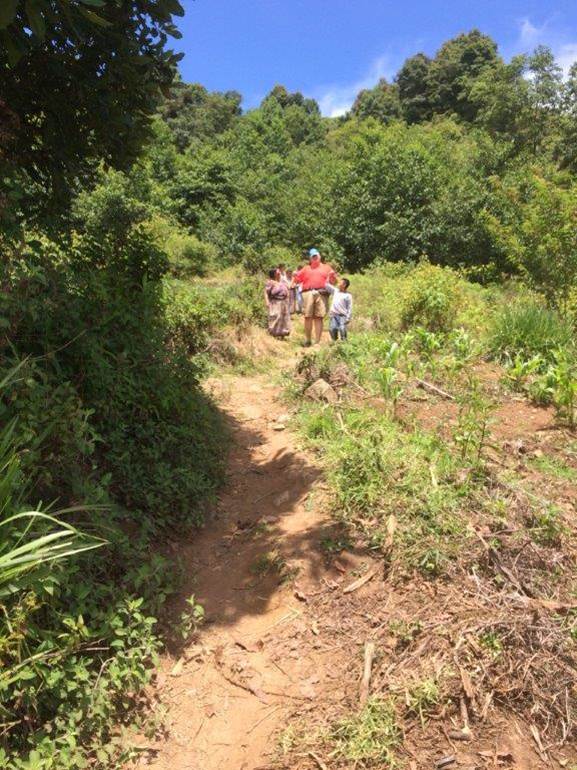
Climbing up was difficult in the high altitude – over seven thousand feet – especially when carrying building supplies for a home that our team was building for a grateful family in need. Climbing down was terrifying. One slip or loss of balance would be catastrophic. My friend and colleague saw a short tree than had been fallen and went over to find me a stick. Lida stripped off the branches from a limb and presented me with a very helpful third point of balance. My goodness, I was grateful.
Safely down on the road, ready to load up the van for our return to town, I spied children from the family peering down from their perch high above the road. I saw no need to take the stick with me. I had not planned to return to the building site. So I limped over to the towering bank and lifted it up to them. I returned the stick. One boy took it and smiled.

In the same region the next day, I saw a man with a small horse. Strapped to it’s back were bundles of sticks he had gathered for firewood. In places of such extreme poverty, currency comes in many forms. Money, of course, is well known. But food is also useful as currency. Alcohol is currency. Goods, including firewood, is also valued as currency by those who use wood to cook. The walking stick I had used and returned were valuable items of currency to this impoverished family.

To my surprise, our group returned to the lofty building site the following day. Of course, we did; we went back to dedicate the house, to bless the family, and to distribute gifts and food. I didn’t want to climb the high mountain trail leading to the house, especially after a long, tiring day working elsewhere. I prayed. I prayed hard about going back up. By God’s grace and whisper, I set out for one last climb. Up the trail I went, blessed to take part in the dedication and blessings.

I only had to return down the steep trail.

With no stick, tired, and drained I began the descent. From behind, the mother of the family and one of her sons – the one to whom I had returned the stick, each approached and took me by the hand. With mom on my right and son on my left, these profoundly grateful and humble children of God became my new walking stick, balance, and assurance as I made my way down the mountain. They saw my need. They met my need, even though each was a fraction of my size.

withalittlehelpfrommyfriends

Safely down on the road, the mother and son smiled, and wished me well in a language I did not understand. I was amazed and humbled by the kind gift they had given to me, far more valuable than the original stick I had used. My goodness, I was grateful. Their guiding hands, confident steps, and gentle presence swallowed me in God’s grace unlike I had ever experienced and will never forget.

All because, I returned the stick.

Breaking Yokes

“Is not this the fast that I choose: to loose the bonds of injustice, to undo the thongs of the yoke, to let the oppressed go free, and to break every yoke?” – Isaiah 58:6
breakingyokes3

The complaint is valid.

We Christians like to quarrel and fight and to strike with wicked fists (Isaiah 58:4). Be it theology, dogma, social action, civil rights, just war, or whether or not we designate one parking space in the church parking lot “Handicapped” … we love ourselves a good church debate.

The Lord knows of what He speaks.

All the while we are engaged in church meeting food fights, right outside our door is a world of refugees fleeing war, widows and children dying of malnutrition, ethnic injustice, people without benefit of intellectual or physical abilities left to beg (and die) on the street, individuals being crushed by the yoke of oppression.

If this is our fast, it sounds like the Lord doesn’t want any part of it.

I’m no expert. I’ve made a couple of short term mission trips to Central America, read a few books, conversed with a lot of sages, wise men and women, mentors, fellow missionaries, and friends. I have dreamed deeply about the question, “who is my neighbor?” It is more important to me to watch and listen with curiosity than it is dive into debate or body surf through a sea of cultural muck and angry goo.

Quick answers, in my experience, are often poor answers, many times leading to unanticipated consequences. Speaking only for myself, I need time to process, pray, and listen for the whisper of the Spirit. It is important to reflect upon what I’ve experienced and to wait for the nudge of Divine creativity to lead me to break a few yokes of oppression that would make Jesus proud.

As a pastor, a preacher of the Gospel of Jesus Christ, I’ve been called to crush oppressive yokes that enslave people. I’ve been called to channel the spiritual journey to the next destination beyond individual forgiveness and salvation, beyond the self to the whole, towards healing that embraces all of God’s good creation.

If I spend too much time on my intellectual high-horse, please, someone knock me down and swarm me with tickling children. Humility is a great thing. God knows, I need more of it.

This blog will use story telling to focus on Christian international outreach and ministries. I have a lot of stories to tell, and I’m always listening for more. My hope and prayer is that these reflections will serve as an invitation to you, the reader, to watch, listen, pray, reflect, discuss, plan, and to get up and get out into the world to break a few yokes.

Destroy the yoke of oppression where ever you find it. Set people free. Be the balm of Gilead that brings God’s healing to the world.