24. First Year Winter Break and Spring Placement

Pass / Fail is a beautiful thing. I passed all my courses in the Fall and was set to begin Spring classes mid-January. The seminary would be a ghost town over break so it was time to return home for a few weeks.

Rick Stackpole and I had been friends over a number of years. He was the waterfront director at Casowasco when I was on staff. It was his underwear that we bagged in zip locks, filled with beer, and froze in the staff house freezer. What ever I gave, Rick returned in kind. Our practical jokes were the stuff of legend. We both were from central New York, he was from Bath and I was from Elmira, in the southern Tier. He was, and is, wicked smart. He was drawn in by his first term professor of Christian Education, Don Rogers, and felt like he was right at home. Both Rick and I were on the ordination track with the Board of Ministry. We shared the same District Board, based out of Elmira, and we were both scheduled for our annual interviews.

The District committee tracks candidates progress through a process that includes mentoring, supervision by the candidate’s local church, educational progress, psychological testing, and half a dozen other boxes that have to be  checked. They represent an ever widening circle of discernment to confirm a candidates call to ministry. During the third year of seminary, they pass the candidate off to the Conference Board of Ordained Ministry for possible membership in the conference and ordination. All in all, it was for me an eight year process. 

Rick and I carpooled and headed home over Christmas break. Night driving was preferable, so we set off from Dayton, Ohio headed to Elmira well into the evening. We drove into a wicked blizzard. Snow on the interstate between Columbus and Cleveland was piling up fast. No moon, it was as dark as the inside of a cave. It seemed like we were the only car on the road. I was just nodding to sleep when Rick yelled in terror. The car spun in circles, at least a 720, headed off road, and we ended up buried deep into a snow drift. 

Just great. Neither of us had any money. AAA was for rich people. And our luck ran out. We were going to be a day late and a dollar short. What are we going to do?

We keep the engine running and the lights on as we considered our options. After about a half hour we heard a tap on the window. An Ohio State Trooper had seen our tracks and lights in the snow drift, came to a stop, and hiked down to investigate. “You boys okay?” He asked. 

I don’t know about Rick but I was near tears in despair. He must have seen the look of fear and uncertainty in our eyes because he said, “Let’s see what we can do.” The trooper was massive, all muscle, built like a bull dog. I got out. Rick stayed behind the wheel. We pushed. Rick spun the tires. We rocked the car. Slowly, but surely, the car made its way back to the road, foot by foot. Both the trooper and I were drenched in sweat … poor guy. 

“Thank you,” I said as we were both bent over at the waist trying to catch our breath. “What do I owe you?” I naively asked. “What? What are you talking about?” The trooper replied. “This is what I do,” he said. “It’s all part of the job.” 

His job, his call to ministry, was to help young, idiot seminarians out of a snow bank, and get them safely back on their way home.

“Thank you, sir.” I said. Thank you, O Lord, for sending Rick and me a kind hearted, strong as an ox, Ohio State trooper. 

Laps are usually a time to quiet my mind, to meditate without interruption, to listen to the still soft voice of the Holy Spirit leading me in harmony with God’s will. Not this morning.

The pool was cool and I had a lane all to myself. I should have been content. Instead, my mind raced from topic to topic, issue to issue, from opportunity to threat that life was sending my way. 

“Be still,” I told myself. 

Drain the thoughts like pulling the plug in a water filled basin, I thought to myself. “Be quiet,” and observe the anxieties circle in vortex as the water is drained away. 

Ten laps of freestyle, I counted, along with another five of breaststroke. In the blink of the eye, I was standing under a hot shower washing the chlorine off my body. The water felt good, oh, so good.

The woman seated across the table looked pleasant enough. Roy C., a full time counselor in our Crisis Unit sat in the corner, observing, taking notes, looking at every aspect of my assessment. I was doing my best to appear non-threatening, kind, and respectful. The clinical phrase we used was “establishing a non-anxious presence.” Like a branding iron, pastors everywhere work their non-anxious presence.

“What brings you in today?” I asked quite innocently. 

“I had to wash my mother of her sins,” she replied. Her thick mental health record had tipped me off to a lifetime of physical, psychological, and sexual abuse at the hand of her mother. She showed no sign of fear, anxiety, or guilt. Not a care in the world.

“What happened?” I asked.

“I stabbed my mother with a butchers knife,” the woman smiled. My eyes widened. She proceeded to tell me that she then used the knife to dismember the corpse, cube the muscle, dump it all into the washing machine, added detergent, and set it on spin. “She’s all clean now,” she smiled at me. 

A danger to self or others, with the means and intent, was sufficient clinical criteria for admission to our locked psychiatric unit. Dayton Police handcuffed her and transported her to our unit located at the Dayton State Psychiatric Hospital. The crime was never mentioned on the news. I assume she was remanded by a judge to a forensic psychiatric facility, but I don’t know. I never heard from her again. 

Lord, have mercy. 

As spring term of our first year drew to a close, we were to be assigned to a student church for our middle year. I decided I wanted to stay on with Eastway Community Mental Health because I loved working with people in crisis and those with chronic mental health diseases. I was good at it and it was rewarding. I was young, needed little sleep, and it paid five bucks an hour. 

Regardless, I had to work in a parish setting twenty hours a week, supervised by a senior pastor, in addition to being a full time student, reading, writing, and attending class. Student churches treated seminary students like a new change of clothes. One would leave, another would take their place. The work was always leading the youth fellowship group, assisting in worship, and, rarely, filling the pulpit. 

I was assigned to the St. James United Methodist Church in Miamisburg, Ohio. It was a suburban community about ten miles south of the city of Dayton. The church was large, compared from my experience of United Methodist churches in central New York. Attendance was about 300, divided between two services on Sunday. I could give them all day Saturday and Sunday, but that was about it. 

The secretary smiled and pointed my way to the pastor’s office. My knock was timid. What was I expecting? I had no clue.

“Welcome to Miamisburg,” the short Italian gentleman stood from behind his desk, came around, and shook my hand. He appeared to genuinely want me to feel right at home. Hospitality on the half shell. “I’m Nunzio Donald Catronie,” he enunciated every syllable with a natural Italian accent. “But you can call me, Don.” 

I knew I was right where God wanted me to be. 

Don was a tenured elder in the West Ohio Conference. He was confident in his own skin. He’d seen it, done it, wrote the book on pastoral ministry. He was an exceptional mentor my second and third year of seminary. 

Don loved restoring old Toyota Celica and Civics in his garage, eagerly participated in youth events I arranged, and added many tools to my pastoral toolbox that would serve me well. One, was to always write out prayers in advance, otherwise “you end up saying the same old thing the same old way every time you pray. People deserve better,” he’d say. 

Two, when it came to setting the fee for doing a wedding, don’t fall into the same trap he had done in his early years serving the parish. “Never ask the groom, ‘how much is she worth to you?'” he reported. The first, and last time he did this, the groom pulled out his wallet and gave him a one dollar bill for his services. 

Don was such a blessing to me. He and his wife often welcomed me for lunch after Sunday services. He introduced me around town, with other Clergy, down at City Hall, the Rotary Club, and with families throughout the parish. The people of the Miamisburg United Methodist Church were kind and loving, gifting me with blessings and experiences that would serve me well. 

It was a Miamisburg city police officer by the name of S.K. Willey that would end up changing my life. 

23. God Talk, Ricky, and The Turkey in the Straw

As it turns out, a lot of people down through the ages have been thinking and talking about God. I wasn’t unique. Theology is quite literally God Talk. Theo- = God, -ology = words and the study of God. One doesn’t need to be Clergy to think and talk about God. Rather, it is everyone’s best interest for Clergy to spark discussions about who and what God is, how God has worked and acted through the ages, and one’s personal experience with the God of their revelation. 

What is God’s will; and, is my will aligned with God’s will? How does God reveal God’s self to humankind, in general, and to me, in particular? What are the benefits of God’s presence and influence? What are the characteristics of God’s divinity and, in the Christian experience, humanity? 

In addition to introductory classes in Old Testament, New Testament, Hebrew and Greek, I was privileged to take Introduction to Theology in my first semester at United Theological Seminary. Dr. Tyron Inbody taught the class. He quickly became one of my many heroes.

Ty taught us the unique language of theology, derivatives of Greek, Latin, and German, words found only in theological scholarship. It is helpful to discussion if everyone uses a common language, not so different than the language unique to medicine or law. Ty opened up to me an expansive cosmos, created out of divine joy and love. 

Whip smart, articulate, and a leading academic, Ty had learned his trade at the University of Chicago, from the presence of luminaries in the field, including Paul Tillich. He studied in the original French and German, taught with passion and context, and wrote prolifically. Ty was the real deal. Every single moment I was in Ty’s presence, I wanted to learn more. He had a talent of bringing the leading theologians of the age to United, many of whom were controversial, to expose us to the fullness the discipline had to offer. 

Doyle and I slid into our seats just as the class was about to begin, each of us sporting a big gulp from 7-Eleven. Before us was Norman Pittenger from Oxford, a guest of Dr. Inbody, to teach us about his work in the field of process theology. Pittenger spent a lifetime thinking, learning, teaching, and writing books expanding upon process theology. Long hair, unkept, very non-British, Doyle and I made our entrance. Dr. Pittenger pointed at Doyle and me and asked Ty, “what exactly is that?” Was he asking about the big gulp or Doyle and me? 

Process theology, was birthed in the later 1800’s by the writing of Alfred North Whitehead (I have all of his books, as I have read all of Pittenger). It gave birth to liberation theology, which spread with Evangelical fervor throughout central and south America and into Africa. No, it wasn’t communism disguised as church. It is the voice of the oppressed, the poor, the hungry and homeless. It opposed power, violence, and the evil of the world. Liberation theology was the movement of people who sought to be free, to live lives of meaning, to love and to be loved.

Now we are talking. 

What appeals to me about a process theology worldview is the intimacy of God. God did not create the world, set the earth spinning on its axis, and walk away with eternal disinterest.

It has been, and continues to this day, my experience of God acting and reacting in every moment (actual occasion, in process parlance) of life. I make a bad decision, God adapts. God acts, and I have the freedom to respond. God’s love is manifest in drawing me to make God’s approved choices (God’s will). God lures me towards a life of perfection, my own imperfection leads to the next actual occasion where I’m given an opportunity for redemption, to right the ship, and align myself better with God’s will for my life. 

As I approached the pool this morning, a swimmer finished his laps, got out and graciously offered me my own lap personal lane. “I warmed it up for you,” he smiled. “Why, thank you,” I replied. 

Lap speed is so over rated. The temptation is to pull too hard and injure a shoulder, kick too hard and run out of breath, try to keep up or draw ahead with swimmers in adjacent lanes. 

Avoid temptation, I tell myself. 

A half-hour swim is a half an hour, whether it is a half a mile or a mile and a half. The cosmos doesn’t care. Though my cardiologist might want me to do more, I’m trying to ride the fine line between quality and longevity of life, living faithfully, listening and responding to God’s encounters in every actual occasion. 

“Hello. Eastway Community Mental Health. This is the Crisis Center. How can I help you?” This was the corporate greeting with which we were taught to answer every call for help. 

“This is Ricky,” the barely audible, raspy voice whispered. His throat had held court to a lifetime of cigarettes, crack cocaine, and every form of alcohol known to human kind. As far as I could tell, none of the crisis counselors on staff had ever met Ricky in person. He was always a 3:00 am caller on the crisis line, calling from a payphone primed with his last dime. 

“How can I help you, Ricky?” I asked. The line was silent, but I knew I had to wait. Be patient, I told myself. His brain cells weren’t firing on all cylinders and his cerebrospinal fluid was intoxicated with industrial solvents, his recent MO, dumpster diving the factories in East Dayton in search of chemicals to sniff. 

“I need help, man.”

Prior attempts to get Ricky to come in had been unsuccessful. He was homeless and proud of it. He had rags and cardboard boxes sufficient to survive the coldest of winters. If he ate, it wasn’t much, and must have been whatever he happened upon in dumpsters. He was a black ring wraith who ruled the night.

“Can I get you to come in and talk to me? I can get you some hot coffee and something to eat.” I tried. Lord knows, I tried, not knowing these would be the last words I’d ever have a chance to speak to him.

Word of his death spread rapidly through our crisis team. Dayton PD had found his body in a dumpster, his head crushed when the lid fell on him. Factory-sized and scaled dumpsters were like that. Ricky’s life had meaning to his mother. He meant something to me, though I didn’t have the words to articulate it. 

Addiction is a ravishing disease. Progressive. Fatal. Yet, every actual occasion is an opportunity for God’s gift of grace to make a better decision, to hold addiction in hibernation, to suspend the craving and orient the whole self to God, light, and love. 

Years passed. Memories faded. Some attempted to keep Ricky alive with prank calls to new staff members. I couldn’t join in the cruel laughter. Ricky and thousands of other clients at Eastway deeply touched my heart, gave me a lifelong empathy for people who struggle with chronic mental health diseases or addictions.

Every parish I ended up serving had its share of people with mental health challenges and addictions. Experience at Eastway gave me the tools for my toolbox to work with these kinds of people, empathy to love when others judged or rejected, light in a world of shadows and darkness.

Common Meal at United and it was the day before Thanksgiving. Following lunch, campus would empty for the holiday weekend; everyone gone except for the few of us who hailed from a homeland too distant to return. We planned to get together for our own dish-to-pass thanksgiving meal at one of our apartments. We’d have plenty of time to study for the end of term and to get a jump start on the papers that were due. 

Dr. Jim Nelson stood and the room fell silent, upper class students with foreknowledge of that which was to come extended reverence where reverence was due. Jim was a professor of something that I don’t remember anymore, but it didn’t matter. He was an elder among professors, a teacher who’s pastoral approach and wisdom was absorbed by every student in his class. 

Dr. Nelson wore his life long struggle with depression on his sleeve. I could feel that it was a deep source of his empathy and love. You could see it in the contours of his face, wrinkles and shadows deep with meaning. Depression was yes, a struggle, but yet, even yet, a blessing, a gift from God, from which Jim drew and drank. 

Jim stepped onto his chair, then onto his table. The room was silent. He smiled. “Turkey in the Straw” was piped in from the public address system. Off came his pants, baring for the world to see Jim’s skinny, bony, hairy legs. He sang the lyrics and danced awkwardly as if the room was a Dodge City shindig.

We stood in awe of greatness. We clapped and stamped, whistled and hollered. We cheered Dr. Nelson and this encounter with God, humanity, with us lowly seminary students in the basement dining room of Fouts Hall. 

That actual occasion had meaning and I knew it. 

Decades later, I’ve emulate Dr. Nelson, dancing my own Turkey in the Straw for day programs, families, and friends in local churches I had the privilege to serve. Every time I’ve done so, it was with a smile on my lips and a prayer of thanksgiving in my heart for God’s enormous, amazing grace, and the lives of those like Ty Inbody, Ricky, and Jim Nelson.

God loves you. And so do I. Cue the music, please. 

22. Learning Church and The Dancing Lady

“Why do we attend church on Sunday?” I innocently inquired. The Sunday part, even I knew that Sunday was the third day after the crucifixion of Jesus when his tomb was found empty and he first appeared alive and resurrected to Mary and the disciples. Every Sunday is resurrection Sunday. But, why church? 

One would think that a preacher’s kid growing up and forced attendance to both Sunday school and church would have provided me a clue. But, nope. As a first year seminarian in the Introduction to Worship class led by Dr. McCabe, I sincerely didn’t know the “why” part of attending church.

Dr. McCabe’s tight lips betrayed a wisp of a smirk. “Mr. Goddard,” he began, pointing his index finger at my nose, “we attend worship to give praise and thanksgiving to God.” 

Boom! Like lightening and an energized light bulb above my head, I was given clarity to a question I long had wondered.

We gather, as a community of likeminded followers of Jesus, to praise God. Praise for God’s handiwork and marvelous creation, from atom to cosmos. Praise for God’s abundant, all encompassing, inexhaustible, unconditional love. Praise for God’s unmerited amazing grace that saved a wretch like me. I wasn’t feeling like a wretch, mind you, but, even I, a first year seminary student was self-aware of my imperfections. 

When we gather to worship God, we return our thanks. We thank God for the gift of scripture, God infused truth, Spirit filled insight and strength, that anchors my foundation of faith. We thank God for the gift of sacraments, initiation through baptism, sustenance for the journey with the body and blood of Christ. We thank God with such fervor that we sing out with hymns of praise, prayers of confession, intercession, and petition, and with silence to contemplate the awesome sauce of God’s plan. 

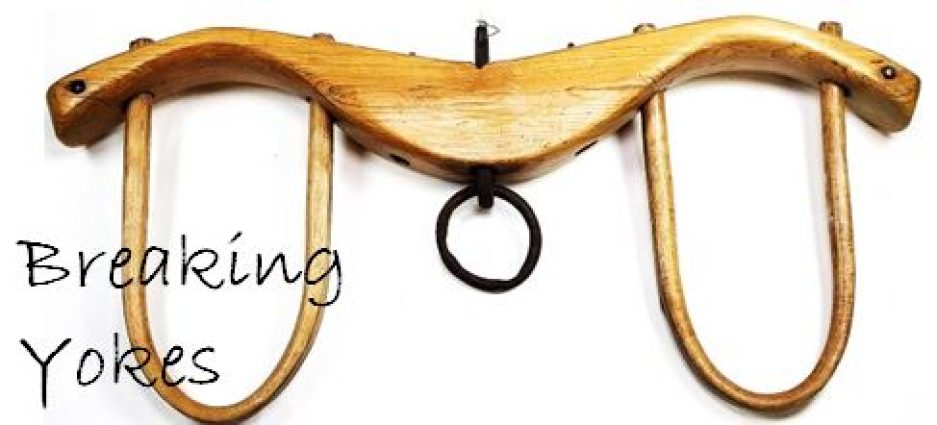
Praise and thanksgiving is a community effort on Sunday’s, as well as for weddings, and funerals. Praise and thanksgiving became my focus every time I placed the yoke of ordination around my neck, a stole resplendent with colors and symbols of the body of Christ across the centuries, at work to redeem and save the world. Sometimes praise and thanks were channeled to God by my labors of liturgy, sometimes in spite of me. Every moment at the pulpit or behind the altar, I experienced the awesomeness of responsibility, of privilege, of God’s imminence when leading worship. Leading worship is humbling, leading me to become greater disciplined, reflective, discerning.

In my 42nd year of leading worship I take to heart Dr. McCabe’s defining words that changed my life. I could get over Dr. McCabe’s pointy finger, and I did. Thank you, God, for Dr. McCabe and his impact on my life, call, and ministry.

The pool. My lane. This morning, I was uninterrupted. 

The water was cool and refreshing. The laps sailed by and in the blink of an eye, I was done. 

The water in which I swam, was the same water that baptized me in a little Evangelical United Brethren church (a predecessor denomination of The United Methodist Church) in Stillwater, New York. I swam in the same water that flowed among Jesus and John when Jesus was baptized in the Jordan River. The same molecules of water floated Moses, drifting him into the Egyptian bullrushes. The water that gave me buoyancy is the same water the Lord created, and found it good.

The water in which I swam is God’s gift of hospitality, of inclusion, welcoming even me into the community of sinners and saints, from time before, until time unending, salvation in the here and now and salvation into the eternal here after. 

We swim together.

The Rabbit died. 

My new-to-me yellow Volkswagen that carried me to Dayton to attend seminary wouldn’t shift into any forward gear. Reverse was good, but highly impractical in city traffic. My parents, poor as church mice, had nothing to give but empathy and prayers. Three days later (resurrection perhaps?), a check came in the mail from my older brother, Steve, 13 years my senior, and at that time, an unfamiliar brother who left for college the year I entered kindergarten. Steve wrote me a check to pay for the transmission repair. 

Did I mention God’s grace. Yup. Sustaining. Amazing. Thank you, Steve, if I hadn’t thanked you enough already. Thanks for throwing me a solid.

I arrived at my job as a crisis counselor at Eastway Community Mental health promptly at 6:45 am, giving the new shift an opportunity to be briefed by the overnight crew of any ongoing interventions before the start of the 7:00 am shift. Opening the double door to our lobby, I was greeted by a middle aged woman dancing barefoot on a coffee table, shrieking and laughing, obviously disconnected from reality, experiencing a psychotic episode. Now there is something you don’t see everyday. 

I passed her by, put my lunch in the fridge in the staff lounge, and took my place at my desk, waiting for report. Our desks were arranged in a circle, each with a telephone to receive crisis calls, under expansive skylights that welcomed in the daylight sun and gave sight to the rising moon. In the center of the circle was a rotating file with one dumb terminal, a Wang computer, that we all shared. It was State of the art, back in the day, a link with mental health records in Columbus. 

Dr. Rueth walked in, put his briefcase in his office and sat on a desk in our circle. “Anyone notice Mrs. So-and-so in the lobby?” Why yes, now that you mention it, I did. Dr. Rueth pointed at me and with a gesture invited me to follow him. We went to the waiting room. 

Slowly, gently, quietly, Dr. Rueth talked this psychotic woman off the table, took her by the hand, and led the two of us into his office. When he completed his assessment, Dr. Rueth walked her over to the day program, and brought her a cup of coffee, where she reconnected with reality, smiled, and thanked us. 

Wow. I was truly in the presence of greatness.

Afterwards, I learned that this woman was the wife of a prominent judge, who dominated and brutalized her in their marriage to the point where she would psychologically break from reality. She was a long term survivor of domestic abuse, her abuser protected by an unjust system of power and authority, disguised by the black robe of justice. 

In that time and era, in the absence of hard evidence, there wasn’t much that Dr. Rueth or I could offer her, except for a little bit of dignity, respect, and comfort. Our presence and undivided attention gave this woman a sense of worth and love, a lifeline of hope, as tenuous as it was, in a storm of uncertainty and evil abuse. 

It remains unknown to me how everything turned out, if it even did. She was a long-term client of Dr. Rueth, a woman he valued and treated with dignity and respect, simply because she was a child of God. She mattered. The lesson she taught me would last the rest of my life. 

People matter, much as I like to complain otherwise. Equal rights matters. People are not objects (the focus of objectification), where some are valued more or less than others. Power inequality cannot be dismissed as political wokeness. Life matters, because life is a good gift from God. 

Treat life kindly, beloved. Show respect. Love others, just as you are loved.

21. Suspended

My father’s ancient Royal wide carriage manual typewriter was too bulky and heavy to bring to United. An IBM Selectric was way out of my price range. In those prehistoric days a computer or word processor wasn’t even a twinkle in the eye of Alan Turing. So, I bought a brand new Brother electric portable typewriter to head off to Seminary.

I knew the demands on writing were going to be oppressive, but when we were introduced to the Turabian standard during orientation, I knew I was in for a steep learning curve. A math major has a lot of experience in proofs, logic, and computer programming on IBM punch cards, but when it came to the English language, not so much. A good Marriam-Webster became my Brother’s companion. Hundreds of papers later, both were thoroughly worn out after three years. 

Our three week orientation also required every student to take the Graduate Record Exam (GRE) and to sit for a day completing the Minnesota Multiphasic Personality Inventory (MMPI), an ancient device used to assess personality types and psychopathology. Apparently, the seminary faculty wanted to screen out mother rapers and father molesters.

I guess we all passed because no one appeared to drop out. There was significant grumbling among the women students who felt the MMPI was unnecessarily invasive when it came to questions about frequency of peeing. They rallied their courage and voice around one female student who was pregnant.

My first day at Eastway Community Mental Health found me in a classroom being taught how to defend myself from bodily injury if assaulted. “Good preparation for a parish minister,” I thought to myself. We were also taught effective methods for de-escalating violent clients and how to call for help by pressing the big red button on the wall in each of our interview rooms. 

It was a privilege to meet Dr. Thomas Rueth, a world leader in crisis management and my department manager. Over the course of the next three years, Dr. Rueth would teach me everything I needed to know. He was quiet, compassionate, and calm. He disciplined his body language and affect in such a disarming way, I was always left in amazement. The Dayton Police Department, Montgomery County Sheriff Department and all nine Dayton City hospital emergency depended on Dr. Rueth, his staff, and his training methods. My first year, I observed. My second year, I led assessments, supervised by Dr. Rueth or one of his experienced supervisors. My third year, I was conducting psychiatric assessments on my own. 

This was heady work. I was responsible to be thorough, to write with clinical precision, and to make recommendations to the staff psychiatrist regarding an appropriate level of care. The Diagnostic and Statistical Manual of Mental Illness (or DSM-3, as I first learned it) was the driver’s manual for diagnostic impressions. With a word, I could have a person restrained and locked up on a 72 hour hold. God forbid if I abused this responsibility and violate someone’s civil rights. In time, the staff psychiatrists began to trust me and Dr. Rueth gave me a longer leash. 

I had never seen a bicycle chain used as a belt before. The sixteen year old kid who stood up and faced off with me unleashed his belt and, despite using every communication tool in my toolbox Dr. Rueth had taught me, this kid was going to kill me. Not just dead, his chemically altered state meant to beat me bloody, make me suffer, kill me dead, and paint the room with my blood. What a headline that would have made in the Dayton Daily News. 

Remember that big red button?

Yep, I pushed it. As the chain swung and I ducked, the door opened and every male staff member in the building piled in and tackled the kid. He bit, spit, clawed, and writhed. He wet himself, pooped himself, and turned himself into a demon possessed person. Those demon possessed people Jesus exercised? Yeah, I’ve met quite a few of similar people over the years.

It broke my heart to watch the take down as if in slow motion. Dr. M walked in with a syringe. Held in a four point position the kid’s butt was bared and the shot was delivered. Within minutes the fight left this kid’s body, everyone breathed a sigh of relief, and Dr. Rueth pulled me aside to ask if I was okay. 

Me? How about that poor kid laying in a heap of his own mess unconscious on the floor?

No. Dr. Rueth wanted to make sure I was okay. His heartfelt empathy held enough room for both the patient and his staff. A few days later, sensing a teachable moment, we revisited the encounter in the privacy of his office. What I did. What I didn’t do. He didn’t pull any punches. Neither did I; the whole truth was laid bare before him. As our supervisory season came to conclusion, Dr. Rueth told me that there are times and circumstances in which the best intervention isn’t going to be good enough.

That’s okay he said. You did good.

I glide down my lane this morning pulling myself forward, kicking as vigorously as possible without running out of breath. My goggles provided me perfect clarity to the bottom of the pool. I was suspended on the surface, I thought to myself. The surface tension and viscosity of water was sufficient to counter the opposition of gravity, the capacity of my lungs and forward velocity giving me just enough buoyancy to keep from sinking.

Suspended is my lap swimming inspiration for today. Suspended; held aloft, held up, a force that counteracts drowning. 

The laps went by like a flash this morning, as I was deep in thought. My life has been suspended by God’s grace, allowing me to swim, find joy, maintain health, discern will, and provide strength. In the absence of God’s grace I’d lose buoyancy, veer of balance, careen out of control.

God’s grace has allowed me to be suspended and supported throughout my life and over 40 years of pastoral ministry, a fact as certain to me as stars are hung in the sky.

My next door neighbor recalled during his orientation for medical school that he was told to look left, look right, and know that by the end of the first year one of you isn’t going to make it. Seminary wasn’t quite as bad, but nearly so.

We had students attracted to graduate school who would never make it in the parish, even if their Board of Ministry granted them ordination (most never did). Some students were on an academic trajectory that would take them to a PhD and teaching. Other students transferred out, or transferred in, especially if they needed a degree from United (that was accredited). I was on the three year plan, while others took four years or more. I was determined to vacuum it all in, to experience seminary in its fullest, to learn as much as I could in the time allotted. 

I was reading 500 pages or more a week, writing papers as fast as my Brother could keep up. All the reading and writing was breaking me like a wild pony. I’ve often thought the first year of seminary was meant to de-construct faith and beliefs to the core foundation, jettison off the whey from the curds, the wheat from the chaff.

The second year was meant to build, to fill the mind with the faith and theology of great thinkers, scholars, theologians from the past 4,000 years (You read that right. To know 2,000 year old Jesus, one must know 4,000 year old Abraham).

My final year was focused on developing my own systematic theology, encompassing everything from eschatology to theodicy. 

The last thing I wanted to take was Bible classes. And no, God forbid if I had to take Greek or Hebrew. I had to, and I did. 

Bible classes turned out to be enjoyable. Taught with academic rigor, scriptural literalist and fundamentalist were exposed as frauds and turned out in droves. Ha! Serves them right. Take that, you filthy trout sniffers. Bible thumpers could harm me no more.

We learned critical thinking, methods of criticism, storytelling and oral tradition techniques, and language skills. We sought data from original documents, drew understanding or “sitz im leben”, and were taught to ask the question of God’s deeper truth. Biblical archeology was a thing, and my data driven scientific mind was thrilled. Don’t believe me? Go to https://www.biblicalarchaeology.org/ and prepare to have your mind blown. My enthusiasm for Biblical truth was kindled in seminary and became as flames of the Spirit, experienced as grace, suspending me throughout my parish ministry. 

Suspended. There is that word again. 

Dr. Battdorf slapped the blackboard with his cane. Dr. Boomershine drilled the Gospel into our DNA through rote learning and storytelling until we were blue in the face. Dr. Barr and Dr. Farmer led us into Hebrew scripture that brought grace to law, revealing a loving, personal, interested God in place of the vengeful punishing God of my youth. Biblical studies are hard, but, oh, so rewarding work. I revel in it to this day. The rewards are better sermons, a healthier spiritual life, and a closer walk with God. 

Suspended in an environment of Theological inquiry, discovery, and curiosity, attending and graduating from seminary changed my life dramatically, molding me into a parish pastor. Seminary taught me to swim in God’s ocean of grace, how to serve with love and empathy those entrusted to my care.  Suspended. Thank you God, for hold me above water, suspending me in your grace all of my days. 

20. Orientation

Dayton, Ohio is hot in the summer. I arrived in early August, 1983 in my new-to-me yellow Volkswagen Rabbit. My two-room apartment in Fouts Hall was right out of 1930, complete with steam radiators and huge windows painted shut.

Down the hall, I met my first seminary chum, Doyle, who’s dad was a district superintendent from North Dakota, where the wind blows so hard one leg of a chicken is shorter than the other, simply to stand up straight. Doyle was one of the few classmates who was fresh out of college. Most of the others were second career budding preachers, who sold their mortgaged homes and moved their families to Dayton.

Doyle sported a bushy beard and a ponytail that hung to his waist. In other words, we became instant friends. We set out together for supplies and to scout the neighborhood. Kroger’s would become our main go-to. One week worth of groceries cost less than twenty bucks.

The first day of our three-week orientation found us in Breyfogle chapel, eight to a pew. There were about 40 of us, early morning tired, fearful of the great unknown. The Master of Divinity degree is a three-year master’s degree, ninety hours of post graduate reading, writing, discussions, classroom lectures, and practice. Add in a six-hour Clinical Pastoral Education stint (both an MDiv and CPE were required for ordination at that time) and each of us sitting in the pews were wondering if we could cut the mustard.

Home conferences would have their say, too. Just because a candidate for ordination presents themselves with the proper credentials does not mean the Board of Ordained Ministry would approve a recommendation to the elders and full clergy members of conference for ordination. The process was fraught with risks. Discernment sought increasingly large circles of people who would support, or not, an individual’s perceived call to the ordained.

Ordination may be the best union in the world, but it can be the most difficult to have entry granted.

In walked Dr. Kendal Kane McCabe, professor of preaching and worship, son of a bishop, single, perfectly comportmented, dressed in full blown Anglican cassock (black) and surplice (white lace), clerical dress unknown to all but a few. A full clerical collar completed his persona. This should be interesting.

Dr. McCabe passed out copies of the Daily Office. I had been used to my mother reading me the daily devotions from the Upper Room over breakfast cereal when I was young. It was always a relief when the closing prayer did not end with the Lord’s Prayer, drawing out the pain.

The Daily Office was a scripture-based collection of short, small, three times a day worship experiences that we were all expected to practice. The faculty had authored the Daily Office, tailoring the content for us young seminarians. It invited us to contemplate deeper questions of God, call, grace, and love. It was neither painful or drudgery, rather, it would serve as a common talking point during coffee breaks or before class.

Opening worship was led by Dr. McCabe, joined by various seminary professors, and the president. Dr. Schafer played the magnificent pipe organ and I attempted to sing without my voice breaking.

Around me were students from Iowa, Oregon, Kentucky, New York, Pennsylvania and all places in-between. The Eucharist balanced the scripture and sermon. It was without question, high church, complete with sung responses, bells and smells. This was quite a departure from my experience where one groveled at the feet of Jesus seeking undeserved table scraps. Instead of little cut cubes of white bread and Welches grape juice served in shot glasses, the elements were consecrated pita bread and a common chalice; actually, two chalices. One with fermented fruit of the vine, the other, not.

I recall a lot of silence in that opening worship. In between time were filled with large gaps of nothing, separating scripture from sermon, sermon from prayer, prayer from Eucharist, Eucharist from benediction. The magnificent chapel was a space of awe and wonder, reflecting an image of the God from our shared United Methodist experience. Immortal. Indivisible. God only wise. Alpha and Omega.

An open lane! Five other lanes were packed with lap swimmers and water walkers. I hurried out of the locker room and stood at the pool’s edge claiming it for my own, when behind me I heard the question, “mind if I join you?”

Crap.

“Yes, please do,” was my polite response. I slipped into the water and began my crawl stroke. Of course, my new lane buddy must have been an Olympic goal Metalist, slicing past me like a rocket shot out of a cannon. The only thing I saw of her was the fading bottom of her kicking feet.

Halfway through my meager attempt at exercise, the lane next to me lost both of its swimmers, becking me to come hither. I slipped over with the smile of freedom on my face. Just as I made the turn I noticed a mountain size of a man standing at the end of my lane.

CRAP!

I eased right as I approached the end. He leaned over and politely asked permission to join me. “Yes, please do,” I repeated, making me question my own honesty. Requesting permission is more about etiquette; to alert the other swimmer to one’s presence, to avoid collision and the potential of broken bones. My new lane buddy was more like an out-of-control washing machine, threatening to swamp me each time we passed.

Needless to say, when I finished, I dragged my sorry excuse of a lap swimmer out the pool and found serenity under a refreshing hot shower.

Common Meal was a tradition at United. During orientation it was held daily. During the school year, it was held every Wednesday at noon, following 11 am chapel. Faculty, staff, and students were strongly encouraged to attend. Over food we would grow to know one another, explore the latest lecture or book, talk about papers that were due, or just enjoy each other’s company. Our diversity invited us to challenge our personal beliefs, faith, and culture. Women and ordination, sexuality, doctrine, and the next General Conference (the global gathering of Clergy and lay delegates that speaks definitively for the United Methodist Church) were common topics about the tables.

I so loved sitting at Dr. McCabe’s table for Common Meal. He was an ideal model for a parish pastor, far different from my experience with my father. Being a preacher’s kid (PK for short) meant your father was also your pastor, definitely a conflict of interest, especially when it came to personal questions and confessions.

Dr. McCabe was proper. He spoke with clarity. He stood and sat as if he was schooled in a military academy. He knew his specialty through and through, presented at international conferences, publish widely, and spoke of prominent scholars on a first name basis. He probably knew the Lord’s first name.

At the conclusion of our first Common Meal, we were sorted into Core Groups; a collection of eight diverse students, matched with a professor and with a prominent pastor of one of the large local churches. Dr. Kathleen Farmer, a professor of Old Testament and Don, Brethren pastor, served as our leaders.

Core Groups were required to meet weekly for all three years of our seminary experience. We discussed the classes we were taking, classes we wanted to take, challenges in our student churches or community agencies, shared devotions and prayer, and often didactics (word-for-word renditions of our work experiences).

The curriculum’s expectation was that first year students would work in a social services agency, second year students would serve as a student pastor in a local congregation, and the third year was reserved for time to complete CPE. A Federal work study program allowed each eligible student to work for $5 an hour for up to 20 hours a week at a community agency. That was enough to buy groceries and put gas in the car.

That first week we visited at least three agencies who were willing to take on student interns. My first visit would be sufficient. Eastway Community Mental Health Agency (https://www.eastway.org/) caught my attention. I ended up working for Eastway all three years of seminary, granting me a deeper understanding of the human condition and the previously unknown world of mental health.

Eastway was a large agency, led by a United alumnus, that served people with mental health concerns. It offered short term in patient treatment, drop in centers for individuals with chronic disease, a battered women’s shelter, a crisis center, individual and group counseling, and probably a whole lot of other things I never knew about.

Crisis Services provided intervention, stabilization, and referral 24/7/365, on the phone, on scene, or at one of our offices. We had the contract to conduct psychiatric assessments at all nine city hospitals, Dayton Police Department, and the Montgomery County Sheriff’s department. If it was breaking news at 11 pm, there was probably an Eastway counselor present to talk the person off the ledge. I had been a math major, with a concentration in computer science. What was I doing working in a 24/7 crisis center working with homicidal or suicidal people?

Eastway would change my life in profound ways, giving me the skills and tools to conduct comprehensive clinical psychiatric assessments, deescalate conflict, establish control out of chaos, and respond with newly discovered empathy towards others. I’d learn to become the Quiet in the midst of the Storm.

What was I doing at Eastway? Only God would reveal.

19. God’s Call to Ordained Ministry & Pine Valley

Reflecting back, I was not developmentally prepared to leave home and go away to college for my first two years at Clarkson. I was undisciplined and exploited my newfound freedoms in behavior that I’m not proud of. Hungover one Sunday afternoon, I met up with Bill, the college chaplain assigned by the United Methodist Church to North country colleges, to visit a local church Youth Fellowship gathering. Bill grabbed a hold of my shirt, pulled me close, and looked into my bloodshot eyes. “What does God want you to do with your life?”

There was a question I had never considered. God’s will for my life. Hum. 

The winter of my sophomore year, the Clarkson hockey team traveled to Boston to play in the ECAC tournament at the Garden. I loaded up a car load of fraternity brothers and made the road trip to support our team. I dumped the others off at their hotel and I met up with Phyllis, a graduate music student at Boston University, and a fellow Casowasco summer staff member. I slept on her apartment floor and Phyllis gave me the grand tour between games. 

Late one night we were locked away on the observation deck of the Hancock Tower watching airliners take off and land across the bay when Bill’s question kept returning to my thoughts. What is God’s will for my life? Engineering? Two kids and a boat in the driveway, earning a big salary at a large company? Or, was it something else?

Phyllis gave me a tour of BU, ending at Marsh Chapel, the cornerstone of the School of Theology. She introduced me to professors and students she had come to know during her time there. Serene. Peaceful. Powerful was the space. We exited the chapel and before us was a sculpture dedicated to BU’s most popular graduate, the Rev. Dr. Martin Luther King, Jr. On the pedestal were his words to “I have a dream.” 

The sun was just right. My heart was strangely warmed. I knew God was calling me to do what my father had done: serve as a pastoral shepherd of local churches. 

My laps this morning flew by. I replaced a 101 year old regular lap swimmer. “Did you warm up the lane for me?” I asked. “Yep,” he smiled, “and I made sure all the water in the lane remained wet.” God bless his soul.

One, one. One, two. One, three. Two, one. Two, two. Two, three, I counted as each lap passed me by. The cool water hydrated my dried out skin, giving me a break from the omnipresent summer heat and humidity. 

Push. Glide. Stroke. Breathe. Wash. Rinse. Repeat. Swimming laps is a beautiful thing, especially in retrospect when they are completed.

I was 19 years old, had transferred from Clarkson to Elmira College, and moved back home to settle myself down. The commute for my Junior year would be from Chemung, NY where my father served the Chemung and Willawanna parish. A major in Mathematics would ensure my transferred credits would be translated into a bachelor’s degree in four years and a ticket to graduate school. Math and computer science, back in the age of programing with IBM punch cards in BASIC or FORTRAN on a computer main frame the size of a house, would be my home.

That fall the phone rang. It was the District Superintendent, Bill Swales, calling. “I’ll go get my dad,” I replied. Bill knew me well from Casowasco and my solar panel hot water engineering days. “No, I want to talk to you.”

“What’s up, Bill?”

“I heard you were thinking about going into ordained ministry,” he said. He didn’t question my call, judge my youthful lack of maturity, or my utterly lack of knowledge.

“Yeah,” I replied. “Well, kind of. Maybe. I don’t know.”

“Well I have a church for you,” Bill offered. WHAT? Does he even know that I’m a 19 years old kid without a clue, my subconscious screamed. “What would I preach about?” I innocently asked.

“Well, you’ve got a Bible, don’t you?” Bill replied. Besides, your dad could help you along. “Plus, it pays $55 a Sunday, right out of the offering plate.”

“I’ll take it!”

Oh, boy. I’d have to put up or shut up. 

Pine Valley was about a 20 minute drive from home and a full hour from Casowasco. My first vehicle was a Datsun pickup truck, rusted to the rims, hand painted with a brush by the previous owner with green latex paint. Holes in the floor boards ensured a shower when it was raining. It was impossible to put the stick into reverse without opening the passenger door. Flies gathered on the inside of the windshield and died on the dashboard. It was the perfect vehicle for a pastor. 

The people of Pine Valley were so gracious and kind. They knew that their role as a part of the larger United Methodist Church was to give prospective pastors a start with a taste of ministry, or, to help ease into retirement those who were ready to go. I was a member of the former category. 

My first funeral was for a patriarch, a retired contractor with a large family. Dad gave me the Book of Worship. The undertaker told me when to enter, where to stand, and when to leave. Just read from the book, I thought to myself. How hard could that be? Another pastor entered and sat in the last row, a kind gesture of support. 

Note to self: when leading a funeral, print the deceased name on a sticky note and post it in the Book of Worship. The second lesson I heard from Ted’s funeral was to write in the title “The Lord’s Prayer” so I wouldn’t forget it. Sounds silly, but for a newbie, these little tips lasted me 41 years in the parish. 

From November 1981 until June 1983 I commuted to Pine Valley every Sunday morning to lead worship and preach. It fit my summer schedule working at Casowasco and my routine the rest of the year when school was in session. My first sermon was “On Christ the Solid Rock I Stand.” The rest is history. 

Kind. Gracious. Faithful. These were the people of Pine Valley who affirmed my call to Ordained Ministry, who encouraged me to continue down the path towards seminary. These salt-of-the-earth people would be found in every small church I served. They were God’s gift to me, mentors, cheerleaders, even financial supporters. Each, beloved. 

By the time I graduated in 1983 and was headed to United Theological Seminary, I had saved enough to trade in that Datsun for a used VW Rabbit. With a car loaded to the gills, I set course for Dayton, Ohio and three years of the unknown, leaving tears and gratitude behind.

18. Casowasco – 2040

It is wonderful to recall fond memories of my youth, call to ministry, and deeply felt connections to Casowasco. But, I ask, what of Casowasco’s future? What can Casowasco become by the year 2040, a mere fifteen years from now?

Two conditions that must be honored are related to the property being sold to The United Methodist Church in 1948, namely, the site carry on the “Case” name (i.e. Casowasco), and, that the land be use in ministering to youth and children. These conditions must be honored. Our word matters.

In earlier years, stable leadership and the popularity of summer church camp proved widely successful. Former campers and staff have enriched local churches with exceptional lay members and clergy. In recent years, the popularity of summer church camping waned, leadership frequently changed, and Casowasco oversite lacked mission, vision, and accountability. Today, Casowasco sits empty, the property is heavily capitalized and in need of repair. Consultants have been employed by the church to lead discussions and to create a plan for the future.

One consideration that should not be given the light of day is selling the property. This would harm the integrity of the Upper New York Conference, alienate prior campers and staff, and violate our word to Gertrude Case, her family, and estate. Legacy needs preserved. Cremains need to be honored. Furthermore, the potential for real estate development is high. This would lead to an environmental disaster to the woods, watershed, and lake.

A vision forward is needed.

For a vision to be transformed into mission and evaluative goals, the first priority for the next 15 years is to create a solid foundation upon which Casowasco may be resurrected. To this end,

  1. The stewardship of Casowasco should be transferred to an independent not-for-profit corporation, while the ownership of the property must remain with the annual conference.
  2. A solid financial footing must be established by a capital fund drive by the annual conference to stabilize and eventually to improve the property, facilitate donor development, and to pursue investment and grant opportunities.
  3. An effective not-for-profit board should be exclusively United Methodist, employ capable, stable leadership, establish a long-range plan, and be held accountable for the achievement of measurable and realistic goals.
  4. The long-range plan should stabilize the property, enact sound economic principles for the buildings and grounds, and make plans for future site development.
  5. The long-range plan should grow the financial foundation, support an aggressive development effort, and be flexible to a changing market for camping and retreat ministries. Casowasco can become financially sustainable, especially when the potential for fund raising is unleashed. Prior campers and staff will be generous in their support, provided the necessary policies have been put in place to ensure fidelity and trust.
  6. The long-range plan should include for the gradual implementation of site use.

What might the Casowasco experience be like in the year 2040? I can imagine three opportunities for the future of Casowasco

  1. Children and Youth Ministries
  2. Lay and Clergy Development
  3. A Finger Lakes Education and Cultural Experience

Children ministries should be maintained on a deliberately modest scale, anchored to one lodge or site, should be themed, and should be limited to a limited number of weeks throughout the summer. Perhaps one lodge should survive and become the sole host for children’s seasonal camping.

Youth ministries should anchor district and conference councils of youth ministries, provide short term camping experiences over educational breaks, and, possibly serve as an educational incubator for innovative local church Christian education initiatives. Think: training and running an effective vacation Bible school by hosting a Bible school academy every spring. Think: youth retreats, training efforts for youth mission trips, youth trip camps.

Lay development. Casowasco should be dedicated to training, empowering, and deploying effective lay leaders in our churches. Casowasco could host efforts to license and credential lay ministers and local pastors. Think: Mission academy, to develop the mission potential of local churches; Stewardship school, to develop effective stewardship programs; and Justice Institute, to develop and deploy effective justice ministries throughout the conference, impacting the entire world.

Clergy Development. Casowasco can become a leader in clergy support and professional development, as well as nurturing physical, emotional, and spiritual health. Think: Preaching Academy, where pastors can hone their homiletical skills; New Pastor Start Up school, to orient new pastors to serving in our conference; Clinical Pastoral Education; spiritual guidance and retreats; and Board of Ministry meetings, retreats, and interviews. Consider partnering with The Upper Room, evangelism and discipleship ministries, local seminaries and universities.

A Finger Lakes Education and Cultural Experience. Casowasco can be transformed into an educational center of excellence, teaching visitors about the geology, flora, and fauna of the Finger Lakes, ecology and environmental history, history of native Americans and colonials, the Burned Over District of religious fanaticism, women’s suffrage, industrialism, and the Great Gatsby Era, as reflected by the Case family history. Think Elderhostel, Ted Talks, corporate leadership retreats. Think retreats that support sobriety, serenity, and spirituality. The only limit is our imagination.

These thoughts are not an attempt to derail the process of discernment that is taking place. Listening is essential. United Methodist across New York and beyond have much to teach us. Intentional, gentle policies and procedures must be put in place that honors the legacy of Casowasco, rebuilds trust, and affirms a future that only God knows, even as we faithfully attempt to discern God’s will moving forward.

I’m praying the Casowasco discernment process bears fruit, worthy of the Lord. God dreamt big; in six days the earth was created, and the Lord took an additional day for rest. I’m praying for the day that Casowasco will return to bearing fruit, worthy of the Kingdom. Decades of decline must end. The tomb is empty; Christ is risen, and so, too, should the Church. Parishes need to be resurrected and placed on a growth trajectory. Casowasco can be that springboard of new life, grace, peace, and hope for the future.

17. Casowasco – Fishing Camp

Casowasco is a tree lined retreat on the southwest shore of Owasco Lake, one of the picturesque Finger Lakes in central New York. Carved deep by retreating glaciers from an earlier age, Owasco, we were told, was the Native American name for “the crossing,” a trail that traversed the north end of each of the lakes.

The lake plunged to hundreds of feet of depth just off the Casowasco point, such that when I scuba dived the area it was like I was descending along an underwater cliff. I never made it deeper than 92 feet, which was plenty of depth to explore the cove and retrieve antique bottles and other such artifacts. Owasco lake is known for its ample stock of Lake Trout, Browns, and Rainbows, as well as perch, crappies, and bass.

Summer camp sessions ran from Sunday afternoon until Saturday morning. Individual lodges would feature themes. Camps were led by clergy volunteers and staffed by volunteer lay members from their church, with summer staff filling in where ever there was a need. I took my turn as a counselor at Older Elementary camps up at Mt. Tabor, connected to the main campus down below by the notorious Jacob’s Ladder, 164 steps of near vertical assent. Not my favorite, even though it sported “Counselor’s Bluff” where one could stop and catch your breath.

I staffed a tennis camp. No thank you; it got miserably hot out on the tennis courts. And, no, I had never played tennis. Not a recipe for success. I worked a bike camp, but, being a big guy I found the 35 miles a day on the road a non-starter. My hemorrhoids thank you.

Then, there was fishing camp, led by Charlie who was the pastor of the large United Methodist Church in Geneva, NY. Charlie had been leading the fishing camp for years before my arrival, and would continue on until I took it over ten years later in the mid-1990s. Charlie was mischievous, always had a twinkle in his eye, and had a heart for the kids and their safety.

He fished from a boat he won in a raffle at the St. Mary’s festival. Gambling, being a vice dis-allowed by God fearing Methodists, Charlie justified his win by saying it was his way to practice ecumenism and foster good relations with our Roman Catholic sisters and brothers. Bishop Yeakel turned a blind eye, so Charlie kept his boat.

Charlie fished for Lake Trout by pulling copper, and out fished everyone else by the bucket full. Pulling copper is an old method of fishing. Copper wire was unwound from a spool that replaced the turntable of an old Victrola. Semi-stiff and weighted, it would hang straight down from the boat.

A large silver spoon with hook was attached to the end. Jerking it along the bottom gave the appearance of a wounded bate fish. Lake trout pounced and Charlie would real them in. He’d return with three five-gallon pales chuck full of Lakers, which would result in an all-camp tutorial on how to clean fish and a lesson on wrapping and freezing the tasty filets.

Captain Bill was a charter boat operator we recruited to be on staff. He was an expert at trolling for trout. Bill’s service was to repay the pastoral care he and his family received when his younger son was dying with brain cancer. For years, Captain Bill launched his own 35 foot charter boat, supplied his own fuel, opened his heart, and taught campers about life, faith, and fish. Quality, bar none.

Mark, a young clergyman and a lifelong friend, would bring his boat and teach kids to jerk for perch and bass along shore and near the shallow end of the lake. Later years, Bill, my Lay Leader from Dresden, and, Vito, an auto parts store manager from my later church, would join us. Both were also expert fishermen, especially when it came to crappy, perch and bass.

Pete was a former camper enrolled at Cornell studying fishery sciences. Pete lived for fish, studying their environment, and protecting their habitat. He was smart as a tack, an expert in the field and an academic behind a computer screen, teaching me how to hand code my church web page back before Al Gore invented the internet.

Pete was a fly fisherman, second to none. He and Les (see my pervious post about Les sulking in the shrubs listening for appointment scuttlebutt) taught us all how to tie flies, cast, and stalk fish in every kind of setting. I’d frequently wake at 5 am to spy Pete fly fishing, standing in a row boat just off shore in the fog at morning’s first light. Pete’s passion for flyfishing was contagious. He taught me everything I know.

Arrangements were made to take the camp to the Onondaga County Fish Hatchery, where we were met with members of the local flyfishing club and the owners of the local Orvis store, who kindly supplied all the rods and equipment. Club members taught the campers how to catch trout. When a trout rises to strike a floating fly, it is like sticking your finger in a light socket! It is electrifying to experience the strike, set the hook, and reel it in. Arrangements were made with the director of the hatchery such that we could keep all the fish we caught, but, once we left the property, we were on our own.

Driving back to Casowasco that night with tired out campers and about 200 pounds of illegal trout in our trunk, we were careful not to break any speed limits. Cleaned outside the camp kitchen and frozen in the walk-in, each camper was able to take home Saturday morning at least ten pounds of Lake trout filets.

Every fish was a blessing.

—-

When I pushed off the side of the pool to begin my laps this morning, I had thought my reminiscence of Casowasco had come to an end. Oh, there are a thousand of stories I could share, some better, some worse, some funny, others, well, let’s not mention them in print. I’m full of it, afterall. The feedback has boosted my pride, but, to be honest, my ego is aging and the need for popular acceptance is waning. So be it.

The water was cool. My lane this morning was mine alone, meant for solitary contemplation, meditation, prayer. The water pulled and resisted, giving me a glimpse of the underwater world, that, absent of chlorine, could easily support … fish.

Pete was the apple of my eye when he graduated from Cornell. There were no openings at that time with New York State Department of Environmental Conservation, but with his impeccable credentials and enthusiasm, it was easy for Pete to find a staff position with the State of Wisconsin. He was married the summer before he left for out west in the middle of a fly-fishing stream. Though Pete assured me he’d take his vacation to attend my fishing camp each year at Casowasco, it was a sad goodbye as he packed his car with clothes and fishing gear and drove off to new adventures.

God knows how much we all loved Pete. He was like a little brother from another mother.

Pete was killed in a motor vehicle accident just a few weeks after he started his new dream job. His sobbing mother told me that his car was t-boned at an intersection that broke his spine and killed him instantly. Would Mark and I conduct his funeral? It was hard to believe. All of us reacted with grief and sorrow.

It was a bone-chilling cold February day we gathered at Casowasco’s unheated lakeside chapel to celebrate Pete’s short but bountiful life. Snow flakes drifted slowly to earth. One’s breath hung in the air. It was so cold the slide show we created from years of fishing camp froze and refused to cycle. Pete’s ashes were in an urn on the altar. Mark and I led the service, the family spoke, we eulogized, we prayed, we cried. Faith and eternal life were woven like a thin strand of 6-pound test fishing line.

At the final benediction, Mark and I carried the urn, led family and friends outside to the shore at the point. With Owasco’s waters gently lapping, we shoved off in a rowboat and interned Pete’s ashes back from where they came, into the waters from which he was baptized, welcomed into the loving arms of our God of the ages, the earth, the sky, the seas.

Each time I return to Casowasco, I think of Pete. Of fishing camp. Of all the dearly beloved souls God has included in my circle of life. When I stand on the point and look out at the lake, I know the trout are rising and Pete is near. What a blessing. What a blessing.

16 Casowasco – The Dodge Power Wagon and Cynthia

My first summer on the camp staff, I was purebred maintenance. I didn’t have to interact with campers, and I liked it that way. In time it dawned on me that campers were the reason for us to exist; so, “maybe,” I thought to myself, “I should do something about it?”

Instead of hanging out at the staff house, I began to visit campfires each evening, join in the singing, even taking part in silly games or skits. In later years, summer staff, myself included, would rotate into and out of the role of counselor, sleeping in the same cabin as nippers and leading them throughout the day. Note to self: always claim the bed closest to the light switch. Also, when one nipper pees the bed, everyone airs out their sleeping bag the next morning on the clothesline.

There were three camp vehicles only the maintenance guys were allowed to drive. The yellow and white International tractor, about 20 shaft horsepower, the all-important mount for the hydraulic front loader, with brakes so bad it wouldn’t hold you if every direction was up. It was great for chaining and dragging timber, filling a dump truck with cinders, or depositing grease from the kitchen behind cars parked outside the staff house. Who? Me?

Then, there was the John Deere 3020, a 60 shaft horsepower bull, built of green painted iron, pumping hydraulic oil and testosterone. That John Deere would work all day and spit nails at night. It took many lessons before Don would give you the okay to operate it by yourself. It was a glorious day that Don told me to “take the Deere down to the creek (pronounced “crik”) and use the backhoe to learn how to move gravel around.”

One “one-year-wonder” maintenance guy who thought he knew everything let the John Deere get away from him and he treed it nearly vertical, a hair’s width away from flipping it over backwards and crushing himself to death.

Then, there was the Dodge Power Wagon. Drop that baby into low range and it had power to eat trees and poop potted plants. It had dual wheels in the rear and a hydraulic dump bed that made it the ideal vehicle for bringing milk back from Auburn Dairy, taking loads of trash to the dump, or fetching new canoes from the Grumman factory in Marathon. It had an indestructible clutch and was known to slalom itself through trees in the Highlands. Like, nobody ever noticed? Yeah, right.

Saturdays were made for trips to the town dump. Carter on the kitchen staff loved to swing full garbage bags into the dump bed. It looked exciting enough, other staff would join in and all I had to do was lean on a post and look cool. I’d drive a load to the environmentally sad excuse for a landfill, back up to the edge, and pull the dump lever. Hearing the deposit was like music to my ears. I always will remember the town employee, sitting in his air-conditioned cab, idling his front loader, while looking at porn and sneaking nips of whiskey. He was fired, I’m told, one day when he was so drunk he rolled his loader into the pile.

The Dodge, with its tilt bed, was also useful for staff visits to the Auburn Drive-In Movie Theater on Saturday nights. A bit of bleach and a good scrub down after the dump run and the back of the truck was like new. We’d load it full of mattresses, sleeping bags, snacks, and libations and head out for a well-deserved night out. We’d park in the back row, lift the tilt bed a third of the way, and we had the ideal viewing platform for the larger-than-life movie screen. There was enough room for twenty of us. Many a budding romance began in the back of that Power Wagon.

One Saturday morning, the loading of garbage commenced. Carter looked like an Olympian discus champion. Onlookers and participants began to gather. As I sat back and watched others paint my white picket fence, I noticed one of the new female staff members jogging by, intent on keeping in shape, working up a sweat that was, well, something for me to ogle.

Something stirred. Flittered. You know. Like a prairie dog, I sat up and took notice. A thought like a flash of lightning grabbed my attention. Her name was Cynthia, and she was the new camp nurse.   

The pool this morning was a cool contrast to the heatwave we’ve been experiencing.

I lost count this morning of my laps, which is a rare thing for me to do. Instead of pushing out laps like counting contractions in labor, this morning I was distracted by thoughts of Casowasco and, yesterday, my first Sunday serving two new part time churches in retirement.

Was that three, or four laps?

People were nice, but there wasn’t a familiar face in either group. Everyone welcomed me, the new guy. I don’t feel like I am anything special. Like Lincoln was reported to say, “I can make a brigadier general in five minutes, but its hard to replace a hundred horses.” Forcing myself to be extroverted left me exhausted by the time I returned home.

The people tolerated the new guy. What will keep me coming back, however, is the honesty, is the authenticity, is the genuine love of God and neighbor that I’ve always found in small country churches. What a blessing! What a gift of grace.

The bush hog broke; rather, a blade was bent and needed replacing. My boss, Don, used the front loader to lift it vertical with a chain, giving us access to the naked underside. Smart, I thought. Don really knows what he is doing.

I held steady the giant steel disk on which the blades were attached while Don used a sledgehammer and wedge to pry the disk off the shaft. “You got it?” Don asked me before he gave it another wack. “I got it,” I confirmed as I tightened my grip.

Bam! The disk popped off and dropped to the ground. I was no match; the steel disk probably weighed fifty pounds more than I could lift. Had I been wearing steel toe work shoes, my life would have been radically different, tragic, possibly. The disk landed on top of my foot, split the nail of my big toe, and filled my boot with blood. Don put me in the Dodge and off we sped to the emergency room.

Twelve hours later, I was back at Casowasco, high as a kite on painkillers, my foot wrapped in tape and gauze, in the Nurse’s Quarters trying to make sense of my discharge instructions.  “Let me help you,” Cynthia told me.

“Yes, ma’m.” You can help me all day long!

I spent the next two weeks in her quarters, getting my wound cleaned and dressed, whether I wanted to, or not. I was out on disability, smiling on painkillers, and in the care of the attentive, and very good-looking, camp nurse.

Holy cow was Cynthia ever good to me. Before I could run another load of laundry, we became an item. I have no other explanation, except for God’s wonderful, bountiful, amazing grace. This year, we will be celebrating our fortieth wedding anniversary.

Once I returned back to work, things got a little cool between us. I couldn’t explain why. Perhaps because her dad was a pastor (like my dad) and served the Bishop as the Dean of the Cabinet? Yet, I found Cynthia lovely and gracious, highly intelligent, and personally driven. She had transferred from Ohio Wesleyan to Syracuse University to complete a degree in nursing, which added a whole extra year to her undergraduate. She had more grit than me, I thought to myself. Personally, I liked her pipe smoking dad, her Latin teacher mother (both had served on the Casowasco staff in the 50’s), and her older and younger siblings.

Cynthia’s father, Irving, already had an eye on me. He chaired a conference committee I was on. He ordered a truckload of firewood, which I dutifully delivered and dumped in his back yard in Syracuse. And the staff enjoyed surprising Irv, and his fellow District Superintendents, more than once having a cold one at the Owasco Inn in Moravia after the Bishop had left Casowasco for the night.

During my last year on the Casowasco staff, the summer of 1983, I was headed out for seminary, arriving early for a multi-week orientation for new students. I packed my car and headed for Dayton, Ohio. God was having me turn a new chapter in my life. Little did I know, the one being closed did not include Cynthia. That chapter was just starting to be written. Our relationship, though ebbed and flowed, was just getting started. Thank you, Lord!

15. Casowasco – Captain John and Clergy Shenanigans

John Spooner is a Casowasco legend. Many will remember him from his campfire ukulele strumming silly songs, his waterfront antics, his Venture 21 sailboat, Pegasus, and his wife, Clair, his son, Larry, and daughter, Louise. John was a second-career elementary school teacher from Barea, Ohio.

John’s first career was as a bachelor ship mate on Great Lake freighters, homeported out of Cleveland. He plied their magnificent waters from Duluth to Montreal, learning navigation and weather, lighthouse and reefs like the back of his hand. He recalled to me once that he enjoyed a day in port, showering and air-drying buck naked on the open hold of his ship, just as a tourist boat slowly chugged past, its rail filled with gasping sightseers.

It is unknown to me how Captain John came upon Casowasco, but he was a fixture when I arrived in 1979. It offered him a free dock to berth the Pegasus, and for the small price of teaching sailing on the camps Sunfish and Phantoms, and shifts lifeguarding nippers, the good Captain was free to fix and polish his beloved sailboat. Summers were grand, for John I’m sure, a restorative respite from elementary school life.

Each evening Captain John would join the rest of the summer staff rotating among campfires with his ukulele, singing songs that remain rooted in my memory. “All God’s Critters Got a Place in the Choir.” John was singing and practicing inclusion generations before it was being maligned as woke. “The Big Rock Candy Mountain” was one of my favorites, for it painted a picture of what the kingdom of God would look like, complete with the buzzing of the bees and the bubblegum trees.

His wife Clair, volunteered in the office. Larry, in high school at the time, was the camp Romeo. He was always on the prowl for members of the opposite sex. He was good looking and knew all the best places around camp to sneak away and swap spit. Louise was Cosmopolitan as fully as a teenage girl can be, blow drying her hair and painting here nails before that was a thing. I took her on an Adirondack canoe trip once. She assured us she could live without a blow dryer for a week. When it came time to drive home, she was a long time in the Pizza Hut’s women’s room. She said that she made work each day as she disappeared into the woods with a shovel, but her agony and groans said otherwise.

One evening at dinner, Captain John asked me if I wanted to go sailing that night. “In the dark?” I asked. “It will be perfect,” John assured me. “The moon will be full and the wind is expected to be brisk.” “Sure,” I agreed. This should be fun. It was just John and I tacking Owasco Lake at midnight. Other than red and green running lights, we were sailing like lightning, healed up until both our butts were soaked.

“I got something to show you,” John told me, with a twinkle in his eye. “I’ve been working on this all week.” What could it possibly be, I wondered? John slipped into the cabin and I heard a cassette tape sucked into a player. High on the two stays off the main mast, newly installed Radio Shack speakers came to life. Wagner’s Flight of the Valkyries woke the waves with a hundred decibels of pure exuberance. I stood, as if at attention, and directed the imaginary orchestra like a conductor, sans a wand. Wind and waves, speed and angels, sound and fury expanded my conception of God’s magnificent kingdom and the potential it is waiting to reveal.

Watch. Wait patiently. Expect the movement of the Holy Spirit. Lessons taught to me by Captain John. Thank you, Captain, my Captain.

Lane choice was no choice this morning. The only lane not occupied by two swimmers was lane 6, the outside lane of the aging pool. “Okay, then,” I thought as I slipped on my goggles and began my laps.

Lane 6 is the road less traveled for multiple reasons. At one end, entry stairs crowd the wall. A Hoyer lift held belts and pullies overhead, making for a cramped approach and turn. At the other end is a chrome ladder into the deep end. Catch a hand on that and, yikes! All of which to say, the sandpaper textured edge of the pool ran its length. Careful positioning avoided stubbed toes and jammed fingers, but also distracted my glide induced meditation. When in Rome, they say.

As I pulled my sorry butt and wrinkled body out of the pool, I saw a cue of three waiting for a lane to swim. I was ashamed to think to myself how I was mentally grumbling about swimming lane 6 all to myself while others were waiting just to begin their laps.

I’m not proud of how selfish and shallow I can be. It’s a character defect that I’ve worked a lifetime to perfect, and a lifetime to correct. Some days are better than others. Sigh. Forgive me, Lord.

United Methodist Clergy frequently made their way to Casowasco for meetings, retreats, visits, and to direct one of the many summer camps for children. I practiced this rhythm throughout my pastoral ministry, at times more frequently than others. Driving down to camp has always been like finding respite from the anxieties of the world, a chance to breathe deeply, to claim a bit of serenity, if even for a time before reentry into the storm tossed world.

Other than exposure to my dad, who ended up serving 19 years in the parish before dying young, and, Bob Stoppert, the Director / Manager, my perception of Methodist ministers was they were a bunch of conservative, straight laced, black suit kind of humorless Oxford wing tipped preachers, who wore protective rubbers at the first sight of rain.

I couldn’t have been more wrong.

Harry came to our staff table Sunday afternoon and reported in a booming voice that he needed “two gigantic red balls” for his camp. We about knocked ourselves out laughing so hard. Harry, in his naivety, had no idea why we were all laughing. Another preacher stopped if he saw any of us loafing and told us to give him ten pushups. He was also known to tell my buddy Clint to retrieve a flash light that fell through the hole landing on top of the pile in one of the Highland’s outhouses. Um, no thank you.

Gordon woke his camp every morning at 6 am clad only in a bathing suit and flip flops, blowing a tuba, sans a polished bell. He probably bought it at auction. He also had a habit of driving his boat right onto shore instead of taking a regular mooring like everyone else; fuel leak and scratches be damned. One night Gordon and his wife startled my gal and I down by the waterfront. He was pushing her in a stolen shopping cart on Galilee’s south lawn, testing it out for his camp “M*A*S*H.”

Sam was a socially awkward, lovable pastor, and academic who did his seminary work at the University of Chicago at the foot of Paul Tillich. His boney chicken dance broke the nose of one senior high girl on the south porch. His eye filled with tears over his guilt and remorse. Sam would eat his sugar donuts like a mad man, coving himself in powdered sugar, looking at us staring, asking, “What? What did I do now?”

Les, considered Casowasco a second home, without the taxes. He was frequently there on his day off. He showed up when the Bishop met with his cabinet of District Superintendents when it was appointment season. He could be found sulking in the hedges under a cracked window or outside a door hoping to catch a snippet of information about who was being sent where. As soon as he caught a whiff of information, he’d hit the telephone and get the rumor mill started. Les was a fly fisherman who taught me, along with others, to tie flies and fly fish lake, pond, and stream.

One morning, Les was marching his camp of older elementary campers down to the waterfront for a polar bear swim. We had been building a hip roof on the staff house and the building was draped with ladders and tarps, the grounds with stacks of shingles and pails of nails. As was his practice, Les called his gaggle to halt, threw open the door and began to sing at the top of his lungs, “Good morning to you! Good morning to you! You look kind of sleepy, in fact, you look creepy. Good morning to you!” At 6 am every morning, his camp’s chorus was not welcomed.

We prepared the ambush for his Friday morning arrival the evening before. We filled buckets full of water balloons and hoisted them to the roof. We ran hoses inside the staff house and charged them at the ready. We populated ourselves in the bushes and on the hillside fully ammo-ed up with hundreds of water filled projectiles. As soon as Les flung open the door and took a deep breath we sprung the trap. He was soaked with streams of water. The kids were bombed with water balloons, such they were dancing, laughing, and begging us to take aim for them. It was a slaughter. Everyone loved it. We still talk about it today, nearly fifty years later.

Lessons from a diverse community of Clergy men and women still guide me to this day. “Never fish from your own dock,” one mysteriously told me. He was in his second marriage with six children. “What?” I wondered. “It cost just as much to keep a full tank of gas as an empty one,” my future father-in-law told me before I went on a date. Pastors were a diverse bunch of folks. What I learned was that every one of them had a passion for Christ and a deep reservoir of faith.

Casowasco, where the butterflies fly and the bluebirds sing, at the Big Rock Candy Mountain.