“Rejection at Nazareth”

Luke 4:21-30

January 30, 2022

The Rev. Todd R. Goddard, Pastor

Rush United Methodist Church

Luke 4:21-30

Then he began to say to them, “Today this scripture has been fulfilled in your hearing.” All spoke well of him and were amazed at the gracious words that came from his mouth.

They said, “Is not this Joseph’s son?”

He said to them, “Doubtless you will quote to me this proverb, ‘Doctor, cure yourself!’

And you will say, ‘Do here also in your hometown the things that we have heard you did at Capernaum.’”

And he said, “Truly I tell you, no prophet is accepted in the prophet’s hometown. But the truth is, there were many widows in Israel in the time of Elijah, when the heaven was shut up three years and six months, and there was a severe famine over all the land; yet Elijah was sent to none of them except to a widow at Zarephath in Sidon. There were also many lepers in Israel in the time of the prophet Elisha, and none of them was cleansed except Naaman the Syrian.”

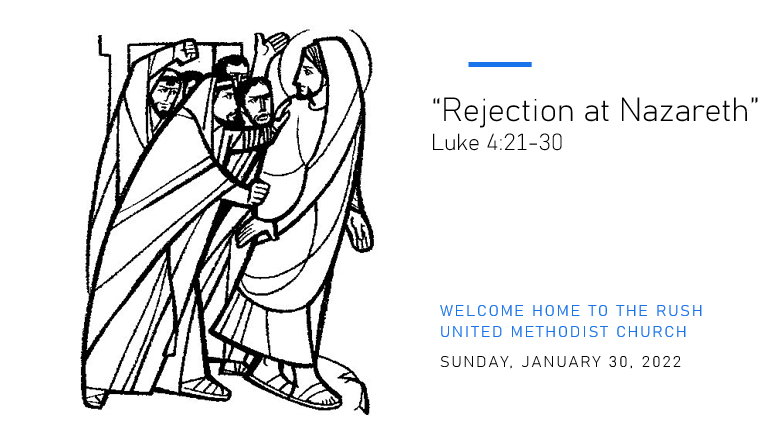
When they heard this, all in the synagogue were filled with rage. They got up, drove him out of the town, and led him to the brow of the hill on which their town was built, so that they might hurl him off the cliff. But he passed through the midst of them and went on his way.

| Centering Prayer |

This Gospel selection from Luke is a continuation of

Last Sunday’s illustrative narrative

Of Jesus returning to his hometown of Nazareth,

Attending Synagogue on the Sabbath

And reading from the Isaiah scroll.

Jesus chose

Selections from chapters sixty-one and fifty-eight.

“The Spirit of the Lord was upon me,” Jesus announced. (4:18)

The Holy Spirit was upon him, just as it had come to the Virgin Mary.

It was the same Holy Spirit that acted and spoke at the baptism of Jesus.

And it was the same Spirit that drove Jesus into the wilderness to face temptation and protect him from the Devil.

Luke reports that Jesus begins his ministry

by returning to the region of Galilee,

filled with the power of the Spirit,

Teaching throughout the area

In the numerous small towns and villages.

The presence, power, and action of the Holy Spirit in the life of Jesus

Is prominently displayed in the Gospel of Luke

And becomes a defining characteristic of the Church that would follow.

Where there is Church there is Spirit.

No Spirit? No Church.

Like a good Jewish, young rabbi,

Jesus reads aloud from one of the beloved Hebrew Prophets: Isaiah.

Good choice.

It was a people’s favorite.

You or I might be intimidated by going back to our hometown to preach.

Family, relatives, neighbors – they can all be harsh critics.

Pulling the Isaiah scroll was a good call on Jesus’ part.

Who doesn’t like to hear the pronouncement of

The forgiveness of debts?

Justice for the oppressed? and

Healing for the sick?

Who wouldn’t want to hear this proclamation from Isaiah

Especially if you felt

you were the victim

of poverty, injustice, or ill health?

Apparently Jesus’ one sentence sermon went over pretty well

Because when he said

“Today this scripture has been fulfilled in your hearing.” (4:21)

Luke reports that “All spoke well of him

And were amazed at the gracious words that came from his mouth.” (4:22)

I’m guessing people weren’t pleased with the brevity of Jesus,

Though some might have been happy because they had a roast in the oven

Or they wanted to get into the restaurant before the lunch crowd.

My guess is that they viewed themselves

As victims, not the perpetrators,

As the exploited, not the oppressors,

As those who had been harmed, not the ones causing suffering.

It is precisely at this moment that the wheels fall off

And Jesus nearly veers off a cliff.

Literally.

Light turns to darkness.

Acceptance is replaced with rejection.

What goes wrong? We are left to question.

Where is the Good News in a crowd rejecting Jesus,

Turning homicidal, and

Attempting to throw him off a cliff?

What are we to learn

And how can we apply what we learn

To our lives today?

A few thoughts.

1. The back of the sanctuary conversation

Turned on a light bulb for the hometown congregation

Of family, friends, and neighbors.

One (obviously distant) neighbor says

Hey! “is not this Joseph’s son?” (4:22)

It would be a mistake to read this

as if the questioner was filled with astonishment.

This isn’t confirmation of a hometown boy making good.

“Is not this Joseph’s son?” should be read dismissively,

With a dash of sarcasm and

A pinch of privilege.

“Is not this Joseph’s son?” someone sneers.

What lifts the veil is our Lord’s response to the people:

“And you will say ‘Do here also in your hometown the things that we have heard you did at Capernaum.’” (4:23)

In other words

From Jesus’ point of view

The people thought they were better than everyone else.

‘We’re as good as anyone else,’ was the sentiment of the congregation.

‘Actually, we’re better than everyone else.

Treat us with deferential entitlement.’

The people were turned completely upside down

When they realized that Jesus came to their synagogue

As the fulfillment of prophecy.

He wasn’t there to make friends.

Yes, Joseph was his father.

But also, yes, God was his heavenly Father,

Which they failed to grasp.

The presence of Jesus was bringing divine condemnation

For privileged entitlements

At the expense of the poor, the oppressed, and the broken.

None of us like

Getting blindsided by Jesus,

Publicly condemned,

Of having our system of beliefs completely pulled out from underneath us,

Of having our faith completely turned upside down exposing all of our hypocrisy and sin

For the whole world to see.

Come on, bro!

Don’t do me like that.

If Jesus only taught in the abstract

And only brought judgment upon others.

Today, Jesus gets personal.

The people of Nazareth respond violently, rejecting Jesus and his message outright.

This begs us to ask the question of ourselves

When and under what circumstances do I feel most confronted by Jesus?

What elements of the Good News do I reject completely?

What can turn my faith into a rage of anger?

Yes, I have questions and

So should you.

Is it the fact that we’ve hurt others, oppressed others, taken advantage of others?

How have we allowed this to happen?

What can we do to correct it?

Are we most uncomfortable when Jesus challenges our privilege,

Our entitlement, which we too frequently and conveniently deny?

Is it the fact that Jesus reveals each of us as flawed and broken?

Because he came to bring Good News and judgment,

Redemption and forgiveness.

Is it the fact that Jesus exposes our hypocrisy?

Out of one side of our mouths we agree with

“Love your enemy and pray for those who persecute you,”

Yet, out of the other side of our mouths we say

“Jesus didn’t live in the real world.

We must arm ourselves to the teeth

And defend what we’ve got.”

The kettle begins to boil.

Perhaps that’s the point:

That which we reject

Deserves our deepest attention.

The Good News bites,

It kicks more than Tabasco.

Jesus turns the world upside down,

Igniting the flames of a new revolutionary world order,

Where the last become first

And the first become last.

When we are the first,

we don’t like it anymore than the people of Nazareth did.

Pay attention to when the Gospel of Jesus is most revolutionary in your life and faith journey.

Instead of dismissing Jesus and throwing him off a cliff,

Dig deeper and examine how the Gospel’s bite

is an opportunity for spiritual growth.

2. Jesus pokes the hornet’s nest

When he probably could have left well enough alone

And slipped out the back door.

“The truth is,” Jesus lays down the gauntlet,

Elijah wasn’t sent to the chosen Hebrew widows.

God sent Elijah to Gentile widows.

Elisha wasn’t sent by God to the Israelite victims of leprosy.

God sent Elisha instead to heal Naaman, the Syrian.

In other words,

The Jewish Nazarenes probably heard Jesus say to them,

When compared to everybody else,

You’re not that special.

Yes, they’re precious and near perfect as a created child of God,

But their covenantal monopoly has just been broken.

They were unprepared and unable to hear

The exclusive covenant between the Lord and the descendants of Abraham

Was getting a messianic upgrade.

God was doing a new thing.

The age of the prophets had wound down.

The messianic age was dawning.

Jesus had come to save the world.

The world.

The whole world.

Jews and Gentiles alike.

Losing out on an exclusive contract hurts.

Consider, for a moment, how this might relate to you and me.

Do we ever find ourselves desiring the attention of someone special

Only to have them turn their attention elsewhere?

When others receive a blessing that we feel should have been ours?

Do we cursed because we felt it was undeserved or given at our expense?

Allow me to use the Gospel to disrupt our world view for a moment.

How do we feel about the alien at our door?

This is my house, my land, my country.

Why should the bounty of our community

Be extended to people from different lands?

How do we feel about those on public assistance, Medicaid, disability?

I work hard to pay taxes,

Why shouldn’t everyone else?

Jesus comes to save the world,

Not just the descendants of Abraham.

Allow me to churn your faith a bit,

How does it make us feel about God’s grace?

When God extends grace to others,

Are there times we react with jealousy?

When God reaches out with mercy and love to people who are different than we are,

Do we experience a twinge of “Hey, when do I get my share?”

Does God’s grace cause us to become resentful?

There’s plenty of grace to go around.

Consider our less-than-lovely responses to God’s grace towards others

As a wake-up alarm,

As a moment of epiphany,

A time when God breaks in and becomes manifest, present, and active in our world.

Pay attention!

Wake up when those internal alarm bells begin to ring,

For God is present and demands our attention.

Be intentional about self-awareness!

Listen for God to speak Good News!

Consider these moments as an epiphany

As an opportunity for us to drink God in, grow in faith, and

To draw closer and learn more about Jesus Christ,

To journey further along the way.

3. Add these two dynamics together

And you’ve got yourself some homicidal hometown heroes.

Having walked up this precipice outside of Nazareth numerous times myself

I can’t help but wonder how Jesus was able to

Pass “through the midst of them” (4:30) and go on his way.

The way isn’t wide enough.

The cliff, though not sheer,

Is steep enough to ensure anyone’s inability to escape.

Jesus was trapped.

There was no way out.

Death by hurling was the only possible end to the story.

So how’d he do it?

And, why is it important?

Luke leaves the details of escape intentionally obscure.

What we do know is that Jesus wasn’t sent to the world

To die on a mountain in Nazareth

At the hand of a homicidal mob.

Jesus was sent to die on a mountain in Jerusalem

To take away the sin of the world

That all the world might be saved.

His escape was vital for the sake of the world and

God made it happen.

I don’t know how.

I do know that God made it happen.

I’ve got more questions than answers.

Are there areas of life

From which Jesus needs to make an escape?

The American experience informs us that there should be a separation of Church and state

Religion and politics.

Jesus informs and influences our leaders,

At the same time, our leaders do not favor or exert control over Christ and the Church.

How about personally?

What are we up too that we shouldn’t be?

That would bring harm or discredit to Christ?

I suspect we all have time and experience where we are

A part of the crowd who tried to fling Jesus off the cliff,

Not a part of the crowd who let him escape?

God has created us with the capacity to change,

To grow,

To improve.

Our God is one of second chances;

Take advantage of this Divine gift of grace.

Do better.

Be better.

Make way for Christ to fulfill his will

In the world and

In you.

What can be found from this near-violent narrative?

The Holy Spirit empowers!

Jesus is the Messiah.

He’s come for the benefit of the world.

God shows no favorites.

Watch for God’s presence and action.

Make way for God’s will.

This works for me;

I trust it will work for you, too.

Amen.

“Anointed to Bring Good News”

Luke 4:14-21

January 23, 2022 – Epiphany 3

The Rev. Todd R. Goddard, Pastor

Rush United Methodist Church

Luke 4:14-21

Then Jesus, filled with the power of the Spirit, returned to Galilee, and a report about him spread through all the surrounding country. He began to teach in their synagogues and was praised by everyone. When he came to Nazareth, where he had been brought up, he went to the synagogue on the sabbath day, as was his custom. He stood up to read, and the scroll of the prophet Isaiah was given to him. He unrolled the scroll and found the place where it was written: 

“The Spirit of the Lord is upon me,

because he has anointed me to bring good news to the poor.

He has sent me to proclaim release to the captives

and recovery of sight to the blind,

to let the oppressed go free, 

to proclaim the year of the Lord’s favor.”

And he rolled up the scroll, gave it back to the attendant, and sat down. The eyes of all in the synagogue were fixed on him. Then he began to say to them, “Today this scripture has been fulfilled in your hearing.”

| Centering Prayer |

I would like to take a moment to

Thank my dear friend and colleague

The Rev. Padraic Collins-Bohrer

For his worship leadership these past two Sundays.

Both of his messages and celebrations of Holy Communion were inspiring to me.

Paddy is at the forefront of thought

Where theology and disability intersect.

He is a leader, example, and friend.

He has taught me much,

For which, I am grateful.

Last Sunday, the Gospel of John reported

That the kickoff of the ministry of Jesus took place

At the wedding in Cana, of Galilee.

It was the mother of Jesus who was responsible for his launch,

For, it was her prodding that led to Jesus turning water into wine.

Just as Paddy mentioned,

The kickoff of the ministry of Jesus takes place

Under entirely different circumstances in the Gospel of Luke.

Jesus had newly been baptized,

The Holy Spirit had descended upon him,

And a voice from heaven spoke,

“You are my Son, the Beloved; with you I am well pleased.” (3:21-22)

As if an intermission between acts,

Luke lists the ancestors of Jesus.

At the conclusion of the list, stretching back as far as Adam,

Luke reports

“Jesus, full of the Holy Spirit, returned from the Jordan and was led by the Spirit in the wilderness, where for forty days he was tempted by the devil.” (4:1-2a)

The conclusion of the temptation launches us into

The start of our passage,

“Then Jesus, filled with the power of the Spirit, returned to Galilee.” (4:14a)

The Holy Spirit descends upon Jesus

And takes up residence.

Jesus was filled by the Spirit.

The Holy Spirit led Jesus into the wilderness

Where Jesus was put to the test,

Providing Jesus with strength and guidance.

The Holy Spirit remains with Jesus

As he begins his Galilean ministry.

There is a theme here;

One that is obvious, even to the casual listener. 

There is a trend here;

One that should not be ignored.

The author of the Gospel of Luke

is the same author as the New Testament book,

The Acts of the Apostles.

The Holy Spirit is portrayed

as the activity and presence of God.

God shows up; think Epiphany!

God stands up; think Jesus and his ministry of teaching, preaching, prophesying, healing, and casting out demons.

God powers up; giving Jesus the power to fulfill Isaiah’s promise:

To bring good news to the poor,

To proclaim release to captives and recovery of sight to the blind,

To let the oppressed go free,

To proclaim the year of Jubilee, the year of the Lord’s favor.

God powers up the early Church;

giving the apostles the ability to truly set the church on fire,

Starting in Jerusalem, to Samaria, to all the world: think Pentecost!

Throughout The Acts of the Apostles

The Holy Spirit brings joy, guidance, miracles, and visions to the faithful.

The Spirit works to spread the mission,

To fulfill God’s will,

To expand God’s kingdom.

The Holy Spirit becomes a common experience,

The defining characteristic, of every new Christian community.

Note to self:

We are one in the Spirit,

we are one in the Lord,

or, we are nothing at all.

Note to the pessimists out there:

expect the ground to shake and to hear voices from the clouds.

Note to the optimists out there:

Now is the time

To be an open and willing vassal

For the Spirit to take up residence in your life.

Allow the Spirit to abide in you and to be in you.

Now is the time to allow the Holy Spirit to use you (and me)

to bring Jesus Christ to all the world!

I remember a video clip by the theologian, Leonard Sweet,

Which stated “Don’t invite people to church.

Invite people to Jesus.”

Invite people to Jesus

And let the rest take care of itself.

Amen, brother. Amen.

The Holy Spirit anoints Jesus

To fulfill his purpose

And complete his ministry.

The Holy Spirit answers the

What? Who? and For whom?

Questions about Jesus Christ.

It is through Jesus

That the act of the Holy Spirit reveals God’s

Enduring love for the poor, captives, oppressed and blind.

That which God perfects in love,

Leave it up to humankind to soil and ruin. Yes?

Sadly, yes.

We ruin the prophetic vision of Isaiah 61 and 58 which Jesus quotes

Because we tend to think of ourselves as the poor of this world.

We are not.

We think that we are being held captive by a world that is out to get us.

We tend to believe that we live a life of oppression

because of our faith, beliefs, or values.

We love to play the victim for all the trials and tribulations that befell us, and

We love to point the finger at personified evil himself – the devil.

Get over yourselves!

Harder yet,

I’m going to need help getting over myself.

It’s easy to tell others to take accountability for faith and discipleship,

It’s a lot harder for this preacher to confess

My complicit support of the rich and powerful of this world,

My biases and blinders that serve to enable and support oppression and captivity,

My ignorance and coldness that substitute the politics and economies of this world in place of the politics and economies of Jesus Christ.

When it comes to sins of commission,

I would expect that you are much like myself;

We are behaviorally conservative.

We’re followers of the Ten Commandments

And we take the righteous lifestyle seriously.

Yes, there are a few times we have failed,

But, we like to keep our failures to a minimum.

We like to keep our moral failures hush-hush.

Repent, seek forgiveness, make reparations, be restored …

And start all over again.

Wash, rinse, dry, repeat.

The rub comes when we plumb deeper into the life of discipleship

And explore our acts of omissions.

What have we failed to do?

Have we failed to speak up when we should have, and just remained silent?

Have we spoken truth to power, or just let it go?

Have we eaten while others have gone hungry?

Have we indulged in wealth while others suffer in poverty?

Have we exercised privilege even as others wait in lines?

Have we allowed oppression in whatever form it presents itself –

Racism, sexism, antisemitism, islamophobia, nationalism,

Or any other -ism you can think of –

To go unopposed and unchallenged?

Taking ownership of our complicit support

of the corrupt powers of this world

At the expense of the gracious and loving intentions of our God

Is the first step of redemption.

Taking accountability for our own inaction

Is what returns us to the purpose, ministry, and life of Jesus.

Authentic accountability leads us back to a synagogue in Nazareth,

Humbly before the master,

When today he sits, and begins to teach,

“Today this scripture has been fulfilled in your hearing.” (4:21)

Today.

Today! Jesus proclaims.

Real time, we are talking.

Right now.

The manifestation of God isn’t some

pie-in-the-sky future event we are to look forward to.

Today! Jesus proclaims.

Today!

Jesus lifts the poor from poverty,

Frees prisoners,

And fills the bellies of the hungry.

Today!

Jesus restores sight,

gives sight, and

gives new insight

Into what God’s kingdom and

What God’s kingdom can become.

Today!

Jesus brings release! Jubilee! A second chance.

Today!

Salvation has come.

Today, Jesus snaps,

just as he did to Zacchaeus.

Come down from that tree, for I’m going to your house today! (19:5)

“Today! Salvation has come to this house,” Jesus informs Zacchaeus. (19:9)

Today, Jesus replies to the condemned thief crucified next to him.

“Today you will be with me in paradise.” (23:43)

Today! Salvation is now

And you’re “it”!

Wow!

That’s some amazing grace, right there.

Especially poignant in the Gospel of Luke,

Jesus is characterized as

The one anointed,

Filled with the Spirit,

The one and the same Holy Spirit that empowers

Our Church and ourselves today.

Through Jesus

God shows up, stands up, powers up!

Jesus is named as our God who doesn’t wait.

Our God acts today! Immediately, if not sooner.

Presence. Action. and

Our God is one who brings salvation to the table,

Ours to claim, or to be ignored.

Jesus is ours for the taking,

So take him in, and

Lift him up.

Do it, today!

Amen.

“Word, Flesh, and Light”

January 2, 2022

John 1:1-18

The Rev. Todd R. Goddard, Pastor

Rush United Methodist Church

In the beginning was the Word, and the Word was with God, and the Word was God. He was in the beginning with God. All things came into being through him, and without him not one thing came into being. What has come into being in him was life, and the life was the light of all people.

The light shines in the darkness, and the darkness did not overcome it. There was a man sent from God, whose name was John. He came as a witness to testify to the light, so that all might believe through him. He himself was not the light, but he came to testify to the light. The true light, which enlightens everyone, was coming into the world. He was in the world, and the world came into being through him; yet the world did not know him. He came to what was his own, and his own people did not accept him. But to all who received him, who believed in his name, he gave power to become children of God, who were born, not of blood or of the will of the flesh or of the will of man, but of God. And the Word became flesh and lived among us, and we have seen his glory, the glory as of a father’s only son, full of grace and truth.

(John testified to him and cried out, “This was he of whom I said, ‘He who comes after me ranks ahead of me because he was before me.’”) From his fullness we have all received, grace upon grace. The law indeed was given through Moses; grace and truth came through Jesus Christ. No one has ever seen God. It is God the only Son, who is close to the Father’s heart, who has made him known.

| Centering Prayer |

This majestic opening to the Gospel of John

Leads me today

to meditation on three things:

Word, Flesh, and Light.

Let’s take a look at each.

Word.

The phrase

“In the beginning”

Always causes my heart to skip.

“In the beginning” is an intentional echo from

The opening line of the Book of Genesis.

“In the beginning God created the heavens and the earth.”

John uses “In the beginning”

To give us the same sense of awe of God and creation.

Our God creates.

This is God’s business.

God creates and it is good,

Good in the case of earth, sea, and stars,

Very good in the case of creating man and woman in God’s own image.

The prologue of the Gospel of John reports

There was nothing before the beginning.

There was and is

only God.

Everything else came thereafter

as a consequence of

God’s good, creative work.

The Book of Genesis gives name to the Creator God: Yahweh.

The Gospel of John gives another name to the same Creator God: Word.

Λόγος, Logos, noun, def. – Divine Expression.

( https://biblehub.com/interlinear/john/1.htm )

Logos. Divine expression. Beautiful, isn’t it?

The difference between Genesis and John is Jesus.

The Gospel reports the truth about Jesus,

The creative expression of

the expansiveness and extravagance of God’s love.   

As the new calendar year begins,

The opening prologue of the Gospel of John

Encourages us to be observant and vigilant throughout the year

For signs of Logos,

For Divine expressions of love.

Where might Logos be found in your life this coming year?

It won’t be found in isolation.

The Word, God,

Is most likely to be found

In acts of creating,

In loving,

In relationships.

When I think of places were creating takes place,

I think of the Arts: music, sculpture, poetry, and paint.

I think of the Environment: mountains, seas, forest, and sunsets.

I think of birth, death, and the fulness of imagination in-between.

In my opinion, that’s where Logos is likely to be found.

When I think of places were love takes place,

I think of parents, children, and families.

I think of the empathetic response to others in need, hunger, clothing, shelter, safety.

I think about answering the call to discipleship, servant leadership, selflessly, faithfully following the will of God.

That’s where you’ll most likely find Logos.

When I think of environments conducive of relationships,

I think of church,

an open, inviting, loving, generous, community of United Methodist right here in Rush.

I think of outreach, visiting, listening, responding to neighbors near and far.

I think of communion, with each other and with our God.

Watch.

Listen.

For the Logos in our midst.

Flesh.

Let me share with you a true story about

Ira Cribb (1851-1943).

A Google search of his name

Will inform you that

As highway superintendent

He developed

Oil and stone (macadamized) road treatment,

Became known as the “Father of Modern Highways.”

( http://www.townofcanandaigua.org/page.asp?id=141 )

But there was more to Ira

Then what is reported on the internet.

I learned about this remarkable man of faith from Joe Cribb,

His grandson,

My parishioner,

Surrogate court justice of Ontario County.

On a warm summer day

Judge Cribb walked me around

to the front lawn of the Canandaigua United Methodist Church building and

Pointed out to me his grandfather’s name

inscribed in stone

at the top of the belltower.

“His name wasn’t inscribed because he gave a lot of money,”

Judge Cribb explained,

“His name was inscribed because he served as the Superintendent of Works

When the building was built.”

This is how faithful and committed Ira Cribb was:

Ira took a leave of absence from his elected position for an entire year,

Pitched a tent and lived in the front yard,

To direct construction

Until the new church building was complete.

Only then did he return home to his family and get back to his job as highway superintendent.

Ira Cribb literally pitched a tent and dwelt in it.

I think of Ira every time

I experience the majestic words of John’s prologue,

“And the Word became flesh and lived among us,” – John 1:14

The word “lived” or “dwelt” is from the Greek, eskēnōsen,

A verb,

Defined as “tabernacled, to dwell as in a tent, encamp.

( ἐσκήνωσεν: eskēnōsen, verb – def. tabernacled, to dwell as in a tent, encamp )

( Biblehub, as found at https://biblehub.com/interlinear/john/1-14.htm )

God pitched a tent

To live among us.

“Just as God traveled with the people of Israel in the wilderness

by means of the “tent of meeting” in their midst,

John announces that God has chosen

to “tabernacle” among us

in an even more radical way,

by the Word embodied in human flesh.”

( Thanks to Elisabeth Johnson, as found at https://www.workingpreacher.org/commentaries/revised-common-lectionary/second-sunday-of-christmas-3/commentary-on-john-11-9-10-18-9 )

This pandemic is a painful reminder

Of how important in-person relationships

Are to our spiritual health and well-being.

God wouldn’t use prophets or angels to

Standoff, social distance, isolate, or quarantine any longer.

With the birth of Jesus

God is pitching a tent,

Throwing a tabernacle,

Taking up residence,

Right in the middle of humanity,

Up close and personal,

In your face,

In your life and mine.

As 2022 starts to be revealed

Watch for signs of Jesus getting personal with you.

The question isn’t if he will.

Believe me, Jesus will.

The question is whether or not

You’ll recognize Christ’s presence and action in your life,

And respond accordingly.

Light.

“What has come into being in him was life,

and the life was the light of all people.

The light shines in the darkness, and

the darkness did not overcome it.”

– John 1:4-5

The Light v Darkness metaphor for God v Sin,

Works well but isn’t perfect.

I am sensitive to my darker complexioned sisters and brothers.

Darkness does have some good features:

It is necessary for sleep.

It is essential for the development of film, if that is even done anymore.

It is required to gaze more clearly into the heavens.

Other than that, the benefit of darkness leaves me searching.

The Gospel intent is to expose the relationship between God and Evil.

They are polar opposites.

There is no middle ground.

This is a cosmic zero-sum game

Where God / Jesus is light, and

Satan / Evil is darkness.

Light destroys darkness,

Just as Jesus destroys sin

By his forgiveness and redemptive blood.

Light shines, revealing God’s glory.

The glory of God is revealed

In almighty power,

In omniscience presence,

In disciplined principles (known as Law),

In fidelity to covenants made and kept, and

In the person of Jesus Christ.

Light shines, reveals the fullness of God’s grace and truth.

By word and deed,

Jesus demonstrated that there is no “quit” with God.

Once God created you,

Nothing can separate you from God’s love.

There are no final chances.

The door always remains open.

The Lord will shepherd you until you choose to enter salvations door.

Light shines, revealing the way forward.

Christ has a purpose for you,

A direction for your life,

A lifestyle for the journey,

A destination for your future.

Where is God calling you?

Are you living a lifestyle worthy of Jesus?

What progress are you making?

Good questions to start a new calendar year.

Word, flesh, light.

Where will you find the Word this year?

Get used to the fact that God has pitched a tabernacle in humanity and has made the world God’s forever home.

What does Christ reveal to you? And what are you going to do about it.

Christ coming seems to ask more questions

Then providing quick, easy, cliche, or stock answers.

Take Jesus as serious as a heart attack.

A relationship with Jesus is hard work.

Be like Mary and

Ponder Him in your heart.

Amen.

“Connecting the Dots”

Luke 2:41-52

December 26, 2021, Second Day of Christmas, Year C

the Rev. Todd R. Goddard, Pastor

Rush United Methodist Church

Luke 2:41-52

Now every year his parents went to Jerusalem for the festival of the Passover. And when he was twelve years old, they went up as usual for the festival. When the festival was ended and they started to return, the boy Jesus stayed behind in Jerusalem, but his parents did not know it. Assuming that he was in the group of travelers, they went a day’s journey. Then they started to look for him among their relatives and friends. When they did not find him, they returned to Jerusalem to search for him.

After three days they found him in the temple, sitting among the teachers, listening to them and asking them questions. And all who heard him were amazed at his understanding and his answers.

When his parents saw him they were astonished; and his mother said to him, ‘Child, why have you treated us like this? Look, your father and I have been searching for you in great anxiety.’

He said to them, ‘Why were you searching for me? Did you not know that I must be in my Father’s house?’ But they did not understand what he said to them.

Then he went down with them and came to Nazareth, and was obedient to them. His mother treasured all these things in her heart.

And Jesus increased in wisdom and in years, and in divine and human favor.

| Centering Prayer |

Childhood waxes and wanes

in the early teens

when hormones give moxy

and a growth spurt gives

false confidence.

It is an awkward time.

Neurological connections

that operate

coordination

and good judgment

have yet to be threaded and sewn

into the neural network

by biology’s hand.

Females lead the way

(who’s surprised?)

and are the first to make

progress towards

a transformation

from a child

to a woman.

Males are slower to mature

(who’s surprised?)

insisting on holding on

to childhood’s last vestiges;

refusing to part with toys and immature behavior

from ages past.

Contemporary developmental psychologists

report insightful treasures

unlocked by years of research and study.

They tell us that

it is during these vulnerable years,

between when a

child is transformed

from a completely and wholly dependent individual

into an adult of legal

obligation and responsibility

that the ability to understand metaphor begins to take root.

For many

this is a time of great awakening,

a multi-year “ah, ha” moment

when one becomes aware

of deeper, additional meaning

to otherwise simple, ordinary stories.

Metaphor transforms a simple

two-dimensional world

into a multi-dimensional place

filled with texture and richness.

For example:

metaphor transforms the Ten Commandments

from a list to be memorized

by rote recitation

into God’s greater plan

for humanity to live together

with peace and justice with one another

and in harmony with a loving Creator.

Metaphor allows the

artist to mix primary colors

to unlock a whole new pallet

of infinite color and beauty.

Metaphor is the Spirit’s means

to breath new life

into otherwise suffocating

organized religion.

It was at this very time

at this great junction

in the life of the boy, Jesus,

when he and his parents

made the pilgrimage south

for the annual celebration of Passover.

They traveled a curculios route

(like a backward “C”)

to avoid Samaria

round and down the Jordan valley

and up the mountain

to Jerusalem’s Temple mount.

This was a family

and extended family event.

Tribal, if you will.

Some of the food was still on the hoof

being herded

along with cart and wagon

carrying tent and supplies

for a multi-day adventure

for these relative country bumpkins traveling to the big city of Jerusalem.

Undoubtedly

cousins played,

aunts planned and cooked,

and uncles talked politics and taxes.

Camped with the swelling

crowds, at, perhaps, Bethany

– a mere stone’s throw across the Kidron valley –

the family would return

to the Temple towering

over the ancient city.

Up the magnificent staircase

all would ascend,

stopping at times to rest

or to dip in the cool pools of water

placed to give

pilgrims ample opportunity

to wash

to cleanse

to become ceremonially clean

before setting foot

inside the sacred Temple courtyard.

The crowd’s gate and pace

would have been slow

and hot.

Parents patience

and tempers would be tested

by squirming children complaining.

“Are we there yet?”

“How many stairs are there left to go?”

At the top of the two grand

staircases would be

an expansive outdoor plaza

filled with the hustle and bustle of

banking and commerce.

Currency would be exchanged into the common Temple coinage

(Undoubtedly at an inflated rate).

Live animals would be sold by

Temple authorities,

at premium prices,

guaranteed unblemished and

raised in a sheltered flock,

to be used for slaughter and sacrifice

to a quiet and unseen God.

Men and boys would queue to the right

Women and girls to the left

to enter the indoor inner courtyard

where the Temple tax would be collected

and the animal would be sacrificed

by a member of the priestly family

standing before

the Holy of Holies

housing inside and out of view

the Arc of the Covenant.

Noise would be hushed

inside the Temple’s inner courts.

Holy men would be giving guidance and council

to those who sought them out

in quiet, reflective whispers

in a darkened room

lit only by the flicker

of candle and lamp.

It was here

that the young Jesus

had engaged in conversation

with teachers from the Temple’s court,

asking questions

listening for answers

applying his newly discovered tools of adolescence

to his budding faith.

It was here

in the midst of the

atonement substitution of animal sacrifice

– of personal sins in exchange for the life of the animal –

that Jesus began to construct

a faith built upon history,

tradition, scripture, and experience.

Jesus turns up missing.

His parents and family search

For him for three days

(I can’t even imagine.

Today, three amber alerts would have gone out and he’d be the lead story on the local news.)

His mother finds him

and says,

‘Child, why have you treated us like this?

Look, your father and I

have been searching for you

in great anxiety.’

In his mother’s eye

he was still a child

unconcerned and irresponsible.

But God was doing

greater things.

Jesus said to them,

‘Why were you searching for me?

Did you not know that I must be in my Father’s house?’

But they did not understand what he said to them.

In three short days

dependence for the child Jesus

had been transferred from earthly parents

to an adult Jesus

who recognized that his dependence

was now wholly, and exclusively

upon a heavenly Father.

Guidance and direction would come

less and less from Mary and Joseph,

and more and more from God above.

Many of us never make this connection,

and if we do,

it usually comes well into adulthood,

with wisdom and experience.

Some of us might recognize

these same feelings

on the occasion of a death of a parent.

Few, if any, of us

come to this understanding

during adolescence.

Being in “my Father’s house”

is more than being under the same roof.

It is about

wherein one places their dependence,

trust,

faith,

hope,

and belief.

It is about

Wherein one decides to abide.

Consider your own faith history.

When did you enter your Father’s house?

When did you become aware

of the reality

that God had already established?

Perhaps you are still in the process

of awakening

of connecting the metaphorical dots

that all of life

ultimately

is wholly and completely dependent

upon our loving God.

Perhaps you have already arrived,

And have lived comfortably in the Lord’s dwelling

For years or decades.

For me,

it didn’t come with baptism, confirmation,

or ordination;

though I suspect this is where

the seeds were first sown.

My awakening really took hold

when I walked

the Valley of the Shadow of Death.

I was juggling too much.

There was too much tragedy and death in my life.

Crisis begat crisis.

My emotional and spiritual health suffered.

The confluence was a wake-up call

for me to accept the fact that I was

no longer independent or self-reliant.

Neither was I dependent

upon my parents,

my father recently deceased.

I was no longer dependent

upon a church bound by appointment obligations.

I was no longer dependent

upon popular opinion.

When I woke to the fact

that my life is lived

completely supported and upheld by the grace of God,

my life and ministry turned a vital corner,

one that can’t be taught

but must be experienced,

one that John Wesley described

in his life

as when his “heart was strangely warmed”

while walking on Aldersgate Street in London.

Here we stand

perched on the precipice

of a new calendar year.

Let the new year ring!

2022

Is the year to

Abide in our Father’s house.

For some of us

Let the new year inspire us

To make the decision to dwell with the Lord,

To abide in God’s house,

And, like Jesus,

to more deeply inquire of God’s ways.

For others of us

Let the new year spur

a thankful memory of when we

took that developmental leap of faith,

entered our Father’s house,

and decided to stay.

May all of us be at home with the Lord

This new year,

To abide in his presence

And to partake of his grace.

Let the changing of the guard spark

a new and heartfelt desire

to sit and stay awhile

and inquire further.

We reside this day

in a sanctuary built of lofting wooden spars and trusses.

Yet, our Father’s house

isn’t found in these boards, carpeting, furniture, or candles.

Our Father’s house

can only be found

in the heart.

Amen.

Christmas Eve Homily

December 24, 2021

The Rev. Todd R. Goddard, Pastor

Rush United Methodist Church

| Centering Prayer |

Christ came

To forgive

To redeem

To remove

Our sins,

Intentional violations and

Unintentional violations of

God’s will or law.

Christ is come

This night

that

Just as you have been redeemed

You might redeem another.

Christ’s redemption

Is at work

In your mind

And in your heart

To bring absolution and forgiveness

To one who has sinned against you.

Who are you being called to forgive and redeem this Christmas Eve?

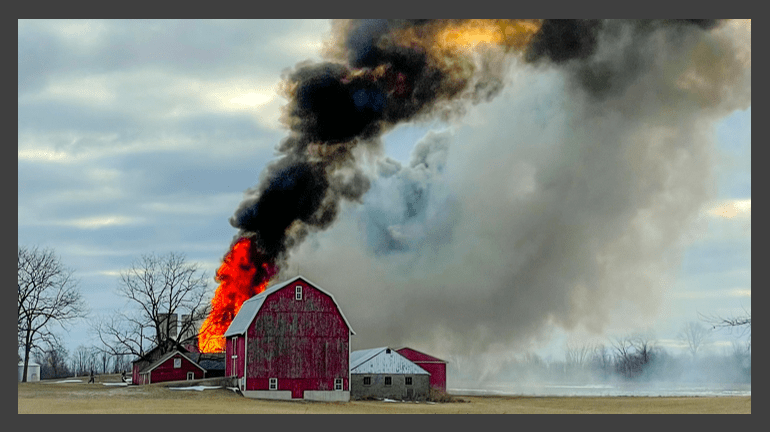
It was 6:00 am,

April 15, 1986

When my Plectron went off

Waking Cynthia and me.

The distinctive tones for our Fire Department dropped,

Followed by the familiar voice of the county fire dispatcher,

and the sound of the village siren beginning to spool up.

“Barn fire” I heard

As I threw on my coveralls and pulled on my boots.

The farm was identified by the family name.

I didn’t have to wait to hear the address.

The farm family was one of my church families.

In the pre-dawn hour

I ran across the street,

Through two back lots

And was first to the fire station.

Towering black smoke was already evident to the south.

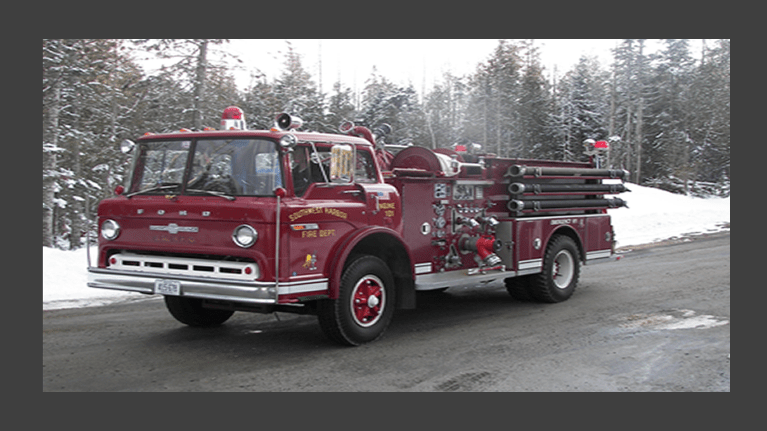
I jumped in the driver seat of our 1972 Ford cab over pumper.

I was new, still wet behind the ears,

Recently completed “Pump Operator’s School.”

Fortunately, Bill, my church Lay Leader,

And a far more experienced volunteer jumped into the passenger seat.

“You got this, Todd,” he encouraged.

Off we sped,

Besting 20 miles per hour uphill,

Lights and siren in all its glory.

Departments across the county and in neighboring counties

Were being dispatched to provide tankers and water

Even before I arrived first in at the fire scene.

Volunteers arrived in private cars and pickups

Dawned protective equipment

Ran into the burning barn to save cattle and equipment.

I set about priming the pump,

Unloading handlines,

And charging them with water.

I only had 1,000 gallons.

Enough to last seconds once the water began to flow.

“Put the wet stuff on the red stuff,”

As they say.

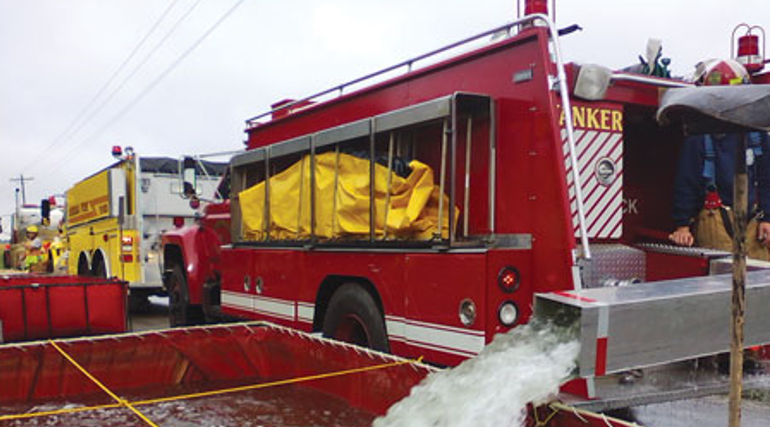
A portable pond appeared, set up, and I connected my hard suction

To quench the thirst of my voracious pump.

A parade of tankers appeared arriving on the road

Dumping thousands of gallons at a time

Trying to keep up.

It wasn’t to be.

The Fire Chief,

The Chairperson of my Board of Trustees,

came over to me with a replacement pump operator.

“Pastor,” he said as he looked and pointed at the family home across the road,

“I think you’re more needed over there.”

“Right, chief.”

“Come in, pastor,” I was welcomed

In response to my knock on the door.

At the dinning room table sat the family,

Mom, Dad, son, and daughter.

Also sitting at the table

Was a sheriff deputy,

A good United Methodist from a neighboring parish.

The mood was grim.

The sheriff’s questions were gentle but direct.

I could see where this was going.

The boy, I’m guessing eight years of age, or so,

Came round to explain.

The prior evening,

He and some friends were playing in the barn,

Making little fires,

But quickly putting them out.

Or so they thought.

The realization that he had burnt down his daddy’s barn

Quickly flashed across his face.

Cheeks drained of color.

His eyes filled with tears

And he ran to his room crying.

We sat there

In the long silence

When dad cleared his throat.

“I never told anyone,

And deputy, I hope you can forgive me,

But when I was my son’s age

I accidently burned down one of my daddy’s barns.”

We could still hear the sobs coming from the boy’s bedroom.

“Dad,” I began

Covering my inexperience with whatever confidence I could find,

“The one who needs to hear your story is in his bedroom crying.”

“He needs to be redeemed by his father.”

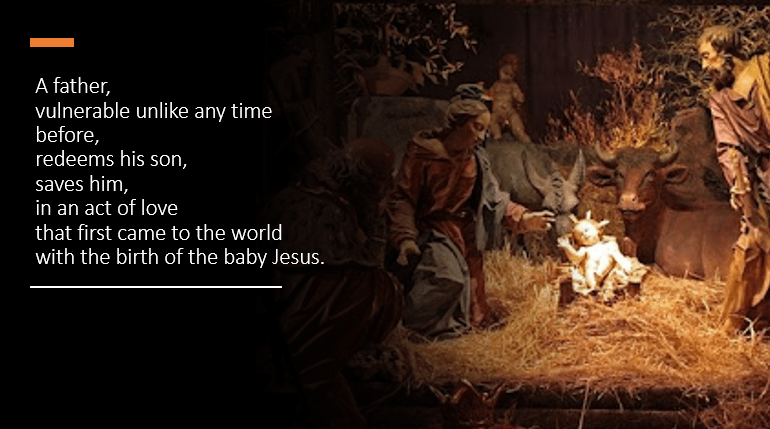
A father

Vulnerable unlike any time before

Redeems his son,

Saves him,

In an act of love

That first came to the world

With the birth of the baby Jesus.

Jesus Christ,

Fully divine,

The Creator of all things,

Born an infant,

Vulnerable,

Dependent on the love of a human mother and betrothed father.

Jesus Christ,

God’s love incarnate,

In the flesh,

Comes to the world,

Not to condemn the world for our sins,

But that all the world might be redeemed and saved.

That is God’s amazing grace,

Unmerited, unlimited love.

I leave you with the question I earlier asked:

Just as our Heavenly Father

Sent his Son to redeem and save the world,

Just as a farming father

Redeemed his 8-year-old son

With his own confession and forgiveness,

Who

is God working through you

to redeem and save this Christmas?

Christ will come again, we boldly proclaim!

When he does, what will he find?

Our transgressors bitter and alienated?

Ourselves stubbornly dug in

Refusing to apologize

For the transgression

We’ve used to hurt others?

When Christ returns

Will he find people hungry and homeless

While we are full and cocooned inside our safe, warm, houses?

When Christ returns

Will he find us divided by racism, oppression, injustice?

Will he find a world of violence and inequality?

Will he find mercy missing in action

Surrounded by unnecessary suffering and pain?

The baby Jesus

Is God’s invitation

To you and me,

To swallow our pride,

Get over ourselves,

Roll up our sleeves,

And make right

all the wrongs in our life …

wrongs we’ve committed and

those committed against us.

Christ’s birth is God’s effort to redeem the world,

A reminder that

each of us

have a necessary role to play

as his disciples.

Beloved, the ball is in your court.

The Lord is working you hard.

Who will you redeem?

Who will you save?

Amen.

“Prepare the Way of the Lord”

December 5, 2021, Advent 2C

Luke 3:1-6

the Rev. Todd R. Goddard, Pastor

Rush United Methodist Church

Luke 3:1-6

In the fifteenth year of the reign of Emperor Tiberius, when Pontius Pilate was governor of Judea, and Herod was ruler of Galilee, and his brother Philip ruler of the region of Ituraea and Trachonitis, and Lysanias ruler of Abilene, during the high-priesthood of Annas and Caiaphas, the word of God came to John son of Zechariah in the wilderness. He went into all the region around the Jordan, proclaiming a baptism of repentance for the forgiveness of sins, as it is written in the book of the words of the prophet Isaiah,

‘The voice of one crying out in the wilderness:

“Prepare the way of the Lord,

make his paths straight.

Every valley shall be filled,

and every mountain and hill shall be made low,

and the crooked shall be made straight,

and the rough ways made smooth;

and all flesh shall see the salvation of God.”’

| Centering Prayer |

Sixty-six years is a long sentence to serve in prison.

That’s 792 months.

Sixty-six years is a long time

for one to be punished for disobedience.

Sixty-six years;

This is how long our ancestors paid for their sins.

This is how long it took for them

For the Lord to wring the stain of sin out of them,

to be cleansed of evil.

The prophet Isaiah,

A spokesperson on behalf of God,

Warned successive kings of Judiah

That the nation would be punished for guilt associated with four charges:

Wicked behavior, rebellion, corruption, and iniquity.

(See Isaiah 1)

God doesn’t tolerate fools.

Isaiah was no fortune teller.

He was simply an obedient bullhorn for the Lord to speak directly to God’s people.

Prophecy was known inside our Hebrew experience

As revelation,

A message from God,

Delivered by God’s hand-picked chosen servant.

God is always true to God’s promises.

The hammer of divine judgment fell in the year 605 BCE

When the Babylonian king, Nebuchadnezzar, defeated our forefathers

In the Battle of Carchemish and laid siege to Jerusalem.

Appeasement payments only held off the inevitable.

Stores of food ran out.

The protective city walls were breached, the Temple was destroyed, and we were utterly and completely defeated.

Nebuchadnezzar initiated three successive waves of deportation for the survivors.

Our defeated ancestors were deported

To prisoner of war camps,

Located deep within Babylon,

On the shore of the Tigris and Euphrates Rivers,

In modern day Iraq,

547 miles to the East as the crow flies.

The first wave of deportations was in 597 BCE,

the second was in 587, and

the third was in 582.

Sixty-six long years from judgment to release.

Our Hebrew ancestors were freed in 539 BCE

By the hand of Cyrus the Great, Nebuchadnezzar’s successor.

Sixty-six years is more than three generations.

How long would the Lord’s punishment last? To children? To grandchildren? To great-grandchildren?

At what point had justice been served?

At what point had all iniquities been wiped clean?

Listen to the haunting words of the Psalmist.

“By the rivers of Babylon— there we sat down and there we wept when we remembered Zion.

On the willows there we hung up our harps.

For there our captors asked us for songs, and our tormentors asked for mirth, saying, “Sing us one of the songs of Zion!”

How could we sing the Lord’s song in a foreign land?”

– Psalm 137:1-4

It was during this period of life in exile,

Life in the Babylonian prisoner of war camps,

That the Lord approached the tribe of Isaiah and his descendants;

The family of the great prophet, and others who joined with him and his tradition.

The words of the Lord

To a young prophet in the Isaiah tradition

Are recorded, starting in Chapter 40, extending through Chapter 55.

“Comfort, O comfort my people, says your God. Speak tenderly to Jerusalem, and cry to her that she has served her term, that her penalty is paid, that she has received from the Lord’s hand double for all her sins.

A voice cries out: “In the wilderness prepare the way of the Lord, make straight in the desert a highway for our God. Every valley shall be lifted up, and every mountain and hill be made low; the uneven ground shall become level, and the rough places a plain. Then the glory of the Lord shall be revealed, and all people shall see it together, for the mouth of the Lord has spoken.”

– Isaiah 40:1-5

Our debt had been paid.

Israel had been redeemed.

The voice crying out set the stage

For Jewish messianic expectation:

Redemption is at hand!

Prepare the way for the Lord

For the Lord is coming to redeem all people and lead us back home.

The expected messiah is propagated by other Jewish prophets,

Most namely Malachi,

Following the return of the exiles,

The restoration of Jerusalem,

And the reconstruction of the Temple:

“See, I am sending my messenger to prepare the way before me, and the Lord whom you seek will suddenly come to his temple. The messenger of the covenant in whom you delight—indeed, he is coming, says the Lord of hosts. But who can endure the day of his coming, and who can stand when he appears? For he is like a refiner’s fire and like fullers’ soap; he will sit as a refiner and purifier of silver, and he will purify the descendants of Levi and refine them like gold and silver, until they present offerings to the Lord in righteousness.”

– Malachi 3:1-3

For the next four-hundred thirty years

Malachi’s messianic expectations simmered on the back burner

of Jewish theology, beliefs, and practice.

After periods of prosperity,

Like Groundhog Day,

God used

The Greeks, first, then the Romans,

To pass judgment and execute judgment on Israel’s return to wickedness.

Greek, then Roman conquerors

Followed the example of the earlier Babylonians.

They conquered our covenant-promised land and enslaved God’s chosen people.

Messianic expectation caught fire like sparks to spilled gasoline.

Zechariah, a righteous and devout priest of the temple,

Husband of Elizabeth,

Cousin of Mary, by marriage,

Was filled with this frenzied messianic expectation

For he had the words of Isaiah and Malachi written in his DNA.

In the first chapter of Luke, starting with the eighth verse,

We hear of an angelic visitation and message.

The angel Gabriel called on Zechariah,

Not in a dream, but in person, at the altar of incense in the temple.

Gabriel confirmed Zechariah’s messianic expectation:

Although Elizabet was of post-menopausal age,

She would become pregnant

And give birth to a boy, who Zechariah was to name John.

John would be the one to lead the effort to prepare the way for the messiah.

It isn’t every day one is visited by an actual angel!

John was born, just as promised.

Zechariah cradled his infant son, John, and

Prophesies just as the angel Gabriel instructed:

“And you, child, will be called the prophet of the Most High; for you will go before the Lord to prepare his ways, to give knowledge of salvation to his people by the forgiveness of their sins. By the tender mercy of our God, the dawn from on high will break upon us, to give light to those who sit in darkness and in the shadow of death, to guide our feet into the way of peace.”

– Luke 1:76-79

From Isaiah to Malachi,

From Malachi to Zechariah,

Prophecy had undergone significant evolution.

A prophet had been transformed

From a future teller (futurist),

To a divine messenger,

a spokesperson for God,

To one chosen by God

To recognize and witness to the fact

That God is at work

Forgiving sins and

Saving souls

Right in our midst.

Zechariah’s revelation

Was that God was changing course.

Instead of going the prophet and prophecy route

God was stepping through the heaven and earth divide.

God was coming to all nations, to all people,

To redeem all people from sin,

To give knowledge and promise of salvation,

To give light to those in darkness,

To give life in the shadow of death, and

To guide us into the way of peace.

Our messianic expectation was being fulfilled.

His name is Jesus, the Christ.

The one leading the way for Jesus,

Was John, warning all the world to repent and make personal preparations,

For God was already at work in our midst.

Wow.

In the post-messianic era leading continuing to today

What becomes the role of prophet?

What is to become of prophecy?

And, what is our role in it?

The role of prophet and the work of prophecy

Continued to change following Jesus,

His passion, death, resurrection, and ascension.

Prophet and prophecy advanced with the presence and power of the Holy Spirit.

God has given to us the gift of the Holy Spirit

To work in us, individually,

And to work through us collectively,

To empower and direct the Church moving forward.

The work of the Spirit, as detailed in Luke’s second book,

The Acts of the Apostles,

Reveals that God continues to be present and active in the world,

God continues to redeem and save.

The Holy Spirit continues to overcome darkness with light,

bring life to the dead,

and take an active role in the lives of disciples.

Our prophetic challenge today

Is to witness to this reality,

To reveal to the world just what it is that the Holy Spirit is up to,

That the glory of the Lord will be revealed to all flesh.

Prophecy today witnesses to the fact that

Christ came to redeem, to purchase the sins of all the world.

Christ promised to come again,

to save all the world into God’s eternal kingdom.

This becomes our prophetic testimony,

The prophetic testimony of Christ’s universal Church to the world.

It is the power and direction of the Holy Spirit that makes it all possible.

Dearly beloved, take a look around:

Can’t you see?

Can you feel the Spirit at work in our midst?

In our prayers?

In our discernment?

In our mission and ministry?

Of course, we can!

Make your testimony

Of what the Spirit has being doing in your life.

Witness of your experience

To a world

In waiting,

In expectation,

For Christ to fulfill his promise and return.

This is our prophetic voice!

Claim your voice!

This Advent,

Shout it from the mountain top!

Prepare the way for the Lord to come.

By our convincing testimony

Bring down the mountains

And fill in the valleys.

By your witness

Straighten out this crooked world.

Make ready for Christ to come.

Amen.

“Stand Up and Raise Your Heads”

Luke 21:25-36

November 28, 2021

The Rev. Todd R. Goddard, Pastor

Rush United Methodist Church

Luke 21:25-36

“There will be signs in the sun, the moon, and the stars, and on the earth distress among nations confused by the roaring of the sea and the waves. People will faint from fear and foreboding of what is coming upon the world, for the powers of the heavens will be shaken. Then they will see ‘the Son of Man coming in a cloud’ with power and great glory. Now when these things begin to take place, stand up and raise your heads, because your redemption is drawing near.”

Then he told them a parable: “Look at the fig tree and all the trees; as soon as they sprout leaves you can see for yourselves and know that summer is already near. So also, when you see these things taking place, you know that the kingdom of God is near. Truly I tell you, this generation will not pass away until all things have taken place. Heaven and earth will pass away, but my words will not pass away.

“Be on guard so that your hearts are not weighed down with dissipation and drunkenness and the worries of this life, and that day catch you unexpectedly, like a trap. For it will come upon all who live on the face of the whole earth. Be alert at all times, praying that you may have the strength to escape all these things that will take place, and to stand before the Son of Man.”

| Centering Prayer |

Happy New Year!

Woot! Woot!

Of course,

I’m not speaking about the calendar year

Which will refresh all on its own

In a mere 33 days.

I’m speaking of the Liturgical Year,

The Church’s Worship Year,

Which begins fresh and new on the First Sunday of Advent.

On this date,

The Gospel centric focus of worship pivots.

We leave Mark behind.

Don’t worry, we revisit each Gospel every third year.

Today we bring focus on the Gospel of Luke.

We will ride Luke this coming year like a pony,

Interspersed with a dash of seasonings from the Gospel of John,

Over the next 365 days.

(With Irony)

Let’s start this New Year off right with the Gospel of Luke

By starting with the 21st chapter …

Right? Right.

What genius thought of that?

Actually,

Allow me to begin in the first chapter of Luke

Where the Gospel author,

Tells his friend Theophilus the reason for

Dictating this orderly account of the life of Jesus.

This witness is

“so that you may know the truth concerning the things about which you have been instructed.”

(Luke 1:4)

Theophilus had been learning about the life of Jesus.

Now, he needed to know

The truth behind the experiences of Jesus the Christ,

The Son of God.

Truth is a common thread picked up from Christ the King last Sunday;

Where Pilate was interrogating Jesus about his kingdom.

What is truth? Pilate asked.

What is truth? First century disciples of Jesus asked,

Even as they eagerly awaited Jesus’ imminent return

On a cloud, from on high.

What is truth?

Those same disciples asked about truth when Rome destroyed the Temple and the few survivors were flung to the far corners of the Empire and earth;

Thrown as if they were rag dolls with their hair on fire.

Where is Jesus?

He said he’d return.

Yet, he hadn’t.

Why?

What is the truth?

Thus, Luke authors his Gospel and the sequel, the Acts of the Apostles,

For the benefit of Christ followers,

So they’d know the truth about Jesus and how to wait with faithful anticipation for his return.

In many ways,

Our religion is one of waiting,

… and how we spend our time while we wait.

I hate waiting, especially if it has no purpose.

Too long of a check-out line and not enough people working the registers?

It drives me nuts.

It’s pointless.

But if waiting has a purpose,

A reason,

Waiting can become a spiritually refreshing posture of faith.

We wait for Christ to return.

In the meantime, what are we to do?

First.

When we wait for Christ to come

We are to watch for signs,

Because when he comes

The day will catch us unexpectedly

like a trap.

(Luke 21:35)

Luke promises signs of persecution and destruction.

The first century disciples of Jesus would have nodded their heads with understanding.

Jerusalem had been destroyed.

Nero was crucifying our ancestors and

Lighting the corpses of Christian martyrs on fire to illuminate his path.

Our first-century sisters and brothers

Were living firsthand the promise of Luke.

In today’s Gospel,

Luke points us to cosmic powers and signs:

The sun, the moon, and the stars.

He cites the roaring of the sea and the waves.

The nations of the earth will be distressed.

People will be filled with foreboding.

Even the power of the heavens will be shaken.

These are signs of Christ’s imminence in that first century,

And every generation since.

Our generation is no more exceptional than any other.

What gives us the pride and hubris to believe

Our generation is suffering more,

Is facing greater persecution,

Is in greater peril,

Then our ancestors who were martyred in the Colosseum

Or during the Inquisition, the Napoleonic wars, in Nazi Germany, or occupied Syria?

The alarm has been raised with every prior generation,

Even as it is raised with us today. 

What we are to take away from this posture of active watching

Is Luke’s promise that

The power of God

Far exceeds the disturbed cosmic powers being replaced.

All familiar powers of the universe will be shaken and lost.

Power that is familiar …

… think about it …

Power that is familiar will be lost.

Terror has the potential to grip even the strongest of Christian

When conventional powers are shaken

And when cosmic powers fail.

Be assured, Christ’s power exceeds

All that has come before.

Christ’s power and authority surpasses all cosmic powers,

And it certainly eclipses all mortal, earthly powers.

When Christ returns,

So, too, will order.

Order will return to all things.

And God’s kingdom shall reign forever.

Second,

Luke reports that

Jesus doesn’t tell us to run like hell when we witness these signs.

Jesus doesn’t tell us to be terrified.

He doesn’t tell us to lash out with kneejerk anger or vengeance.

Instead, Jesus tells us to stand up and raise our heads.

Beloved friends,

Let us temper our words and our behaviors.

I, too, feel the primal, emotional need to lash out to those

Who seek to destroy this world,

And to do it with unspeakable, brutal violence.

Let you and I discipline our behavior.

Let our Christian training kick in.

Take a moment to catch our breath.

Return to the Gospel and be refreshed by its Good News!

Be filled with confidence!

This is God’s kingdom and Christ is returning.

Standing up and raising our heads means

We refuse to submit to fear.

We refuse to be a victim.

We refuse to allow ourselves

To be used as a proxy for

The Devil’s message and a motive for sin and temptation.

Standing up and lifting our heads means we bear testimony

To our loving God,
And the gift of his Son,

To redeem and save the world.

When we stand and lift our heads

Others rise with us.

We stand in unity, encouraged by each other’s confidence.

Nothing builds confidence like the confidence of others.

Let us stand up and raise our heads

Because we will not be shaken or lost.

God is present.

God is active.

God is in control.

With confidence we are able to proclaim to a world awash in sin

That Christ is returning.

The days when false prophets were listened to and followed are over.

The days we surrendered the return of Christ

To people hawking crazy “rapture” theology to whoever would buy it, are over.

We can confidently turn our backs

On millennialists and numerologists

Who claim insider-knowledge

about when and where the world is coming to an end.

We can stand together and lift our heads

With confidence and faith,

In spite of the Devil and all his evil designs.

Christ is coming again.

Period.

Third.

We stand confident in our faith

in the promise of judgment.

The Lord is our judgment;

It is on the Lord’s terms

and in the Lord’s time

That God pronounces judgment and executes justice

For every one of God’s children.

We are not called to judge others.

We can only judge ourselves.

God is the final arbitrator for each of us.

God may employ anyone to execute justice,

Or not.

We don’t know.

It isn’t our place to question or interfere.

It isn’t up to us to decide

Who God chooses

To pass judgment and execute justice.

Neither do we know

God’s will for any of God’s chosen;

How judgment will be adjudicated or how justice will be carried out.

We can volunteer.

Thankfully, many do.

But judgment and justice is the

White hot iron of Christianity that might be tempting to touch,

But is retained exclusively by God.

Pity the poor fool who doesn’t get the message

And attempts to take the law into vigilante hands. 

Stand and look up.

Watch.

Wait.

Redemption is drawing near.

Stand up and raise your head with confidence

Knowing that God is in control.

Do so with anticipation of Christ’s coming again.

This is what we do during Advent.

This is who we are as Christians.

Amen.

“Pilate’s Five Questions”

John 18:33-38

November 21, 2021

Christ the King

The Rev. Todd R. Goddard, Pastor

Rush United Methodist Church

John 18:33-37

Then Pilate entered the headquarters again, summoned Jesus, and asked him, “Are you the King of the Jews?”

Jesus answered, “Do you ask this on your own, or did others tell you about me?”

Pilate replied, “I am not a Jew, am I? Your own nation and the chief priests have handed you over to me. What have you done?”

Jesus answered, “My kingdom is not from this world. If my kingdom were from this world, my followers would be fighting to keep me from being handed over to the Jews. But as it is, my kingdom is not from here.”

Pilate asked him, “So you are a king?”

Jesus answered, “You say that I am a king. For this I was born, and for this I came into the world, to testify to the truth. Everyone who belongs to the truth listens to my voice.”

Pilate asked him, “What is truth?”

| Centering Prayer |

His questions intrigue me, and

Reveal to us where this train is headed.

Pontius Pilate had only five questions for the incarcerated Jesus;

Held and tried on full display before Annas, Caiaphas, and other Jewish authorities.

1. “Are you the King of the Jews?”

Translation: Anyone claiming authority over the Emperor would be guilty of treason and immediately put to death by crucifixion.

Careful, Jesus.

Pontius Pilate is judge, jury, and executioner.

“Do you ask this on your own, or did others tell you about me?” Jesus responds to the question with a question.

Translation: The Jewish authorities want Jesus dead but they didn’t have the authority or stomach to kill him themselves.

Pilate would serve their need for an assassin by proxy.

2. “I am not a Jew, am I?”

Translation: Pilate’s question is a statement that he is not a Jew.

Therefore, his answer to Jesus’ question

Informs Jesus

just who it was

behind the plot to kill him.

Pilate lifts the curtain, and the religious authorities are caught red handed.

Who knew? They blushed.

3. “What have you done?”

Jesus previously reported to the Caiaphas, the High Priest, that he was only guilty of teaching in synagogues and in the Temple.

That got Jesus a slap across the face by a Temple police officer.

(John 18:19-224)

The unspoken charge was blaspheme;

teaching irreverently about God or sacred things;

You know, things …

Like the Temple was corrupt,

Religious authorities preyed on the poor, and

Lust after wealth, power, and control.

What had Jesus done?

The Son of God exposed organized religion as organized crime.

4. “So you are a king?”

Christ’s sovereignty isn’t political, ideological, tribal, or national.

Jesus informs Pilate that his kingdom is comprised of

everyone who belongs to the truth and listens to his voice.

(John 18:37)

Christ’s teachings are truth.

Those on the other side of truth

Pay no attention to Jesus.

Their sovereign is darkness and death.

Those of us who listen to Christ’s teachings and belong to the truth are members of Christ’s kingdom.

Listen and learn from Jesus.

Embrace truth.

Christ is our King.

5. “What is truth?”

The loyal flunkey of Caesar

thought he knew a few things about truth,

as he saw it.

Truth was …

In his eyes,

Pilate had all the power

over life, death, and everything in-between.

Truth and power,

influence and affluence,

all were his to hold or wield

as he saw fit.

Truth was …

In Pilate’s eyes,

the strong rule the weak.

The powerful judge the weak.

Rome demanded peace, obedience, and an uninterrupted flow of cash.

Pilate thought he knew a few things about truth:

It had proved to be politically useful

to befriend the religious authorities

to enlist their help

to keep the peace

to become the pipeline of money

delivering tax income to Rome.

Some considered it collaboration with the enemy.

The religious authorities saw it as a means to an end.

Whatever the justification;

When Rome was happy

Pilate was happy.

Pilate held all the cards,

Jesus had none.

Or, so Pilate thought.

Truth was

the spineless Temple priests

charged Jesus with blasphemy

but didn’t have the courage

to face him themselves

without the power of Pilate and his soldiers

to back them up.

Pity Pilate and his lackey Temple priests.

Their assumptions about truth

had all been wrong.

The question

“What is truth?”

simply points to

the depth of their ignorance,

the absence of faith.

Truth does not change with time.

What was true yesterday

is true today

and will be true tomorrow.

Truth can be replicated by others.

making it universal in its application.

It crosses all divisions

– gender, race, culture, and economics.

Truth is valid

in every time and every circumstance.

Therefore,

Contradiction undermines truth.

It creates an imperfection,

distressing incongruities,

and leads to failure.

The truth about God

is that there is more than what is seen, known, or experienced.

The mysterious nature of God is an ocean to our small island.

Had Pilate been able to see

what we see through the lens of history

he would have seen the fall of the Roman Empire,

the Ottoman Empire,

Nazi Germany,

And the crushing of ISIS.

Pilate would have been faced

with God’s larger truth that

the strong do not rule the weak.

Rather,

in God’s kingdom,

domination leads to failure,

power leads to corruption,

and those who hoard money find it impossible to

thread a needle with a camel.

If Pilate had been able to see

the larger picture,

absent of contradiction, imperfection, and incongruity,

he would have seen that

that God favors the poor,

the weak,

the least, the lost, the disadvantaged,

all those who get left behind.

The truth about God

is rooted deeply in faith.

What is beyond what can be seen

at any one time

is a reality in which

God is immortal, almighty, and in absolute control.

This is God’s kingdom

And Jesus is our king.

While we may be preoccupied

with the minutia of everyday

living and dying,

God is doing far greater things.

God is shaping and molding

into an ultimate, final divine will for all things,

from the vast expanse of the cosmos

to the particular of every human experience.

God creates and recreates everything

From the big to the small,

From the East to the West,

From the North to the South.

Faith that God is in control

frees the self

from equating cure with healing,

from connecting affluence with blessing,

and insisting that punishment

is the only solution for sin.

Faith in God

frees the self

from the necessity to always take charge,

and allows us

to submit,

to serve,

to give,

and to let go.

Faith that God is in control

allows one to recognize

the fact that we do not need to know all things,

to be a part of every decision,

to trust,

ultimately,

to allow God to be God.

Justice will prevail.

Peace will come.

The truth about God

is also rooted in a foundation of love;

the source of every

divine motive

from the beginning of time

through every eon of eternity.

Love overcame the flaw of sin;

the garden’s imperfection.

Love gave Moses a voice

Abraham a covenant

and the prophets a message.

Love birthed Jesus into the human condition,

forgives all flaws

and brings victory over the grave.

Love brings light and salvation

to a world hiding in darkness and sin.

We are a forgiven people because of God’s love.

We are a resurrection people because of God’s love.

We are a claimed people because of God’s love.

Where ever love can be found

it is possible

to trace its origins

back to the source

back to from whence it came

back to the Lord God, Almighty.

“Everyone who belongs to the truth listens to my voice,”

Jesus informs

the faithless personification

of stubborn, selfish, human will.

We know in our heart

that Jesus is right.

But to listen

and to obey

implies

surrender

of the will

to the Divine will.

Yes,

this is the price of Truth;

the only price that we are asked to pay.

“Are ye able,

said the Master,

to be crucified with me?”

to surrender the self

wholly to Christ,

to go

only where he leads?

to follow

only his voice?

“Are you the King of the Jews?”

asked a perfumed, pompous ruler

who thought he knew better.

“My kingdom is not from here,”

Jesus answers.

Thank God.

Thank God

Christ’s kingdom was never built on

political power, military might, or state wealth.

Thank God

we can handle the truth;

The truth is that God is in control.

The truth is that faith is able to free us.

The truth is that eternal love is God’s only pure and unblemished motive.

Amen.

“Not One Stone”

Mark 13:1-10

November 14, 2021

The Rev. Todd R. Goddard, Pastor

Rush United Methodist Church

Mark 13:1-10

As he came out of the temple, one of his disciples said to him, “Look, Teacher, what large stones and what large buildings!” Then Jesus asked him, “Do you see these great buildings? Not one stone will be left here upon another; all will be thrown down.”

When he was sitting on the Mount of Olives opposite the temple, Peter, James, John, and Andrew asked him privately, “Tell us, when will this be, and what will be the sign that all these things are about to be accomplished?” Then Jesus began to say to them, “Beware that no one leads you astray. Many will come in my name and say, ‘I am he!’ and they will lead many astray. When you hear of wars and rumors of wars, do not be alarmed; this must take place, but the end is still to come. For nation will rise against nation, and kingdom against kingdom; there will be earthquakes in various places; there will be famines. This is but the beginning of the birthpangs.

“As for yourselves, beware; for they will hand you over to councils; and you will be beaten in synagogues; and you will stand before governors and kings because of me, as a testimony to them. And the good news must first be proclaimed to all nations.

| Centering Prayer |

Context is the key to understanding.

Nobody likes rising taxes.

The result were public protests and attacks on government officials.

Governor Florus over-played his hand:

He ordered the Temple plundered and the treasury emptied.

This was the spark for the first of three wars

between the Jews and Rome.

Jewish rebels fought back,

Leading the pro-Roman king, Agrippa, government officials, and soldiers

to flee Jerusalem for their lives.

The rebellion was quickly spinning out of control.

Nero, the Emperor, had to act.

First, he sent Gallus to bring his legions of troops from Syria

to restore order and end the revolt.

6,000 troops were caught by Jewish rebels west of Jerusalem

In the Beth Horon pass.

All six thousand were slaughtered.

The Jewish victory attained great support throughout the land

And won over the hearts of the people.

Volunteers poured into rebel recruiting stations

Offering to fight Rome.

Passion and patriotism surged with youthful vigor.

Hold on there, dearly impassioned Jews.

Nero wouldn’t be embarrassed again.

The most experienced general, Vespasian,

was handpicked to crush the rebellion in Judaea.

Avoiding a direct attack on the heavily reinforced City of Jerusalem,

Four legions of troops,

That’s 24,000 soldiers,

landed in Galilee in 67 AD.

For three years, the legions advanced, led by Vespasian’s son, Titus,

Who served as second in command.

Rebel strongholds were eradicated, the fields were salted, and the population was punished.

February, 70 AD found the Roman legions knocking at the gates of the City of Jerusalem.

The Jewish rebels held out against the siege for 7 months.

All food supplies inside the walls were exhausted.

Time was on the side of Rome.

Jerusalem fell on September 7th in the year 70.

The Temple was destroyed, timbers burned, every stone above the foundation was thrown down and smashed.

The fire was so hot you can see the burn stains on the rubble to this day.

Rome found its revenge.

Josephus, the famed Jewish historian, claims 1.1 million people were killed during the siege, and 97,000 prisoners were taken into Roman slavery.

The few surviving Jews fled,

Diaspora-ed under cover of night to the four corners of the world.

Among the traumatized, surviving Jews

Were a small band of disciples

Who, as luck would have it, witnessed Christ’s ascension

38 years earlier.

By the light of the burning Temple,

St. Mark and his band of new Christians,

Convert memories to record,

Put pen to paper and begin a first draft of their Gospel.

Context is the key to understanding.

( Historical references from:

“Remember when Jesus made his final visit to the Temple?”

Mark and his small band of brothers probably opined.

“Jesus asked him,

‘Do you see these great buildings? Not one stone will be left here upon another; all will be thrown down.’” (13:2)

Not one stone.

Not one stone is left.

How right Jesus was.

….

You think these are bad times? End times, even?

COVID-19 pandemic.

Raging inflation.

Supply chain interruptions.

Taxes up.

Health care out of control.

Country divided.

The Capital stormed by rioters.

Hate crimes, more bold and more frequent.

Double talking,

lobbyist owned,

insincere parties, and

lying politicians

Who couldn’t pour water out of a boot even if the directions were printed on the sole?

You think these are bad times?

President Madison probably thought he was living through the end times

As he fled Washington and Major General Robert Ross

Easily routed the city and burned it to the ground.

Confederate John Bell Hood probably thought he was living through the end time

As his troops were overwhelmed and defeated in the Battle of Atlanta.

Sherman burned it to the ground.

Fire and fury,

Defeat and the smell of rotting corpses,

Would lead any woman or man to ask the same question

As our Lord’s disciples: When? What will be the signs?

When? And What? We ask of ourselves.

Lord, deliver us from such evil that threatens to consume us!

Jesus recognized the fact two days before the Passover

That crisis makes one vulnerable

to deception.

He was facing his own crisis,

And this made him vulnerable to temptation.

The crisis made the early Christians caught up in the destruction of Jerusalem during the first Jewish revolt

Vulnerable to every self-proclaimed snake oil salesman

Claiming to be the second coming of Christ.

They will say, “’I am he!’ and they will lead many astray,” Jesus warns. (13:6)

The crisis we see on today’s news

Speaks of wars and rumors of wars,

Of nations rising against nations.

California wildfires sweeping whole towns away,

Volcanoes blowing and spewing,

Earthquakes and famines –

This isn’t the end, Jesus proclaims.

This is just the beginning of labor,

The first contractions.

Christ followers will be vulnerable,

Easily led astray.

We are vulnerable, when facing persecution,

To give up and give in.

Hold strong, Jesus is telling us today!

Now is the time to hold strong.

No one knows when, so hold strong to faith.

No one knows when, so let us prepare ourselves for

Christ to return to anyone, anytime, anywhere, to everyone.

In other words

Stop looking for signs.

Efforts to correlate

the return of Christ and

the establishment of God’s kingdom with earthly signs

is a complete and utter waste of time.

There is great danger in associating

The evil of this world,

The tragic natural catastrophes of this world,

With the will of God.

The Lord is the light; and is not responsible for the darkness.

This is God’s kingdom.

God acts in God’s own time.

Throughout salvation history,

God has always worked for good.

Expect this trend to continue.

Apocalyptical prophecies prey upon the vulnerable,

Especially when facing the trials and temptations of this world.

Apocalyptical forecasting is not only a waste of time,

It distracts us from the task at hand:

 “The Good News must first be proclaimed to all nations.” (13:10)

Hold strong to the faith,

Jesus communicates to his followers,

And proclaim his Good News to all nations.

Share the Gospel.

Spread the Gospel.

Propagate the Gospel.

Make the entire planet aware

Of Jesus Christ, God’s gift of love,

His forgiveness and his salvation.

Not one stone will be left here upon another,

Jesus correctly proclaimed.

Today, all that remains of the Temple in Jerusalem

Are the foundation and front stairs.

Everything else is rubble,

Preserved for pilgrim tours.

When we hear about or look upon the foundation of the Temple,

Known as the Wailing Wall,

May we be reminded of our Lord’s directives:

Stay strong.

Stay focused.

Remain prepared.

Spread the Good News.

Leave the rest up to God.

Amen.

“Jesus Knows Better”

November 7, 2021 – All Saints Sunday

The Rev. Todd R. Goddard, Pastor

Rush United Methodist Church

John 11:32-44

When Mary came where Jesus was and saw him, she knelt at his feet and said to him, “Lord, if you had been here, my brother would not have died.”

When Jesus saw her weeping, and the Jews who came with her also weeping, he was greatly disturbed in spirit and deeply moved. He said, “Where have you laid him?” They said to him, “Lord, come and see.” Jesus began to weep. So the Jews said, “See how he loved him!” But some of them said, “Could not he who opened the eyes of the blind man have kept this man from dying?” 

Then Jesus, again greatly disturbed, came to the tomb. It was a cave, and a stone was lying against it. Jesus said, “Take away the stone.” Martha, the sister of the dead man, said to him, “Lord, already there is a stench because he has been dead four days.” Jesus said to her, “Did I not tell you that if you believed, you would see the glory of God?” So they took away the stone.

And Jesus looked upward and said, “Father, I thank you for having heard me. I knew that you always hear me, but I have said this for the sake of the crowd standing here, so that they may believe that you sent me.” When he had said this, he cried with a loud voice, “Lazarus, come out!” The dead man came out, his hands and feet bound with strips of cloth, and his face wrapped in a cloth. Jesus said to them, “Unbind him, and let him go.”

| Centering Prayer |

“Lord, if you had been here,

my brother would not have died.”

(John 11:21, 32)

Mary repeats the charge first made by her sister, Martha.

Mary and Martha blames Jesus for the death of their brother, Lazarus.

That’s quite the charge to heap on Jesus, don’t you think?

Never mind the fact that Lazarus may

may have died of natural causes.

We just don’t know what caused his illness.

He may have had many complex medical conditions.

Perhaps he didn’t take care of himself.

Never mind the fact that Lazarus didn’t have access to health care as we know it.

And, never mind the fact that Lazarus had lived a good, long life for that day and age.

Their charge

“Lord, if you had been here,

my brother would not have died,”

Speaks much more to the state of grieving sisters

Than it reflects the true nature of Jesus’ pastoral responsibility,

Or lack, thereof.

I’d suggest

“Lord, if you had been here,

my brother would not have died”

Reflects Mary and Martha’s deeper cultural belief about death,

One that most of us share:

That life is good and death is bad.

Death should be avoided at all cost.

Death should be avoided AT ALL COST,

even if it involves intense, chronic suffering.

Death should be avoided AT ALL COST,

even if it cost others a fortune.

Death is the enemy

And it STINGS.

Jesus thinks differently.

His approach to death,

as evident in our Gospel lesson for today,

Tells us he isn’t buying our popular assumptions about death.

Jesus knows better

And challenges us to consider death and its effects more deeply.

A quick Wikipedia search of the word “Saint”

Brings a diversity of beliefs from across Christendom

(and other world religions)

about what a Saint is,

what a Saint does, and

why a Saint is important.

Yes, a Saint is a football player

From New Orleans

With a 3 and 1 record

Playing the Atlanta Falcons today at 1:00 pm.

That’s not the kind of Saint I’m thinking about.

Generally speaking, “a Saint is a person who is recognized as having an exceptional degree of holiness, likeness, or closeness to God.”

(https://en.wikipedia.org/wiki/Saint)

Depending on the context and denomination, a Saint is venerated.

That is, honored or remembered for their high degree of sanctity or holiness.

The word veneration comes from the Latin,

Venerare (vene’ rare), meaning

to regard with reverence and respect.

Traditionally, the faithful disciple of Christ

Demonstrates veneration outwardly by

respectfully bowing or making the sign of the cross

Before a Saint’s picture or icon,

their bodily remains (called relics),

or their statue.

This is why we turn to photo albums and visit cemeteries.

Inward veneration is to remember and reflect upon the individual,

To consider the Christian lessons taught by both word and deed,

That made them holy.

November 1st is the date set by the Western Church

– Roman Catholics and Protestants alike –

to celebrate All Saints Day,

With the following Sunday being set aside as All Saints Sunday.

We Methodist have become very good at the veneration of Saints.

We speak the name, breaking the silence.

The spoken name makes life and death real.

We light a candle and bow in memory of a Saint in our life.

We place the candle and reflect upon the life that was lived.

As the flame ignites and the smoke ascends

Our faith brings assurance that

our loved one has now received their just reward and

has ascended to God in heaven.

This is important.

It is important for our own encouragement and wellbeing.

It is important that the memory and stories of the Saints be told to our children

So that their legacy might live on forever.

This is important because it is an exercise in the intellectual and physical aspects of our faith.

A number of years ago,

I read and reflected a lot on Greek Orthodox spirituality,

As related to books authored by Kyriacos C. Markides.

Dr. Markides is an American professor of sociology.

I highly recommend his book

“The Mountain of Silence: A Search for Orthodox Spirituality.”

(https://www.amazon.com/s?k=9780385500920)

He makes a few points that brings light to the story of Lazarus

on this All-Saints Sunday.

First: The soul moves to Theosis.

That is to say,

By Divine grace,

our soul is transformed and

obtains likeness with Christ

– Union with Christ.

This should sound comfortably familiar

to all of us in the Wesleyan tradition.

We Methodist have always placed a strong emphasis on entire sanctification,

Or the transforming effect of God’s sanctifying grace.

(https://en.wikipedia.org/wiki/Divinization_(Christian) )

John Wesley referred to Theosis as

moving towards Perfection,

a reference to Hebrews 6.

In our earthly life

Some make more progress towards Perfection than others.

Ours is not to judge.

Ours, as a Church, as an Ecclesia

Is to encourage, to support, to facilitate,

To pray for each and every soul and our quest

“To become One with Christ and

One with each other,”

As we pray in the Communion liturgy.

In Eastern Orthodox thought

Death becomes little more than a reference point

In the soul’s obtainment of Theosis.

This is why the Eastern Church prays for the dead;

That each eternal soul might continue to be transformed into the likeness of Christ.

Sainthood is obtained at Theosis,

Either in life or in death.

It is the complete shedding of the ego

Growing into a perfect union with Jesus.

Theosis is heavenly;

And heaven can be achieved by the Saint

Here on earth,

Or in a future heaven.

Secondly, Dr. Markides makes the point that

We’ve come to place

Too much value on the Western approach to the intellectual and scientific.

We have lost our roots that places

Spiritual value on God and the miraculous.

If we rebalance our lives

with the known and the mysterious

With science and theology

Then perhaps the pathway to Theosis becomes much easier to travel.

The intellectual, Western approach to the story of Mary, Jesus and Lazarus

Is to attempt to explain away the miracle of resurrection.

Cells break down at death.

Chemical processes take place.

Flesh becomes putrefied and decays.

Therefore, Lazarus could not have been “truly” dead.

He must have been in a natural, deep coma, from which Jesus aroused.

Right?

Not so fast!

Jesus knows better.

What we have left behind in our unbalanced,

Intellectual approach to God

Is that

the same God who is the Creator of life

Is the Lord of life!

God can breath life into those old dry bones in Ezekiel.

God can give life to a decaying, rotting, four-day-old corpse

formerly known as Lazarus.

Our God is the same One who demonstrated as much

By the resurrection of Jesus!

God could even give life to a stone,

if that suited God’s purpose.

It is not ours to explain how or why.

It is our purpose to live life

in the presence of the Divine mysterious,

To drink in Its grace,

To discover that at its very core

God is love.

The pathway to Theosis is to become the love of God.

The journey towards Perfection is to be transformed into the heart of Jesus.

To be a Saint

Is to live and die on the journey towards God.

We learn in schools, and our intellect is expanded.

We grow with the transformation of our minds

at the feet of teachers, instructors, and professors.

But we experience the transformation of our soul,

by God’s grace alone.

This transformation takes place

In the Ecclesia,

In the Church,

As we become One with the love of God.

We move from brain to heart,

– From thought to love –

As we become One with Christ and One with each other.

This is what redeems and transforms the world.

This is what opens the door to heaven for one and all,

Where one day,

Every knee will bow and

Every soul will be as One with the Lord.

This is the journey of the Saint.

Today

Even as we pray for the journey of those who’ve gone on before us,

Even as we pray for the journey of one other,

By God’s grace,

May the journey towards Perfection

… the journey into love …

Also be yours.

Amen.