“Skinned Rat”

The hill sloped steeply down. Stepping carefully across trenches and natural folds on the side of the mountain, it was hard for me to conceive this was the front entrance to anyone’s house. Yet, it was.

I stooped and bowed to get my head under the sharp edges of the metal roof and had to pause to allow the pupils in my eyes to adjust to the sudden darkened shade. In these high altitudes, the sun is unusually bright. Sunscreen is a necessity.

skinned ratThe house was dirt floor, made of stones, cornstalks and tree branches, covered by the metal roof. There was no electricity. Food was cooked over an indoor fire pit, giving everything a smoky smell. Water came downhill through a hose from some unseen spring higher on the mountain. The hose terminated at a filthy outdoors wash tub.

A mother and her three children greeted us. She meekly smiled, lowered her eyes, and motioned for us to sit on the tree stumps next to the house.

She had been boiling leaves inside, over a charcoal fire. It was lunch for the mother and her under developed children.

Yeah. Boiled leaves.

As the realization of malnutrition set in I looked up at the outside door and noticed the skin of a rat had been pinned on the wall. Obviously it was all that remained from a prior meal. It caused me to shudder.

Through translators, we were able to hear this woman’s story. She was a single mother raising three children under the age of eight. She had a husband, who fathered one or more of her children, but he drank to excess and just disappeared one night, never to be seen again. She had a boyfriend, who fathered another of her children, but like her previous relationship, he had hit the road, too. She had no income, no job, and three children, none of which were registered at birth or enrolled in school.

Mom had reached out to local churches in the area. None of them would talk to her, or throw her a lifeline, because of her reputation with men. Times like these, it is embarrassing to be a pastor, let alone a Christian.

What is she supposed to do? She was like the skinned rat pinned to the wall; forever trapped in slavery, eventually skinned to death.

Our team had brought a 90 pound bag of food, expertly packed with food, vitamins, and essentials to help a family of four live for a month. Just add water. The mother had to be taught how to open the child proof bottles.

We also made certain that the local pastors and church leaders who were part of our team and who provided translation between English, Spanish, and Myan, were willing and able to follow up with this woman. She and her family were welcome in their church. They would visit her weekly. They would help find her a job and overcome legal problems to get the kids enrolled in school. A social worker was assigned to this mother and her family.

“Come up to our trucks after we are done praying,” we invited this woman. “Let’s get you and your children some new cloths.”

A glimmer of hope began to sparkle in her eyes.  Someone loved her. Someone cared. She had friends who were reaching out to her family, expecting nothing in return. As we surrounded this woman and prayed for her and with her, I thought to myself; yes, Lord. The skinned rat can now be taken down.

“7 Bucks”

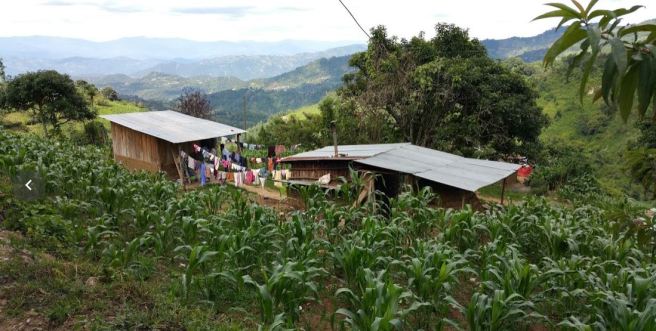
Down the long, winding gravel road we drove. The mountain side was first on our left, and with every hairpin, the mountain was reversed. Chris drove our high clearance four-by-four expertly, while conferring on his cell phone with the team of local clergy and lay volunteers waiting for us in the valley below. In the absence of guardrails on this rural back road, there was an abundance of hand planted corn that covered the mountain side in between every loop.

Not like cornstalks would prevent our slip over the abyss.

The corn looked sickly. It had been explained to us that Guatemala was experiencing a terrible drought. No Atlantic hurricanes had swept across Central America in recent years, leaving the aquifer dangerously low. The drought was having a devastating effect on crop yields and was contributing to malnutrition, especially in high-mountain, rural areas, like where we were serving.

You can see hunger in children’s eyes and sadness on mother’s faces.

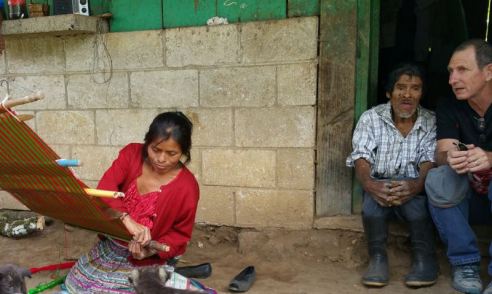
We pulled up next to the waiting Toyota Helix … pronounced by the locals as a “Toyota Hi Lo”. Three in the cab and five crowded into the back were happy to greet us and ready for work. We followed our friends and drove down a lane through a bottom dwelling corn field that brought us to an isolated cinder block shack. Three young Mayan women were weaving on the front stoop.

Members of our local team and Chris greeted the women, and they appeared to be really happy to welcome us to their home. As the rest of our English speaking mission team and I were doing our best to exchange pleasantries, an elderly man with a huge scythe stepped out of the corn and into our midst.

I swallowed hard.

There was no reason to be frightened. This was the widower father, who lived with his three daughters. They didn’t own the land. They were given permission by the land owner to squat on the property and use this one room mud house in exchange for their willingness to “watch the property.” My guess is the owner didn’t want any of his meagerly crop stolen.

We learned the three sisters had forgone marriage and made an intentional decision to take care of their ailing father. Years of alcoholism had taken its toll on his skinny body. His eye sockets were sunken, his hat hid the deep crevices in his face, and his hands were callused and crusty.

weaving

His daughter’s made a living by weaving. They employed century’s old techniques to weave the most beautiful Mayan fabric on their hand made looms. One was weaving a table cloth that would easily command a hundred dollars or more back home in New York. Another was weaving a gorgeous table runner that I guess would go for fifty.

These women worked seven days a week, three hundred sixty-five days a year, just to sell their fabric to a dealer who paid them seven bucks a month. Plus, they had to use a portion of their earnings to purchase the thread for the next month’s production. This is what the household lived on each and every month. Seven bucks.

The word that comes to mind is “slavery.”

The beauty of working with a well-established mission organization on the ground, who has cultivated relationships with local churches and pastors, is that our visiting short-term mission team came into a pre-established network of Christians helping Christians. Six months of work conducting assessments, meeting neighbors, and leading outreach by local church leaders had already prepared the mission field for us to enter.

Chris, the leader of our group, is an excellent linguist who easily slips from English to Spanish without even thinking. Yet, even he was relying upon the local church leaders and pastors for their ability to speak the modern version of Mayan. It isn’t Spanish.

With patience and love, Chris was able to break the ice with our new friends. He was able to joke with the father, who then was able to tell his story of how Christ had helped him keep 20 years sober. The daughters smiled and laughed, even as they kept weaving. Chris made a call on his cell phone, and before we knew what was happening, he made arrangements for these women to work with a new broker. The new connection would pay them $20 a month and supply them with all the thread they needed.

Just like that.

Their salary nearly tripled. They could now afford enough food to not go hungry. They could start to put some muscles on their bones and begin to make a life for themselves.

Chris led us in prayer. I don’t know which language; it didn’t really matter. By the time we were done praying, everyone was rolling tears down their cheeks. Our prayers had been spoken in about a dozen different languages. I don’t think it mattered to God; our Heavenly Father understood them all.

Dad vowed he’d try to get back to church. It had been a long time since he last attended. His daughters might even be able to take a morning off to join him in the pew. Our local pastors quickly made arrangements to help get dad back to church.

God is good.

We pray at the Eucharist table the petition to be “one with Christ and one with each other.” On this very hot Guatemalan afternoon, we had indeed become one with each other, even as we became one with Christ.

To learn more about Chris and his  wonderful organization, go to: http://www.bethelministriesinternational.com/

15 Insights about Christian, Short-Term Mission Trips

In the past couple of years, I’ve had the privilege to take part in a number of short-term mission trips to Central America. These trips have been life changing and faith expanding. With reflection, conversation, and prayer, this is what I’ve learned:

1. Preparation is essential.

On my first mission trip, I went without much prior preparation. Packing lists are one thing. But preparing myself emotionally and spiritually was something altogether different.

I listened to the advice and followed the lead of other, more experienced missionaries. All were kind and generous, but few, I discovered had thought more deeply about cultural sensitivity, unintended consequences, and doing no harm. Least of all was a sense of a theological foundation for reaching out to neighbors in general, and these individuals in specific.

Prior to my second trip, a colleague and friend invited me to read “When Helping Hurts” by Steve Corbett and Brian Fikkert. This book was a game changer for me. It was the first theological, thoughtful discussion about engaging in short-term missionary trips. An evangelical perspective emerged from a solid Biblical base that led me to ask relevant questions about what we are doing and why we do it.

Read the book; or one similar to it. Use it as a guide for discussion with traveling colleagues before you leave. Reflect and pray about the insights that are presented.

2. Be humble.

Humility is a good thing; especially when you are the guest in someone’s home. The houses you visit, the towns you visit, the countries you visit are your hosts, and as such, the best posture of every short-term missionary is Christian humility.

God has called you to serve. Speak and act like it is a privilege, because it is.

No one likes an outsider who acts like a know-it-all. Pride and arrogance are easily brought down to size by indigenous people who knew better all along, but were willing to watch well-intended visitors try and fail. As an American, there is established a global persona that we are brash and bully, arrogant and rude. Unrepentant colonialism and centuries of political meddling have not served us well.

Local people have more to teach us then we have to teach them. It is their culture, their language, their values, and their beliefs. Allow them the space and the freedom to become our teachers. A modest, conservative approach multiplies blessings.

3. Be curious.

We love to talk about ourselves! So do the people God has called us to serve.

Listen actively. Ask questions. Force yourself to be non-judgmental. None of us know the complexity of family or church communities, the nuances and outside pressures, or the status and roll of individuals in larger communities.

Show interest in their story. Listen with empathy. Learn the details. Ask about family, especially children and grandchildren. Smile; warm yourself to narratives of love, kindness, and generosity. Learn from tales of courage, ingenuity, and marvel at success … especially educational success.

And, oh. Don’t talk about yourself unless you are asked. And never communicate a sense of affluence or prosperity.

Listen and learn all that you can because your experience is a gift, God’s world is great, and there is no end to knowledge.

4. Show respect.

It is amazing what a softened brow, averted eyes, praying hands, and a slight bow can do.

I have found myself in the most unpleasant of environments and circumstances. The house I consider to be a dump is someone’s home where they are raising a family. The food I consider to be vile might be the difference between life and starvation. The shoeless man with a bag full of peaches is a father preparing to plant an orchard to support his family.

Respect elders, leaders, pastors and priests. Respect teachers; they work a lot harder than you or me. Respect fathers and mothers. Show respect to children. Respect your hosts, both your indigenous hosts and your missionary or Non-Governmental Organizational hosts. Remember, you depend upon them for your every need.

5. Be disciplined.

Some short-term missionaries think they can behave the same way as they do back home. With friends, they might let their hair down a bit; drink, smoke, swear, carouse, or party.

Don’t.

At least, don’t behave this way in front of local people, especially children. Discipline personal behavior to reflect the God we are glorifying. Poor behavior distracts attention from our Gospel values, the life of Jesus, and the will of God.

6. Be flexible.

Experienced travelers have learned to be flexible. Those who can’t be flexible stop traveling. There are always airline delays, diversions, distractions. Reservations are easily mixed up. Accommodations never appear to meet expectations. And, there is always the high maintenance missionary (don’t be that guy or gal).

Like most North Americans, I have a monochromic view of time. Time is a limited and valuable resource that shouldn’t be wasted. Agendas, timetables, and goals must be strictly kept and checked off. It is almost a sin to think of wasting time, especially when one considers the expense of traveling.

But many in the world think differently about time. Many have a polychromic perspective of time. There is always more time. Schedules and agendas serve little more than a guide of how one spends their day. Relationships come before schedules. Friendships are more important than completing tasks.

I know you want to get things done. Just take a deep breath and try to be a little flexible. Ministry often happens during those in-between times or when detoured by another road.

7. Make new friends.

Take the time to make new friends and reconnect with old ones. This is far more important than getting things done, sticking to time lines, or checking off agenda items.

Wealth and quality of life are not measured by the size of your bank account, the size of your house, the car you drive, or where you vacation. Wealth and quality of life are largely dependent on the people you surround yourself with. This is true in your immediate social circle. It’s also true of the friends you make on mission trips.

Friendship fights the scourge of poverty and isolation. It forms a connection that communicates solidarity. It is the foundation for advocacy and service. It is the substance for trust, understanding; yes, even recreation. Friendship unifies our hearts with that of Jesus Christ.

I’m planting a seed here: Multiple mission trips, serving the same people, over numerous years is a great strategy to make and keep sustained friendships. Like a long-term pastorate, the benefits are compounded. At the same time, watch for the signs of dependence; that may be an indication for sun-setting a mission.

8. Take your time.

Slow down whenever possible. Yes, hasten your step to make that flight connection. However, when you’re immersed in your mission setting, walk slower, linger, take it all in, and give God your thanks.

Pay special attention to your senses. Smell what’s cooking or the exotic vegetables and fruits in the open market. Listen for the roosters in the morning, the sounds of children laughing or a baby crying, and listen for church bells.

Pause to take in the vistas. After you take your pictures, spend an equal or more amount of time just taking in the scenery. Look people in the eye in a non-threatening way. Though your gaze, soften your brows and bestow your warm smile.

Most transportation in Central America will be open air. Take advantage of feeling the change in micro climates, awareness of the thinness of the air due to elevation, the glorious feel of water rolling off your skin in the shower after a hard day’s work.

You’ve removed yourself from your everyday world. So, slow down and breathe!

9. Play.

Play like there is no tomorrow. Let your inner child free from your North American norms and values (all the while ensuring safety for each child).

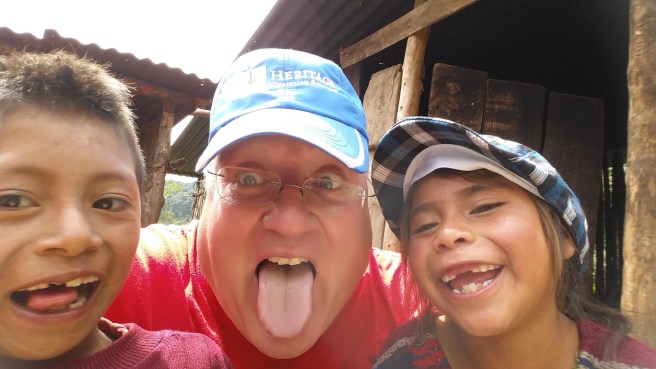
No props are needed. Finger shadows, Vulcan Vs, curling the tongue, and rolling the eyes work wonders. Add a cell phone and selfies become a hit. Children are attracted to a playful visitor doing selfies like bees are attracted to honey.

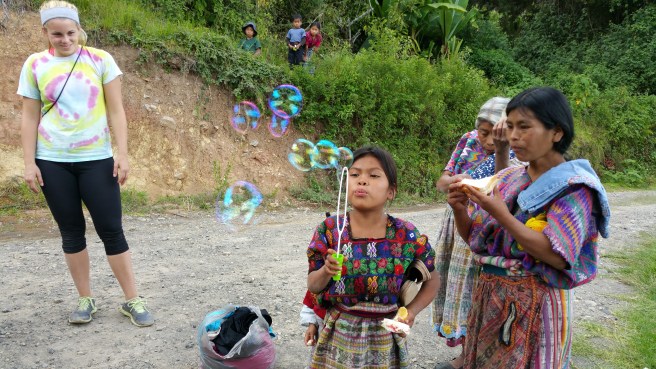
Travel prepared with props. Bubble blowing bottles and wands bring out the inner giggle in children. Bring out a jump rope and before you know it, crowds gather to count who can make the most jumps. Pull out your bottle of hand sanitizer and everyone wants a squirt!

Play on the school yard. Play in the church yard. Play while waiting on the bench for the van to come pick you up. Play with the goal of connecting with children and warming their hearts. By your play communicate to every child that they are important, they are loved, and that it is Jesus Christ who brings us together.

10. Sit on assumptions.

It’s hard to not jump to conclusions when something goes wrong or turns up missing. Take a deep breath and zip it. Step back and give yourself time to think, reflect, and pray.

Quick, emotional reactions usually don’t work out well.

Things get lost and misplaced. It doesn’t mean they were stolen or the individual is stupid. What may be repugnant in your world may be the norm in your host community.

If you don’t know, ask. Go to the leader of your mission team. Go to the leader of your host NGO or in country support team. Talk it over before making a decision to respond.

11. Generosity goes both ways.

I’ve always carried a couple of hundred dollars US cash with me on each trip. I think to myself that where there is a need, I’d like to be able to step in and help. Who doesn’t love to be generous?

To the best of my ability, I am generous; abet, cautiously generous.

What I’ve learned is that the people we serve end up being just as generous (if not more so) than we are towards them.

Friends squeal with delight when we visit. We’re often invited into their home, offered some food, or cut down plantains for us to take home with us.

When teaching Bible School, the vice-principle interpreter had requested each person in my class to bring me a thank you note on the last day. Of course I didn’t know of the request since I don’t speak Spanish. When Friday came, each of my thirty students came one by one up to me to present me with a personally created thank you note.

One of the most over-the-top church dinners I’ve ever experienced came from a gathering of pastors and lay leaders who had partnered with us in mission the entire week. The cuisine was worthy of the finest New York City restaurants. Wow. Words fail to express the generosity I’ve received.

12. Beware of unintended consequences.

It is very easy to make an attempt to help someone out, when in fact you end up hurting them. It wouldn’t take a second thought to give a woman a hundred dollar bill who earns seventy dollars a month weaving at a loom.

But, what if the neighbor sees that she is now flush with money and they rob her? Or worse. What if her supplier of thread now jacks up the price because they know she can pay it?

Becoming a human ATM machine is a terrible practice and it is fraught with danger. Oh, you will make a lot of friends, but you’ll also send forth ripples throughout the community that will benefit some and harm others.

Try to be creative with your generosity. Instead of giving money to neighborhood kids, offer to pay them a fair wage after spending the day helping the mission accomplish its goals.  Encouraging people to earn, work, and be employed offers a sense of satisfaction. It elevates self-esteem. And it recognizes both as equals.

13. Love is universal.

When on a mission trip, you become the channel for God’s love to flow and lavishly splash into the lives of everyone you meet. Oh yes, God’s love is already present. What is different is that now it is the missionary who is the new source (and recipient) of God’s love in the community.

Turn on love’s fire hose!

Love lavishly. Seek out the unlovely; you know, the one who it appears no one else is paying attention to. Seek to stretch you envelope of comfort. Reach out and love them. Give them you attention, your time, your heart.

Love means not making promises that cannot be kept.

Love cost zero money, but it is priceless. It is hard for me to get over myself, for I am a self-avowed conservative curmudgeon. So, I tell myself all the time … get over it! Tear down the barriers. Be the love of Christ present in the room.

Love always benefits the recipient. It is never exploitive or for our personal benefit. Keep it that way.

14. Watch and listen for God to move.

Over thirty years of pastoral ministry has taught me to pay special attention to the revelation of God especially during times of life crisis. The same is true when it comes to short-term mission trips.

Pray for the presence of the Holy Spirit, and your lungs will be filled with the Spirit. Watch for how circumstances play out. You think that was a coincidence? Think again.

Listen for the change in a person’s voice when gathered tightly in a prayer circle, even when the prayers are in a language you don’t understand. That’s God at work. Watch for eyes filling with tears. Take in that seemingly herculean effort to finish work by the end of daylight, and recognize the fact that it was God who supplied the extra energy even after everyone else was spent.

Witness to the movement of God during daily devotions. Listen to the witness of others as they share their miraculous tales of God at work and God at play. God put you at the table for a purpose; take it all in and let the awareness of God permeate deeply into your soul.

15. Interpretation is necessary.

After all the fund raising and preparation; after the expense and travel; after the awesome, God filled experience of your mission trip; after you return home and sleep for three days … your job is not done.

Return to your faith communities and churches with the Good News of what God was able to do in your midst. They’ve supported you with money, prayer, and worship. Return generosity with your gratitude.

Take pictures, show slideshows, premier videos, talk about people and how lives were changed. Share your passion and allow it to be contagious. Say thank you.

Invite those in the audience to consider joining you on the next short-term mission experience. To sustain a mission effort, a new cohort of first time missionaries are needed on every trip.

In conclusion, there are many more lessons I’ve learned from my mission experiences to Nicaragua and Guatemala. Many are already posted below. As so moved, I plan to post more on this blog. I still feel like a newbie to the mission movement. There is so much more to learn and experience about God’s world, his creation, and God’s beautiful people.

Stung

I was stung.

Not by a bee, mind you. I was stung by my own poor judgment and cultural insensitivity. It even hurts to blog about it, because I work really hard at being as open minded and inclusive as possible.

On the short list of qualities everyone should want in a pastor, being inclusive and sensitive should be at the very top. Let me explain.

It had been two years since I had been to Telica, Nicaragua. The first evening back in town, a lot of people heard that we’d returned and walked over to say “hi” and “welcome back.” Children had grown a few inches taller. Parents had a few more wrinkles. Each of us were sporting two additional years of wisdom, along with the associated grey hairs.

One boy asked me in Spanish if I was going to smoke a cigar, a practice I had established each evening on my last visit. The children and youth that hung around our front door each night had looked at me funny, at first, but, I had assured them, through the efforts of a translator, that smoking a cigar is like anything … it is best done in moderation. One per day, no more. The youth looked and giggled at me, a giant of a man, a pastor from the US, who took great delight in having one cigar per evening. I was smug in laying down a moral lesson.

Boy, was my life about to change.

Ricardo – not his real name – asked me for a cigar. Ricardo is 14. “No, no, no,” I replied. “Cigars are only for adults,” I spoke through my trusty translator.

“But you gave me two cigars last time you were here,” he insisted.

White hot anger flashed through my brain. I was stung.

“I never gave you cigars,” I emphatically insisted. “I would never give a child a cigar. In my country, I’d go to jail for giving a child a cigar.” Besides, I thought to myself, I love cigars too much to haphazardly give them away. It was no use. The more I protested, the more I felt like dying. I furrowed my brow and walked away, you know, like a responsible adult.

Lord, have mercy.

I was in a pickle, and I knew it. While I had not, and would never, give a child a cigar, the mere accusation of any kind of less than stellar behavior against a pastor can be devastating. What I was guilty of was smoking a cigar and setting a bad example in front of children. Indeed, I was devastated.

When faced with anger at my own hypocrisy in the past, I have found it helpful to disengage, breathe, be still, listen, reflect, and pray. So I did.

I felt the Spirit’s nudge, and I went to speak with Tony; our host, my church member, and the one who grew up in Telica before moving to America and becoming a professional baseball player.

“I screwed up, Tony …” I began with what felt like my confession. I laid it all out for him, ending with, “why would Ricardo make up such an accusation?” “I don’t know, pastor Todd, but I’ll find out,” Tony assured me.

Small towns have many secrets, and Tony was related to all of them.

Turns out Ricardo, when confronted by the truth, admitted that he made the whole story up. He had been running with the wrong group of kids, disobeying his mother, staying out drinking alcohol and shooting pool. Ricardo was a kid going astray in search of redemption.

Perhaps his motive was fishing: casting out his line to see if he could hook a visiting pastor. Ricardo wanted to get back to the straight and narrow; perhaps, in some unknown way, I was his hand up.

No one worked harder the rest of the week to support our team of short-term missionaries, than did Ricardo. He was up early, worked hard, and stayed late every day. He even got up at three in the morning to ride with us to the airport on the day we departed.

No a word was mentioned about what happened. Yet, I knew that he knew. I forgave, even as he forgave me. It was for us, like our little secret.

I learned that my behavior must be above reproach when I’m on mission trips and making friends with local individuals. I had unintentionally made it messy. I had been smug and full of myself. I had become my own moral authority, and had failed to submit to God’s authority. Note to self: do not sin like this again.

Faith is the only solution, the only way forward for me. My faith is in the redeeming grace of Jesus Christ. That grace is more than sufficient to cover both Ricardo and me. And I believe the redeeming grace of Jesus is the only means to clean up the mess we both made. Grace takes us by the hand, lifts us up, and leads us towards healing and wholeness.

“Hey, Ricardo! Listen to your mother. Here’s the deal: You stay out of trouble, and I’ll try to do the same. God loves you, and so do I.”


Swooping Beemer

I wasn’t there.

But the reports came in fast and furious as soon as we returned to our home following a morning of teaching Vacation Bible School.

This is what I was told: our two brothers, Tony – who grew up in Telica, Nicaragua and went on to a Major League baseball career, and Oscar – who grew up and stayed in Telica, traveled to our building site in Oscar’s pick up truck. The building site is where two houses were being constructed for two families in need. Black plastic and stick shacks don’t cut it when you’re trying to raise a family.

We had three team members mixing concrete and laying blocks to assist the six local workers we hired to lead the construction. As soon as they parked the truck, Beemer came swooping down on them like a hawk plucking a salmon from a river. She was mad, and she wanted answers.

Our teams had build most of the houses in the neighborhood on previous mission trips. We built Beemer’s house. And we built the one in question.

Third hand news, passing through translation from Spanish to English, and amplified by a lot of hand gestures, finger wagging, and facial scowls can sometimes become distorted, but this is my best shot: Beemer’s brother owned the house in question and had died. Beemer didn’t like her brother’s family and accused them of unbecoming behavior. Beemer believed she was entitle to her brother’s house, and not his wife or his family.

In fact, Beemer claimed she had hired a lawyer to obtain what she believed was rightly her own. She wanted to know what Oscar and Tony were going to do about it!

Few people thrive on confrontation. Even fewer are comfortable with dealing with it. News of Beemer’s aggressive assertion was upsetting to our mission team, especially to Oscar and Tony. What should we do about it? we asked.

The front porch consensus that evening was simple: we help build homes for needy families. Legal issues are their problem.

Or, are they?

Though I nodded my consensus, I was left feeling spiritually uneased.

Tony’s spouse and our mission trip host, Halyma, told me that in Nicaragua, any lawyer can be purchased for any price to do anything under the law. God bless Halyma, for the next morning she sought out a local lawyer she knew who could provide an honest legal opinion. The long and short of the story is that Beemer hired a lawyer who had been disbarred, was unscrupulous, and was taking her money.

Let’s call this victimizing the poor.

It is easy for me to pass judgment on a man I never met, based on facts I can’t confirm, from my privileged office thirty-eight hundred miles away. However, this narrative has caused me to consider how I victimize the poor in my life. Most of the time, I don’t even know it.

Lord, have mercy.

I try my best to help others in need, but rarely do I ever reflect upon unintended consequences, or how I participate in circles of privilege, power, and hubris. It’s easy to lend a hand to a peer who falls on hard times, but how about someone taking shelter under a bridge to find refuge from the cold winter wind?

Christ, have mercy.

When I shop with abundance and consume my daily bread, how often, I ask myself, is the food I’m eating being misdirected directly from the table of someone who is in greater need? Goodness knows, I could benefit from fasting.

Lord, have mercy.

I leave with a blessing, riding my full-of-myself moral high horse, returning to my wonderfully comfortable family home, knowing full well the gathering of friends I just left will return to a group home they never selected and living with room-mates not of their own choosing.

There is no splitting of hairs between sins of omission and sins of commission. Sin is sin. And sin will remain sin unless, and until, we break every yoke of oppression. I’m up for breaking a few yokes. How about you?


Strawberry Candy

It was gone.

Nowhere to be found. Panic swelled within and quickly overflowed like magma from the local volcano.

The reason I love international missions is that it is incredibly honest and raw. It’s hard to be phony; completely impossible to maintain a false facade or keep a turd polished. What bubbles up is as pure as the driven snow.

20160106_111623.jpg

The strawberry candy I had laid out on the teacher’s desk was gone and after a quick scan of the room, I was frantic. Most distressing was the fact that it was central to my lesson about Mary, the mother of Jesus. The whole morning hung in the balance.

“Must have been one of the kids,” I quickly assumed. I recall an earlier encounter with my Co teacher who warned me about keeping the door closed for fear of theft.

Youth are such easy targets, especially for an old fool like me.

“Tony!” I pleaded, as quietly as possible. “Someone’s stole the candy.” “Let me check. I’ll see who is eating candy.”

The week of lessons had gone so incredibly well. We experienced growth in both youth and adults each day. Everyone was enthusiastic, genuinely thankful, and loving. There was no reason for me to jump to this conclusion.

None. Nada. Zip. Zero.

Toy’s eyes scanned the crowd like he was back on the mound in Baltimore pitching for the Orioles.

My Spanish speaking Co teacher came over and began to speak with him, even as opening exercises were concluding. Tony called me closer, and smiled.

“The teacher just told me she hid the candy in the class room. She didn’t want it to be stolen.”

There it was. My sin, my biases, my stain hanging out for all the world to see. I had left the door open.

If I can’t polish it, I better fix it.

That’s what short term mission trips do for me. How about you?

Don’t Sit Next to Me

I was relieved.

The gentleman sat in the pew across and in front from me. He had shuffled down the center isle during the priest’s sermon, stood silently at the front pew on the other side, until his presence was felt and everyone scooted over to give him a wide perch. He silently sat. The priest never missed a beat or sweat a drop.

If preaching was an Olympic sport, I’d give him a perfect 10.

I’ve had people disrupt sermons I’ve been delivering on a few, rare occasions, but nothing like a shirtless, shoeless man in obviously soiled britches. Wow. His body odor could set off the Telica volcano.

But it didn’t.

I assumed this man was drunk. Intoxicated. Really lit. After the service, other visiting friends seated in the back had likewise taken note of this man’s slow shuffle to the front of the isle. They also noted that no one else in the Cathedral had reacted with behavior out of the ordinary. Kids weren’t holding their nose and adults weren’t rolling their eyes. He was one of them and we were mere visitors.

Hum. I could sense the Spirit’s daring, but I just couldn’t put my finger on it. What’s up, God?

The youth hanging with our missionary team on the front stairs back home shed the light. No. He wasn’t intoxicated. He wasn’t crazy. He was dying. “Infermal” was the word they used.

Why, oh Lord, would you smack me like that?

I think of church as a community of faith, people who are tightly connected, yet always looking to add to the circle. Church is where we can love God and love neighbors and love enemies alike. Church is the boat we take together on the river that leads us back to God.

Church is where we weather together life’s storms. You know, like illness and death. Like terminal illness. Like infermal.

Thank you God, for the cross and blood of Christ. Because I’m so full of assumptions, biases, and sin that I could make the Telica volcano blow. I think I just did!

Have you ever thought to yourself while in church, “I hope he doesn’t sit next to me “? If you have, you’re in good company. This sinner is right there with you.

Next time, I pray he sits next to me.

You in?

Telica

Certainly God can raise the dead, but I’m thinking a town full of roosters could do the same. This early morning rousal doesn’t take into account the cemetery on the edge of town.

Hum. More to ponder.

It felt good to offer an orientation tour of town and our previous building sites to to the 4 other missionaries making their first trip to Telica. “We built this house, and that house, last time we were here.” “I’m told we built this one, and that one, too.” Indeed, our church’s mission had accomplished much in eight previous missions.

I was feeling pretty smug.

It didn’t take long. Soon the neighborhood sprang to life. While I was admiring buildings, people poured out of their homes to greet us. Most remembered me. I am the Pastore. I was soon making introductions every 3 steps.

Introductions, hugs, and smiles are the polite, expected thing to do. But soon we were drawn into friends homes, presented new babies, shown how much junior had grown in the past two years, and had flower gardens proudly displayed. We were led through a maze of paths and hidden back fence passage ways from one family to another.

One husband and wife pulled out a machete and quickly brought down a branch of plantains, hacking away perilously close to low hanging wires. As we left, we were presented with 5 bags of their wonderful tropical fruit. No expectations that they’d be paid. It was a generous gift between friends.

Humbling.

Poverty is about what you don’t have. Yet, wealth isn’t about what you possess. Five bags of plantains are a symbol to me that wealth is about what you give away; your time, your money, your heart, God’s love.

Yes, we are here to accomplish a goal packed agenda. But more importantly, we’re here to give it all away, make and keep friends, all for the glory of God.

Beemer Times Two

Our two week visit to Telica was coming to an end.

Vacation Bible School (VBS) had been a big hit. Each of the three hundred children who attended received a roll, something to drink, and a dose of the Good News every day. It is painful for me to contemplate the fact that, for some, this may have been their only meal. Nicaragua is the second poorest nation in the hemisphere. At least every child knew they were loved by God and their new friends from the north.

The three houses the other members of our team had been working on were turning out pretty good. Concrete had been mixed on the ground, poured into shallow footers, and cinder block walls had risen to give shape to new houses.  Even a 12 foot deep bano had been dug out back of each, covered by a properly secured one-holer. The women and children who would become the new home owners need some sort of protection when they have to use the bathroom in the middle of the night.

Distributing clothing and medical supplies had been gratifying, but not nearly as fun as hosting a baseball tournament for all the kids in town and buying each of the players boiled, under-sized hot dogs from a local vendor.

I was tired and I wasn’t going to miss the hard cane bed I had been sleeping on each night.

Our team of 20 North American teachers and builders assembled our final evening at the three newly constructed houses as I put on my liturgical game face. We dedicated each house to the glory of God and handed over the keys to each new home owner.

20140110_181110

Well, to be honest, the keys were metaphorical, since the doors were still to be built. The roofs would also have to be installed after we left. But each house was close enough in my book to go ahead with the dedication.

After the celebration was completed and the neighborhood crowds had dispersed, Beemer sought me out and pulled me aside. There was a frantic look in her eyes as she held up a paper for my inspection.

Remember, this Gringo no hablo Espanol!

It looked like a past due electric bill and Beemer owed … Let me see. I did some quick calculations in my head. Carried the two, multiplied by the exchange rate, and rounded up for safe measure. It looked like Beemer was hitting me up for about 6 bucks. Six bucks!

Sure, I thought to myself, having yet to read “When Helping Hurts” by Steve Corbett and Brian Fikkert. I pealed out the foreign bills without a moments hesitation. Instead of joy, I saw Beemers countenance fall, even as she forced a smile, thanked me, and turned and walked away.

I failed to understand. At the same time, I assumed something wasn’t right.

Right before turning in, most of us were sitting in front of the house in cheep plastic chairs watching kids playing foot ball in the street. Families had come to say good bye to us, thank us for our efforts, and giving us their blessings. We were headed out first thing in the morning. Emotions were raw and many eyes were filled with tears.

“You see Beemer this evening?” I overheard one ask another.

“Yeah. She was asking me to pay her electric bill.”

“She was?” I piped in, even though it wasn’t my conversation or place to speak. “She asked me the same thing.” I felt anger begin to bubble up, as if I had been played for a fool. I assumed I’d been scammed. How could I have been so dumb?

“Yeah. It was her electric bill five months in arrears. She owed thirty bucks, but she’d only take twenty-four.”

The universe stood still. Comprehension was slow, but coming.

I deserved this hard mat bed, I later thought to myself in the dark, when no one else could see my eyes filled with tears. This is what I get for making assumptions and being so wrong, so very wrong.

I assumed Beemer was scamming me. She wasn’t. I assumed the bill was for one month; it was for five. I jumped to the conclusion that Beemer was dishonest; yet, she was so honest that she only accepted that which she owed, nothing more.

And, oh. By the way, some of those Dollar Store extension cords in Beemers house were supplying electricity to her neighbors as well.

Poverty isn’t about money or wealth. Here I found myself broken and poor, deeply in need of repair, desperately seeking God’s redemption. I had sinned against the maternal voice of the neighborhood, the tamale baker of Telica.

Lord Jesus Christ, Son of God, have mercy on me, a sinner.

Early the next morning, Beemer showed up to see us off. Her gold teeth glittered as she smiled. She gave me a bear hug, turned, and disappeared as she walked away.


Beemer

I made a friend and her name is Beemer. Well, not actually. Her real name is that of an other expensive European sports car, but from where she is from, it’s doubtful she will ever take a ride in her namesake.

Beemer is my friend and she lives in Telica, Nicaragua.

She is a mother of many (unknown to me), living with other women in the family. There are no men around. “Speak no English” is a helpful phrase that keeps me from delving into conversations I have no right to enter.

Beemer has a mouth full of gold, reflective of the dentistry techniques of the local provider. Living on dollars a month, I have no idea how this works out, but the gold covers over rotted and malnourished teeth, and gives her a glint in her smile. I can only imagine how much it must ache to chew with those teeth.

Beemer is contagiously happy!

Maybe this is one reason I like her so much. She had met many of my other team members on our short term mission trip, since many of them are repeat missionaries. Many of our companions have built friendships with numerous local families and children. Some have even sponsored youth through trade schools or paid their college tuition.

Beemer flung her arms in the air and ran to greet us when we appeared at her gate. She had been cooking tamales with other, younger women, in a large pot over an open fire. The women of the family earn their money by selling tamales on the streets to the people of Telica.

She was introduced to me, she smiled, glittered, and gave me a big hug, as if I was some kind of long lost uncle.  Okay, then; “when in Rome,” I thought to myself.

Beemer was so proud of her house, one that our team had build on a previous visit. She insisted on giving us a tour. Pointing out a door frame that needed repair, she led us into the interior darkness, even while we were still swimming in the 95 heat and humidity.

The place was a magnet for Dollar Store extension cords, hanging from the roof, each (under)powering various appliances. The walls were adorned with blurry photographs, presumably members of her family, each dressed in a graduation gown, holding a diploma. Graduation is a big deal in Telica.

Beemer was so proud to point out improvements she had made to her house since it was built. She conversed with Spanish speaking members of our group, pointing up, down, over here, and over there. I stood in the background, arms folded, grateful to be invited into this woman’s home.

As the group filed out, Beemer pulled on my pant leg to stay behind. She turned and put an index finger in front of her lips. She wanted to show the new pastor from New York something. Through a nearly invisible passageway, Beemer led me behind a black plastic wall to a small bedroom in the back. Following was one of the many small children who belonged to Beemer’s household.

Lying on the bed was an infant baby, asleep, breathing shallowly, gnats flying around.

BeemersBaby

Beemer showed her golden smile as I sat on the edge of the bed and cupped my hand upon the child’s head, offering a humble blessing. She was beautiful; obviously a grand-daughter or great grand-daughter. It’s impossible for me to tell. What I can tell you, is that love filled the space; the love of a grandmother for a child, a universal love that so many of us share across boarders and cultures, across time and space.

All love comes from God, who first gives it. Each of us are so blessed to be recipients of God’s love. Church people, like myself, call this grace. We are even more blessed when we receive love that was freely given, and, in turn, freely give it away.

It is easy to love family. If I am willing to get over myself, put myself out there, and show a willingness to make new friends, I’ve found that it is just as easy to love new friends, too.

How about you?