In the fifteenth year of the reign of Emperor Tiberius, when Pontius Pilate was governor of Judea, and Herod was ruler of Galilee, and his brother Philip ruler of the region of Ituraea and Trachonitis, and Lysanias ruler of Abilene, during the high-priesthood of Annas and Caiaphas, the word of God came to John son of Zechariah in the wilderness. He went into all the region around the Jordan, proclaiming a baptism of repentance for the forgiveness of sins, as it is written in the book of the words of the prophet Isaiah,
‘The voice of one crying out in the wilderness:
“Prepare the way of the Lord,
make his paths straight.
Every valley shall be filled,
and every mountain and hill shall be made low,
and the crooked shall be made straight,
and the rough ways made smooth;
and all flesh shall see the salvation of God.”’
| Centering Prayer |
Sixty-six years is a long sentence to serve in prison.
That’s 792 months.
Sixty-six years is a long time
for one to be punished for disobedience.
Sixty-six years;
This is how long our ancestors paid for their sins.
This is how long it took for them
For the Lord to wring the stain of sin out of them,
to be cleansed of evil.
The prophet Isaiah,
A spokesperson on behalf of God,
Warned successive kings of Judiah
That the nation would be punished for guilt associated with four charges:
Wicked behavior, rebellion, corruption, and iniquity.
(See Isaiah 1)
God doesn’t tolerate fools.
Isaiah was no fortune teller.
He was simply an obedient bullhorn for the Lord to speak directly to God’s people.
Prophecy was known inside our Hebrew experience
As revelation,
A message from God,
Delivered by God’s hand-picked chosen servant.
God is always true to God’s promises.
The hammer of divine judgment fell in the year 605 BCE
When the Babylonian king, Nebuchadnezzar, defeated our forefathers
In the Battle of Carchemish and laid siege to Jerusalem.
Appeasement payments only held off the inevitable.
Stores of food ran out.
The protective city walls were breached, the Temple was destroyed, and we were utterly and completely defeated.
Nebuchadnezzar initiated three successive waves of deportation for the survivors.
Our defeated ancestors were deported
To prisoner of war camps,
Located deep within Babylon,
On the shore of the Tigris and Euphrates Rivers,
In modern day Iraq,
547 miles to the East as the crow flies.
The first wave of deportations was in 597 BCE,
the second was in 587, and
the third was in 582.
Sixty-six long years from judgment to release.
Our Hebrew ancestors were freed in 539 BCE
By the hand of Cyrus the Great, Nebuchadnezzar’s successor.
Sixty-six years is more than three generations.
How long would the Lord’s punishment last? To children? To grandchildren? To great-grandchildren?
At what point had justice been served?
At what point had all iniquities been wiped clean?
Listen to the haunting words of the Psalmist.
“By the rivers of Babylon— there we sat down and there we wept when we remembered Zion.
On the willows there we hung up our harps.
For there our captors asked us for songs, and our tormentors asked for mirth, saying, “Sing us one of the songs of Zion!”
How could we sing the Lord’s song in a foreign land?”
– Psalm 137:1-4
It was during this period of life in exile,
Life in the Babylonian prisoner of war camps,
That the Lord approached the tribe of Isaiah and his descendants;
The family of the great prophet, and others who joined with him and his tradition.
The words of the Lord
To a young prophet in the Isaiah tradition
Are recorded, starting in Chapter 40, extending through Chapter 55.
“Comfort, O comfort my people, says your God. Speak tenderly to Jerusalem, and cry to her that she has served her term, that her penalty is paid, that she has received from the Lord’s hand double for all her sins.
A voice cries out: “In the wilderness prepare the way of the Lord, make straight in the desert a highway for our God. Every valley shall be lifted up, and every mountain and hill be made low; the uneven ground shall become level, and the rough places a plain. Then the glory of the Lord shall be revealed, and all people shall see it together, for the mouth of the Lord has spoken.”
– Isaiah 40:1-5
Our debt had been paid.
Israel had been redeemed.
The voice crying out set the stage
For Jewish messianic expectation:
Redemption is at hand!
Prepare the way for the Lord
For the Lord is coming to redeem all people and lead us back home.
The expected messiah is propagated by other Jewish prophets,
Most namely Malachi,
Following the return of the exiles,
The restoration of Jerusalem,
And the reconstruction of the Temple:
“See, I am sending my messenger to prepare the way before me, and the Lord whom you seek will suddenly come to his temple. The messenger of the covenant in whom you delight—indeed, he is coming, says the Lord of hosts. But who can endure the day of his coming, and who can stand when he appears? For he is like a refiner’s fire and like fullers’ soap; he will sit as a refiner and purifier of silver, and he will purify the descendants of Levi and refine them like gold and silver, until they present offerings to the Lord in righteousness.”
– Malachi 3:1-3
For the next four-hundred thirty years
Malachi’s messianic expectations simmered on the back burner
of Jewish theology, beliefs, and practice.
After periods of prosperity,
Like Groundhog Day,
God used
The Greeks, first, then the Romans,
To pass judgment and execute judgment on Israel’s return to wickedness.
Greek, then Roman conquerors
Followed the example of the earlier Babylonians.
They conquered our covenant-promised land and enslaved God’s chosen people.
Messianic expectation caught fire like sparks to spilled gasoline.
Zechariah, a righteous and devout priest of the temple,
Husband of Elizabeth,
Cousin of Mary, by marriage,
Was filled with this frenzied messianic expectation
For he had the words of Isaiah and Malachi written in his DNA.
In the first chapter of Luke, starting with the eighth verse,
We hear of an angelic visitation and message.
The angel Gabriel called on Zechariah,
Not in a dream, but in person, at the altar of incense in the temple.
Gabriel confirmed Zechariah’s messianic expectation:
Although Elizabet was of post-menopausal age,
She would become pregnant
And give birth to a boy, who Zechariah was to name John.
John would be the one to lead the effort to prepare the way for the messiah.
It isn’t every day one is visited by an actual angel!
John was born, just as promised.
Zechariah cradled his infant son, John, and
Prophesies just as the angel Gabriel instructed:
“And you, child, will be called the prophet of the Most High; for you will go before the Lord to prepare his ways, to give knowledge of salvation to his people by the forgiveness of their sins. By the tender mercy of our God, the dawn from on high will break upon us, to give light to those who sit in darkness and in the shadow of death, to guide our feet into the way of peace.”
– Luke 1:76-79
From Isaiah to Malachi,
From Malachi to Zechariah,
Prophecy had undergone significant evolution.
A prophet had been transformed
From a future teller (futurist),
To a divine messenger,
a spokesperson for God,
To one chosen by God
To recognize and witness to the fact
That God is at work
Forgiving sins and
Saving souls
Right in our midst.
Zechariah’s revelation
Was that God was changing course.
Instead of going the prophet and prophecy route
God was stepping through the heaven and earth divide.
God was coming to all nations, to all people,
To redeem all people from sin,
To give knowledge and promise of salvation,
To give light to those in darkness,
To give life in the shadow of death, and
To guide us into the way of peace.
Our messianic expectation was being fulfilled.
His name is Jesus, the Christ.
The one leading the way for Jesus,
Was John, warning all the world to repent and make personal preparations,
For God was already at work in our midst.
Wow.
In the post-messianic era leading continuing to today
What becomes the role of prophet?
What is to become of prophecy?
And, what is our role in it?
…
The role of prophet and the work of prophecy
Continued to change following Jesus,
His passion, death, resurrection, and ascension.
Prophet and prophecy advanced with the presence and power of the Holy Spirit.
God has given to us the gift of the Holy Spirit
To work in us, individually,
And to work through us collectively,
To empower and direct the Church moving forward.
The work of the Spirit, as detailed in Luke’s second book,
The Acts of the Apostles,
Reveals that God continues to be present and active in the world,
God continues to redeem and save.
The Holy Spirit continues to overcome darkness with light,
bring life to the dead,
and take an active role in the lives of disciples.
Our prophetic challenge today
Is to witness to this reality,
To reveal to the world just what it is that the Holy Spirit is up to,
That the glory of the Lord will be revealed to all flesh.
Prophecy today witnesses to the fact that
Christ came to redeem, to purchase the sins of all the world.
Christ promised to come again,
to save all the world into God’s eternal kingdom.
This becomes our prophetic testimony,
The prophetic testimony of Christ’s universal Church to the world.
It is the power and direction of the Holy Spirit that makes it all possible.
“There will be signs in the sun, the moon, and the stars, and on the earth distress among nations confused by the roaring of the sea and the waves. People will faint from fear and foreboding of what is coming upon the world, for the powers of the heavens will be shaken. Then they will see ‘the Son of Man coming in a cloud’ with power and great glory. Now when these things begin to take place, stand up and raise your heads, because your redemption is drawing near.”
Then he told them a parable: “Look at the fig tree and all the trees; as soon as they sprout leaves you can see for yourselves and know that summer is already near. So also, when you see these things taking place, you know that the kingdom of God is near. Truly I tell you, this generation will not pass away until all things have taken place. Heaven and earth will pass away, but my words will not pass away.
“Be on guard so that your hearts are not weighed down with dissipation and drunkenness and the worries of this life, and that day catch you unexpectedly, like a trap. For it will come upon all who live on the face of the whole earth. Be alert at all times, praying that you may have the strength to escape all these things that will take place, and to stand before the Son of Man.”
| Centering Prayer |
Happy New Year!
Woot! Woot!
Of course,
I’m not speaking about the calendar year
Which will refresh all on its own
In a mere 33 days.
I’m speaking of the Liturgical Year,
The Church’s Worship Year,
Which begins fresh and new on the First Sunday of Advent.
On this date,
The Gospel centric focus of worship pivots.
We leave Mark behind.
Don’t worry, we revisit each Gospel every third year.
Today we bring focus on the Gospel of Luke.
We will ride Luke this coming year like a pony,
Interspersed with a dash of seasonings from the Gospel of John,
Over the next 365 days.
(With Irony)
Let’s start this New Year off right with the Gospel of Luke
By starting with the 21st chapter …
Right? Right.
What genius thought of that?
Actually,
Allow me to begin in the first chapter of Luke
Where the Gospel author,
Tells his friend Theophilus the reason for
Dictating this orderly account of the life of Jesus.
This witness is
“so that you may know the truth concerning the things about which you have been instructed.”
(Luke 1:4)
Theophilus had been learning about the life of Jesus.
Now, he needed to know
The truth behind the experiences of Jesus the Christ,
The Son of God.
Truth is a common thread picked up from Christ the King last Sunday;
Where Pilate was interrogating Jesus about his kingdom.
What is truth? Pilate asked.
What is truth? First century disciples of Jesus asked,
Even as they eagerly awaited Jesus’ imminent return
On a cloud, from on high.
What is truth?
Those same disciples asked about truth when Rome destroyed the Temple and the few survivors were flung to the far corners of the Empire and earth;
Thrown as if they were rag dolls with their hair on fire.
Where is Jesus?
He said he’d return.
Yet, he hadn’t.
Why?
What is the truth?
Thus, Luke authors his Gospel and the sequel, the Acts of the Apostles,
For the benefit of Christ followers,
So they’d know the truth about Jesus and how to wait with faithful anticipation for his return.
In many ways,
Our religion is one of waiting,
… and how we spend our time while we wait.
I hate waiting, especially if it has no purpose.
Too long of a check-out line and not enough people working the registers?
It drives me nuts.
It’s pointless.
But if waiting has a purpose,
A reason,
Waiting can become a spiritually refreshing posture of faith.
We wait for Christ to return.
In the meantime, what are we to do?
…
First.
When we wait for Christ to come
We are to watch for signs,
Because when he comes
The day will catch us unexpectedly
like a trap.
(Luke 21:35)
Luke promises signs of persecution and destruction.
The first century disciples of Jesus would have nodded their heads with understanding.
Jerusalem had been destroyed.
Nero was crucifying our ancestors and
Lighting the corpses of Christian martyrs on fire to illuminate his path.
Our first-century sisters and brothers
Were living firsthand the promise of Luke.
In today’s Gospel,
Luke points us to cosmic powers and signs:
The sun, the moon, and the stars.
He cites the roaring of the sea and the waves.
The nations of the earth will be distressed.
People will be filled with foreboding.
Even the power of the heavens will be shaken.
These are signs of Christ’s imminence in that first century,
And every generation since.
Our generation is no more exceptional than any other.
What gives us the pride and hubris to believe
Our generation is suffering more,
Is facing greater persecution,
Is in greater peril,
Then our ancestors who were martyred in the Colosseum
Or during the Inquisition, the Napoleonic wars, in Nazi Germany, or occupied Syria?
The alarm has been raised with every prior generation,
Even as it is raised with us today.
What we are to take away from this posture of active watching
Is Luke’s promise that
The power of God
Far exceeds the disturbed cosmic powers being replaced.
All familiar powers of the universe will be shaken and lost.
Power that is familiar …
… think about it …
Power that is familiar will be lost.
Terror has the potential to grip even the strongest of Christian
When conventional powers are shaken
And when cosmic powers fail.
Be assured, Christ’s power exceeds
All that has come before.
Christ’s power and authority surpasses all cosmic powers,
And it certainly eclipses all mortal, earthly powers.
When Christ returns,
So, too, will order.
Order will return to all things.
And God’s kingdom shall reign forever.
…
Second,
Luke reports that
Jesus doesn’t tell us to run like hell when we witness these signs.
Jesus doesn’t tell us to be terrified.
He doesn’t tell us to lash out with kneejerk anger or vengeance.
Instead, Jesus tells us to stand up and raise our heads.
Beloved friends,
Let us temper our words and our behaviors.
I, too, feel the primal, emotional need to lash out to those
Who seek to destroy this world,
And to do it with unspeakable, brutal violence.
Let you and I discipline our behavior.
Let our Christian training kick in.
Take a moment to catch our breath.
Return to the Gospel and be refreshed by its Good News!
Be filled with confidence!
This is God’s kingdom and Christ is returning.
Standing up and raising our heads means
We refuse to submit to fear.
We refuse to be a victim.
We refuse to allow ourselves
To be used as a proxy for
The Devil’s message and a motive for sin and temptation.
Standing up and lifting our heads means we bear testimony
To our loving God, And the gift of his Son,
To redeem and save the world.
When we stand and lift our heads
Others rise with us.
We stand in unity, encouraged by each other’s confidence.
Nothing builds confidence like the confidence of others.
Let us stand up and raise our heads
Because we will not be shaken or lost.
God is present.
God is active.
God is in control.
With confidence we are able to proclaim to a world awash in sin
That Christ is returning.
The days when false prophets were listened to and followed are over.
The days we surrendered the return of Christ
To people hawking crazy “rapture” theology to whoever would buy it, are over.
We can confidently turn our backs
On millennialists and numerologists
Who claim insider-knowledge
about when and where the world is coming to an end.
We can stand together and lift our heads
With confidence and faith,
In spite of the Devil and all his evil designs.
Christ is coming again.
Period.
…
Third.
We stand confident in our faith
in the promise of judgment.
The Lord is our judgment;
It is on the Lord’s terms
and in the Lord’s time
That God pronounces judgment and executes justice
For every one of God’s children.
We are not called to judge others.
We can only judge ourselves.
God is the final arbitrator for each of us.
God may employ anyone to execute justice,
Or not.
We don’t know.
It isn’t our place to question or interfere.
It isn’t up to us to decide
Who God chooses
To pass judgment and execute justice.
Neither do we know
God’s will for any of God’s chosen;
How judgment will be adjudicated or how justice will be carried out.
We can volunteer.
Thankfully, many do.
But judgment and justice is the
White hot iron of Christianity that might be tempting to touch,
But is retained exclusively by God.
Pity the poor fool who doesn’t get the message
And attempts to take the law into vigilante hands.
Jesus answered, “Do you ask this on your own, or did others tell you about me?”
Pilate replied, “I am not a Jew, am I? Your own nation and the chief priests have handed you over to me. What have you done?”
Jesus answered, “My kingdom is not from this world. If my kingdom were from this world, my followers would be fighting to keep me from being handed over to the Jews. But as it is, my kingdom is not from here.”
Pilate asked him, “So you are a king?”
Jesus answered, “You say that I am a king. For this I was born, and for this I came into the world, to testify to the truth. Everyone who belongs to the truth listens to my voice.”
Pilate asked him, “What is truth?”
| Centering Prayer |
His questions intrigue me, and
Reveal to us where this train is headed.
Pontius Pilate had only five questions for the incarcerated Jesus;
Held and tried on full display before Annas, Caiaphas, and other Jewish authorities.
1. “Are you the King of the Jews?”
Translation: Anyone claiming authority over the Emperor would be guilty of treason and immediately put to death by crucifixion.
Careful, Jesus.
Pontius Pilate is judge, jury, and executioner.
“Do you ask this on your own, or did others tell you about me?” Jesus responds to the question with a question.
Translation: The Jewish authorities want Jesus dead but they didn’t have the authority or stomach to kill him themselves.
Pilate would serve their need for an assassin by proxy.
2. “I am not a Jew, am I?”
Translation: Pilate’s question is a statement that he is not a Jew.
Therefore, his answer to Jesus’ question
Informs Jesus
just who it was
behind the plot to kill him.
Pilate lifts the curtain, and the religious authorities are caught red handed.
Who knew? They blushed.
3. “What have you done?”
Jesus previously reported to the Caiaphas, the High Priest, that he was only guilty of teaching in synagogues and in the Temple.
That got Jesus a slap across the face by a Temple police officer.
(John 18:19-224)
The unspoken charge was blaspheme;
teaching irreverently about God or sacred things;
You know, things …
Like the Temple was corrupt,
Religious authorities preyed on the poor, and
Lust after wealth, power, and control.
What had Jesus done?
The Son of God exposed organized religion as organized crime.
4. “So you are a king?”
Christ’s sovereignty isn’t political, ideological, tribal, or national.
Jesus informs Pilate that his kingdom is comprised of
everyone who belongs to the truth and listens to his voice.
(John 18:37)
Christ’s teachings are truth.
Those on the other side of truth
Pay no attention to Jesus.
Their sovereign is darkness and death.
Those of us who listen to Christ’s teachings and belong to the truth are members of Christ’s kingdom.
Listen and learn from Jesus.
Embrace truth.
Christ is our King.
5. “What is truth?”
The loyal flunkey of Caesar
thought he knew a few things about truth,
as he saw it.
Truth was …
In his eyes,
Pilate had all the power
over life, death, and everything in-between.
Truth and power,
influence and affluence,
all were his to hold or wield
as he saw fit.
Truth was …
In Pilate’s eyes,
the strong rule the weak.
The powerful judge the weak.
Rome demanded peace, obedience, and an uninterrupted flow of cash.
Pilate thought he knew a few things about truth:
It had proved to be politically useful
to befriend the religious authorities
to enlist their help
to keep the peace
to become the pipeline of money
delivering tax income to Rome.
Some considered it collaboration with the enemy.
The religious authorities saw it as a means to an end.
Whatever the justification;
When Rome was happy
Pilate was happy.
Pilate held all the cards,
Jesus had none.
Or, so Pilate thought.
Truth was
the spineless Temple priests
charged Jesus with blasphemy
but didn’t have the courage
to face him themselves
without the power of Pilate and his soldiers
to back them up.
Pity Pilate and his lackey Temple priests.
Their assumptions about truth
had all been wrong.
The question
“What is truth?”
simply points to
the depth of their ignorance,
the absence of faith.
Truth does not change with time.
What was true yesterday
is true today
and will be true tomorrow.
Truth can be replicated by others.
making it universal in its application.
It crosses all divisions
– gender, race, culture, and economics.
Truth is valid
in every time and every circumstance.
Therefore,
Contradiction undermines truth.
It creates an imperfection,
distressing incongruities,
and leads to failure.
The truth about God
is that there is more than what is seen, known, or experienced.
The mysterious nature of God is an ocean to our small island.
Had Pilate been able to see
what we see through the lens of history
he would have seen the fall of the Roman Empire,
the Ottoman Empire,
Nazi Germany,
And the crushing of ISIS.
Pilate would have been faced
with God’s larger truth that
the strong do not rule the weak.
Rather,
in God’s kingdom,
domination leads to failure,
power leads to corruption,
and those who hoard money find it impossible to
thread a needle with a camel.
If Pilate had been able to see
the larger picture,
absent of contradiction, imperfection, and incongruity,
he would have seen that
that God favors the poor,
the weak,
the least, the lost, the disadvantaged,
all those who get left behind.
The truth about God
is rooted deeply in faith.
What is beyond what can be seen
at any one time
is a reality in which
God is immortal, almighty, and in absolute control.
This is God’s kingdom
And Jesus is our king.
While we may be preoccupied
with the minutia of everyday
living and dying,
God is doing far greater things.
God is shaping and molding
into an ultimate, final divine will for all things,
from the vast expanse of the cosmos
to the particular of every human experience.
God creates and recreates everything
From the big to the small,
From the East to the West,
From the North to the South.
Faith that God is in control
frees the self
from equating cure with healing,
from connecting affluence with blessing,
and insisting that punishment
is the only solution for sin.
Faith in God
frees the self
from the necessity to always take charge,
and allows us
to submit,
to serve,
to give,
and to let go.
Faith that God is in control
allows one to recognize
the fact that we do not need to know all things,
to be a part of every decision,
to trust,
ultimately,
to allow God to be God.
Justice will prevail.
Peace will come.
The truth about God
is also rooted in a foundation of love;
the source of every
divine motive
from the beginning of time
through every eon of eternity.
Love overcame the flaw of sin;
the garden’s imperfection.
Love gave Moses a voice
Abraham a covenant
and the prophets a message.
Love birthed Jesus into the human condition,
forgives all flaws
and brings victory over the grave.
Love brings light and salvation
to a world hiding in darkness and sin.
We are a forgiven people because of God’s love.
We are a resurrection people because of God’s love.
We are a claimed people because of God’s love.
Where ever love can be found
it is possible
to trace its origins
back to the source
back to from whence it came
back to the Lord God, Almighty.
“Everyone who belongs to the truth listens to my voice,”
Jesus informs
the faithless personification
of stubborn, selfish, human will.
We know in our heart
that Jesus is right.
But to listen
and to obey
implies
surrender
of the will
to the Divine will.
Yes,
this is the price of Truth;
the only price that we are asked to pay.
“Are ye able,
said the Master,
to be crucified with me?”
to surrender the self
wholly to Christ,
to go
only where he leads?
to follow
only his voice?
“Are you the King of the Jews?”
asked a perfumed, pompous ruler
who thought he knew better.
“My kingdom is not from here,”
Jesus answers.
Thank God.
Thank God
Christ’s kingdom was never built on
political power, military might, or state wealth.
Thank God
we can handle the truth;
The truth is that God is in control.
The truth is that faith is able to free us.
The truth is that eternal love is God’s only pure and unblemished motive.
As he came out of the temple, one of his disciples said to him, “Look, Teacher, what large stones and what large buildings!” Then Jesus asked him, “Do you see these great buildings? Not one stone will be left here upon another; all will be thrown down.”
When he was sitting on the Mount of Olives opposite the temple, Peter, James, John, and Andrew asked him privately, “Tell us, when will this be, and what will be the sign that all these things are about to be accomplished?” Then Jesus began to say to them, “Beware that no one leads you astray. Many will come in my name and say, ‘I am he!’ and they will lead many astray. When you hear of wars and rumors of wars, do not be alarmed; this must take place, but the end is still to come. For nation will rise against nation, and kingdom against kingdom; there will be earthquakes in various places; there will be famines. This is but the beginning of the birthpangs.
“As for yourselves, beware; for they will hand you over to councils; and you will be beaten in synagogues; and you will stand before governors and kings because of me, as a testimony to them. And the good news must first be proclaimed to all nations.
| Centering Prayer |
Context is the key to understanding.
Nobody likes rising taxes.
The result were public protests and attacks on government officials.
Governor Florus over-played his hand:
He ordered the Temple plundered and the treasury emptied.
This was the spark for the first of three wars
between the Jews and Rome.
Jewish rebels fought back,
Leading the pro-Roman king, Agrippa, government officials, and soldiers
to flee Jerusalem for their lives.
The rebellion was quickly spinning out of control.
Nero, the Emperor, had to act.
First, he sent Gallus to bring his legions of troops from Syria
to restore order and end the revolt.
6,000 troops were caught by Jewish rebels west of Jerusalem
In the Beth Horon pass.
All six thousand were slaughtered.
The Jewish victory attained great support throughout the land
And won over the hearts of the people.
Volunteers poured into rebel recruiting stations
Offering to fight Rome.
Passion and patriotism surged with youthful vigor.
Hold on there, dearly impassioned Jews.
Nero wouldn’t be embarrassed again.
The most experienced general, Vespasian,
was handpicked to crush the rebellion in Judaea.
Avoiding a direct attack on the heavily reinforced City of Jerusalem,
Four legions of troops,
That’s 24,000 soldiers,
landed in Galilee in 67 AD.
For three years, the legions advanced, led by Vespasian’s son, Titus,
Who served as second in command.
Rebel strongholds were eradicated, the fields were salted, and the population was punished.
February, 70 AD found the Roman legions knocking at the gates of the City of Jerusalem.
The Jewish rebels held out against the siege for 7 months.
All food supplies inside the walls were exhausted.
Time was on the side of Rome.
Jerusalem fell on September 7th in the year 70.
The Temple was destroyed, timbers burned, every stone above the foundation was thrown down and smashed.
The fire was so hot you can see the burn stains on the rubble to this day.
Rome found its revenge.
Josephus, the famed Jewish historian, claims 1.1 million people were killed during the siege, and 97,000 prisoners were taken into Roman slavery.
The few surviving Jews fled,
Diaspora-ed under cover of night to the four corners of the world.
Among the traumatized, surviving Jews
Were a small band of disciples
Who, as luck would have it, witnessed Christ’s ascension
38 years earlier.
By the light of the burning Temple,
St. Mark and his band of new Christians,
Convert memories to record,
Put pen to paper and begin a first draft of their Gospel.
When Mary came where Jesus was and saw him, she knelt at his feet and said to him, “Lord, if you had been here, my brother would not have died.”
When Jesus saw her weeping, and the Jews who came with her also weeping, he was greatly disturbed in spirit and deeply moved. He said, “Where have you laid him?” They said to him, “Lord, come and see.” Jesus began to weep. So the Jews said, “See how he loved him!” But some of them said, “Could not he who opened the eyes of the blind man have kept this man from dying?”
Then Jesus, again greatly disturbed, came to the tomb. It was a cave, and a stone was lying against it. Jesus said, “Take away the stone.” Martha, the sister of the dead man, said to him, “Lord, already there is a stench because he has been dead four days.” Jesus said to her, “Did I not tell you that if you believed, you would see the glory of God?” So they took away the stone.
And Jesus looked upward and said, “Father, I thank you for having heard me. I knew that you always hear me, but I have said this for the sake of the crowd standing here, so that they may believe that you sent me.” When he had said this, he cried with a loud voice, “Lazarus, come out!” The dead man came out, his hands and feet bound with strips of cloth, and his face wrapped in a cloth. Jesus said to them, “Unbind him, and let him go.”
| Centering Prayer |
“Lord, if you had been here,
my brother would not have died.”
(John 11:21, 32)
Mary repeats the charge first made by her sister, Martha.
Mary and Martha blames Jesus for the death of their brother, Lazarus.
That’s quite the charge to heap on Jesus, don’t you think?
Never mind the fact that Lazarus may
may have died of natural causes.
We just don’t know what caused his illness.
He may have had many complex medical conditions.
Perhaps he didn’t take care of himself.
Never mind the fact that Lazarus didn’t have access to health care as we know it.
And, never mind the fact that Lazarus had lived a good, long life for that day and age.
Their charge
“Lord, if you had been here,
my brother would not have died,”
Speaks much more to the state of grieving sisters
Than it reflects the true nature of Jesus’ pastoral responsibility,
Or lack, thereof.
I’d suggest
“Lord, if you had been here,
my brother would not have died”
Reflects Mary and Martha’s deeper cultural belief about death,
One that most of us share:
That life is good and death is bad.
Death should be avoided at all cost.
Death should be avoided AT ALL COST,
even if it involves intense, chronic suffering.
Death should be avoided AT ALL COST,
even if it cost others a fortune.
Death is the enemy
And it STINGS.
Jesus thinks differently.
His approach to death,
as evident in our Gospel lesson for today,
Tells us he isn’t buying our popular assumptions about death.
Jesus knows better
And challenges us to consider death and its effects more deeply.
…
A quick Wikipedia search of the word “Saint”
Brings a diversity of beliefs from across Christendom
(and other world religions)
about what a Saint is,
what a Saint does, and
why a Saint is important.
Yes, a Saint is a football player
From New Orleans
With a 3 and 1 record
Playing the Atlanta Falcons today at 1:00 pm.
That’s not the kind of Saint I’m thinking about.
Generally speaking, “a Saint is a person who is recognized as having an exceptional degree of holiness, likeness, or closeness to God.”
One of the scribes came near and heard them disputing with one another, and seeing that he answered them well, he asked him, “Which commandment is the first of all?” Jesus answered, “The first is, ‘Hear, O Israel: the Lord our God, the Lord is one; you shall love the Lord your God with all your heart, and with all your soul, and with all your mind, and with all your strength.’ The second is this, ‘You shall love your neighbor as yourself.’ There is no other commandment greater than these.” Then the scribe said to him, “You are right, Teacher; you have truly said that ‘he is one, and besides him there is no other’; and ‘to love him with all the heart, and with all the understanding, and with all the strength,’ and ‘to love one’s neighbor as oneself,’ —this is much more important than all whole burnt offerings and sacrifices.” When Jesus saw that he answered wisely, he said to him, “You are not far from the kingdom of God.” After that no one dared to ask him any question.
| Centering Prayer |
Johann Tetzel was
First the messenger, and
Secondly, the project manager.
The message was a difficult one to swallow
Even for this faithful servant.
The cultural and language gulf was enormous.
The request was directed by his superiors towards those
Who had nothing to left to give,
Who had suffered difficulties and calamities,
Famine, plague, crime, and war.
You can’t get blood from a stone.
He transverse the Alps.
As he journeyed through the fiefdoms and villages of Europe
Refugees and immigrants were common,
All in search for a better life.
A third of the dwellings he passed lay empty,
Their families the victim of a raging pandemic,
The plague, or Black Death, it was called.
It was a global tragedy
Unlike any seen before, or since
(Including COVID-19).
Johann’s project was to lead a successful stewardship campaign for the church in Germany.
His efforts would not use the tried-and-true stewardships tools familiar to us today.
No letters.
No every-member visitations.
No pledge cards to return.
No celebration Sundays.
Raising money for a cause de jure wouldn’t work.
Why build a new cathedral when the current one was perfectly good?
Construction and fund raising planned for 120 years?
What kind of crazy evil-genius would indebt this generation
And the next two or three to come?
Oh, yeah. One who was believed to be infallible.
Johann, like every other emissary from the Holy See,
Was directed to visit every parish priest in their assigned jurisdiction,
Inform each how much they had to annually raise,
And empower the clergy with the necessary means of raising the funds.
Their authorized technique?
Selling indulgences.
What’s an indulgence?
The Church of Rome taught that it is
“a way to reduce the amount of punishment one has to undergo for sins.”
His marketing intelligence was high.
Johann came up with the jingle that had a nice ring to it in German:
Johann had been quite successful until he came to Wittenburg and
Came face to face with the professor and parish priest, Martin Luther.
Forgiveness is God’s alone to grant, the university professor taught,
And it was wrong of those who claimed indulgences absolved buyers
From all punishments and granted salvation.
“Christians,” he said, “must not slacken in following Christ on account of such false assurances.”
Christ alone forgives our sins.
Christ alone saves us into eternal life.
On October 31, 1517
504 years ago on this very day,
Martin Luther put pen to paper,
Listed 95 complaints related to the oppressive indulgences of the Pope, and
Nailed them to the front door of the Wittenburg church.
Luther’s “Ninety-five Theses”
Would have barely caught the attention of his supervisor, let alone the Pope,
Had it not been for the invention of the newest social media platform of the day:
The printing press.
Gutenberg’s printing press provided the means
For the rapid spread of Luther’s complaints in the common language.
The spark was set to kindling and
The fire of the Protestant Reformation began to rage.
The Roman Catholic Church divided and Protestant protest denominations
Started to spring up, mostly among national influences.
Individual parishes had to make a decision.
Ordained clergy also had a decision to make.
Remain in the Roman Catholic Church
(Pay indulgences and pay for the new St. Peter’s cathedral in Rome for the next 120 years), or,
Break away and join up with a new denomination
Under the Protestant umbrella.
A fresh start
With a new piece of canvas.
Should I stay or should I go?
Sounds familiar, doesn’t it?
…
Let’s keep it simple, beloved.
Hear the voice of Martin Luther:
“Christians must not slacken in following Christ on account of such false assurances.” (Luther)
Listen to the voice of Jesus and follow his commands:
‘Hear, O Israel: the Lord our God, the Lord is one; you shall love the Lord your God with all your heart, and with all your soul, and with all your mind, and with all your strength.’ The second is this, ‘You shall love your neighbor as yourself.’ (Jesus)
…
Most of us are aware
Of a similar division that is approaching the United Methodist Church.
The forces that are tearing apart people, parishes, and pastors
Are related to theological differences about human sexuality.
But it runs deeper than that.
Plurality and tolerance was once embraced
When the Methodist and Evangelical United Brethren denominations
Merged in 1968 to form The United Methodist Church.
It was a big tent time and almost all theologies were welcome.
That age has ended.
Theological cracks began to form early on
And have only grown and spread.
Have you noticed?
The world has become more divided, partisan, and intolerant
Since 1968.
Good Christians don’t need to agree on everything.
Good Christians only need to keep their eye on Jesus.
Division is coming.
A unity that keeps us fighting
Is not a unity I’m praying for.
A unity that allows each deeply divided side to be at peace
And focus all efforts on following Jesus
Is the unity that I’m praying for.
…
Let’s keep it simple, beloved.
Hear the voice of Martin Luther:
“Christians must not slacken in following Christ on account of such false assurances.” (Luther)
Listen to the voice of Jesus and follow his commands:
‘Hear, O Israel: the Lord our God, the Lord is one; you shall love the Lord your God with all your heart, and with all your soul, and with all your mind, and with all your strength.’ The second is this, ‘You shall love your neighbor as yourself.’ (Jesus)
…
An insightful article in “The Atlantic” caught my attention this past week.
“The Evangelical Church is Breaking Apart,”
“Christians must reclaim Jesus from his church.”
By Peter Wehner
Suggests to me that an even larger division is coming,
One that may be thought of as a second Reformation.
Wehner paints an American landscape of Christianity
Already greatly divided,
Well before the pandemic hit.
He writes,
“The root of the discord lies in the fact that many Christians have embraced the worst aspects of our culture and our politics. When the Christian faith is politicized, churches become repositories not of grace but of grievances, places where tribal identities are reinforced, where fears are nurtured, and where aggression and nastiness are sacralized. The result is not only wounding the nation; it’s having a devastating impact on the Christian faith.”
He observes
Worship is transformed into entertainment.
Teaching doesn’t come from the church but from the media that individuals consume.
Scripture and Biblical ethics are distorted to fit the politics.
This thought prevails:
What I believe is under assault and I need to fight to protect it.
Wehner warns us of history repeating itself,
“Once Christians gained political power under Constantine, that beautiful loving, sacrificing, giving, transforming Church became angry, persecuting, killing Church. We had forgotten the cross.”
We should fear future inquisitions and crusades
As much as we are convicted by or sinful past.
The choice of a potential second reformation is between
Jesus and the Gospels, or,
Rugged masculinity and Christian nationalism.
My belief and experience lead me to believe Wehner is spot on and we should heed his warning.
Self-awareness is the first step in transformational change.
…
Keep it simple.
Hear the voice of Martin Luther:
“Christians must not slacken in following Christ on account of such false assurances.” (Luther)
Listen to the voice of Jesus and follow his commands:
‘Hear, O Israel: the Lord our God, the Lord is one; you shall love the Lord your God with all your heart, and with all your soul, and with all your mind, and with all your strength.’ The second is this, ‘You shall love your neighbor as yourself.’ (Jesus)
They came to Jericho. As he and his disciples and a large crowd were leaving Jericho, Bartimaeus son of Timaeus, a blind beggar, was sitting by the roadside. When he heard that it was Jesus of Nazareth, he began to shout out and say, “Jesus, Son of David, have mercy on me!” Many sternly ordered him to be quiet, but he cried out even more loudly, “Son of David, have mercy on me!” Jesus stood still and said, “Call him here.” And they called the blind man, saying to him, “Take heart; get up, he is calling you.” So throwing off his cloak, he sprang up and came to Jesus. Then Jesus said to him, “What do you want me to do for you?” The blind man said to him, “My teacher, let me see again.” Jesus said to him, “Go; your faith has made you well.” Immediately he regained his sight and followed him on the way.
| Centering Prayer |
Crying Out
Growing up, I loved the Bob Newhart sit-coms;
Both the early series where Bob is a Psychiatrist
And the later series where Bob and his wife own and operate a bed and breakfast in Vermont.
Three characters in the second series have left an indelible impression on my memory:
Larry, his brother Daryl, and his other brother Daryl.
It was absurdly funny to think that two brothers would be named the same.
Neither spoke; they didn’t have to.
Their introduction each week kept the laughs rolling.
If they could have spoken, what would they say?
Were they silent due to an intellectual challenge?
Or were they quiet because of an overbearing older brother?
Maybe they were just the quiet sort?
Two brothers with the same names;
Now that’s funny.
In a similar funny sort of way,
We are introduced to our main character in today’s Gospel:
Bartimaeus, son of Timaeus.
Now that’s funny!
Did you catch the joke? It was meant to make you laugh.
The Gospel author named this blind beggar twice:
Bartimaeus, would have been Bar, or, son of, Timaeus.
In the translation from Hebrew to Arabic
Every New Testament scribe would have burst out laughing and slapped their knee in delight
When they copied the Gospel from one scroll to another:
This man is redundantly named: Son of Timaeus son of Timaeus.
Every town has its character
And our Gospel author is painting a portrait of Jericho’s.
Jericho was an Arab settlement at the time of Jesus (and still is today),
So unlike Jewish towns,
The beggars would be right downtown.
Think small town life.
Everyone knows the son of Timaeus.
It was such a shame that he lost his sight in his younger days.
Now he sits on Main Street (Jericho really only has a Main Street) all day long,
Rattling his tin cup and shouting out to anyone he hears passing by.
The unknowing traveler gets the
Bartimaeus treatment.
#BartimaeusTreatment should be trending on Twitter, by the way.
The Bartimaeus treatment was
The loud, bombastic appeal of a persistent, blind ragamuffin.
At the same time,
Other travelers would be quietly sneaking past on the other side of the road
Hoping the brash and obnoxious son of Timaeus with two first names
Wouldn’t hear them.
Those who know the son of Timaeus son of Timaeus
Avoid him.
They go out of their way to not deal with him.
They marginalize him.
They keep him contained.
Take a moment to reflect on the people in your social circles.
Who do you avoid?
Who do you marginalize?
“Life would be so much easier if I didn’t have to deal with ____________”
Who are the people in your life with two first names?
<Silence>
…
Being Healed
Like a fisherman watching a group of anglers headed towards a secret fishing hole
The crowd of enthusiastic people are encroaching on Bartimaeus’ turf.
That gives an edge to
son of Timaeus son of Timaeus.
It makes him a bit cranky.
If he was going to be heard, he had to amplify his message a bit,
Add some spice,
Up his game,
Stretch the truth.
The crowd expected Jesus to become king,
“So why not stretch it out a bit and give him a royal title,”
son of Timaeus, son of Timaeus probably thought to himself.
Look at me!
Pay attention to me!
Coins don’t magically appear in my cup.
Making a scene draws attention.
Attention puts coins in my cup!
“Jesus, son of David!”
A king has money to spare,
“Have mercy on me”
He says as he rolls his diseased eyes and extended his cup
Giving it a little rattle.
Members of the Chamber of Commerce probably had a conniption.
“Can someone please shut that man up!”
That’s just asking for it,
Like poking a hornets’ nest twice,
Like pouring gasoline on a fire.
When Bartimaeus wouldn’t be silenced
The annoyed crowd stopped attempting to mussel him.
They said to him,
“Take heart; get up, he is calling you.”
Something profound begins to take place in his soul.
How do we know?
Consider his actions.
Here’s a hint.
Bartimaeus throws off his cloak.
Blind, begging, homeless ragamuffins
Don’t just jettison clothing, even if they are just rags.
Throwing off his cloak means
The son of Timaeus knew his life as he knew it
Was over.
He isn’t coming back to retrieve it.
Hey! Rich, young ruler: take note.
Son of Timaeus son of Timaeus gives away all that he has
When he tosses his cloak,
Leaving it for the competition,
Leaving it for his fellow beggars.
Faith throws a cloak.
Jesus doesn’t make spit.
Neither does he touch his eyes.
Jesus simply commands him to be healed:
“Go; your faith has made you well.”
Imagine that.
The one person the crowd wanted to marginalize in the worst sort of way
Ends up having more faith than all of them put together.
And that faith is sufficient to restore a blind man’s sight.
Those people in your life I had you reflect upon just a few moments ago?
Those who you’d like to forget, avoid, or just wish they’d go away?
What faith might they have? …
That causes Jesus to stop,
Stand still,
Call them close,
And heal them?
Faith is contagious.
Allow yourself to be exposed to the faith of those you’d prefer to avoid or make disappear.
Like a virus
Faith exposures
Can, and will, deepen your faith
grow your life,
draw you closer to God.
…
Following Him on the Way
With the immediacy of Mark
Son of Timaeus son of Timaeus
Regains his sight and
Follows Jesus on the way.
Like some tech companies who leave special Easter Eggs in their web pages,
Our Gospel author
– The same one whose humor is given voice by the naming redundancy –
Leaves us another delightful Easter Egg.
Here, then, is a deeper hidden message for Christians to hear:
“The Way” was a coded phrase,
Often repeated in the Aramaic oral tradition with a wink and a nod,
Meaning the journey of discipleship;
Following Jesus that leads to suffering, death, and resurrection.
To follow Jesus in “The Way” means
You are willing to join with Jesus as your companion;
You’re willing to suffer with him in his humiliation, whips, scorn, and crown of thorns;
You’re willing to die with him on a cross;
And You expect, simply by shear faith,
To be resurrected with him into eternal life.
Son of Timaeus,
Who had sight and lost it by some unknown circumstances,
Only to have his sight miraculously restored by Jesus,
Now leaves his begging cup and cloak behind and
Joins the journey with Jesus that leads to the cross and empty tomb.
The son of Timaeus will suffer like Jesus,
Will die like Jesus,
And will live again in the resurrection of Jesus.
Many of us hope “the Way” for us
Is suffering and death LITE,
With a special second helping of that whole eternal life bit.
“I’d like to have a sharp mind and healthy body, die in my sleep, and have those pearly gates swing wide open for me to enter.”
Isn’t that what most hope for?
Truth is,
To live is to suffer.
To die is universal.
To be resurrected is our Christian expectation.
Truth is,
If we want to follow in “The Way”
We must follow the divine One who was marginalized
And is largely relegated to the sidelines as irrelevant by today’s society.
If we want to follow in “The Way”
We must join a crowd
Of those we’ve previously marginalized, avoided, and treated with contempt.
If we are going to journey with Jesus together
We better start building bridges with one another,
Especially with those who cause us to shrug our shoulders
And we’d rather not even think about.
Following in “The Way”
Causes us to confront our own biases and prejudice.
Following “The Way”
Invites each of us to a deeper spiritual life.
Life’s journey is easy with friends;
But there is not much growth with such shared experiences.
Jesus didn’t come to heal the healthy!
He came to heal the sick and save the sinner!
Life’s journey along “The Way” of Jesus
Is where faith is nurtured, grown, and deepened.
It is where healing pours into the vessel of faith.
James and John, the sons of Zebedee, came forward to him and said to him, “Teacher, we want you to do for us whatever we ask of you.” And he said to them, “What is it you want me to do for you?” And they said to him, “Grant us to sit, one at your right hand and one at your left, in your glory.” But Jesus said to them, “You do not know what you are asking. Are you able to drink the cup that I drink, or be baptized with the baptism that I am baptized with?” They replied, “We are able.” Then Jesus said to them, “The cup that I drink you will drink; and with the baptism with which I am baptized, you will be baptized; but to sit at my right hand or at my left is not mine to grant, but it is for those for whom it has been prepared.”
When the ten heard this, they began to be angry with James and John. So Jesus called them and said to them, “You know that among the Gentiles those whom they recognize as their rulers lord it over them, and their great ones are tyrants over them. But it is not so among you; but whoever wishes to become great among you must be your servant, and whoever wishes to be first among you must be slave of all. For the Son of Man came not to be served but to serve, and to give his life a ransom for many.”
| Centering Prayer |
I was a big fan of the HBO series, The Sopranos.
Tony Soprano was a New Jersey crime boss who ruled his criminal empire with an clenched, iron fist.
His captains: Christopher, Sil, and Paulie …
Each climbed their way to the top of the organization.
All three of them were constantly maneuvering to be Tony’s favorite and successor.
A good boss has a succession plan.
Tony Soprano was no different.
He was constantly testing and grooming his captains.
On numerous occasions Tony and one of his boys
Would get into a BIG DOG confrontation.
Tony would emerge triumphant.
Enraged, he’d ask, “You want a piece of me?”
Then he pinned them to the floor and showed him his clenched fist.
“You want some of this?”
The message was clear: if you want to be the Boss, you have to best the Boss.
I must confess,
Our Gospel message for this morning made me think of The Sopranos.
…
Three observations.
1. You want some of this?
You must be baptized into Christ, and tempted by the Devil.
“So, John and I were thinking,” James stammers.
<Eyes shift left and right>
“Can we ask you a favor?”
“What is it?” Jesus asks, knowing full well the answer to his question before he asks it.
<Eyes roll back>
“Can we sit at your right and left hand when you are crowned king?”
James and John had expectations that didn’t include a cross.
They were hoping for a throne instead.
“If you want some of this” Jesus points to himself,
“You have to join me in my baptism.”
On the surface, this sounds like a simple request.
James and John fall for it without thinking it through.
“We are able.”
They were probably thinking of that glorious moment
When Jesus rose from the water,
The heavens parted,
The dove descended and
The voice of God spoke from the heavens,
“This is my Son, the Beloved, with whom I am well pleased.”
“We are able,” they boldly proclaimed with sugar plums dancing in their heads.
<Jesus closes his eyes and shakes his head>
This probably was not Jesus’ intention.
My guess is that Jesus was thinking about what happened after his baptism.
The launch of his public ministry began
With him driven into the wilderness,
Cold and hungry for 40 days,
Enduring multiple, repeated, merciless temptations from the Devil personified.
You want a piece of me?
Those who are baptized in Christ,
As each of us are here today,
Will face the same severity of trials and temptations Jesus did.
We will not be sheltered, protected, or hidden away by God.
Rather, being baptized in Christ,
Disciples of Christ are given the assurance
That the same Jesus who bested the Devil in the wilderness
Will be the same Jesus who is right by your side when you face your 40 days with the Devil.
I’m counting on it.
I don’t know about you;
But I’m not strong enough to endure the world’s pain and suffering, trials and temptations alone.
The only way I’ve been able to survive to this point in my life
Is by keeping Jesus by my side.
During a formative period in life
I swam laps three times a week
At the local High School.
My goal was not to lose weight or count laps.
I was the slowest swimmer in the pool.
Others sported fancy Speedo’s.
I wore high drag cargo suits.
I was there for other purposes.
My goal was to discipline my mind and focus on Jesus for 40 minutes at a time.
No cell phone.
No interruptions.
Just the silent sound of rushing water.
I had two strategies.
The first was to say the Jesus prayer one time for every two or three strokes:
“Lord Jesus Christ,
Son of God,
Have mercy on me.”
Wash, rinse, repeat.
Pull, breath, glide, repeat.
The second strategy was to recite in my mind as much of the Gospel as I could remember:
Starting in Matthew with the descendent list from the line of Jesse, and
Ending with “Low, I will be with you always, to the end of the age” as the risen Jesus ascends into heaven.
There is a lot in between.
There is great treasure in the details.
It would take me multiple days to complete even snippets of a narrative.
Recall, recite, rinse, repeat.
It is amazing how much can be reconstructed after a lifetime of reading, studying, and preaching the Gospel.
As you go through your regular routine,
give it a try.
In silence
Feel the river,
Watch the fire,
Walk the trail,
Hike the woods,
Peddle your bike,
Paddle your kayak forward
With Christ at your side.
…
2. You want some of this?
You must drink of the cup that Christ drinks, and die with him on the cross.
“Yes, we’d like to sit at your right hand and your left hand,” James and John requested.
You want some of this?
Then “you must drink of the same cup that I drink,” Jesus responds.
One thing about Jesus,
Is that when he hosts a gathering and he shares a meal
He does it nearly the same way every time.
Remember when he fed the crowds with five loaves and two fishes?
He took the bread,
Gave thanks to God,
Broke the bread, and
Shared it with the people.
It was the same formula in the Upper Room.
It was the same formula after a day on the road to Emmaus.
And it was the same formula remembered and written down in Paul’s first epistle to the church in Corinth.
Undoubtedly, Jesus had fed his disciples, including James and John,
Numerous times,
Both recorded and not recorded,
Following the same Sacramental formula.
James and John had expectations that didn’t include a cross.
They were hoping for a free meal instead.
“We are able,” they eagerly replied.
Their response reminds me of
A candidate for ordination
Giddy with anticipation
Of the new privilege about to be entrusted to them;
Celebrating the Sacraments for the first time.
What an incredible privilege it is to
Baptize a baby and
Celebrate the Eucharist.
36 years later,
It remains a humbling, fearful, exhilarating, awe-filled experience.
“We are able,” James and John declared.
What a guy.
What a pair.
When we share in the cup of Christ,
We also share in his death.
Death is not nearly as cool or glamorous as giving thanks, breaking and sharing bread and cup.
Twelve hours is a long time to hang and bake in the hot Middle East sun.
Hands and feet pierced.
Flies buzzing around.
Sweat dripping.
Thirst growing.
Breathing labored.
The crowd watching for that final breath.
Twelve hours is a long time to hang there and think
About what you’ve done and what has remained undone.
It is a long time to have a dirty sponge filled with vinegar shoved into your face.
It is a long time to be all alone in the middle of a crowd.
Have you ever set vigil with someone dying?
It is an experience that can’t be forgotten.
There is fear of what is coming.
Anxiety grows as
The diaphragm weakens,
Fluids migrate,
Pain medication is applied.
Often, there are words that need to be said.
There may be good-byes to be made.
There is darkness that descends.
And the abyss comes into view.
I’m a pretty brave guy
– except when it comes to snakes and heights and death.
I don’t fear dying.
I fear dying alone.
I would be a mess of anxiety and depression
If I only had my thoughts with me
When I’ll step through the curtain that defines the end of life,
Hoping on a wing and a prayer that eternal life is waiting on the other side.
My guess is that I’m not alone in very natural mortal fears.
This is what I know:
I know I must have Jesus with me.
That is why I drink of his cup.
When we share in Christ’s cup
We welcome Jesus into our lives.
We walk side-by-side.
We become companions and friends.
Christ is right there,
Present with us when we face our final breath.
Jesus died the death we fear.
He has stepped through the curtain to the other side into God’s glory.
Jesus knows the way.
Jesus is the one I have to have with me when I die.
I hope and pray that you do, too.
The Apostle Paul and many others tell us
To live every day prepared to die.
That means inviting Christ to journey with us,
Right by our side,
Every moment of every day of our life.
Regardless of the circumstances of our death;
Quick and painless,
12 hours in the hot sun, or
12 years suffering greatly from the agony of a terminal disease;
Jesus Christ,
By our side,
Is the only way to step through into eternal glory.
…
3. On the right and left of Christ in his glory, is reserved for servants, who like Christ, have given their life for many.
You want some of this?
“Are you able …” Jesus says,
To become a servant and slave of all?
Oh, yes! “We are able!” James and John proclaim proudly.
‘One will sit on the right-hand side of the throne,
The other will sit on the left.
We’ll even arrange for some scantily clad Egyptian women
To stand behind us and cool us with palm branches,’
They are probably thinking to themselves.
Not so fast!
Jesus cools their jets.
“Whoever wishes to become great among you must be your servant,” Jesus tells them,
“And whoever wishes to be first among you must be slave of all.”
Dismiss the Egyptian slave women,
Pick up their palm branches,
Start cooling the air.
Oh, yes, we want Jesus to be at our side,
Right by our side,
Every moment of every day,
Because, well, you know;
<air quotes>
“That time” will eventually come.
God’s grace might be free, but it isn’t cheap.
Jesus tells his disciples,
And those of us who are here today,
That if you want Christ by your side,
Then dedicate your life to be at the side of others.
As Jesus serves you,
So must you serve others.
As Jesus taught us,
So must we teach.
As Jesus showed us how to live,
So, too, we must follow in his example.
As Jesus forgives,
So must we forgive.
As Jesus loves,
So must we love.
Live a life dedicated to living at the side-by-side serving others:
Don’t pass by on the other side of the road; stop, come to the side of the bloodied man in the ditch and see to his recovery.
Don’t ignore the hungry; stop and feed them.
Listen to the blind calling out from the side of the road, stop, and heal them with God’s love.
Reach out to the prostitute who wants to be made clean, and offer her living water.
Cast out demons from those who have the Devil in them.
Give your life, and I’ll give mine, for the service of others,
Just as Jesus has done for us.
‘You want some of this?’ Jesus asks.
If you want some of Jesus, invite him to your side.
Invite Jesus to travel life’s journey with you.
He will be with you during good times and the dark nights of your soul.
He will be with you when you step through the divide into God’s eternal glory.
As he was setting out on a journey, a man ran up and knelt before him, and asked him, “Good Teacher, what must I do to inherit eternal life?” Jesus said to him, “Why do you call me good? No one is good but God alone. You know the commandments: ‘You shall not murder; You shall not commit adultery; You shall not steal; You shall not bear false witness; You shall not defraud; Honor your father and mother.’” He said to him, “Teacher, I have kept all these since my youth.” Jesus, looking at him, loved him and said, “You lack one thing; go, sell what you own, and give the money to the poor, and you will have treasure in heaven; then come, follow me.” When he heard this, he was shocked and went away grieving, for he had many possessions.
Then Jesus looked around and said to his disciples, “How hard it will be for those who have wealth to enter the kingdom of God!” And the disciples were perplexed at these words. But Jesus said to them again, “Children, how hard it is to enter the kingdom of God! It is easier for a camel to go through the eye of a needle than for someone who is rich to enter the kingdom of God.” They were greatly astounded and said to one another, “Then who can be saved?” Jesus looked at them and said, “For mortals it is impossible, but not for God; for God all things are possible.”
Peter began to say to him, “Look, we have left everything and followed you.” Jesus said, “Truly I tell you, there is no one who has left house or brothers or sisters or mother or father or children or fields, for my sake and for the sake of the good news, who will not receive a hundredfold now in this age—houses, brothers and sisters, mothers and children, and fields with persecutions—and in the age to come eternal life. But many who are first will be last, and the last will be first.”
| Centering Prayer |
In 1989 I was left an inheritance.
Our neighbor George
Left me his tackle box and all of his fishing equipment.
It was enough to fill the back of his son-in-law’s pickup truck.
George loved the fact
That I led a fishing camp for Junior High boys at Casowasco,
One of our United Methodist Camp and Conference Centers
on Owasco Lake.
I recruited volunteer staff and led this six-day camp
Each summer for many years.
Most of George’s equipment went to support efforts to teach kids to fish.
What remains today, 25 years later,
Is safely tucked away at the family cottage.
It was a privilege to have had George remember me in his will.
With his inheritance has come a few lessons I still ponder.
I didn’t do anything to earn his inheritance.
We were simply friends and neighbors.
Over the years our families grew together.
We both loved to mow our lawns at the same time on our
Nearly identical gray Sear’s lawn tractors.
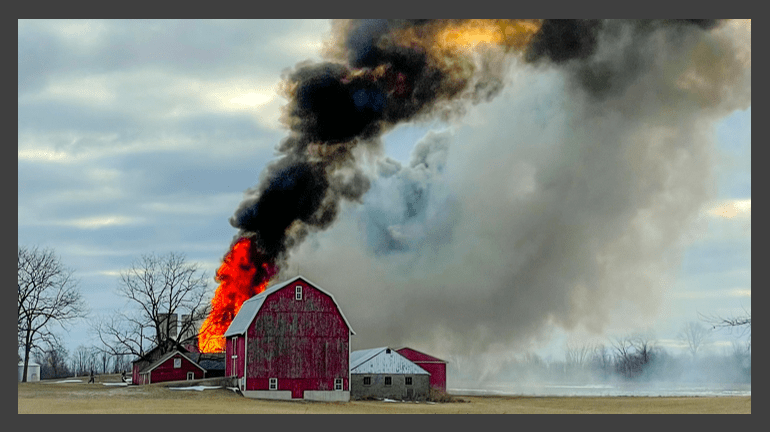
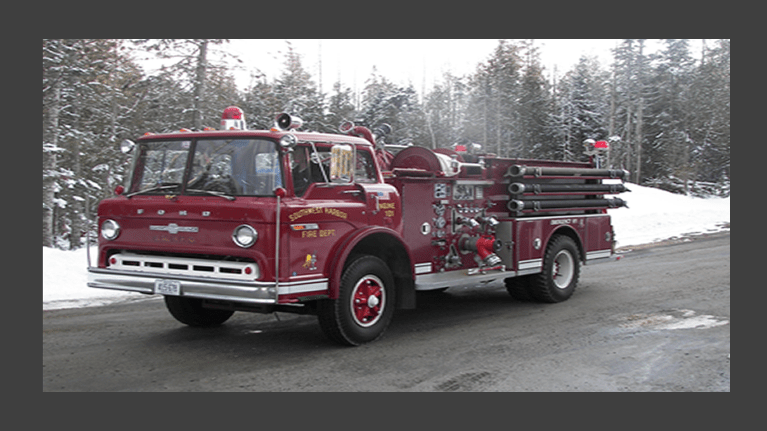
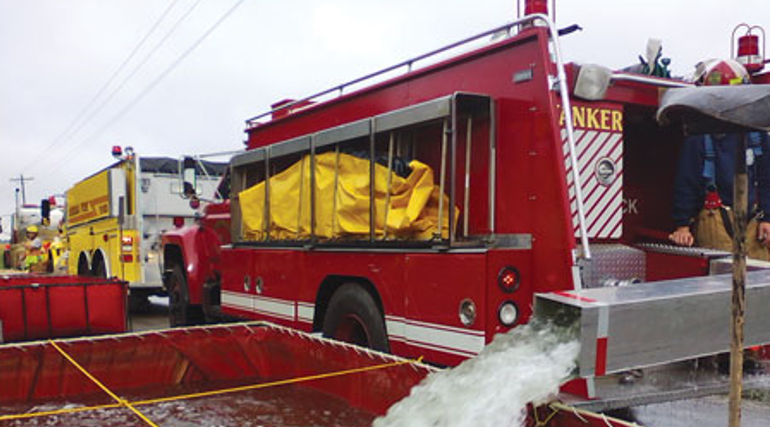
We both loved being members of the Dresden Fire Department.
During the day when most others were at work
George and I put out a lot of fires together;
Just the two of us.
Inheritance can’t be earned.
Rather, inheritance is about belonging.
Inheritance is about growing, developing, maturing relationships;
Sharing together this journey of life and faith.
I’ve also learned that for there to be an inheritance,
Someone has to die.
This is a bitter lesson.
I’d give back all George’s fishing equipment ten fold
Only to have an afternoon with him talking over the back split-rail fence.
I loved George dearly, and still miss him a lot, 32 years later.
…
“Good Teacher, what must I do to inherit eternal life?”
(Mark 10:17)
All of us who follow Jesus
Belong to a pretty special group.
We are known by our love,
Our authentic desire
To lead our lives the way Jesus led his life,
Our desire to discern and follow God’s will, and
Our commitment to live according to God’s Law.
At our baptism we were accepted by God,
Hereafter, we belong.
We are accepted and included.
Period.
Inheritance is about belonging.
According to the researcher Erik Carter
Belonging in a community
United by faith
Is about being
Present,
Invited,
Welcomed,
Known,
Accepted,
Supported,
Cared For,
Befriended,
Needed, and
Loved.
(Thanks to Professor Erik W. Carter, as found at erikwcarter.com/belonging)
Jesus, the Good Teacher first correctly steers this anonymous man
Towards that which gives identity to Christians,
And to our Jewish ancestors:
Living according to the Law of Moses,
Which came as a gift from God.
We don’t follow laws to belong.
We belong, therefore, we desire to fit in.
We want to follow God’s Law.
Jesus establishes the Law as the bare-bones foundation,
Upon which he builds out the rest of his kingdom.
Eternal life cannot be earned any more than an inheritance.
The resurrection of Jesus Christ grants eternal life for all who accept it.
There isn’t enough righteousness, or right living,
To earn someone a ticket to heaven.
Saying “yes” to Jesus Christ,
Accepting salvation as a divine gift of grace,
Means living in relationship with God and others.
Belonging to the “Eternal Life Club” individually, and collectively,
Means changing priorities.
We don’t live for ourselves.
When we live according to God’s Laws,
We live for others and
We live for God.
When Jesus tells us
“go, sell what you own, and give the money to the poor,”
He is calling us to reorder our priorities in life.
Place the needs of the poor before your own needs.
Make the last first.
Making the last first in our lives
Is all about belonging,
Of being in community,
Of living as benefactors of God’s inheritance;
Of God’s amazing grace.
…
Jesus does one other amazing thing here.
Belonging to the “Kingdom of God Club”
And accepting the inheritance,
Is about rejecting the idols of this world.
When we think of idols,
We are most likely to think of a golden calf and pagan worship.
Not so fast, partner!
An idol is anything that is owned, possessed, or sought after
That steals attention from God,
Impairs our ability to discern God’s will, and
Damages our ability to fulfill God’s will for our lives.
Stuff becomes our idols.
The house, the car, our property, our savings;
All of it, from man-caves to the Mercedes in the driveway,
From flower beds to 401k’s,
… all of it has the ability
To become the focus and purpose of our life
In place of …
In substitution for …
Our Lord, Jesus Christ.
Property and wealth can become a barrier between us and those Jesus calls us to serve.
It makes it nearly impossible to follow him
Unless and until we remove those barriers.
Give it away.
Simplify.
Even still, recognize the fact
That we are dependent on God
If you and I are ever going to get through the eye of a needle.
…
Getting to “follow me”
Means that we are willing to go out on a limb.
We are willing to stop trusting in ourselves and our own accumulated resources.
It means that we are willing to place our trust in Jesus, and
Follow him wherever he leads.
I have to sit on my hands, close my mouth, and submit my will
All the time
If I am to faithfully follow Christ.
This is my choice.
It isn’t a simple one.
But, for me, it’s the right choice.
I invite you to make the same personal choice.
Allow Thy will be done; not my will be done.
Getting to “follow me”
Means belonging to a community of people
Who are crazy enough for Jesus
To place the needs of the poor in front of our own.
Being Christ’s disciple doesn’t fit in American politics.