12. Casowasco – My Beginning

God had been moving quietly, subtly, deliberately in my life, beginning with my conception, periodically during my childhood, throughout my public school years. I didn’t see it then, but I see it now. My call to Ordained Ministry began before my call was discerned, characteristic prevenient grace that is rooted deep in the heart of the United Methodist experience. The fingerprints of God’s prevenient grace is written all over the first chapters of my life and development. Did you perceive it as you read through my story?

  1. Where I’ve Been – Embracing Change: https://breakingyokes.org/2024/07/30/where-ive-been-embracing-change/
  2. From Whence I Came – Tears of a Birthing Mother: https://breakingyokes.org/2024/08/05/2-from-whence-i-came-tears-of-a-birthing-mother/
  3. Epiclesis: https://breakingyokes.org/2024/08/10/3-epiclesis/
  4. A Smidge of Grey: https://breakingyokes.org/2024/08/14/4-a-smidge-of-grey/
  5. Discipline, Honor, Integrity and Herb Larson: https://breakingyokes.org/2024/08/23/5-discipline-honor-integrity-and-herb-larson/
  6. Dairy Farmers, Bus Drivers, and Don Jordan: https://breakingyokes.org/2024/08/31/6-dairy-farmers-bus-drivers-and-don-jordan/
  7. Advent in August: https://breakingyokes.org/2024/09/07/7-advent-in-august/
  8. Addison and Vernon Lee: https://breakingyokes.org/2024/09/25/8-addison-and-vernon-lee/
  9. Discipline Matters: The Education of Todd Goddard: https://breakingyokes.org/2024/10/07/9-discipline-matters-the-education-of-todd-goddard/
  10. Becoming a Wolverine: https://breakingyokes.org/2024/12/17/10-becoming-a-wolverine/
  11. The Smell of Hoppes: https://breakingyokes.org/2025/03/11/11-the-smell-of-hoppes/

My experience and perception of discernment is both personal and communal. God called me, pinging me like sonar. Even as a child, my spiritual antenna received the signal loud and clear. However, it took years for me to piece together the evidence that God’s hand was working in and through others at key moments in my life. It took a long time for me to get to an “aha” moment of recognition.

My call to ordained ministry wasn’t random. It wasn’t from out of the blue. Neither was it from a mentally delusional individual. God pumped the dime into the payphone and dialed my number. Over time, God worked through others, a community of disciples, to question me, encourage me, guide me to make choices that were consistent with a disciplined life of an ordained pastor. At first, it was informal. Friends and family. In time, others in the Church dropped hints. At the end of the process, it was the formality of Church polity; confirmation from the local church, the District Committee on Ordained Ministry, the Conference Board of Ordained Ministry, peer elders, and finally, the resident Bishop. My call took place over the first 26 years of my life.

I couldn’t bring myself to the pool this morning. My weekly self-injection 36 hours ago leaves me nauseous and without an appetite. Tomorrow morning I will swim. Reach. Pull. Kick. Push. Glide. Breathe. Uninterrupted silence, space for prayer, meditation, reflection.

Come, Lord. Come quickly.

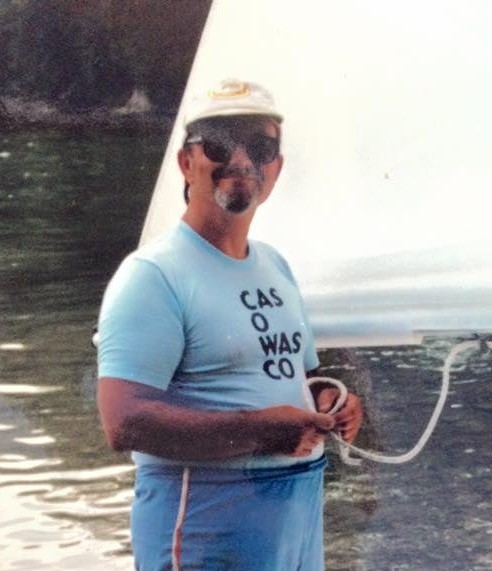
Casowasco is a property on the shore of Owasco Lake, one of New York’s beautiful Finger Lakes. It is the former summer estate of Theodore Case and his family, an inventor who ran with the likes of George Eastman and Thomas Edison. Case on Owasco is 73 acres of woods, one mile of shoreline, and since 1948, it has served as a host for children and youth ministries operated by the United Methodist Church, as directed in the family’s bequest.

Summer, 1979. I graduated high school and prepared to attend Clarkson as an engineering student. Science and math came naturally to me. I took off two weeks from work to join my dad volunteering at a work camp at Casowasco. Bill Swales was the director. He was my dad’s District Superintendent. He knew of my interests. He was charged with building a solar hot water system for the Highlands, the camping area on the West end of the property. Bill needed a lifeline and he phoned a friend. I answered the call.

Over the course of two weeks I led the team clearing land (think chain saws, shovels, and heavy equipment), building the plumbing (think copper pipes, tin solder, valves, and couplings), and erecting a gravity system to provide hot water. It takes some serious planning and construction to safely locate a 500-gallon water tank eight feet above the floor and enable it to be annually winterized.

The buildout worked like a charm. The property manager, a pastor and Japanese scholar by the name of Bob Stoppert, took notice. He remembered my name. Mid freshman year Bob gave me a call and invited me to join his 1980 summer staff.

Confidence. Fleeting in adolescence, confidence is panned for like specks of gold. As it is discovered, developed, and amassed, it becomes a solid foundation for a fruitful life. Where is confidence found? In a phone call. Words of appreciation. Recognition of a strong work ethic. A twinkle in the eye; evidence of God’s greater will being lived out on stage and in the spotlight called youth.

What little confidence I gained in those two weeks at Casowasco would be shaken with a difficult freshman year at college. Everyone was way smarter than me. Alcohol and marijuana were as destructive to me as an unexploded time bomb. Fraternity life was a distraction and grades suffered. Developmentally, I wasn’t ready. It would take me an additional four years before I was truly prepared to grow up and move out to live independently. The summer of 1980 couldn’t come fast enough.

Move in day was as early in May as college let out. Maintenance staff were needed early to get the property ready for the first week of nippers, er, campers, as we called them. I went straight to Casowasco to open the next chapter in my call to ministry and life’s unfolding book.

11. The Smell of Hoppes

Tom’s kitchen table had been cleared after the evening meal. It was now set, with a base linen towel. Scattered on top were various rifle bits and pieces, displayed as if jewels under glass.

Tom had gone blind from macular degeneration. Yet, he insisted on cleaning guns when I returned from the field. Rifles for woodchucks or coy dogs, shotguns for fowl, rabbit or deer, pistol or revolvers for just plain fun.

Hoppes patches and oil were rubbed over every part, barrel, receiver, magazine before each was reassembled and gently returned to its case.

Residue from gunpowder and dirt from the Chemung River Valley spotted our oily rags. He and I sat at his table, rubbing and wiping, Tom listened to my most recent adventures, me listening to his tales from long ago. Into the evening we’d celebrate mass. Cleaning the guns Tom lent me was like the sacramental completion of the circle of life, from generation to generation.

Tom grew up in northeast Pennsylvania, depression poor, mining anthracite coal from the state’s deepest vanes. Dark, dangerous, unforgiving work could reduce a man to a gelatinous dark spot crushed into the floor of the mine, or, into a rasping, wheezing cancerous mesothelioma plaintiff in the blink of the eye.

During the great depression, Tom and his siblings worked two and three jobs to keep the household afloat. When the great war and shortages came, Tom was paid to run ration stamps out the back alley for complicit  store owners one step ahead of the federal agents. After the war, he settled into New York’s southern tier, bought and operated a gas station and repair shop in Elmira, filling tanks, replacing engine rings, and swapping out brake drums well into his seventies when his eyes began to fail.

A member of my father’s parish, Tom was a father figure my own dad couldn’t be. For my dad, guns were weapons of war that maimed with explosive violence, not tools for game or pleasure plinking. To think that a gun could bring together generations was beyond his experience and imagination. He’d prepared for burial too many of his generation, corpses violated by the unforgiving laws of chemistry and physics, flung without compassion by the brutality of war. But for Tom and me, Hoppes was the smell of our bread and wine.

“Lap Pool Closed” greeted me early the other morning, causing me to seethe. “I didn’t pay good money for a membership only to be denied at the door,” my sick brain whined and complained like a spoiled first world privileged brat.

“When the chemicals adjust to proper levels, they’ll call up and let us know the pool is open,” the blameless messenger smiled as she delivered up my bad news. Disrupt my routine and I tend to become more distempered than usual. Gnarly. Pessimistic, I’ve been described. Everyone who is surprised, raise your hand.

I’m working on it. I don’t want to be known as that ornery old man. I want to create the reputation I want to live with. You know what I’m talking about: kind, gracious, loving. Someone like Tom.

Rusty lived down the street from the parsonage. He and I were in the same grade, rode the same bus to school, and were often hunting partners. He was from a poor family, but he certainly knew just about everything when it came to the outdoors, hunting and fishing. What Tom didn’t teach me, Rusty often would show me. Game was plentiful behind town, down by the mainline Erie Lackawanna, where the muddy Chemung River wandered.

We liked to hunt pigeons from the railroad trestle, a three-span double-track bridge that paralleled the new highway bridge just a half mile upstream. Rusty and I would walk in single file with our 12 gage pumps at port arms down the center between track one on the north side and track two on the south, my right thumb resting on top the safety in the off position. Slow we’d stalk the filthy, good-for-nothing pigeons that roosted in the truss.

We’d usually make it center span before they’d spook and the whole mass would depart for the safety of any place other than there. Timing and a smooth pull were necessary for a safe and accurate shot. One in the chamber and four in the magazine would quickly be pumped out. If the lead was corrected for flight below and away, and, if by skill we successfully shot between the steel truss, we could bring down fifteen or twenty. Hit a girder and duck! Once the flock departed, we’d find cover in the steel and wait for first, their scout, then second, the flock to slowly but surely return to the roost. Wash, rinse, repeat. A good outing might bring two or three iterations of this killing cycle, littering the river, turning the water red.

A hot, summer afternoon found Rusty and I stalking Chemung’s filthy pigeons. Cicadas buzzed. Skeeter skimmed stagnant pools. The river flowed. The moaning of Jake brakes from eighteen wheelers further down the valley echoed into the hills and gulches so characteristic of the Southern Tier. The sun high in the sky bore down. Sweat stained our tee shirts and wet the brow. Safety off. Slow. Lift, advance, gently, step, one railroad tie to the next. Watching. Listen. Waiting for the first sign of a pigeon to stir.

What? Was? That? Head on a slow swivel, rotating from Rusty’s back to the horizon around behind us. There. A mile and half behind barely visible whiffs of soot ascended above the tree line, followed by six thousand horsepower of Erie Lackawanna muscle leaning into the corner, lining itself up for the bridge we were on. Thirty feet above the water. Dead center. Inches from the rails. Loaded shotguns un-safed.

Shit.

We just about did. “Run!” we both yelled simultaneously. Safe on, and I ran like the devil was licking at my ass. West we ran, feeling the bridge rumble when the groaning engines gained the distant bank. Can’t slow. Can’t slip. Can not, for God sake, put an ankle between ties. Snap, scream, and pink mist. Rusty, don’t you fall. As we gained the west shore, we angled across track two and flung our bodies and guns down the embankment, just as the lead engine, horn blaring, roared past. Tumbled and slid in a cloud of dust, soot, and railroad ash, guns protected by the roll.

Stunned, we righted ourselves. Sat silent as the caboose above glided past. Soon, the train disappeared down the straight, enveloped by the valley. I exhaled about the same time as Rusty and we burst out laughing.

How close. How incredibly lucky. How incredibly stupid we were, but we survived. The walk back to town was quiet. Pensive. He veered off to his house, and me to Tom’s.

The table was soon set. The smell of Hoppes appeared, drifted, enveloped two guys, one blind and old, the other young and not quite so full of spit and vinegar as before. The quiet was broken only when necessary. The table was so rich and full. Oh, how the memory warms my heart. God’s grace whispered as my shotgun was cleaned, reassembled, and returned to its fitting and proper place.